
BuddhistCatholicContemplativeEvangelicalGeneral ChristianHinduJewishLatter-day SaintMuslimNew VisionsProgressive Christian
Beliefs
- Buddhist
- Catholic
- Contemplative
- Evangelical
- General Christian
- Hindu
- Jewish
- Latter-day Saint
- More Voices
- Muslim
- New Visions
- Pagan
- Progressive Christian
Topics
- Religion News
- Food and Religion
- Sports and Religion
- Religious Art
- Religious Music and Entertainment
- Religious Events
- History and Religion
- Style and Religion
- Politics and Religion
- Women in Religion
- Recreation Outdoors and Religion
- Business Finance and Religion
- Careers Workplace and Religion
- Education and Religion
- Family Parenting and Religion
- Health Fitness and Religion
- Home and Religion
- Relationships and Religion
- Technology and Religion
- Travel and Religion
Columnists
- Buddhist Columnists
- Business Finance and Religion Columnists
- Careers Workplace and Religion Columnists
- Catholic Columnists
- Contemplative Columnists
- Education and Religion Columnists
- Evangelists Columnists
- Family Parenting and Religion Columnists
- General Christian Columnists
- Health Fitness and Religion Columnists
- Hindu Columnists
- History and Religion Columnists
- Home and Religion Columnists
- Jewish Columnists
- More Voices Columnists
- Latter Day Columnists
- Muslim Columnists
- New Visions Columnists
- Nonreligious Columnists
- Pagan Columnists
- Politics and Religion Columnists
- Progressive Columnists
- Recreation Outdoors and Religion Columnists
- Relationships and Religion Columnists
- Religion News Columnists
- Religious Art Columnists
- Religious Events Columnists
- Religious Music and Entertainment Columnists
- Sports and Religion Columnists
- Style and Religion Columnists
- Technology and Religion Columnists
- Travel and Religion Columnists
- Women in Religion Columnists
Resource Library
- 2026 Calendar
- Library of World Religions
- The 100 Most Holy Places on Earth
- Patheos Answers
- Podcasts
- Videos
- Faith Leaders Database
- Anglican Episcopalian
- Bahai
- Baptist
- Buddhism
- Christianity
- Confucianism
- Eastern Orthodoxy
- Hinduism
- Holiness and Pentecostal
- ISKCON
- Islam
- Judaism
- Lutheran
- Methodist
- The Church of Jesus Christ of Latter-day Saints
- New Age
- Paganism
- Presbytarian and Reformed
- Protestantism
- Religion Behind the Scenes
- Roman Catholic
- Scientology
- Shia Islam
- Sikhism
- Sufism
- Sunni Islam
- Taoism
- Zen
- See all religions
Research Tools
 Ad-Free & Subscriber Log-In Subscription Support
Ad-Free & Subscriber Log-In Subscription Support
Follow Patheos 

- Trending:
- Forgiveness
- |
- Marriage
- |
- Consciousness
- |
- Death Penalty
- |
- Election
- |
- Halloween

- Home
- About Hebrew College
- The Rabbinical School of Hebrew College
- The Book of Psalms
- FREE NEWSLETTER
- Home
- Jewish
- Daring to Dream
Daring to Dream
Last updated on: December 2, 2022 at 1:18 pm by Hebrew College
Daring to Dream 2022-12-02T13:18:04-04:00 Hebrew College
Patheos Explore the world's faith through different perspectives on religion and spirituality! Patheos has the views of the prevalent religions and spiritualities of the world.
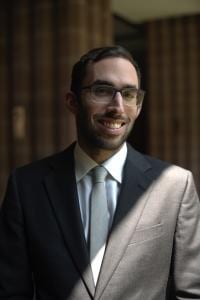
By Rabbi Max Edwards
Parashat Vayetze (Genesis 28:10-32:3)
At the beginning of Parashat Vayetze, Jacob dreams a now-famous scene:
He had a dream; a stairway was set on the ground and its top reached to the sky, and angels of God were going up and down on it.
And standing beside him was the Lord, who said, “I am the Lord, the God of your father Abraham and the God of Isaac: the ground on which you are lying I will assign to you and to your offspring (Genesis 28:12-13).
You can’t do any better than the image of a stairway to heaven—a fantastical ladder peaking at the sky with angels majestically ascending and descending. It is magical but—or perhaps and—it is a dream.
When Jacob awakens from this vision, he is jolted back to reality, but the dream state remains:
Jacob awoke from his sleep and said, “Surely the Lord is present in this place, and I did not know it!”
Shaken, he said, “How awesome is this place! This is none other than the abode of God, and that is the gateway to heaven” (Genesis 28:16-17).
In Jacob’s worldview, there is virtually no line or distinction between dreams and reality. When he wakes from his sleep, his dreamstate informs his existence back in the here and now. His eyes are suddenly opened to divinity and godliness precisely through the experience of closing his eyes, of drifting from this world for a night’s sleep.
Professor of Religion Dr. Naomi R. Goldenberg views dreams as “one of the most immediate approaches to the world of inner experience.” She writes that “sometimes the strongest and most original of all man’s spiritual activities—the religious activity—is also discovered from our dreams.” The ability to dream is the ability to peer into our souls.
The Tanakh is full of dreams becoming reality, but this moment in Parashat Vayetze holds a special place in the collective imagination of our Sages. Jacob is not only a dreamer, he is a davener, a person in prayer.
The Talmud teaches that Abraham, Isaac, and Jacob each instituted a time of day for prayer. Abraham “rose early in the morning to the place where he had stood” (Genesis 19:27). Isaac “went out to converse in the field toward evening” (Genesis 24:63), and Jacob “encountered the place and he slept there” (Genesis 28:11).
Each time of day brings with it a word that the rabbis take to broadly mean “pray.” Abraham stood, Isaac conversed, and Jacob encountered. When we pray in the evening, we can harken back to the actions of Jacob in this moment of encounter. To encounter is to meet by chance, to happen upon, to fall into, to dream. Jacob’s time for prayer is the only episode within which a dream directly follows. What might this tell us about making dreams reality, or making prayer more than potential?
In the case of Jacob, our dreamer and pray-er, the dream only becomes reality insofar as he responds to it, calls upon it as truth, and initiates a new reality from it. To Jacob, a dream is not simply a dream, it is an opportunity. It is a glimpse into another layer of life, a glimpse that he carries with him, tries out, and integrates into his very existence.
Perhaps the same can be said of prayer. In a world that calls to us for big, structural change, prayer can feel a bit reductive—a way to check a box or voice larger-than-life hopes. Jacob teaches us that some prayer may only be as good as our response to prayer. We won’t always come out of a place of prayer with an ability to say, “How awesome is this place!”—but intending to see the world anew might allow us to do just that.
Please contact the author if you’d like to share any feedback.
Rabbi Max Edwards graduated from the Rabbinical School of Hebrew College in 2021. He is currently the Assistant Rabbi at Temple B’nai Abraham in Livingston, New Jersey.
Previous Post

November 22, 2022
Why Is It? Why This?!
Next Post
December 6, 2022 The Burden of Miracles
Browse Our Archives
Select a Category Uncategorized
Select a Month April 2026 March 2026 December 2025 November 2025 October 2025 September 2025 August 2025 July 2025 June 2025 May 2025 April 2025 March 2025 February 2025 January 2025 December 2024 November 2024 October 2024 September 2024 August 2024 July 2024 June 2024 May 2024 April 2024 March 2024 February 2024 January 2024 December 2023 November 2023 October 2023 September 2023 August 2023 July 2023 June 2023 May 2023 April 2023 March 2023 February 2023 January 2023 December 2022 November 2022 October 2022 September 2022 August 2022 July 2022 June 2022 May 2022 April 2022 March 2022 February 2022 January 2022 December 2021 November 2021 October 2021 September 2021 August 2021 July 2021 June 2021 May 2021 April 2021 March 2021 February 2021 January 2021 December 2020 November 2020 October 2020 September 2020 August 2020 July 2020 June 2020 May 2020 April 2020 March 2020 February 2020 January 2020 December 2019 November 2019 October 2019 September 2019 August 2019 July 2019 June 2019 May 2019 April 2019 March 2019 February 2019 January 2019 December 2018 November 2018 October 2018 September 2018 August 2018 July 2018 June 2018 May 2018 April 2018 March 2018 February 2018 January 2018 December 2017 November 2017 October 2017 September 2017 August 2017 July 2017 June 2017
Follow Us!
TAKE THE
Religious Wisdom Quiz
Which prophet lamented over Israel's oppression of the poor?
Select your answer to see how you score.
Amos Obadiah Joel Hosea
Related posts from Seventy Faces of Torah

The Holy Art of World Building

Parashat Tzav: Keeping the Sacred Fire Burning

Color Theory: What Joseph’s Coat Reveals
TRENDING AT PATHEOS Jewish

Building a Little Ark in a Frightening World
This past Shabbat, we read about Noah. I love this story. The...

Yom Kippur : Is There Always Room for...
Making Room for Forgiveness Every year as Yom Kippur approaches, I find...

This Rosh Hashanah: Can I Find New Meaning?
A Sunrise, a New Year, and a Question On our way to...

Killing Amalek: The Torah’s Most Misunderstood Commandment
Few passages of the Torah have provoked more confusion, polemic, and misuse...

I have never trusted a first draft. I don’t mean that...

Back to School, Back to Reality—and a New...
A New School Year Begins… Back to Reality A new school year...
view all Jewish blogs
Ad-Free & Subscriber Log-In Subscription Support
- About Us
- 2026 Calendar
- Videos
- Podcasts
- Library of World Religions
- Faith In Media Tracker
- Advertise With Us
- Write for Us
- Privacy Policy
- Terms of Service
- Do Not Sell My Data
- Contact Us
- Radiant Digital
- Manage Newsletter Subscriptions
- Unsubscribe From Notifications
- Sitemap
Copyright 2008-2026, Patheos. All rights reserved.
Subscription Support Ad-Free & Subscriber Log-In
Follow Patheos