
BuddhistCatholicContemplativeEvangelicalGeneral ChristianHinduJewishLatter-day SaintMuslimNew VisionsProgressive Christian
Beliefs
- Buddhist
- Catholic
- Contemplative
- Evangelical
- General Christian
- Hindu
- Jewish
- Latter-day Saint
- More Voices
- Muslim
- New Visions
- Pagan
- Progressive Christian
Topics
- Religion News
- Food and Religion
- Sports and Religion
- Religious Art
- Religious Music and Entertainment
- Religious Events
- History and Religion
- Style and Religion
- Politics and Religion
- Women in Religion
- Recreation Outdoors and Religion
- Business Finance and Religion
- Careers Workplace and Religion
- Education and Religion
- Family Parenting and Religion
- Health Fitness and Religion
- Home and Religion
- Relationships and Religion
- Technology and Religion
- Travel and Religion
Columnists
- Buddhist Columnists
- Business Finance and Religion Columnists
- Careers Workplace and Religion Columnists
- Catholic Columnists
- Contemplative Columnists
- Education and Religion Columnists
- Evangelists Columnists
- Family Parenting and Religion Columnists
- General Christian Columnists
- Health Fitness and Religion Columnists
- Hindu Columnists
- History and Religion Columnists
- Home and Religion Columnists
- Jewish Columnists
- More Voices Columnists
- Latter Day Columnists
- Muslim Columnists
- New Visions Columnists
- Nonreligious Columnists
- Pagan Columnists
- Politics and Religion Columnists
- Progressive Columnists
- Recreation Outdoors and Religion Columnists
- Relationships and Religion Columnists
- Religion News Columnists
- Religious Art Columnists
- Religious Events Columnists
- Religious Music and Entertainment Columnists
- Sports and Religion Columnists
- Style and Religion Columnists
- Technology and Religion Columnists
- Travel and Religion Columnists
- Women in Religion Columnists
Resource Library
- 2026 Calendar
- Library of World Religions
- The 100 Most Holy Places on Earth
- Patheos Answers
- Podcasts
- Videos
- Faith Leaders Database
- Anglican Episcopalian
- Bahai
- Baptist
- Buddhism
- Christianity
- Confucianism
- Eastern Orthodoxy
- Hinduism
- Holiness and Pentecostal
- ISKCON
- Islam
- Judaism
- Lutheran
- Methodist
- The Church of Jesus Christ of Latter-day Saints
- New Age
- Paganism
- Presbytarian and Reformed
- Protestantism
- Religion Behind the Scenes
- Roman Catholic
- Scientology
- Shia Islam
- Sikhism
- Sufism
- Sunni Islam
- Taoism
- Zen
- See all religions
Research Tools
 Ad-Free & Subscriber Log-In Subscription Support
Ad-Free & Subscriber Log-In Subscription Support
Follow Patheos 

- Trending:
- Forgiveness
- |
- Marriage
- |
- Consciousness
- |
- Death Penalty
- |
- Election
- |
- Halloween

- Home
- About Hebrew College
- The Rabbinical School of Hebrew College
- The Book of Psalms
- FREE NEWSLETTER
- Home
- Jewish
- Memory Problems
Memory Problems
Last updated on: October 4, 2022 at 9:11 am by Hebrew College
Memory Problems 2022-10-04T09:11:10-04:00 Hebrew College
Patheos Explore the world's faith through different perspectives on religion and spirituality! Patheos has the views of the prevalent religions and spiritualities of the world.
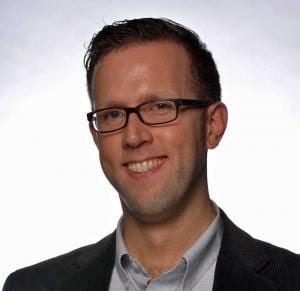
By Rev. Tom Reid
Parashat Ha’azinu (Deuteronomy 32:1-52)
 Why did I choose to write on this particular parashah? As I read it again, I find myself struggling with several passages in this portion.
Perhaps struggle is appropriate during the Ten Days of Teshuvah (Return, Remorse, and Renewal), this season of soul-searching (heshbon-nefesh), which calls the Jewish community to grapple with the fullness of life, including its challenges.
And as a Presbyterian pastor, taking on Ha’azinu affords me the opportunity to do a mitzvah of sorts, by giving my rabbinical friends and colleagues some breathing room, as they prepare their Yom Kippur services and sermons, while still recovering from the many hours of tefillah (prayer) leadership over Rosh Hashanah!
I turn my attention to the opening of this week’s portion. For context, Moses, nearing the end of his life, exhorts his people to remember the past in its entirety—the good, the bad, and the ugly. No one can claim ignorance as the nation marches ever closer to the Promised Land.
“This poem shall confront them as a witness,
since it will never be lost from the mouth of their offspring” (Deuteronomy 31:21).
The poem begins beautifully reinforcing the interconnectedness of the universe, which is entirely bound up in God:
“Let the earth hear the words I utter!
May my discourse come down as the rain… like showers on young growth,
like droplets on the grass” (32:1-2).
Yet, Moses quickly turns from God’s faithfulness to the faithless and crooked responses of God’s children. The prophet describes how God, vexed and pained by their behavior, will turn away from Israel, hiding the divine face. As a result, it is punishment that will rain down upon the wayward.
To be honest, I am troubled by this sudden turn in the text and the poem. Why the abrupt shift? Why did Moses feel the need to issue a stern and ominous warning at this time? When faced with imminent death, these are the words that come forth from the mouth of this sagacious leader? And his exhortation is directed not only at the current generation, but future generations as well.
Perhaps he is afraid. After all, he is being told that his death is imminent and that he will not be allowed to enter the Promised Land despite his efforts to guide the people there through countless obstacles. He could understandably be afraid of what will become of him as an individual. Perhaps he fears what will happen to his children and his family after he dies. And perhaps he is afraid for his tribe (the Levites) and the Israelites as a whole. He is too keenly aware of the past missteps of the Children of Israel and the consequences of their selfishness, greed, anger and fear. Despite his work to be faithful and to keep them faithful, this human instinct—to fall back on idols and spiritual technologies that are believed to be more of a “sure thing”—is often too great a force for a mere mortal to contend with. Maybe this is why the prophet calls on heaven and earth to bear witness to his words.
Memory is a funny thing. There are things we remember and there are things we forget. Sometimes the forgetting is wilful or convenient. Sometimes we forget despite our best intentions. As finite beings, we cannot remember everything. So how do we sift and sort? What do we canonize? What do we condemn and seek to erase?
At this liminal moment, on the cusp between what was and what could be, Moses feels the urgent need to remind his people of the consequences of human behavior: “Remember the days of old…your elders they will tell you” of when God guided Jacob and “fed him honey from the crag” (32:7,13). Yet Jacob “forsook the God who made him and spurned the Rock of his support” (32:15). Don’t forget, I hear Moses urging. Remember who you are and where you came from…and what you have done. It may be painful, but it is for your own good.
Thinking about memory—about what we forget and what we remember—I am reminded of a point Rabbi Arthur Waskow lifted up at a recent event hosted by the Miller Center celebrating his most recent book, Dancing in God’s Earthquake: The Coming Transformation of Religion. Both in the book and in the discussion that evening, Waskow deftly engaged with Christian thought and Christian Scripture, bringing it into conversation with Rabbinic thought and wisdom across the generations. He highlighted the connections between our two traditions, and it made me think of the countless opportunities we have lost over the last two thousand years—opportunities to study alongside and learn from one another as what would become Rabbinic Judaism diverged from the emerging Jesus movement in the wake of unthinkable destruction and devastation.
What is lost when we do not know the story of “the other”? And what is lost when we do our wrestling with texts and traditions of thought isolated in our respective camps? Where might we be if we could benefit from and be enriched by the wrestling our fellow searchers have been doing, based on the same foundational texts? The other side of that coin relates back to the stories that we do tell ourselves. Too often we choose to tell ourselves only the stories that make us feel good, while sweeping the bad or ugly stories under the rug. We want to celebrate our greatness and deny any weakness or failures in our past—personal and collective.
At this point in the Jewish calendar when the faithful have prayed and prayed for God’s forgiveness as the book of life is sealed for another year, Moses reminds us not to forget the shadows of our past. But what sort of message does it send, especially at this point in the Jewish calendar, that not even Moses was forgiven for what seems like the understandable sin of exasperation with his people? What hope can there be for the rest of us?
Perhaps we must look back to the opening verses of Moses’ poem-song. We are connected to the earth and all it contains, and we are connected to our ancestors and to all those who will follow after us. We must remember that God is perfect and ever-faithful. God was, is, and forever will be our Rock—the Rock that writhed in labor pains to bear humanity and all creation (32:18). Even in those moments or periods when we are unable to see or claim that love and faithfulness for ourselves, even when it does not look or manifest how we would choose or prefer it, God is there like the eagle spreading its wings and bearing us upon its pinions. Though that eternal truth does not erase or undo our wrongdoings to God and to one another, holding the comfortable along with the uncomfortable is what we are called to do while we continue to put our trust in God, all of Whose ways are just.
Rev. Tom Reid is the Associate Director of the Miller Center for Interreligious Learning & Leadership of Hebrew College. He is an ordained minister in the Presbyterian Church (U.S.A.) and serves as pastor of Newton Presbyterian Church in Newton Corner. Before changing careers to ordained ministry, Tom spent over ten years working in a variety of fields including: clean energy and innovation in Boston, environmental and green building consulting in Boston and Dubai, and business education in Madrid, Spain. Tom is a proud alumnus of the University of Kansas, holding a BA in Environmental Studies, Latin American Studies, and Spanish. He also holds an MA in Contemporary European Politics, Policy, and Society funded by a Fulbright grant to the European Union and an MDiv from Boston University School of Theology with a certificate in Religion and Conflict Transformation.
Progressive Christian
Previous Post

September 28, 2022
The Power of "With"
Next Post

October 12, 2022 Defining Enough
Browse Our Archives
Select a Category Uncategorized
Select a Month April 2026 March 2026 December 2025 November 2025 October 2025 September 2025 August 2025 July 2025 June 2025 May 2025 April 2025 March 2025 February 2025 January 2025 December 2024 November 2024 October 2024 September 2024 August 2024 July 2024 June 2024 May 2024 April 2024 March 2024 February 2024 January 2024 December 2023 November 2023 October 2023 September 2023 August 2023 July 2023 June 2023 May 2023 April 2023 March 2023 February 2023 January 2023 December 2022 November 2022 October 2022 September 2022 August 2022 July 2022 June 2022 May 2022 April 2022 March 2022 February 2022 January 2022 December 2021 November 2021 October 2021 September 2021 August 2021 July 2021 June 2021 May 2021 April 2021 March 2021 February 2021 January 2021 December 2020 November 2020 October 2020 September 2020 August 2020 July 2020 June 2020 May 2020 April 2020 March 2020 February 2020 January 2020 December 2019 November 2019 October 2019 September 2019 August 2019 July 2019 June 2019 May 2019 April 2019 March 2019 February 2019 January 2019 December 2018 November 2018 October 2018 September 2018 August 2018 July 2018 June 2018 May 2018 April 2018 March 2018 February 2018 January 2018 December 2017 November 2017 October 2017 September 2017 August 2017 July 2017 June 2017
Follow Us!
TAKE THE
Religious Wisdom Quiz
True or False: In John's Gospel, Jesus raises Lazarus from the dead after he had been in the tomb for four days.
Select your answer to see how you score.
TRUE FALSE
Related posts from Seventy Faces of Torah

The Holy Art of World Building

Parashat Tzav: Keeping the Sacred Fire Burning

Color Theory: What Joseph’s Coat Reveals
TRENDING AT PATHEOS Jewish

Building a Little Ark in a Frightening World
This past Shabbat, we read about Noah. I love this story. The...

Yom Kippur : Is There Always Room for...
Making Room for Forgiveness Every year as Yom Kippur approaches, I find...

This Rosh Hashanah: Can I Find New Meaning?
A Sunrise, a New Year, and a Question On our way to...

Killing Amalek: The Torah’s Most Misunderstood Commandment
Few passages of the Torah have provoked more confusion, polemic, and misuse...

I have never trusted a first draft. I don’t mean that...

Back to School, Back to Reality—and a New...
A New School Year Begins… Back to Reality A new school year...
view all Jewish blogs
Ad-Free & Subscriber Log-In Subscription Support
- About Us
- 2026 Calendar
- Videos
- Podcasts
- Library of World Religions
- Faith In Media Tracker
- Advertise With Us
- Write for Us
- Privacy Policy
- Terms of Service
- Do Not Sell My Data
- Contact Us
- Radiant Digital
- Manage Newsletter Subscriptions
- Unsubscribe From Notifications
- Sitemap
Copyright 2008-2026, Patheos. All rights reserved.
Subscription Support Ad-Free & Subscriber Log-In
Follow Patheos