
BuddhistCatholicContemplativeEvangelicalGeneral ChristianHinduJewishLatter-day SaintMuslimNew VisionsProgressive Christian
Beliefs
- Buddhist
- Catholic
- Contemplative
- Evangelical
- General Christian
- Hindu
- Jewish
- Latter-day Saint
- More Voices
- Muslim
- New Visions
- Pagan
- Progressive Christian
Topics
- Religion News
- Food and Religion
- Sports and Religion
- Religious Art
- Religious Music and Entertainment
- Religious Events
- History and Religion
- Style and Religion
- Politics and Religion
- Women in Religion
- Recreation Outdoors and Religion
- Business Finance and Religion
- Careers Workplace and Religion
- Education and Religion
- Family Parenting and Religion
- Health Fitness and Religion
- Home and Religion
- Relationships and Religion
- Technology and Religion
- Travel and Religion
Columnists
- Buddhist Columnists
- Business Finance and Religion Columnists
- Careers Workplace and Religion Columnists
- Catholic Columnists
- Contemplative Columnists
- Education and Religion Columnists
- Evangelists Columnists
- Family Parenting and Religion Columnists
- General Christian Columnists
- Health Fitness and Religion Columnists
- Hindu Columnists
- History and Religion Columnists
- Home and Religion Columnists
- Jewish Columnists
- More Voices Columnists
- Latter Day Columnists
- Muslim Columnists
- New Visions Columnists
- Nonreligious Columnists
- Pagan Columnists
- Politics and Religion Columnists
- Progressive Columnists
- Recreation Outdoors and Religion Columnists
- Relationships and Religion Columnists
- Religion News Columnists
- Religious Art Columnists
- Religious Events Columnists
- Religious Music and Entertainment Columnists
- Sports and Religion Columnists
- Style and Religion Columnists
- Technology and Religion Columnists
- Travel and Religion Columnists
- Women in Religion Columnists
Resource Library
- 2026 Calendar
- Library of World Religions
- The 100 Most Holy Places on Earth
- Patheos Answers
- Podcasts
- Videos
- Faith Leaders Database
- Anglican Episcopalian
- Bahai
- Baptist
- Buddhism
- Christianity
- Confucianism
- Eastern Orthodoxy
- Hinduism
- Holiness and Pentecostal
- ISKCON
- Islam
- Judaism
- Lutheran
- Methodist
- The Church of Jesus Christ of Latter-day Saints
- New Age
- Paganism
- Presbytarian and Reformed
- Protestantism
- Religion Behind the Scenes
- Roman Catholic
- Scientology
- Shia Islam
- Sikhism
- Sufism
- Sunni Islam
- Taoism
- Zen
- See all religions
Research Tools
 Ad-Free & Subscriber Log-In Subscription Support
Ad-Free & Subscriber Log-In Subscription Support
Follow Patheos 

- Trending:
- Forgiveness
- |
- Marriage
- |
- Consciousness
- |
- Death Penalty
- |
- Election
- |
- Halloween

- Home
- About Hebrew College
- The Rabbinical School of Hebrew College
- The Book of Psalms
- FREE NEWSLETTER
- Home
- Jewish
- Religion News
- A History of Sadness and Transformation in Parashat Noach
A History of Sadness and Transformation in Parashat Noach
Last updated on: October 24, 2022 at 9:00 am by Hebrew College
A History of Sadness and Transformation in Parashat Noach 2022-10-21T11:45:43-04:00 Hebrew College
Patheos Explore the world's faith through different perspectives on religion and spirituality! Patheos has the views of the prevalent religions and spiritualities of the world.
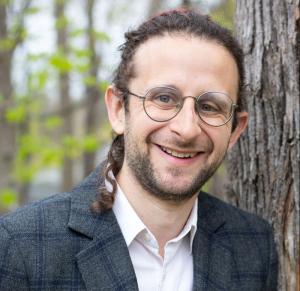
By Rabbi Joey Glick
Parashat Noach (Genesis 6:9-11:32)
 The first time I walked into Dr. Lisa Geiger’s chiropractic office, I was greeted by a symphony of sound. With one large space that doubles as a waiting and treatment room, there was a delightful cacophony of babbling toddlers, crying babies, tired parents, 90s folk music and, above it all, Dr. Lisa giving over wisdom. An experienced healer and Dar Williams enthusiast, Dr. Lisa treats very young kids, their parents—and, in my case, a rabbinical student with a Talmud-induced crooked neck. Over two years of treatment, I started to think of Dr. Lisa’s office as a beit midrash, a communal study hall. In this beit midrash, I observed the healing Torah of the chiropractor: that what seems born and done, bone-deep and calcified, might still be shifted and mended. Dr. Lisa modeled for me how this adjustment might come not by way of dramatic cracks and pops, but by gentle touch, communal witnessing and supportive words.
When I started researching the Noah story in preparation for this writing, I did not expect that my learning would lead me back to these memories of Dr. Lisa’s beit midrash. However, after a week of journeying through stories of global devastation and God’s emotional tumult, I stumbled upon a piece of Torah about the chiropractic treatment of infants. I suspect that this embodied Torah might teach us something about God and healing. But before we can reenter Dr. Lisa’s beit midrash, we need to enter a storm.
God is distraught. Humans are sinning and creation is not going according to plan. Before the flood, the ark, and the rainbow—the story of Noah pauses on God’s emotional state. We read:
וַיִּנָּחֶם יְהוָה כִּי־עָשָׂה אֶת־הָאָדָם בָּאָרֶץ וַיִּתְעַצֵּב אֶל־לִבּוֹ׃
God was sorry that God created humans on the earth and God’s heart was saddened.
(Genesis 6:6)
This verse is the first appearance in the Bible of the root ע/צ/ב (ayin-tzadi-bet) denoting sadness and grief. There’s something odd about this emotional descriptor; the Bible is full of God’s love of Israel and anger towards sin, but Divine depression is much rarer. The literary result of reading about God’s sadness might be compared to the off-putting moment of witnessing a teacher or parent weeping. Beyond the discomfort of seeing God in a moment of vulnerability, the text holds the tragic consequences of God’s sadness. How can we connect to a God whose response to sorrow is global destruction?
The interpretive tradition of God’s depression in Parshat Noach picks up on some of these concerns. Rabbinic and Medieval readers shift God’s sadness away from the language of interior emotion and into external action and consequence. Drawing on a definition of ע/צ/ב as “to grieve,” the Rabbis of the Jerusalem Talmud suggest that God sat shiva during the seven days leading up to the Flood. On the other end of the spectrum, the authors of Bereshit Rabbah explore an alternative definition of ע/צ/ב as “to form or shape.” Their midrash suggests that the 40 days of the flood correspond to the 40 weeks of a pregnancy. As such, we might translate וַיִּתְעַצֵּב not as God is grieving, but rather as God forming or gestating a new creation. In these readings, we are no longer stumbling upon a God in tears, but rather encountering a Divine moved by sorrow into ritual action and renewal.
While addressing the problem of God as the weeping authority figure, neither the Talmud nor the Midrash touch on the ethical disaster of God’s sorrow becoming violence. In general, these readings feel less like honest engagements with God’s emotional life and more like careful detours around God’s pain and its consequence. Before we give up on connecting with a sad and destructive God, there is one more definition of ע/צ/ב to explore, a definition that will lead us back to the chiropractic beit midrash.
Beyond the definitions of “to sadden” and “to shape,” the authors of the Brown Drivers and Briggs Dictionary hypothesize an earlier definition for the root ע/צ/ב: to align a baby. The dictionary seems to be drawing on an ancient practice of healing for newborns with misaligned spines. At first glance, this definition might strike us as surprising; after all, what connection could there possibly be between God’s sadness and baby healing? However, the association comes into clearer relief if we ask ourselves what the God of Parashat Noach might discover, sitting in Dr. Lisa’s beit midrash? What could it mean for God’s sadness to be a form of chiropractic healing?
Through this lens, a God who had expected perfection could not love a fallible humanity. In the wake of this disappointment, of sitting shiva, of destroying and of birthing, God changed not only creation, but perhaps also God’s own self. As a chiropractor might need to adjust the spine of a baby, God had to stretch the contours of God’s heart in this infancy of Divine and human relationship. The result is the God at the end of the flood, a God capable of promising that Divine sorrow will never again lead to total destruction.
With this reading, I do not mean to excuse the God of the Noah story, a God whose sadness becomes global violence. However, in the grace notes of this narrative and in the nuances of the word וַיִּתְעַצֵּב, I think we might witness the beginning of healing on the other side of violence. We view a God who mourns, creates, and stretches the Divine capacity in the direction of greater love. In turn, this story of God’s growth might provide a roadmap for human healing. Our own and our loved ones’ worst mistakes need not be the end of our story. These failings need not leave us bitter and resentful. Rather, if we truly mourn and if we fully strive to create anew, we might reshape our very nature, align our hearts towards an acknowledgment of everything that has gone wrong and an awareness of everything that is yet to grow.
Rabbi Joey Glick is a 2022 alum of Hebrew College and interim assistant rabbi of Shir Tikvah in Minneapolis. A proud native of Pittsburgh, PA, Joey has studied at Colorado College, Pardes and the Graduate Theological Union. Before starting at Hebrew College, Joey served Jewish students at Vassar College as a college chaplain. Joey is passionate about interreligious dialogue, old-time fiddle music, and his hometown Pittsburgh Pirates.
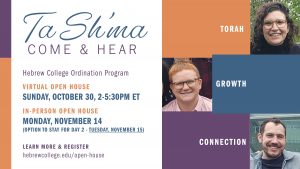
If you or someone you know is considering the rabbinate, please join us or share information about our fall Open Houses (virtual and in-person). Learn more and register here.
Religion News
Religious Music & Entertainment
Previous Post

October 19, 2022
The Best is Yet to Come
Next Post

October 31, 2022 Journeying with Blessings
Browse Our Archives
Select a Category Uncategorized
Select a Month April 2026 March 2026 December 2025 November 2025 October 2025 September 2025 August 2025 July 2025 June 2025 May 2025 April 2025 March 2025 February 2025 January 2025 December 2024 November 2024 October 2024 September 2024 August 2024 July 2024 June 2024 May 2024 April 2024 March 2024 February 2024 January 2024 December 2023 November 2023 October 2023 September 2023 August 2023 July 2023 June 2023 May 2023 April 2023 March 2023 February 2023 January 2023 December 2022 November 2022 October 2022 September 2022 August 2022 July 2022 June 2022 May 2022 April 2022 March 2022 February 2022 January 2022 December 2021 November 2021 October 2021 September 2021 August 2021 July 2021 June 2021 May 2021 April 2021 March 2021 February 2021 January 2021 December 2020 November 2020 October 2020 September 2020 August 2020 July 2020 June 2020 May 2020 April 2020 March 2020 February 2020 January 2020 December 2019 November 2019 October 2019 September 2019 August 2019 July 2019 June 2019 May 2019 April 2019 March 2019 February 2019 January 2019 December 2018 November 2018 October 2018 September 2018 August 2018 July 2018 June 2018 May 2018 April 2018 March 2018 February 2018 January 2018 December 2017 November 2017 October 2017 September 2017 August 2017 July 2017 June 2017
Follow Us!
TAKE THE
Religious Wisdom Quiz
Which book of the Bible contains the story of Gideon?
Select your answer to see how you score.
2 Kings Joshua Judges 1 Samuel
Related posts from Seventy Faces of Torah

The Holy Art of World Building

Parashat Tzav: Keeping the Sacred Fire Burning

Color Theory: What Joseph’s Coat Reveals
TRENDING AT PATHEOS Jewish

Building a Little Ark in a Frightening World
This past Shabbat, we read about Noah. I love this story. The...

Yom Kippur : Is There Always Room for...
Making Room for Forgiveness Every year as Yom Kippur approaches, I find...

This Rosh Hashanah: Can I Find New Meaning?
A Sunrise, a New Year, and a Question On our way to...

Killing Amalek: The Torah’s Most Misunderstood Commandment
Few passages of the Torah have provoked more confusion, polemic, and misuse...

I have never trusted a first draft. I don’t mean that...

Back to School, Back to Reality—and a New...
A New School Year Begins… Back to Reality A new school year...
view all Jewish blogs
Ad-Free & Subscriber Log-In Subscription Support
- About Us
- 2026 Calendar
- Videos
- Podcasts
- Library of World Religions
- Faith In Media Tracker
- Advertise With Us
- Write for Us
- Privacy Policy
- Terms of Service
- Do Not Sell My Data
- Contact Us
- Radiant Digital
- Manage Newsletter Subscriptions
- Unsubscribe From Notifications
- Sitemap
Copyright 2008-2026, Patheos. All rights reserved.
Subscription Support Ad-Free & Subscriber Log-In
Follow Patheos