
BuddhistCatholicContemplativeEvangelicalGeneral ChristianHinduJewishLatter-day SaintMuslimNew VisionsProgressive Christian
Beliefs
- Buddhist
- Catholic
- Contemplative
- Evangelical
- General Christian
- Hindu
- Jewish
- Latter-day Saint
- More Voices
- Muslim
- New Visions
- Pagan
- Progressive Christian
Topics
- Religion News
- Food and Religion
- Sports and Religion
- Religious Art
- Religious Music and Entertainment
- Religious Events
- History and Religion
- Style and Religion
- Politics and Religion
- Women in Religion
- Recreation Outdoors and Religion
- Business Finance and Religion
- Careers Workplace and Religion
- Education and Religion
- Family Parenting and Religion
- Health Fitness and Religion
- Home and Religion
- Relationships and Religion
- Technology and Religion
- Travel and Religion
Columnists
- Buddhist Columnists
- Business Finance and Religion Columnists
- Careers Workplace and Religion Columnists
- Catholic Columnists
- Contemplative Columnists
- Education and Religion Columnists
- Evangelists Columnists
- Family Parenting and Religion Columnists
- General Christian Columnists
- Health Fitness and Religion Columnists
- Hindu Columnists
- History and Religion Columnists
- Home and Religion Columnists
- Jewish Columnists
- More Voices Columnists
- Latter Day Columnists
- Muslim Columnists
- New Visions Columnists
- Nonreligious Columnists
- Pagan Columnists
- Politics and Religion Columnists
- Progressive Columnists
- Recreation Outdoors and Religion Columnists
- Relationships and Religion Columnists
- Religion News Columnists
- Religious Art Columnists
- Religious Events Columnists
- Religious Music and Entertainment Columnists
- Sports and Religion Columnists
- Style and Religion Columnists
- Technology and Religion Columnists
- Travel and Religion Columnists
- Women in Religion Columnists
Resource Library
- 2026 Calendar
- Library of World Religions
- The 100 Most Holy Places on Earth
- Patheos Answers
- Podcasts
- Videos
- Faith Leaders Database
- Anglican Episcopalian
- Bahai
- Baptist
- Buddhism
- Christianity
- Confucianism
- Eastern Orthodoxy
- Hinduism
- Holiness and Pentecostal
- ISKCON
- Islam
- Judaism
- Lutheran
- Methodist
- The Church of Jesus Christ of Latter-day Saints
- New Age
- Paganism
- Presbytarian and Reformed
- Protestantism
- Religion Behind the Scenes
- Roman Catholic
- Scientology
- Shia Islam
- Sikhism
- Sufism
- Sunni Islam
- Taoism
- Zen
- See all religions
Research Tools
 Ad-Free & Subscriber Log-In Subscription Support
Ad-Free & Subscriber Log-In Subscription Support
Follow Patheos 

- Trending:
- Forgiveness
- |
- Marriage
- |
- Consciousness
- |
- Death Penalty
- |
- Election
- |
- Halloween

- Home
- About Hebrew College
- The Rabbinical School of Hebrew College
- The Book of Psalms
- FREE NEWSLETTER
- Home
- Jewish
- The Power of Perspective
The Power of Perspective
Last updated on: May 17, 2022 at 11:19 am by Hebrew College
The Power of Perspective 2022-05-17T11:19:33-04:00 Hebrew College
Patheos Explore the world's faith through different perspectives on religion and spirituality! Patheos has the views of the prevalent religions and spiritualities of the world.
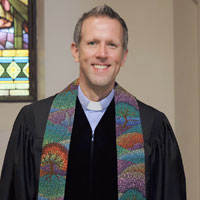 Rev. Tom Reid
Parshat Behar (Leviticus 25:1-26:2)
As I write this, I am sitting on a plane. It should not be surprising, yet it is undeniably powerful how much a shift in our physical location can impact our perspective. The world looks very different from 30,000 feet. As I have read and reread this parsha, my eyes have wandered to the view of the world down below as seen from the small airplane window to my right—my portal looking out on a multicolored quilt of patches of different shapes, sizes, and colors: a dark green field next to a light green field, a brown patch of bare soil, a forest, a stretch of highway extending off into the distance, and a lake or two. It is beautiful and everything looks so small, so distant, so perfect.
Yet, back on the ground, I know that the idyllic view from the sky is not so perfect close up. Were I to be transported 30,000 feet straight down I would see cars whizzing by on the stretch of highway. I would see litter blown by the wind collecting along the edges of the fields. I would see the power plant on the horizon puffing its mix of steam and fossil fuel exhaust in a small but steady stream that slowly, gradually dissipates into the blue sky dotted with clouds. Individually, any one of these things is no big deal. And they are all easily overlooked from the sky. But we humans can’t live at 30,000 feet. We make our homes down on the ground, in the midst of the flaws and challenges that surround us, many of which are the result of our activities and our creative vision for how we think the world should be.
I initially picked this passage to write about because of the powerful message contained within it about the land and our relationship to it. God says to us: “The land is mine; with me you are but aliens and tenants” (Leviticus 25:23). It does not get much clearer than that. And a ride in a plane only helps to reinforce the fact that we are such tiny players in God’s universe. The large-scale impacts we have on the world are visible from 30,000 feet—fields planted with wheat, corn, and soybeans, interstate highways, streetlights, reservoirs. But any one of us in our individual creatureliness is completely invisible from such a height. Who we are as individuals is completely irrelevant. We are practically invisible. What matters is the large-scale impacts we have in the collective. The physical changes we make to the environment are what define us on a planetary scale. Who are we kidding to think that any one of us can actually claim ownership of anything when we are so minuscule from a zoomed-out vantage point? The land is what is visible from on high. And the land is what endures.
I continue to be captivated by the instruction of this passage, and I love that God tells us explicitly that “the land shall observe a Sabbath for the Lord.” How does the land (ha aretz) observe anything? What does that mean? And how are we to define ha aretz anyway? The land is not a single thing. It is not even comprised of a single thing. And land takes on so many different forms and looks so different depending on what land we are talking about and where it is located. Land in the deserts of the Aravah looks very different from the land along what the white European colonial settlers renamed the Charles River that flows near my home in Cambridge, Massachusetts.
Soil can look incredibly different from place to place. Red-orangey soils get their bright coloring from an abundance of iron contained within. My native Midwest is known for its dark, rich topsoil, which has been in high demand for farming for 200 plus years. Much of the soil of New Hampshire to the north of where I live now is shallow with underlying layers of dark grey granite that burst through the surface here and there, giving it the moniker the “Granite State.” Countless rock fragments have broken off over the millennia in various shapes and sizes, scattered here and there or gathered by hand into stacks and rows used to demarcate territory for whatever reason.
Soil is also a microcosm in itself—a tapestry of living things intermixed with organic material, some of which is visible to the naked eye and some microscopic. Soil is never a monolith but rather an intricate ecosystem in miniature. So how can such a multitude of things work together in concert—living creatures and inanimate material—to observe a sabbath for the Lord? I don’t know, but I love how such a question forces us to interrogate and expand our understandings of what sabbath is and what sabbath should do.
Perhaps we have more in common with the soil than we realize. Rest is clearly important to God. And even the land in its complexity and diversity is worthy of it—of a chance to pause, to rest, to rejuvenate. The year of shabbaton, a period of complete and solemn rest, prescribed in Leviticus 25:4 can also serve to remind us tiny humans that the world exists just fine beyond our control. In the year 5782, we happen to find ourselves in one of these shabbaton or shemita years—”a year of release.” Once again, we have a chance to relearn firsthand that life will always continue without us. The land will get along just fine without our tilling, cultivating, and managing. And like the complex, interwoven soil itself, God seeks to remind us that shemita involves the collective whole. The first mention of shemita in Exodus 23:11 begins with ensuring that even the poorest among us and the wild animals have food available to eat. And in Parashat Behar, God reassures us that we too would be able to survive for the necessary time should we actually follow God’s commandment for this shemitayear on behalf of the land. And in the process, perhaps we would be able to internalize the truth that we are never as in control as we would like to think.
In this never-ending season of pandemic, what many of us thought would be a two-week period of quarantine is now going on one-hundred-plus weeks of disruption, disorientation, pivoting, and waiting. We wait for the pandemic to be over. We wait for the threat to be over. Will it ever? And we continue to find ourselves in a conflation of times and tenses. We suffered from too much time when the world shut down. And not enough time when flexible work schedules and hybrid set-ups blurred the lines between work and leisure, between office and home, between sabbath and the rest of time.
In our day to day lives, one year can too easily blend into another. Up close we can get bogged down with the details and miss the beauty of the larger picture. Similar to the view from the airplane window, God reminds us to take a step back once in a while in order to be reminded of that greater world. The earth is beautiful up close and from far away. But we are only a small part of it. The land, of which we are a part, deserves to rest in its totality. God’s world cannot be considered solely in terms of what it produces or how that relates to our survival. It is much more than that, and God demands that we understand and appreciate such a truth. As scripture reminds us, the earth is never ours. It belongs to God alone, who allows us to roam about it as tenants and aliens. We are not the earth. We do not belong to the earth. But we do live on the earth. May we celebrate our place in this beautiful, messy, complicated tapestry. And may we remember to make some time and space with the hope of gaining from even a slight change of perspective.
Rev. Tom Reid is the Associate Director of the Miller Center for Interreligious Learning & Leadership of Hebrew College. He is an ordained minister in the Presbyterian Church (U.S.A.) and serves as pastor of Newton Presbyterian Church in Newton Corner. Before changing careers to ordained ministry, Tom spent over ten years working in a variety of fields including: clean energy and innovation in Boston, environmental and green building consulting in Boston and Dubai, and business education in Madrid, Spain. Tom is a proud alumnus of the University of Kansas, holding a BA in Environmental Studies, Latin American Studies, and Spanish. He also holds an MA in Contemporary European Politics, Policy, and Society funded by a Fulbright grant to the European Union and an MDiv from Boston University School of Theology with a certificate in Religion and Conflict Transformation.
Previous Post

May 10, 2022
The Power of Exclusion
Next Post
May 23, 2022 I’d Like to Exchange these Curses for Blessing, Please?
Browse Our Archives
Select a Category Uncategorized
Select a Month April 2026 March 2026 December 2025 November 2025 October 2025 September 2025 August 2025 July 2025 June 2025 May 2025 April 2025 March 2025 February 2025 January 2025 December 2024 November 2024 October 2024 September 2024 August 2024 July 2024 June 2024 May 2024 April 2024 March 2024 February 2024 January 2024 December 2023 November 2023 October 2023 September 2023 August 2023 July 2023 June 2023 May 2023 April 2023 March 2023 February 2023 January 2023 December 2022 November 2022 October 2022 September 2022 August 2022 July 2022 June 2022 May 2022 April 2022 March 2022 February 2022 January 2022 December 2021 November 2021 October 2021 September 2021 August 2021 July 2021 June 2021 May 2021 April 2021 March 2021 February 2021 January 2021 December 2020 November 2020 October 2020 September 2020 August 2020 July 2020 June 2020 May 2020 April 2020 March 2020 February 2020 January 2020 December 2019 November 2019 October 2019 September 2019 August 2019 July 2019 June 2019 May 2019 April 2019 March 2019 February 2019 January 2019 December 2018 November 2018 October 2018 September 2018 August 2018 July 2018 June 2018 May 2018 April 2018 March 2018 February 2018 January 2018 December 2017 November 2017 October 2017 September 2017 August 2017 July 2017 June 2017
Follow Us!
TAKE THE
Religious Wisdom Quiz
Who prayed in a den of lions?
Select your answer to see how you score.
Noah David Elijah Daniel
Related posts from Seventy Faces of Torah

The Holy Art of World Building

Parashat Tzav: Keeping the Sacred Fire Burning

Color Theory: What Joseph’s Coat Reveals
TRENDING AT PATHEOS Jewish

Yom Kippur : Is There Always Room for...
Making Room for Forgiveness Every year as Yom Kippur approaches, I find...

This Rosh Hashanah: Can I Find New Meaning?
A Sunrise, a New Year, and a Question On our way to...

Killing Amalek: The Torah’s Most Misunderstood Commandment
Few passages of the Torah have provoked more confusion, polemic, and misuse...

I have never trusted a first draft. I don’t mean that...

Back to School, Back to Reality—and a New...
A New School Year Begins… Back to Reality A new school year...

Out-Crowleying Crowley: The Emptiness of the O9A
O9A Neo-Crowley Racial Cosplay and Edgelord Atrocitism Aleister Crowley did not create...
view all Jewish blogs
Ad-Free & Subscriber Log-In Subscription Support
- About Us
- 2026 Calendar
- Videos
- Podcasts
- Library of World Religions
- Faith In Media Tracker
- Advertise With Us
- Write for Us
- Privacy Policy
- Terms of Service
- Do Not Sell My Data
- Contact Us
- Radiant Digital
- Manage Newsletter Subscriptions
- Unsubscribe From Notifications
- Sitemap
Copyright 2008-2026, Patheos. All rights reserved.
Subscription Support Ad-Free & Subscriber Log-In
Follow Patheos