
BuddhistCatholicContemplativeEvangelicalGeneral ChristianHinduJewishLatter-day SaintMuslimNew VisionsProgressive Christian
Beliefs
- Buddhist
- Catholic
- Contemplative
- Evangelical
- General Christian
- Hindu
- Jewish
- Latter-day Saint
- More Voices
- Muslim
- New Visions
- Pagan
- Progressive Christian
Topics
- Religion News
- Food and Religion
- Sports and Religion
- Religious Art
- Religious Music and Entertainment
- Religious Events
- History and Religion
- Style and Religion
- Politics and Religion
- Women in Religion
- Recreation Outdoors and Religion
- Business Finance and Religion
- Careers Workplace and Religion
- Education and Religion
- Family Parenting and Religion
- Health Fitness and Religion
- Home and Religion
- Relationships and Religion
- Technology and Religion
- Travel and Religion
Columnists
- Buddhist Columnists
- Business Finance and Religion Columnists
- Careers Workplace and Religion Columnists
- Catholic Columnists
- Contemplative Columnists
- Education and Religion Columnists
- Evangelists Columnists
- Family Parenting and Religion Columnists
- General Christian Columnists
- Health Fitness and Religion Columnists
- Hindu Columnists
- History and Religion Columnists
- Home and Religion Columnists
- Jewish Columnists
- More Voices Columnists
- Latter Day Columnists
- Muslim Columnists
- New Visions Columnists
- Nonreligious Columnists
- Pagan Columnists
- Politics and Religion Columnists
- Progressive Columnists
- Recreation Outdoors and Religion Columnists
- Relationships and Religion Columnists
- Religion News Columnists
- Religious Art Columnists
- Religious Events Columnists
- Religious Music and Entertainment Columnists
- Sports and Religion Columnists
- Style and Religion Columnists
- Technology and Religion Columnists
- Travel and Religion Columnists
- Women in Religion Columnists
Resource Library
- 2026 Calendar
- Library of World Religions
- The 100 Most Holy Places on Earth
- Patheos Answers
- Podcasts
- Videos
- Faith Leaders Database
- Anglican Episcopalian
- Bahai
- Baptist
- Buddhism
- Christianity
- Confucianism
- Eastern Orthodoxy
- Hinduism
- Holiness and Pentecostal
- ISKCON
- Islam
- Judaism
- Lutheran
- Methodist
- The Church of Jesus Christ of Latter-day Saints
- New Age
- Paganism
- Presbytarian and Reformed
- Protestantism
- Religion Behind the Scenes
- Roman Catholic
- Scientology
- Shia Islam
- Sikhism
- Sufism
- Sunni Islam
- Taoism
- Zen
- See all religions
Research Tools
 Ad-Free & Subscriber Log-In Subscription Support
Ad-Free & Subscriber Log-In Subscription Support
Follow Patheos 

- Trending:
- Forgiveness
- |
- Marriage
- |
- Consciousness
- |
- Death Penalty
- |
- Election
- |
- Halloween

- Home
- About Hebrew College
- The Rabbinical School of Hebrew College
- The Book of Psalms
- FREE NEWSLETTER
- Home
- Jewish
- The Blessing of Asking for Help
The Blessing of Asking for Help
Last updated on: March 29, 2022 at 9:55 am by Hebrew College
The Blessing of Asking for Help 2022-03-29T09:55:07-04:00 Hebrew College
Patheos Explore the world's faith through different perspectives on religion and spirituality! Patheos has the views of the prevalent religions and spiritualities of the world.
 Parashat Tazria (Leviticus 12:1-13:59)
By Heather Renetzky
Parashat Tazria, with its long and dry list of details about leprosy, has never felt so relevant. It’s as if some of this parasha’s questions were taken straight out of a CDC press conference. When is it important to isolate yourself from others for health reasons? In what situations can we be more lenient? Is illness transmittable through surfaces?
The Etz Chayim commentary on the parasha notes, “Perhaps no concept in the Torah is less accessible to the modern reader than the notion of tumah (ritual impurity).” I had to laugh when I read this. As a modern reader living in a world of Covid tests, Covid exposures, and just Covid in general, the anxiety around impurity, disease, and contamination feels all too familiar.
Admittedly, leprosy is a whole different ball game from a modern pandemic. Although a certain amount of expertise is required to discern what is and isn’t permissible, a notable difference between the world of Parashat Tazria and our world is who is considered the expert in medical matters. For skin-disease stricken Israelites, Aaron was their Anthony Fauci. (Please G!d, may people never again ask religious figures to diagnose their dermatitis). In contrast to the laws around menstrual tumah, the instructions for leprosy weren’t given to everyone; they just went to the priests. Leviticus 13:1 states:
וַיְדַבֵּר יְהֹוָה אֶל־מֹשֶׁה וְאֶל־אַהֲרֹן לֵאמֹר׃
God spoke to Moses and to Aaron.
Ibn Ezra points out that the laws of tumah around leprosy are communicated directly to Aaron because he is in charge of determining what to do about human maladies. I am struck by the weight of Aaron’s responsibility. The long list of instructions about leprosy seems short, when one considers that those instructions were all the priests had to hold onto in deciding whether or not to separate someone from the community. (By contrast, when making Covid decisions for my community, I have resources to turn to!)
Why put so much pressure on Aaron, and why give the priests so much power? Why not empower the people to make these decisions?
BT Sota 5a offers some indication for the “why” behind concentrating this information. Through a close-reading of the instructions regarding leprosy, Rabbi Zeira makes the claim that humility paves the path to healing. He subtly suggests that there are times when we should know the limitations of our own knowledge, when perhaps it is best that we look to someone else for information.
Specifically, Rabbi Zeira points out that when a person is the subject of an instruction there is no mention of healing (e.g. “When a person has on the skin of the body a swelling, a rash…it shall be reported…” in Lev. 13:2). However, when the focus is on the skin, healing is mentioned (e.g. “When an inflammation appears on the skin of one’s body and it heals…”). Using this distinction, Rabbi Zeira makes the claim that “one who sees [themselves] as flesh will be cured, but one who holds [themselves] in high regard will not be cured.” In the scary uncertainty of this experience of illness, the person who sees themselves in high regard, who doesn’t look outward or upward for help, will not improve.
I can imagine the person who suddenly sees these scary, strange skin spots, who recognizes their own fragility and the limitations of their knowledge, and goes seeking answers. They don’t want a democratic decision-making process. They want a clear delineation of next steps. Sometimes trying to turn to “Dr. Google” and your best friend and your “Facebook hivemind” yields less clarity and more tzures (trouble).
Although a wildly different scenario, I am reminded of an email I sent to a mentor while facing a difficult decision. In my harried haze of overwhelm and uncertainty, I wrote, “I’ve already driven myself crazy thinking about whether or not to do it. So, I’m less looking for advice and more looking for you to tell me what to do.”
In my intense state of not knowing, I needed a wise, knowing figure. I needed someone who held more knowledge than me and could hold me through the process of deciding. I needed to know that there was someone out there who knew more, and who could help.
As seekers, we have to learn to ask for help. We need to learn to reach out, even in our most vulnerable moments. Commenting on Leviticus 13:45, BT Niddah 66a teaches us that we must share our pain with the masses, so that the masses can pray on our behalf. In the anguish of indecision, I found comfort in reaching out to someone wiser. Likewise, in their physical pain, maybe the person with leprosy found comfort in not only being able to, but being obligated to turn to a higher authority.
Rather than reading the concentration of leprous instructions as disempowering, we can read it as empowering. Appointing leaders or experts gives us permission to ask for help. Suddenly, we’re not being intrusive with our questions or our stress. We’re supposed to admit that we can’t function alone! We’re supposed to admit that we don’t know. We’re supposed to say, “I’m looking for you to tell me what to do” or “Please bring me chicken soup,” or “Help me get through this.” To paraphrase Rabbi Zeira, as fallible humans and people of mere “flesh,” acknowledging our limitations is the best way to heal.
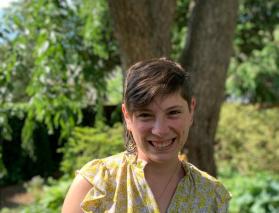
Heather Renetzky is a third-year Hebrew College rabbinical student. She is a firm believer in the healing power of deep listening, trees, and homemade chocolate chip cookies.
Previous Post
March 22, 2022
The Test of the Eighth Day
Next Post

April 5, 2022 Doubt and Redemption
Browse Our Archives
Select a Category Uncategorized
Select a Month April 2026 March 2026 December 2025 November 2025 October 2025 September 2025 August 2025 July 2025 June 2025 May 2025 April 2025 March 2025 February 2025 January 2025 December 2024 November 2024 October 2024 September 2024 August 2024 July 2024 June 2024 May 2024 April 2024 March 2024 February 2024 January 2024 December 2023 November 2023 October 2023 September 2023 August 2023 July 2023 June 2023 May 2023 April 2023 March 2023 February 2023 January 2023 December 2022 November 2022 October 2022 September 2022 August 2022 July 2022 June 2022 May 2022 April 2022 March 2022 February 2022 January 2022 December 2021 November 2021 October 2021 September 2021 August 2021 July 2021 June 2021 May 2021 April 2021 March 2021 February 2021 January 2021 December 2020 November 2020 October 2020 September 2020 August 2020 July 2020 June 2020 May 2020 April 2020 March 2020 February 2020 January 2020 December 2019 November 2019 October 2019 September 2019 August 2019 July 2019 June 2019 May 2019 April 2019 March 2019 February 2019 January 2019 December 2018 November 2018 October 2018 September 2018 August 2018 July 2018 June 2018 May 2018 April 2018 March 2018 February 2018 January 2018 December 2017 November 2017 October 2017 September 2017 August 2017 July 2017 June 2017
Follow Us!
TAKE THE
Religious Wisdom Quiz
What famous basilica is in Vatican City?
Select your answer to see how you score.
St. Peter's Basilica Notre Dame St. Basil's St. Paul's
Related posts from Seventy Faces of Torah

The Holy Art of World Building

Parashat Tzav: Keeping the Sacred Fire Burning

Color Theory: What Joseph’s Coat Reveals
TRENDING AT PATHEOS Jewish

Yom Kippur : Is There Always Room for...
Making Room for Forgiveness Every year as Yom Kippur approaches, I find...

This Rosh Hashanah: Can I Find New Meaning?
A Sunrise, a New Year, and a Question On our way to...

Killing Amalek: The Torah’s Most Misunderstood Commandment
Few passages of the Torah have provoked more confusion, polemic, and misuse...

I have never trusted a first draft. I don’t mean that...

Back to School, Back to Reality—and a New...
A New School Year Begins… Back to Reality A new school year...

Out-Crowleying Crowley: The Emptiness of the O9A
O9A Neo-Crowley Racial Cosplay and Edgelord Atrocitism Aleister Crowley did not create...
view all Jewish blogs
Ad-Free & Subscriber Log-In Subscription Support
- About Us
- 2026 Calendar
- Videos
- Podcasts
- Library of World Religions
- Faith In Media Tracker
- Advertise With Us
- Write for Us
- Privacy Policy
- Terms of Service
- Do Not Sell My Data
- Contact Us
- Radiant Digital
- Manage Newsletter Subscriptions
- Unsubscribe From Notifications
- Sitemap
Copyright 2008-2026, Patheos. All rights reserved.
Subscription Support Ad-Free & Subscriber Log-In
Follow Patheos