
BuddhistCatholicContemplativeEvangelicalGeneral ChristianHinduJewishLatter-day SaintMuslimNew VisionsProgressive Christian
Beliefs
- Buddhist
- Catholic
- Contemplative
- Evangelical
- General Christian
- Hindu
- Jewish
- Latter-day Saint
- More Voices
- Muslim
- New Visions
- Pagan
- Progressive Christian
Topics
- Religion News
- Food and Religion
- Sports and Religion
- Religious Art
- Religious Music and Entertainment
- Religious Events
- History and Religion
- Style and Religion
- Politics and Religion
- Women in Religion
- Recreation Outdoors and Religion
- Business Finance and Religion
- Careers Workplace and Religion
- Education and Religion
- Family Parenting and Religion
- Health Fitness and Religion
- Home and Religion
- Relationships and Religion
- Technology and Religion
- Travel and Religion
Columnists
- Buddhist Columnists
- Business Finance and Religion Columnists
- Careers Workplace and Religion Columnists
- Catholic Columnists
- Contemplative Columnists
- Education and Religion Columnists
- Evangelists Columnists
- Family Parenting and Religion Columnists
- General Christian Columnists
- Health Fitness and Religion Columnists
- Hindu Columnists
- History and Religion Columnists
- Home and Religion Columnists
- Jewish Columnists
- More Voices Columnists
- Latter Day Columnists
- Muslim Columnists
- New Visions Columnists
- Nonreligious Columnists
- Pagan Columnists
- Politics and Religion Columnists
- Progressive Columnists
- Recreation Outdoors and Religion Columnists
- Relationships and Religion Columnists
- Religion News Columnists
- Religious Art Columnists
- Religious Events Columnists
- Religious Music and Entertainment Columnists
- Sports and Religion Columnists
- Style and Religion Columnists
- Technology and Religion Columnists
- Travel and Religion Columnists
- Women in Religion Columnists
Resource Library
- 2026 Calendar
- Library of World Religions
- The 100 Most Holy Places on Earth
- Patheos Answers
- Podcasts
- Videos
- Faith Leaders Database
- Anglican Episcopalian
- Bahai
- Baptist
- Buddhism
- Christianity
- Confucianism
- Eastern Orthodoxy
- Hinduism
- Holiness and Pentecostal
- ISKCON
- Islam
- Judaism
- Lutheran
- Methodist
- The Church of Jesus Christ of Latter-day Saints
- New Age
- Paganism
- Presbytarian and Reformed
- Protestantism
- Religion Behind the Scenes
- Roman Catholic
- Scientology
- Shia Islam
- Sikhism
- Sufism
- Sunni Islam
- Taoism
- Zen
- See all religions
Research Tools
 Ad-Free & Subscriber Log-In Subscription Support
Ad-Free & Subscriber Log-In Subscription Support
Follow Patheos 

- Trending:
- Forgiveness
- |
- Marriage
- |
- Consciousness
- |
- Death Penalty
- |
- Election
- |
- Halloween

- Home
- About Hebrew College
- The Rabbinical School of Hebrew College
- The Book of Psalms
- FREE NEWSLETTER
- Home
- Jewish
- Beautiful & Broken: Abram’s Vision
Beautiful & Broken: Abram’s Vision
Last updated on: October 5, 2021 at 12:17 pm by Hebrew College
Beautiful & Broken: Abram’s Vision 2021-10-05T12:17:10-04:00 Hebrew College
Patheos Explore the world's faith through different perspectives on religion and spirituality! Patheos has the views of the prevalent religions and spiritualities of the world.
Parashat Noah (Genesis 6:9–11:32)
By Rabbi Or Rose | October 05, 2021
This week’s Torah portion includes two great dramas: the Flood story (chapters 6-9) and the tale of the Tower of Babel (chapter 11). In the closing lines of the reading, we are briefly introduced to the great patriarch Abraham (still known as Abram at this point). This introduction, however, is terse and understated, especially considering the drama of the two earlier narratives. We learn nothing about Abram’s character or achievements from these brief lines (Genesis 11:27-32).
Chapter 12, which also serves as the opening of the next Torah portion (Lekh Lekha) then begins with one of the most well-known verses in the entire Hebrew Bible:
YHWH said to Abram,
“Go forth from your native land
and from your father’s house
to the land that I will show you….”
—Genesis 12:1
God continues by promising Abram that God will make him and his offspring a “great nation” and that he will be a “blessing.” And thus begins the unfolding story of the life of this legendary sojourner; his family; the Israelite people; and the other nations that issue from this man.
For centuries, biblical commentators have asked why God chose Abram to be the father of nations. What distinguished this individual from others of his generation (or any generation for that matter)? What had he done in the decades before the reader first meets him at the end of Genesis 11?
One response I find particularly interesting comes from the midrashic collection Genesis Rabbah (likely composed between 300 and 500 CE, with some later additions). Commenting on Genesis 12:1, the brief text reads as follows:
To what can this [God’s call to Abram] be compared?
To a man who was traveling from place to place
when he saw a palace on fire (birah doleket).
He wondered, “Is it possible that the palace has no master?”
The master of the palace looked out and said, “I am the master of the palace.”
Similarly, Abraham Our Father said, “Is it possible that the world lacks a master?”
God looked out and said to him, “I am the Master, Sovereign of the Universe.”
—Genesis Rabbah 39:1
Abram is identified in this text (and others like it) as a seeker, captivated by the grandeur and mystery of the world, including the realities of pain and suffering. There were times when it felt to him like the world was ablaze and in danger of being consumed. In such moments, the patriarch wondered, “Is there a God? If so, where is the Divine?” In response to Abram’s noble search, God responded, “I am the Ruler, Sovereign of the Universe.” God spoke from within the fire, announcing His presence to this attentive and sensitive explorer.
Interestingly, centuries later, the theologian and activist, Rabbi Abraham Joshua Heschel (d. 1972), read this midrash in a much more positive light. He pointed out that the Hebrew term “birah doleket” can be read not only as a “palace ablaze,” but as a palace “full of light (God in Search of Man, pp. 112-113, p. 367). Meaning, Abram was indeed a seeker captivated by the grandeur and mystery of life, but was enchanted by the beauty of the world. “Is it possible that this beautiful, light-filled world lacks a ruler?”
I think both readings are crucial in our beautiful and broken world. Life, as we know all too well from recent global events, involves too much pain and suffering—smoke and fire—some of it caused by human beings (with the free will to make good and bad decisions), and some of it woven into the very fabric of being. But it also includes breathtaking beauty. And as our midrash suggests, God is present in all of it.
Notice that in the rabbinic allegory the master of the burning palace announces his presence but does not put out the fire. I do not read this as a statement about God’s inattention to or inaction in the world but as a divine call—to Abram and to all who follow in his footsteps—to serve as partners (shutafim in rabbinic parlance) in the ongoing project of fashioning a more just, compassionate, and sustainable world (a theological-ethical position Rabbi Heschel argued for and modelled so powerfully).
Our midrash teaches that God’s call to Abram in Genesis 12:1 comes in response to the patriarch’s search and call, stimulated by his awareness of both the brokenness and beauty that inhere in God’s creation. May we have the cognizance and courage to respond to this ongoing divine call in our place and time.
Rabbi Or Rose is the founding director of the Betty Ann Greenbaum Miller Center for Interreligious Learning & Leadership of Hebrew College.
Want to learn more about our rabbinical program?
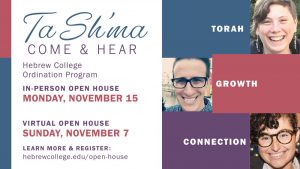 Join us for one of our November Open Houses. Learn more and register here.
Previous Post

September 27, 2021
Difficult Beginnings
Next Post

October 12, 2021 Life in a Spiral
Browse Our Archives
Select a Category Uncategorized
Select a Month April 2026 March 2026 December 2025 November 2025 October 2025 September 2025 August 2025 July 2025 June 2025 May 2025 April 2025 March 2025 February 2025 January 2025 December 2024 November 2024 October 2024 September 2024 August 2024 July 2024 June 2024 May 2024 April 2024 March 2024 February 2024 January 2024 December 2023 November 2023 October 2023 September 2023 August 2023 July 2023 June 2023 May 2023 April 2023 March 2023 February 2023 January 2023 December 2022 November 2022 October 2022 September 2022 August 2022 July 2022 June 2022 May 2022 April 2022 March 2022 February 2022 January 2022 December 2021 November 2021 October 2021 September 2021 August 2021 July 2021 June 2021 May 2021 April 2021 March 2021 February 2021 January 2021 December 2020 November 2020 October 2020 September 2020 August 2020 July 2020 June 2020 May 2020 April 2020 March 2020 February 2020 January 2020 December 2019 November 2019 October 2019 September 2019 August 2019 July 2019 June 2019 May 2019 April 2019 March 2019 February 2019 January 2019 December 2018 November 2018 October 2018 September 2018 August 2018 July 2018 June 2018 May 2018 April 2018 March 2018 February 2018 January 2018 December 2017 November 2017 October 2017 September 2017 August 2017 July 2017 June 2017
Follow Us!
TAKE THE
Religious Wisdom Quiz
What is the first book of the Bible?
Select your answer to see how you score.
Psalms Exodus Matthew Genesis
Related posts from Seventy Faces of Torah

The Holy Art of World Building

Parashat Tzav: Keeping the Sacred Fire Burning

Color Theory: What Joseph’s Coat Reveals
TRENDING AT PATHEOS Jewish

Yom Kippur : Is There Always Room for...
Making Room for Forgiveness Every year as Yom Kippur approaches, I find...

This Rosh Hashanah: Can I Find New Meaning?
A Sunrise, a New Year, and a Question On our way to...

Killing Amalek: The Torah’s Most Misunderstood Commandment
Few passages of the Torah have provoked more confusion, polemic, and misuse...

I have never trusted a first draft. I don’t mean that...

Back to School, Back to Reality—and a New...
A New School Year Begins… Back to Reality A new school year...

Out-Crowleying Crowley: The Emptiness of the O9A
O9A Neo-Crowley Racial Cosplay and Edgelord Atrocitism Aleister Crowley did not create...
view all Jewish blogs
Ad-Free & Subscriber Log-In Subscription Support
- About Us
- 2026 Calendar
- Videos
- Podcasts
- Library of World Religions
- Faith In Media Tracker
- Advertise With Us
- Write for Us
- Privacy Policy
- Terms of Service
- Do Not Sell My Data
- Contact Us
- Radiant Digital
- Manage Newsletter Subscriptions
- Unsubscribe From Notifications
- Sitemap
Copyright 2008-2026, Patheos. All rights reserved.
Subscription Support Ad-Free & Subscriber Log-In
Follow Patheos