
BuddhistCatholicContemplativeEvangelicalGeneral ChristianHinduJewishLatter-day SaintMuslimNew VisionsProgressive Christian
Beliefs
- Buddhist
- Catholic
- Contemplative
- Evangelical
- General Christian
- Hindu
- Jewish
- Latter-day Saint
- More Voices
- Muslim
- New Visions
- Pagan
- Progressive Christian
Topics
- Religion News
- Food and Religion
- Sports and Religion
- Religious Art
- Religious Music and Entertainment
- Religious Events
- History and Religion
- Style and Religion
- Politics and Religion
- Women in Religion
- Recreation Outdoors and Religion
- Business Finance and Religion
- Careers Workplace and Religion
- Education and Religion
- Family Parenting and Religion
- Health Fitness and Religion
- Home and Religion
- Relationships and Religion
- Technology and Religion
- Travel and Religion
Columnists
- Buddhist Columnists
- Business Finance and Religion Columnists
- Careers Workplace and Religion Columnists
- Catholic Columnists
- Contemplative Columnists
- Education and Religion Columnists
- Evangelists Columnists
- Family Parenting and Religion Columnists
- General Christian Columnists
- Health Fitness and Religion Columnists
- Hindu Columnists
- History and Religion Columnists
- Home and Religion Columnists
- Jewish Columnists
- More Voices Columnists
- Latter Day Columnists
- Muslim Columnists
- New Visions Columnists
- Nonreligious Columnists
- Pagan Columnists
- Politics and Religion Columnists
- Progressive Columnists
- Recreation Outdoors and Religion Columnists
- Relationships and Religion Columnists
- Religion News Columnists
- Religious Art Columnists
- Religious Events Columnists
- Religious Music and Entertainment Columnists
- Sports and Religion Columnists
- Style and Religion Columnists
- Technology and Religion Columnists
- Travel and Religion Columnists
- Women in Religion Columnists
Resource Library
- 2026 Calendar
- Library of World Religions
- The 100 Most Holy Places on Earth
- Patheos Answers
- Podcasts
- Videos
- Faith Leaders Database
- Anglican Episcopalian
- Bahai
- Baptist
- Buddhism
- Christianity
- Confucianism
- Eastern Orthodoxy
- Hinduism
- Holiness and Pentecostal
- ISKCON
- Islam
- Judaism
- Lutheran
- Methodist
- The Church of Jesus Christ of Latter-day Saints
- New Age
- Paganism
- Presbytarian and Reformed
- Protestantism
- Religion Behind the Scenes
- Roman Catholic
- Scientology
- Shia Islam
- Sikhism
- Sufism
- Sunni Islam
- Taoism
- Zen
- See all religions
Research Tools
 Ad-Free & Subscriber Log-In Subscription Support
Ad-Free & Subscriber Log-In Subscription Support
Follow Patheos 

- Trending:
- Forgiveness
- |
- Marriage
- |
- Consciousness
- |
- Death Penalty
- |
- Election
- |
- Halloween

- Home
- About Hebrew College
- The Rabbinical School of Hebrew College
- The Book of Psalms
- FREE NEWSLETTER
- Home
- Jewish
- The Walls That Surround Us
The Walls That Surround Us
Last updated on: October 1, 2020 at 10:31 am by Hebrew College
The Walls That Surround Us 2020-10-01T10:31:08-04:00 Hebrew College
Patheos Explore the world's faith through different perspectives on religion and spirituality! Patheos has the views of the prevalent religions and spiritualities of the world.
 Sukkot
By Rabbi Avi Strausberg | Sep 30, 2020
I find that there are days when I don’t leave the house. And some days, before I settle into another day of working from home, of navigating another eight-hour day of my five-year-old’s virtual kindergarten, I step outside and just take a breath, surveying our urban DC street from our front door—the early morning runners, the dog walkers, the garbage trucks, as they pass by. The rest of what I know of the goings on of the outside world comes in the form of alerts on my phone and scrolled articles in stolen moments of downtime. At least, there’s that breath, a brief moment of connection with the outside world before I step back inside.
Many of us have become very good at following God’s instruction for the observance of the seventh day: “Let everyone remain where he is: let no one leave his place on the seventh day.” (Exodus 16:29) After six months of not leaving our places, living in a perpetual Shabbat where our personal tehum, our boundaries have shrunk, extending little beyond the four walls of our dwelling places, Sukkot demands something different of us. Sukkot asks us to leave our homes behind. We’re instructed in the Book of Exodus, “You shall live in sukkot seven days; all citizens in Israel shall live in sukkot.” (Exodus 23:42) We’re to leave behind the security of our homes for these temporary homes, homes that exist beyond our permanent walls, homes that are surrounded by the world, or rather exposed to the world on all sides.
After half a year of closing our doors, protecting ourselves and others behind our walls, Sukkot demands that we throw open the proverbial doors of our sukkah and invite people in to eat with us. In the Mishneh Torah, Rambam teaches that on festival holidays like Sukkot, we not only have an obligation to feed “the stranger, the orphan, and the widow,” as commanded by Deuteronomy, but “one who locks the doors of their house, eating and drinking with their children and spouse alone . . . is not participating in the joy of God’s commandments.” (Mishneh Torah Hilchot Yom Tov 6:18) To observe Sukkot, the holiday of ushpizin or invited guests, without guests, is to not truly celebrate Sukkot at all.
So how do we do this? How do we leave behind our homes during a period in which many of us have been confined to our homes for the past six months? How do we step beyond the security of our four walls in which we control the germs that come in and out into the great outdoors, a space that exists beyond our control? And, what lessons might we learn from our eight-day dwelling in sukkot, in which we simultaneously construct walls and roofs to protect us while insisting that these same boundaries must be open to the world around us?
There are all sorts of requirements for the walls with which we are to construct our sukkot. The Mishna teaches that the walls must be walls that are tall enough that we recognize them as actual walls—about 32 inches; but, in fact, not so tall that we forget that we are standing within a wall structured—no taller than 30 feet. (Mishnah Sukkah 1:1) From the Gemara, Rabbi Meir teaches us that elephants are inadvisable as walls as they might run off, leaving us short a wall, and therefore, short a structure. And from Rabbi Akiva, we learn that a sukkah must have walls that are substantial enough to withstand a typical land wind—no thank you to sheets that blow in the wind (Massekhet Sukkah 23a) All of these halakhot are coming to teach us that our sukkot, while temporary by definition, must have walls that we can rely on to remain standing—walls that will withstand the elements, that will neither run off or, God forbid, die—walls that we can count on.
And yet, our sukkot, unlike our permanent dwelling spaces, must be permeable; they must be exposed to and, in fact, constructed from the very world around them. While the walls must be reliable walls, our schach, the coverings for our roofs, must come from materials that once grew in the soil. (Mishnah Sukkah 1:4) While you can’t have your sun be more than your shade, meaning your roof can’t be too open, when one thinks of a sukkah, inevitably one thinks of a structure that is simultaneously exposed yet protected, open yet closed. (Mishnah Sukkah 2:2) If you make your sukkah too solid, too permanent, too closed to the outside world, it is no longer a sukkah. It’s no longer a fit dwelling place for the holiday.
Sukkot presents a model of home that both offers protection to those inside without closing them off to the world around them. Our sukkot are an in-between ground; when we sit in them, we are, at once, secure in our homes, while a part of the world around us.
As I write this from the security of my own home, with a sense of disconnectedness from the friends I once saw regularly, the community with which I davened, the neighbors and extended neighbors in the midst of their own crises, I wonder, “What might Sukkot teach us about the return to our permanent dwelling spaces? How might we build homes with walls that will protect us and keep us safe while still maintaining a sense of openness to the lives that continue just outside? How might we protect ourselves and others from this virus without closing ourselves off emotionally and spiritually to the needs of our community? How might we bring our sukkot with us after the holiday rather than leave them behind?”
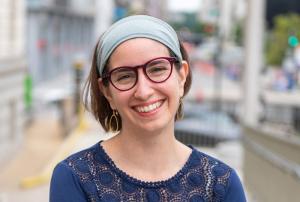
Rabbi Avi Strausberg is Director of National Learning Initiatives at Hadar in Washington, D.C. She was ordained in 2015 by Hebrew College. Learn more about Hebrew College’s rabbinical and cantorial programs at our virtual Open House, Ta Sh’ma (Come & Hear) on November 16, 2020.

Previous Post

September 23, 2020
Moses and Musical Theater
Next Post

October 7, 2020 Praying for Rain
Browse Our Archives
Select a Category Uncategorized
Select a Month April 2026 March 2026 December 2025 November 2025 October 2025 September 2025 August 2025 July 2025 June 2025 May 2025 April 2025 March 2025 February 2025 January 2025 December 2024 November 2024 October 2024 September 2024 August 2024 July 2024 June 2024 May 2024 April 2024 March 2024 February 2024 January 2024 December 2023 November 2023 October 2023 September 2023 August 2023 July 2023 June 2023 May 2023 April 2023 March 2023 February 2023 January 2023 December 2022 November 2022 October 2022 September 2022 August 2022 July 2022 June 2022 May 2022 April 2022 March 2022 February 2022 January 2022 December 2021 November 2021 October 2021 September 2021 August 2021 July 2021 June 2021 May 2021 April 2021 March 2021 February 2021 January 2021 December 2020 November 2020 October 2020 September 2020 August 2020 July 2020 June 2020 May 2020 April 2020 March 2020 February 2020 January 2020 December 2019 November 2019 October 2019 September 2019 August 2019 July 2019 June 2019 May 2019 April 2019 March 2019 February 2019 January 2019 December 2018 November 2018 October 2018 September 2018 August 2018 July 2018 June 2018 May 2018 April 2018 March 2018 February 2018 January 2018 December 2017 November 2017 October 2017 September 2017 August 2017 July 2017 June 2017
Follow Us!
TAKE THE
Religious Wisdom Quiz
What natural event accompanied God's descent on Sinai?
Select your answer to see how you score.
Drought Windstorm Thunder and lightning Earthquake
Related posts from Seventy Faces of Torah

The Holy Art of World Building

Parashat Tzav: Keeping the Sacred Fire Burning

Color Theory: What Joseph’s Coat Reveals
TRENDING AT PATHEOS Jewish

Building a Little Ark in a Frightening World
This past Shabbat, we read about Noah. I love this story. The...

Yom Kippur : Is There Always Room for...
Making Room for Forgiveness Every year as Yom Kippur approaches, I find...

This Rosh Hashanah: Can I Find New Meaning?
A Sunrise, a New Year, and a Question On our way to...

Killing Amalek: The Torah’s Most Misunderstood Commandment
Few passages of the Torah have provoked more confusion, polemic, and misuse...

I have never trusted a first draft. I don’t mean that...

Back to School, Back to Reality—and a New...
A New School Year Begins… Back to Reality A new school year...
view all Jewish blogs
Ad-Free & Subscriber Log-In Subscription Support
- About Us
- 2026 Calendar
- Videos
- Podcasts
- Library of World Religions
- Faith In Media Tracker
- Advertise With Us
- Write for Us
- Privacy Policy
- Terms of Service
- Do Not Sell My Data
- Contact Us
- Radiant Digital
- Manage Newsletter Subscriptions
- Unsubscribe From Notifications
- Sitemap
Copyright 2008-2026, Patheos. All rights reserved.
Subscription Support Ad-Free & Subscriber Log-In
Follow Patheos