
BuddhistCatholicContemplativeEvangelicalGeneral ChristianHinduJewishLatter-day SaintMuslimNew VisionsProgressive Christian
Beliefs
- Buddhist
- Catholic
- Contemplative
- Evangelical
- General Christian
- Hindu
- Jewish
- Latter-day Saint
- More Voices
- Muslim
- New Visions
- Pagan
- Progressive Christian
Topics
- Religion News
- Food and Religion
- Sports and Religion
- Religious Art
- Religious Music and Entertainment
- Religious Events
- History and Religion
- Style and Religion
- Politics and Religion
- Women in Religion
- Recreation Outdoors and Religion
- Business Finance and Religion
- Careers Workplace and Religion
- Education and Religion
- Family Parenting and Religion
- Health Fitness and Religion
- Home and Religion
- Relationships and Religion
- Technology and Religion
- Travel and Religion
Columnists
- Buddhist Columnists
- Business Finance and Religion Columnists
- Careers Workplace and Religion Columnists
- Catholic Columnists
- Contemplative Columnists
- Education and Religion Columnists
- Evangelists Columnists
- Family Parenting and Religion Columnists
- General Christian Columnists
- Health Fitness and Religion Columnists
- Hindu Columnists
- History and Religion Columnists
- Home and Religion Columnists
- Jewish Columnists
- More Voices Columnists
- Latter Day Columnists
- Muslim Columnists
- New Visions Columnists
- Nonreligious Columnists
- Pagan Columnists
- Politics and Religion Columnists
- Progressive Columnists
- Recreation Outdoors and Religion Columnists
- Relationships and Religion Columnists
- Religion News Columnists
- Religious Art Columnists
- Religious Events Columnists
- Religious Music and Entertainment Columnists
- Sports and Religion Columnists
- Style and Religion Columnists
- Technology and Religion Columnists
- Travel and Religion Columnists
- Women in Religion Columnists
Resource Library
- 2026 Calendar
- Library of World Religions
- The 100 Most Holy Places on Earth
- Patheos Answers
- Podcasts
- Videos
- Faith Leaders Database
- Anglican Episcopalian
- Bahai
- Baptist
- Buddhism
- Christianity
- Confucianism
- Eastern Orthodoxy
- Hinduism
- Holiness and Pentecostal
- ISKCON
- Islam
- Judaism
- Lutheran
- Methodist
- The Church of Jesus Christ of Latter-day Saints
- New Age
- Paganism
- Presbytarian and Reformed
- Protestantism
- Religion Behind the Scenes
- Roman Catholic
- Scientology
- Shia Islam
- Sikhism
- Sufism
- Sunni Islam
- Taoism
- Zen
- See all religions
Research Tools
 Ad-Free & Subscriber Log-In Subscription Support
Ad-Free & Subscriber Log-In Subscription Support
Follow Patheos 

- Trending:
- Forgiveness
- |
- Marriage
- |
- Consciousness
- |
- Death Penalty
- |
- Election
- |
- Halloween

- Home
- About Hebrew College
- The Rabbinical School of Hebrew College
- The Book of Psalms
- FREE NEWSLETTER
- Home
- Jewish
- Mapping our Stories in Fits and Starts
Mapping our Stories in Fits and Starts
Last updated on: July 21, 2020 at 5:59 pm by Hebrew College
Mapping our Stories in Fits and Starts 2020-07-21T17:59:26-04:00 Hebrew College
Patheos Explore the world's faith through different perspectives on religion and spirituality! Patheos has the views of the prevalent religions and spiritualities of the world.
Parashat Matot-Masei (Numbers 30:2–36:13)
By Rabbi Becky Silverstein | July 18, 2020
If you have driven through or near South Dakota, you have probably seen the billboards for Wall Drug: “Free ice water! Five-cent Coffee!” Wall, South Dakota, was established as a railroad station for the Chicago & Northwestern Railroad, a link on the chain of railroad connecting the country, a system that my spouse Naomi’s family helped build.
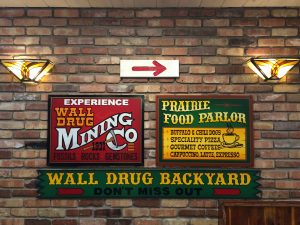 Founded in 1931, Wall Drug originally used the promise of free ice water as a way to attract customers. Today, Wall Drug is a tourist attraction in its own right. Driving from Los Angeles to Boston, Naomi and I arrived at Wall Drug, ready for free water, cheap coffee, breakfast, and the American kitsch that the road trip app promised. It did not disappoint. We had spent the previous day at Badlands National Park and the Pine Ridge Reservation, an area known to the Lakota people as Mako Sica. Our Lakota tour guide told us stories inspired by and connected to the land. His stories about the moon connected me to midrashim about creation and Rosh Chodesh.
Our time in the Badlands connected us to our national history of displacement and trauma, while our time in Wall, South Dakota connected us to family history. Sharing this story with you, recording it in this teaching, is a way of integrating it into my own narrative and marking it as something to pass on to future generations.
Similarly, the second of this week’s double Torah portion, Matot-Masei, the final portion of the book of Numbers, calls us to listen to and integrate the stories of our biblical ancestors with our own. It begins:
These were the journeys of the Israelites who came out from the land of Egypt, troop by troop, in the charge of Moses and Aaron. Moses recorded the starting points of their journeys as directed by YHVH. These are their journeys, according to their starting points. (Numbers 33:1-2)
The text then lists 42 journeys—or segments—of the Israelites overall journey from Egypt to the border of Israel. The language, for the most part, is absent of any real description of what happened along the way, either while the Israelites were on the move or while they were stationary. Instead, we see small glimpses of the experience. We learn that while the Israelites were leaving Egypt, the Egyptians were burying their dead. We learn that Elim was a place with 12 springs and 70 palm trees. We are reminded that in Rephidim the Israelites didn’t have any water. The text reads like a map, like the road atlas on which Naomi and I traced the routes we took on our cross-country road trip, rather than like the complex history it represents.
Why does the text recount these journeys in this way? What can we learn from the routes taken by our ancient ancestors?
For the Kedushat Levi, an 18th century Hasidic master, each segment of the overall journey was an opportunity to uncover and uplift holy sparks that had fallen and been covered in each location. The journey from Egypt to Israel was not just a matter of geography—it was a spiritual journey. Each segment of the journey, as enumerated, provided an opportunity to practice recognizing and reclaiming holiness, to embody a relationship with Gd and with the world.
The Kedushat Levi reminds us that our journeys have a larger context in which they take place and that to move forward we must keep in mind both the overall vision of what we are trying to achieve and the smaller movements it will take to get there. He further explains that this process is the reason why the Israelites spent so much time at one place and not as much at another—sometimes it takes more or less time to uncover the holiness in a place.
Many of us are on the journey of being and becoming anti-racist. We are moving from a place of being complicit in white supremacy to one of pushing back against the way in which it shapes our own thinking and the way our society functions. What is the world we imagine at the end of this journey? What are the smaller steps we are taking to move us there? How will we tap into the kedusha, the holiness, of this work?
Commenting on these verses, Rashi brings a teaching that the enumeration of the journeys demonstrates Gd’s love for the Israelites. He shows that after the decree that we would wander in the desert, the Israelites only made 20 journeys in 38 years. The pace, Rashi says, was an expression of Gd’s love. He makes clear that the desert journey was composed of movement constant enough to be ever-present, yet infrequent enough to allow for rhythms of daily life to be established.
Building a just and equitable world requires an awareness of the need to move forward, and a lived experience of being grounded enough in the place that we are to do the often-destabilizing work of transformation. This work often requires staying put, sitting with the world we are in long enough to notice, grieve, wrestle with, and uproot the oppression.
Rabbi Samson Raphael Hirsch imagines an actual revisiting of these journeys, opening the possibility of seeing what is behind our Torah text, experiencing some of what our ancestors might have felt, and connecting to the divine. Connecting to our ancestors can be a fraught process, a wandering into the unknown that includes the possibility of joy and grounding and pain. He writes:
One can surmise how many other traces of the wanderings and sojournings of our forefathers may have been preserved in these places in the wilderness for the immediate and more distant future, and what opportunities these could have offered to the children and the grand-children of the generation of the wilderness to visit the places where Gd revealed Gdself in Gd’s wondrous guidance. Visiting these places, future generations could contemplate the authenticity of Gd’s presence on earth so eloquently expressed in the history of their forebears.
In his book Decolonizing Wealth, Edgar Villanueva discusses the importance of learning about and grieving the source of a family’s wealth as prerequisites to healing the trauma that the amassing of that wealth caused Native communities. We didn’t intend for our road trip to be part of this process, and certainly not our carefree trip to Wall Drug. Yet, visiting the places of displacement and pain on that trip has been part of my own process of learning, grieving, and beginning to reckon with my own privilege. This same principle is evident in communal tours of the American South and trips to The Legacy Museum and National Memorial for Peace and Justice in Montgomery, Alabama.
Wherever you are in your journey to liberation, however you locate yourself in the project of building a just and equitable world, may the work of connecting to ancestors be deep and healing, a source of grounding and strength.
Rabbi Becky Silverstein (he/him/his), a graduate of the Rabbinical School of Hebrew College, believes in the power of community, Torah, and silliness in transforming the world. Becky lives in Jamaica Plain, MA with his spouse, Naomi, and their kiddo, Edie Gefen.
Previous Post

July 8, 2020
From Fast to Festivity: a Zoom Mitzvah in the Narrow Straits
Next Post

July 21, 2020 The Persistence of Sinat Hinam (Baseless Hatred)
Browse Our Archives
Select a Category Uncategorized
Select a Month April 2026 March 2026 December 2025 November 2025 October 2025 September 2025 August 2025 July 2025 June 2025 May 2025 April 2025 March 2025 February 2025 January 2025 December 2024 November 2024 October 2024 September 2024 August 2024 July 2024 June 2024 May 2024 April 2024 March 2024 February 2024 January 2024 December 2023 November 2023 October 2023 September 2023 August 2023 July 2023 June 2023 May 2023 April 2023 March 2023 February 2023 January 2023 December 2022 November 2022 October 2022 September 2022 August 2022 July 2022 June 2022 May 2022 April 2022 March 2022 February 2022 January 2022 December 2021 November 2021 October 2021 September 2021 August 2021 July 2021 June 2021 May 2021 April 2021 March 2021 February 2021 January 2021 December 2020 November 2020 October 2020 September 2020 August 2020 July 2020 June 2020 May 2020 April 2020 March 2020 February 2020 January 2020 December 2019 November 2019 October 2019 September 2019 August 2019 July 2019 June 2019 May 2019 April 2019 March 2019 February 2019 January 2019 December 2018 November 2018 October 2018 September 2018 August 2018 July 2018 June 2018 May 2018 April 2018 March 2018 February 2018 January 2018 December 2017 November 2017 October 2017 September 2017 August 2017 July 2017 June 2017
Follow Us!
TAKE THE
Religious Wisdom Quiz
Which tribe of Israel did NOT receive a land inheritance?
Select your answer to see how you score.
Benjamin Gad Judah Levi
Related posts from Seventy Faces of Torah

The Holy Art of World Building

Parashat Tzav: Keeping the Sacred Fire Burning

Color Theory: What Joseph’s Coat Reveals
TRENDING AT PATHEOS Jewish

Building a Little Ark in a Frightening World
This past Shabbat, we read about Noah. I love this story. The...

Yom Kippur : Is There Always Room for...
Making Room for Forgiveness Every year as Yom Kippur approaches, I find...

This Rosh Hashanah: Can I Find New Meaning?
A Sunrise, a New Year, and a Question On our way to...

Killing Amalek: The Torah’s Most Misunderstood Commandment
Few passages of the Torah have provoked more confusion, polemic, and misuse...

I have never trusted a first draft. I don’t mean that...

Back to School, Back to Reality—and a New...
A New School Year Begins… Back to Reality A new school year...
view all Jewish blogs
Ad-Free & Subscriber Log-In Subscription Support
- About Us
- 2026 Calendar
- Videos
- Podcasts
- Library of World Religions
- Faith In Media Tracker
- Advertise With Us
- Write for Us
- Privacy Policy
- Terms of Service
- Do Not Sell My Data
- Contact Us
- Radiant Digital
- Manage Newsletter Subscriptions
- Unsubscribe From Notifications
- Sitemap
Copyright 2008-2026, Patheos. All rights reserved.
Subscription Support Ad-Free & Subscriber Log-In
Follow Patheos