
BuddhistCatholicContemplativeEvangelicalGeneral ChristianHinduJewishLatter-day SaintMuslimNew VisionsProgressive Christian
Beliefs
- Buddhist
- Catholic
- Contemplative
- Evangelical
- General Christian
- Hindu
- Jewish
- Latter-day Saint
- More Voices
- Muslim
- New Visions
- Pagan
- Progressive Christian
Topics
- Religion News
- Food and Religion
- Sports and Religion
- Religious Art
- Religious Music and Entertainment
- Religious Events
- History and Religion
- Style and Religion
- Politics and Religion
- Women in Religion
- Recreation Outdoors and Religion
- Business Finance and Religion
- Careers Workplace and Religion
- Education and Religion
- Family Parenting and Religion
- Health Fitness and Religion
- Home and Religion
- Relationships and Religion
- Technology and Religion
- Travel and Religion
Columnists
- Buddhist Columnists
- Business Finance and Religion Columnists
- Careers Workplace and Religion Columnists
- Catholic Columnists
- Contemplative Columnists
- Education and Religion Columnists
- Evangelists Columnists
- Family Parenting and Religion Columnists
- General Christian Columnists
- Health Fitness and Religion Columnists
- Hindu Columnists
- History and Religion Columnists
- Home and Religion Columnists
- Jewish Columnists
- More Voices Columnists
- Latter Day Columnists
- Muslim Columnists
- New Visions Columnists
- Nonreligious Columnists
- Pagan Columnists
- Politics and Religion Columnists
- Progressive Columnists
- Recreation Outdoors and Religion Columnists
- Relationships and Religion Columnists
- Religion News Columnists
- Religious Art Columnists
- Religious Events Columnists
- Religious Music and Entertainment Columnists
- Sports and Religion Columnists
- Style and Religion Columnists
- Technology and Religion Columnists
- Travel and Religion Columnists
- Women in Religion Columnists
Resource Library
- 2026 Calendar
- Library of World Religions
- The 100 Most Holy Places on Earth
- Patheos Answers
- Podcasts
- Videos
- Faith Leaders Database
- Anglican Episcopalian
- Bahai
- Baptist
- Buddhism
- Christianity
- Confucianism
- Eastern Orthodoxy
- Hinduism
- Holiness and Pentecostal
- ISKCON
- Islam
- Judaism
- Lutheran
- Methodist
- The Church of Jesus Christ of Latter-day Saints
- New Age
- Paganism
- Presbytarian and Reformed
- Protestantism
- Religion Behind the Scenes
- Roman Catholic
- Scientology
- Shia Islam
- Sikhism
- Sufism
- Sunni Islam
- Taoism
- Zen
- See all religions
Research Tools
 Ad-Free & Subscriber Log-In Subscription Support
Ad-Free & Subscriber Log-In Subscription Support
Follow Patheos 

- Trending:
- Forgiveness
- |
- Marriage
- |
- Consciousness
- |
- Death Penalty
- |
- Election
- |
- Halloween

- Home
- About Hebrew College
- The Rabbinical School of Hebrew College
- The Book of Psalms
- FREE NEWSLETTER
- Home
- Jewish
- From Fast to Festivity: a Zoom Mitzvah in the Narrow Straits
From Fast to Festivity: a Zoom Mitzvah in the Narrow Straits
Last updated on: July 8, 2020 at 12:35 pm by Hebrew College
From Fast to Festivity: a Zoom Mitzvah in the Narrow Straits 2020-07-08T12:35:14-04:00 Hebrew College
Patheos Explore the world's faith through different perspectives on religion and spirituality! Patheos has the views of the prevalent religions and spiritualities of the world.
Parashat Pinchas (Numbers 25:10 – 30:1)
By Cantor Ken Richmond July 11, 2020
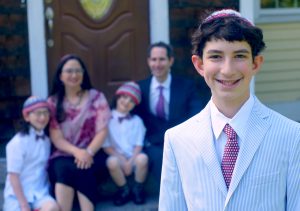
About six weeks ago, finally facing the reality that our son Zalmen’s bar mitzvah – scheduled for Labor Day weekend – would not be able to take place as we had imagined, we decided to move it up to his Hebrew birthday. He was born on the 17th of Tammuz, a fast day in the Jewish calendar that commemorates lamentable events in Jewish history, including the smashing of the first set of tablets of the ten commandments, the ceasing of the daily offerings during the siege by the Babylonians leading up to the destruction of the first temple, and the breaching of the walls of Jerusalem by the Romans, leading up to the destruction of the second temple. You may understandably wonder why we would choose to celebrate our son’s transition into adulthood on this solemn day. The decision, once we made it, though, felt increasingly like the right one, and not only because of factors like the ability to create a week-long Zoom festivity stretching from his secular birthday to his Jewish one, the exciting (for a clergy kid) liturgical and cantillation challenges of the fast day, and the fact that we could feel a little less badly about not being able to feed our guests – Zooming in from far and wide, due to the fast day, as well as our quarantining.
I was thinking about our son’s fast-day bar mitzvah in relation to a teaching by the Bnei Yissaschar, Rabbi Tzvi Elimelech Spira of Dinov (c. 1783-1841), in his teachings on the time bein hametzarim, in the narrow straits, the three weeks between the 17th of Tammuz and the 9th of Av, which commemorate the destruction of the two Temples. He points out that the number 17, for the 17th of Tammuz, is equivalent in gematria to the word טוב (Tov) or “good (9+6+2=17).” What’s good about the 17th of Tammuz? The Talmud (Baba Kama 54b-55a) asks why the word “good” appears only in the second rendition of the ten commandments, but not the first. Rav Ashi answers that God knew that the first set was destined to be shattered, and if the word “good” had been on the first set of tablets, then, God forbid, all good would have vanished from Israel, and presumably from the world. God didn’t want the world to suffer that breakage, so in a way, the breaking of the first tablets and not the second was really all for the best. One could extrapolate that all the disasters that have occurred on the 17th of Tammuz, from ancient times through another day in the life of pandemic, in a country still torn by inequality, are for the good, because the good hasn’t shattered completely. Rabbi Isaac Luria said that when Aaron, in vainly trying to delay the making of the golden calf, said “it will be a festival of God tomorrow (Exodus 32:5),” he was really prophesying that the next day, the 17th of Tammuz, would be a “yom tov (Tov=17),” a day of goodness, partly then, and partly in times to come.
The Bnei Yissaschar goes on to ask why the two parshiyot before Pinchas, Chukat and Balak, which can be combined, are almost always read on separate weeks, while the two parshiyot after Pinchas, Mattot and Mas’ei, are almost always read together as a double-parsha. He answers that this is done in order that Pinchas, Mattot, and Mas’ei, which describe the distribution of the land of Israel, be read during the three weeks “in the narrow straits,” in order to give us hope during a period when we might be feeling depressed. He says, furthermore, that Pinchas is read during this time because it describes the festivals, the sacred times. We may find comfort in recounting the holidays we already know and love, as well as in the words of the prophet Zecharia (8:19), who says that in future times, the fast days will be transformed into additional days of festivity, joy, and goodness.
The question I’ve been wrestling with as a clergy person during COVID times is how much to simply be with people during their suffering, a main lesson I carried away from Clinical Pastoral Education, and how much we should try to lift each other’s spirits through conversation, song, and prayer. Bringing this question into lifecycle events, I’ve been wondering how we can mark milestones in a way that feels authentic, and that balances recognition and celebration with the loss we feel due to our social distancing. What events should we postpone until we can celebrate them more normally, and what should we mark as best we can now?
Although it still feels strange to celebrate our son’s Bar Mitzvah on a fast day, something about these pandemic times fueled our urgency to do so on his birthday, at the first available opportunity. Everything is not normal. Many of us are suffering in a variety of ways, but our son is turning thirteen anyway, and it seemed all the more necessary to recognize him as soon as we could for the kind, funny, and thoughtful young man he is becoming. We hope that this pixelated celebration, for our family and friends and community, will have some of the same effect that the Bnei Yissaschar ascribes to reading Pinchas during the three weeks: that it can bring some goodness and hope into the world, and that it may, in some small way, turn a fast day into a day of festivity.
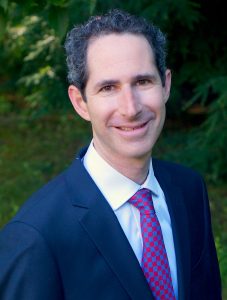
Ken Richmond has been the Cantor of Temple Israel of Natick since 2006, and has also served since then as adjunct faculty in Hebrew College’s cantorial program. He is studying at Hebrew College’s Rabbinical School, with an expected ordination date of spring 2021. He is married to Rabbi Shira Shazeer (HCRS ‘10), who joins him in kvelling this week.
Previous Post

June 29, 2020
Deep in the Wilderness
Next Post

July 15, 2020 Mapping our Stories in Fits and Starts
Browse Our Archives
Select a Category Uncategorized
Select a Month April 2026 March 2026 December 2025 November 2025 October 2025 September 2025 August 2025 July 2025 June 2025 May 2025 April 2025 March 2025 February 2025 January 2025 December 2024 November 2024 October 2024 September 2024 August 2024 July 2024 June 2024 May 2024 April 2024 March 2024 February 2024 January 2024 December 2023 November 2023 October 2023 September 2023 August 2023 July 2023 June 2023 May 2023 April 2023 March 2023 February 2023 January 2023 December 2022 November 2022 October 2022 September 2022 August 2022 July 2022 June 2022 May 2022 April 2022 March 2022 February 2022 January 2022 December 2021 November 2021 October 2021 September 2021 August 2021 July 2021 June 2021 May 2021 April 2021 March 2021 February 2021 January 2021 December 2020 November 2020 October 2020 September 2020 August 2020 July 2020 June 2020 May 2020 April 2020 March 2020 February 2020 January 2020 December 2019 November 2019 October 2019 September 2019 August 2019 July 2019 June 2019 May 2019 April 2019 March 2019 February 2019 January 2019 December 2018 November 2018 October 2018 September 2018 August 2018 July 2018 June 2018 May 2018 April 2018 March 2018 February 2018 January 2018 December 2017 November 2017 October 2017 September 2017 August 2017 July 2017 June 2017
Follow Us!
TAKE THE
Religious Wisdom Quiz
Which book of the Bible contains the story of Gideon?
Select your answer to see how you score.
2 Kings Joshua Judges 1 Samuel
Related posts from Seventy Faces of Torah

The Holy Art of World Building

Parashat Tzav: Keeping the Sacred Fire Burning

Color Theory: What Joseph’s Coat Reveals
TRENDING AT PATHEOS Jewish

Building a Little Ark in a Frightening World
This past Shabbat, we read about Noah. I love this story. The...

Yom Kippur : Is There Always Room for...
Making Room for Forgiveness Every year as Yom Kippur approaches, I find...

This Rosh Hashanah: Can I Find New Meaning?
A Sunrise, a New Year, and a Question On our way to...

Killing Amalek: The Torah’s Most Misunderstood Commandment
Few passages of the Torah have provoked more confusion, polemic, and misuse...

I have never trusted a first draft. I don’t mean that...

Back to School, Back to Reality—and a New...
A New School Year Begins… Back to Reality A new school year...
view all Jewish blogs
Ad-Free & Subscriber Log-In Subscription Support
- About Us
- 2026 Calendar
- Videos
- Podcasts
- Library of World Religions
- Faith In Media Tracker
- Advertise With Us
- Write for Us
- Privacy Policy
- Terms of Service
- Do Not Sell My Data
- Contact Us
- Radiant Digital
- Manage Newsletter Subscriptions
- Unsubscribe From Notifications
- Sitemap
Copyright 2008-2026, Patheos. All rights reserved.
Subscription Support Ad-Free & Subscriber Log-In
Follow Patheos