
BuddhistCatholicContemplativeEvangelicalGeneral ChristianHinduJewishLatter-day SaintMuslimNew VisionsProgressive Christian
Beliefs
- Buddhist
- Catholic
- Contemplative
- Evangelical
- General Christian
- Hindu
- Jewish
- Latter-day Saint
- More Voices
- Muslim
- New Visions
- Pagan
- Progressive Christian
Topics
- Religion News
- Food and Religion
- Sports and Religion
- Religious Art
- Religious Music and Entertainment
- Religious Events
- History and Religion
- Style and Religion
- Politics and Religion
- Women in Religion
- Recreation Outdoors and Religion
- Business Finance and Religion
- Careers Workplace and Religion
- Education and Religion
- Family Parenting and Religion
- Health Fitness and Religion
- Home and Religion
- Relationships and Religion
- Technology and Religion
- Travel and Religion
Columnists
- Buddhist Columnists
- Business Finance and Religion Columnists
- Careers Workplace and Religion Columnists
- Catholic Columnists
- Contemplative Columnists
- Education and Religion Columnists
- Evangelists Columnists
- Family Parenting and Religion Columnists
- General Christian Columnists
- Health Fitness and Religion Columnists
- Hindu Columnists
- History and Religion Columnists
- Home and Religion Columnists
- Jewish Columnists
- More Voices Columnists
- Latter Day Columnists
- Muslim Columnists
- New Visions Columnists
- Nonreligious Columnists
- Pagan Columnists
- Politics and Religion Columnists
- Progressive Columnists
- Recreation Outdoors and Religion Columnists
- Relationships and Religion Columnists
- Religion News Columnists
- Religious Art Columnists
- Religious Events Columnists
- Religious Music and Entertainment Columnists
- Sports and Religion Columnists
- Style and Religion Columnists
- Technology and Religion Columnists
- Travel and Religion Columnists
- Women in Religion Columnists
Resource Library
- 2026 Calendar
- Library of World Religions
- The 100 Most Holy Places on Earth
- Patheos Answers
- Podcasts
- Videos
- Faith Leaders Database
- Anglican Episcopalian
- Bahai
- Baptist
- Buddhism
- Christianity
- Confucianism
- Eastern Orthodoxy
- Hinduism
- Holiness and Pentecostal
- ISKCON
- Islam
- Judaism
- Lutheran
- Methodist
- The Church of Jesus Christ of Latter-day Saints
- New Age
- Paganism
- Presbytarian and Reformed
- Protestantism
- Religion Behind the Scenes
- Roman Catholic
- Scientology
- Shia Islam
- Sikhism
- Sufism
- Sunni Islam
- Taoism
- Zen
- See all religions
Research Tools
 Ad-Free & Subscriber Log-In Subscription Support
Ad-Free & Subscriber Log-In Subscription Support
Follow Patheos 

- Trending:
- Forgiveness
- |
- Marriage
- |
- Consciousness
- |
- Death Penalty
- |
- Election
- |
- Halloween

- Home
- About Hebrew College
- The Rabbinical School of Hebrew College
- The Book of Psalms
- FREE NEWSLETTER
- Home
- Jewish
- It Is Upon Us to Complete the Torah
It Is Upon Us to Complete the Torah
Last updated on: June 8, 2020 at 11:57 am by Hebrew College
It Is Upon Us to Complete the Torah 2020-06-08T11:57:15-04:00 Hebrew College
Patheos Explore the world's faith through different perspectives on religion and spirituality! Patheos has the views of the prevalent religions and spiritualities of the world.
 Parashat Beha’alotecha (Numbers 8:1-12:16)
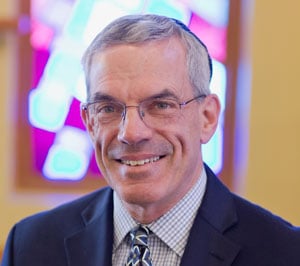
By Rabbi Brian Besser
Edmund Fleg captures the central notion of tikkun olam (“repair of the world”) that drives social change with this declaration: “I am a Jew, because for Israel, the world is not yet completed; we are completing it.” According to Midrash, Torah is the blueprint of all creation. If God left the work of creation incomplete, does that imply that its underlying Torah, as well, is incomplete? The question is more than academic. We human beings structure society based upon what we believe to be right and wrong, just and unjust. If the Torah upon which we base our ethics is deficient, then so is our society.
In the middle of this week’s Torah portion Beha’alotecha, strange marks frame a passage that contains two verses: “When the ark traveled, Moses would say: arise, Adonai, and may Your enemies be scattered. When the ark rested, Moses would say: return, Adonai, to the myriads of Israel!” (Numbers 10:35-36) These fantastic symbols look like inversions of the letter Nun, and they appear within every extant Torah scroll, even the most ancient. Already fifteen hundred years ago, they formed the subject of Talmudic controversy:
The Sages taught: the Holy, Blessed One made special signs to indicate that this section of text is not in its proper place; someday, it is destined to be uprooted and written in its proper place. (Babylonian Talmud 115b)
How extraordinary! It is as if God drafted an unfinished version of the Torah, labeled these two verses for eventual transfer, but never got around to revisiting them.[*] Rabbi Judah the Prince could not abide the thought of an incomplete Torah, so he demurred:
Rabbi Judah the Prince said: this section of text is in its proper place. Rather, the Holy One made these marks to specify the passage as an important book in and of itself, as it is written: “Wisdom has carved seven pillars.”[†] (Babylonian Talmud 116a)
The number seven symbolizes perfection, underlining Rabbi Judah the Prince’s point that the Torah is already complete as is.
Rabbi Judah the Prince’s interpretation introduces another question: what’s so significant about the passage delimited by the inverted Nuns that it constitutes “a book in and of itself?” Its significance lies not so much in what its words say but how its two sentences are deployed liturgically. “When the ark traveled…” is chanted at the beginning of the Shabbat Torah Service; “when the ark rested…” is chanted at the end. So, given that this pair of verses frame the weekly Torah reading, what is the seventh book—the book that, according to Rabbi Judah the Prince, brings the entire Torah to completion? Not the fixed text written in the scroll but the words that come alive and change from week to week when we hear them at synagogue, wrestle with their implications, and incorporate their message into our lives.
Both Talmudic opinions converge on the requirement for active human involvement to bring Torah to fulfillment. Following the sages, the received Torah was left deficient, just like the world itself at the end of Creation. As Rabbi Harold Kushner has stated: “the written Torah represents God’s first word on the subject of truth, not God’s last. The final word has yet to be written.” It is up to us to complete God’s word. On the other hand, following Rabbi Judah the Prince, the Torah is already complete, but only when we actively engage with it to derive meaning, insight, and strength. Torah speaks differently to us from week to week and from generation to generation.
In recent days we have witnessed our nation convulsed by the violence of racism and its aftermath. But racism is a human construct, and, like all human constructs, it can be dismantled. In the words of Nelson Mandela: “No one is born hating another person because of the color of his skin. People must learn to hate, and if they can learn to hate, they can be taught to love, for love comes more naturally to the human heart than its opposite.”
Our own received written Torah contains passages legitimizing slavery, which is the progenitor of racism.[‡] Indeed, over the years people have justified, and still justify, the oppression of African Americans (women, gays, trans people, foreigners, …) by citing the Hebrew Bible. If we want to form a more just society, then we must first formulate a more just Torah, a Torah that lives up to its own primary ideal of human equality, every human being created in the image of God.
We must pursue two ongoing tasks simultaneously: tikkun olam, improving our relationship with one another and the world at large, and tikkun Torah, improving our ethics and our understanding of justice, which underlies all our efforts at tikkun olam. To extend Edmund Fleg’s words: “I am a Jew, because, for Israel, Torah is not yet completed; we are completing it.”
[*] The overturned Nuns resemble a pair of brackets.
[†] Proverbs 9:1. How does Rabbi Judah the Prince come up with seven? If the section framed by the inverted Nuns constitutes a book by itself, it effectively divides the Book of Numbers into three—in addition to the four other books remaining intact (Genesis, Exodus, Leviticus and Deuteronomy).
[‡] To be sure, many more scriptural passages celebrate the divine power of liberation from slavery.
Brian Besser, ordained at the Rabbinical School of Hebrew College in 2010, serves Congregation Beth Shalom in Bloomington, Indiana.
Previous Post

May 26, 2020
Hidden are the things we see
Next Post
June 10, 2020 PsalmSeason: A Playlist for a Time of Upheaval
Browse Our Archives
Select a Category Uncategorized
Select a Month April 2026 March 2026 December 2025 November 2025 October 2025 September 2025 August 2025 July 2025 June 2025 May 2025 April 2025 March 2025 February 2025 January 2025 December 2024 November 2024 October 2024 September 2024 August 2024 July 2024 June 2024 May 2024 April 2024 March 2024 February 2024 January 2024 December 2023 November 2023 October 2023 September 2023 August 2023 July 2023 June 2023 May 2023 April 2023 March 2023 February 2023 January 2023 December 2022 November 2022 October 2022 September 2022 August 2022 July 2022 June 2022 May 2022 April 2022 March 2022 February 2022 January 2022 December 2021 November 2021 October 2021 September 2021 August 2021 July 2021 June 2021 May 2021 April 2021 March 2021 February 2021 January 2021 December 2020 November 2020 October 2020 September 2020 August 2020 July 2020 June 2020 May 2020 April 2020 March 2020 February 2020 January 2020 December 2019 November 2019 October 2019 September 2019 August 2019 July 2019 June 2019 May 2019 April 2019 March 2019 February 2019 January 2019 December 2018 November 2018 October 2018 September 2018 August 2018 July 2018 June 2018 May 2018 April 2018 March 2018 February 2018 January 2018 December 2017 November 2017 October 2017 September 2017 August 2017 July 2017 June 2017
Follow Us!
TAKE THE
Religious Wisdom Quiz
According to 1 Peter, Jesus bore our sins in his body where?
Select your answer to see how you score.
On the tree (cross) In the tomb In the garden On the mountain
Related posts from Seventy Faces of Torah

The Holy Art of World Building

Parashat Tzav: Keeping the Sacred Fire Burning

Color Theory: What Joseph’s Coat Reveals
TRENDING AT PATHEOS Jewish

Building a Little Ark in a Frightening World
This past Shabbat, we read about Noah. I love this story. The...

Yom Kippur : Is There Always Room for...
Making Room for Forgiveness Every year as Yom Kippur approaches, I find...

This Rosh Hashanah: Can I Find New Meaning?
A Sunrise, a New Year, and a Question On our way to...

Killing Amalek: The Torah’s Most Misunderstood Commandment
Few passages of the Torah have provoked more confusion, polemic, and misuse...

I have never trusted a first draft. I don’t mean that...

Back to School, Back to Reality—and a New...
A New School Year Begins… Back to Reality A new school year...
view all Jewish blogs
Ad-Free & Subscriber Log-In Subscription Support
- About Us
- 2026 Calendar
- Videos
- Podcasts
- Library of World Religions
- Faith In Media Tracker
- Advertise With Us
- Write for Us
- Privacy Policy
- Terms of Service
- Do Not Sell My Data
- Contact Us
- Radiant Digital
- Manage Newsletter Subscriptions
- Unsubscribe From Notifications
- Sitemap
Copyright 2008-2026, Patheos. All rights reserved.
Subscription Support Ad-Free & Subscriber Log-In
Follow Patheos