
BuddhistCatholicContemplativeEvangelicalGeneral ChristianHinduJewishLatter-day SaintMuslimNew VisionsProgressive Christian
Beliefs
- Buddhist
- Catholic
- Contemplative
- Evangelical
- General Christian
- Hindu
- Jewish
- Latter-day Saint
- More Voices
- Muslim
- New Visions
- Pagan
- Progressive Christian
Topics
- Religion News
- Food and Religion
- Sports and Religion
- Religious Art
- Religious Music and Entertainment
- Religious Events
- History and Religion
- Style and Religion
- Politics and Religion
- Women in Religion
- Recreation Outdoors and Religion
- Business Finance and Religion
- Careers Workplace and Religion
- Education and Religion
- Family Parenting and Religion
- Health Fitness and Religion
- Home and Religion
- Relationships and Religion
- Technology and Religion
- Travel and Religion
Columnists
- Buddhist Columnists
- Business Finance and Religion Columnists
- Careers Workplace and Religion Columnists
- Catholic Columnists
- Contemplative Columnists
- Education and Religion Columnists
- Evangelists Columnists
- Family Parenting and Religion Columnists
- General Christian Columnists
- Health Fitness and Religion Columnists
- Hindu Columnists
- History and Religion Columnists
- Home and Religion Columnists
- Jewish Columnists
- More Voices Columnists
- Latter Day Columnists
- Muslim Columnists
- New Visions Columnists
- Nonreligious Columnists
- Pagan Columnists
- Politics and Religion Columnists
- Progressive Columnists
- Recreation Outdoors and Religion Columnists
- Relationships and Religion Columnists
- Religion News Columnists
- Religious Art Columnists
- Religious Events Columnists
- Religious Music and Entertainment Columnists
- Sports and Religion Columnists
- Style and Religion Columnists
- Technology and Religion Columnists
- Travel and Religion Columnists
- Women in Religion Columnists
Resource Library
- 2026 Calendar
- Library of World Religions
- The 100 Most Holy Places on Earth
- Patheos Answers
- Podcasts
- Videos
- Faith Leaders Database
- Anglican Episcopalian
- Bahai
- Baptist
- Buddhism
- Christianity
- Confucianism
- Eastern Orthodoxy
- Hinduism
- Holiness and Pentecostal
- ISKCON
- Islam
- Judaism
- Lutheran
- Methodist
- The Church of Jesus Christ of Latter-day Saints
- New Age
- Paganism
- Presbytarian and Reformed
- Protestantism
- Religion Behind the Scenes
- Roman Catholic
- Scientology
- Shia Islam
- Sikhism
- Sufism
- Sunni Islam
- Taoism
- Zen
- See all religions
Research Tools
 Ad-Free & Subscriber Log-In Subscription Support
Ad-Free & Subscriber Log-In Subscription Support
Follow Patheos 

- Trending:
- Forgiveness
- |
- Marriage
- |
- Consciousness
- |
- Death Penalty
- |
- Election
- |
- Halloween

- Home
- About Hebrew College
- The Rabbinical School of Hebrew College
- The Book of Psalms
- FREE NEWSLETTER
- Home
- Jewish
- Safety in Numbers
Safety in Numbers
Last updated on: May 20, 2020 at 11:52 am by Hebrew College
Safety in Numbers 2020-05-20T11:52:14-04:00 Hebrew College
Patheos Explore the world's faith through different perspectives on religion and spirituality! Patheos has the views of the prevalent religions and spiritualities of the world.
Parashat B’midbar (Numbers 1:1-4:20)
By Rabbi Minna Bromberg `10
Numbers. It says it right there in the English name for the book of Torah that we begin reading this week: this book is about numbers. What does it mean for this suddenly free people to be numbered? Can we be truly free if we are constrained by being one in a number? Yet can we have a functioning society without making an accounting of people?
The first numbering in the book of Numbers is a census of men of military age. And this week’s Torah portion alone contains three different numberings: the census of men old enough to bear arms, the census of the Levites, and the census of first-born males who are not Levites.
The text also lays out which tribe is to camp where and in which order they are to march. The men of military age alone number 603,550. Large groups of people trying to move together through the wilderness need to move in some kind of order and ordering means numbering, oversight, the funneling of individual ideas of where to camp and when to march into a larger social structure.
This is not the whole of the book of Numbers, of course. It also contains some of the most vibrant depictions of individuals: Bilaam and his talking donkey, Korach and his disastrous efforts to be recognized as not simply one in the number, the daughters of Tzelophechad successfully arguing that an exception be made to the rules of inheritance due to their unique circumstances, and more. As Everett Fox points out in his introduction to the Book of Numbers, while the other books of Torah “also mix narrative, law, poetry….none of them has combined and alternated these genres with such abandon.”
I see a dance in this mix of censuses of populations and stories of vibrant individuals. It speaks to what it means to form a functioning society that asks each of us to participate fully in community without losing our individuality.
In these first months of this ongoing pandemic, I have been grateful to be living somewhere where I feel cared for as one in a population, even when this means curtailing some aspects of individual freedoms. I have truly felt myself and my family to be part of a massive communal effort to flatten the curve. I get twice daily updates from the Ministry of Health and I have never taken statistics so personally.
Because, of course, there is a cost to this kind of numbering of people. I’ve been known to rant to my rabbinic colleagues (and anyone else who will listen) about the shallowness of quantitative studies of Jewish communal life in the United States. And I am certainly not alone in the world of fat activism in reminding people over and over again that the Body Mass Index (BMI) was created for understanding risks to populations and cannot, in the absence of other data, tell us anything meaningful about the health or illness of an individual.
Within and beyond these pet peeves, there is the basic concern that numbering people is dehumanizing. Gamely participating in the communal efforts to prevent the spread of the coronavirus, we mask our own faces, obscuring our individuality.
But what are we to do? When I am only a number, I am dehumanized. When I refuse to be a number, I risk being anti-social, breaking the social contract at the heart of human life as we know it: both a coming together and a compromise of individual needs and desires so that we may band together to live long enough to heartily enjoy our own “half a loaf.”
So, here we are, in Israel at least, on the downward slope of the curve we worked to flatten. Schools and stores and restaurants are opening up again, and we are all hopeful that this first wave of the pandemic is truly winding down and that we have the measures in place to catch a second wave before it becomes too deadly.
But my family up until now has still been staying at home, fiercely protecting the safety of a family member who is at high risk of dire consequences from becoming ill with COVID. This has meant that we are in the second week in which—unbeknownst to her, although who knows what is really ever “unbeknownst” to a perceptive four year old—our daughter’s schoolmates have been going to Gan (Israeli pre-K and kindergarten) without her.
Her schoolmates are numbered in the attendance and she is not. Does this mean we are essentially saying to those sweet preschoolers, “Can you, dear friends, be the numbers for a while so that we can use your experience to assess whether it is safe to count ourselves among you again?” I shudder to think that it’s their numbers that we are watching. I can see every one of their adorable faces and wouldn’t wish this or any other disease on them. Yet we have been waiting and watching to see whether there is a surge in cases on the population level as things open up.
And so I feel in this again the deep dance that characterizes the Book of Numbers: the dance between census and story, between the longed-for immunity of the herd and the need to protect the most vulnerable of society’s members. In our own lives, in our own families, in our communities, in our countries, may we be blessed with the ability to number and order people wisely without forgetting that each individual human is immeasurably unique and invaluable.
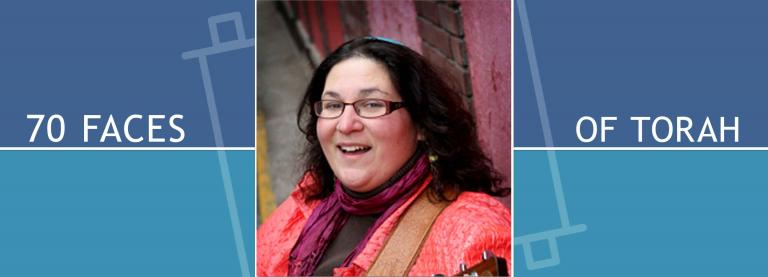
Rabbi Minna Bromberg is a singer, songwriter, rabbi, and voice teacher who lives in Jerusalem with her husband, Rabbi Alan Abrams, and their two children. Believing that singing both demands and teaches an integration of body, mind, and spirit, Minna teaches voice to rabbis, rabbinical students, and lay people who use their voices in leading prayer. Ordained at the Rabbinical School of Hebrew College in 2010*, she currently runs the school’s Year-in-Israel Program for rabbinical students.*
Previous Post

May 12, 2020
Getting our Groove Back
Next Post
May 26, 2020 Hidden are the things we see
Browse Our Archives
Select a Category Uncategorized
Select a Month April 2026 March 2026 December 2025 November 2025 October 2025 September 2025 August 2025 July 2025 June 2025 May 2025 April 2025 March 2025 February 2025 January 2025 December 2024 November 2024 October 2024 September 2024 August 2024 July 2024 June 2024 May 2024 April 2024 March 2024 February 2024 January 2024 December 2023 November 2023 October 2023 September 2023 August 2023 July 2023 June 2023 May 2023 April 2023 March 2023 February 2023 January 2023 December 2022 November 2022 October 2022 September 2022 August 2022 July 2022 June 2022 May 2022 April 2022 March 2022 February 2022 January 2022 December 2021 November 2021 October 2021 September 2021 August 2021 July 2021 June 2021 May 2021 April 2021 March 2021 February 2021 January 2021 December 2020 November 2020 October 2020 September 2020 August 2020 July 2020 June 2020 May 2020 April 2020 March 2020 February 2020 January 2020 December 2019 November 2019 October 2019 September 2019 August 2019 July 2019 June 2019 May 2019 April 2019 March 2019 February 2019 January 2019 December 2018 November 2018 October 2018 September 2018 August 2018 July 2018 June 2018 May 2018 April 2018 March 2018 February 2018 January 2018 December 2017 November 2017 October 2017 September 2017 August 2017 July 2017 June 2017
Follow Us!
TAKE THE
Religious Wisdom Quiz
Which prophet lamented over Israel's oppression of the poor?
Select your answer to see how you score.
Amos Obadiah Joel Hosea
Related posts from Seventy Faces of Torah

The Holy Art of World Building

Parashat Tzav: Keeping the Sacred Fire Burning

Color Theory: What Joseph’s Coat Reveals
TRENDING AT PATHEOS Jewish

Building a Little Ark in a Frightening World
This past Shabbat, we read about Noah. I love this story. The...

Yom Kippur : Is There Always Room for...
Making Room for Forgiveness Every year as Yom Kippur approaches, I find...

This Rosh Hashanah: Can I Find New Meaning?
A Sunrise, a New Year, and a Question On our way to...

Killing Amalek: The Torah’s Most Misunderstood Commandment
Few passages of the Torah have provoked more confusion, polemic, and misuse...

I have never trusted a first draft. I don’t mean that...

Back to School, Back to Reality—and a New...
A New School Year Begins… Back to Reality A new school year...
view all Jewish blogs
Ad-Free & Subscriber Log-In Subscription Support
- About Us
- 2026 Calendar
- Videos
- Podcasts
- Library of World Religions
- Faith In Media Tracker
- Advertise With Us
- Write for Us
- Privacy Policy
- Terms of Service
- Do Not Sell My Data
- Contact Us
- Radiant Digital
- Manage Newsletter Subscriptions
- Unsubscribe From Notifications
- Sitemap
Copyright 2008-2026, Patheos. All rights reserved.
Subscription Support Ad-Free & Subscriber Log-In
Follow Patheos