
BuddhistCatholicContemplativeEvangelicalGeneral ChristianHinduJewishLatter-day SaintMuslimNew VisionsProgressive Christian
Beliefs
- Buddhist
- Catholic
- Contemplative
- Evangelical
- General Christian
- Hindu
- Jewish
- Latter-day Saint
- More Voices
- Muslim
- New Visions
- Pagan
- Progressive Christian
Topics
- Religion News
- Food and Religion
- Sports and Religion
- Religious Art
- Religious Music and Entertainment
- Religious Events
- History and Religion
- Style and Religion
- Politics and Religion
- Women in Religion
- Recreation Outdoors and Religion
- Business Finance and Religion
- Careers Workplace and Religion
- Education and Religion
- Family Parenting and Religion
- Health Fitness and Religion
- Home and Religion
- Relationships and Religion
- Technology and Religion
- Travel and Religion
Columnists
- Buddhist Columnists
- Business Finance and Religion Columnists
- Careers Workplace and Religion Columnists
- Catholic Columnists
- Contemplative Columnists
- Education and Religion Columnists
- Evangelists Columnists
- Family Parenting and Religion Columnists
- General Christian Columnists
- Health Fitness and Religion Columnists
- Hindu Columnists
- History and Religion Columnists
- Home and Religion Columnists
- Jewish Columnists
- More Voices Columnists
- Latter Day Columnists
- Muslim Columnists
- New Visions Columnists
- Nonreligious Columnists
- Pagan Columnists
- Politics and Religion Columnists
- Progressive Columnists
- Recreation Outdoors and Religion Columnists
- Relationships and Religion Columnists
- Religion News Columnists
- Religious Art Columnists
- Religious Events Columnists
- Religious Music and Entertainment Columnists
- Sports and Religion Columnists
- Style and Religion Columnists
- Technology and Religion Columnists
- Travel and Religion Columnists
- Women in Religion Columnists
Resource Library
- 2026 Calendar
- Library of World Religions
- The 100 Most Holy Places on Earth
- Patheos Answers
- Podcasts
- Videos
- Faith Leaders Database
- Anglican Episcopalian
- Bahai
- Baptist
- Buddhism
- Christianity
- Confucianism
- Eastern Orthodoxy
- Hinduism
- Holiness and Pentecostal
- ISKCON
- Islam
- Judaism
- Lutheran
- Methodist
- The Church of Jesus Christ of Latter-day Saints
- New Age
- Paganism
- Presbytarian and Reformed
- Protestantism
- Religion Behind the Scenes
- Roman Catholic
- Scientology
- Shia Islam
- Sikhism
- Sufism
- Sunni Islam
- Taoism
- Zen
- See all religions
Research Tools
 Ad-Free & Subscriber Log-In Subscription Support
Ad-Free & Subscriber Log-In Subscription Support
Follow Patheos 

- Trending:
- Forgiveness
- |
- Marriage
- |
- Consciousness
- |
- Death Penalty
- |
- Election
- |
- Halloween

- Home
- About Hebrew College
- The Rabbinical School of Hebrew College
- The Book of Psalms
- FREE NEWSLETTER
- Home
- Jewish
- Getting our Groove Back
Getting our Groove Back
Last updated on: May 12, 2020 at 8:29 am by Hebrew College
Getting our Groove Back 2020-05-12T08:29:46-04:00 Hebrew College
Patheos Explore the world's faith through different perspectives on religion and spirituality! Patheos has the views of the prevalent religions and spiritualities of the world.
Parashat Behar-Bechukotai (Leviticus 25:1-27:34)
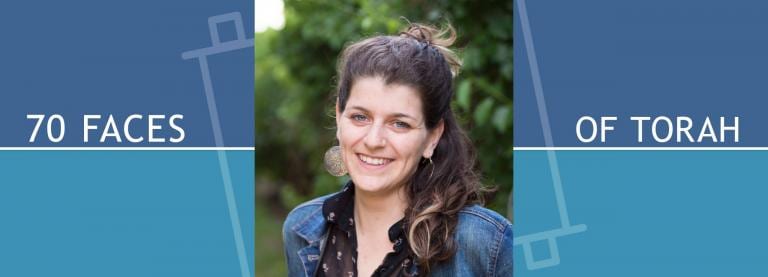
By Rabbi Hayley Goldstein
“So, I heard you’re a rabbi. Isn’t that groovy?” Vivi said, making her way to my garden bed in an N-95 mask and gloves. Vivi and her daughter are farmers who generously volunteered to help a novice like me figure out where and how to plant my vegetables. As we approached the raised bed, I pointed to the little green and purple sprouts coming out of the ground in tight gatherings of five or six to an inch. “As you can see, some of my mesclun greens are starting to come up.”
“Wow,” She replied. “They’re coming up already? How groovy!”
Vivi’s repeated use of the term “groovy” awoke me, quite suddenly, to the reality of where I live. This is Ithaca, New York, a place where utopian hippies came to get away from it all, to get back to the land. It is a place where grooviness lives on, where farmer’s markets are at the center of social life and commerce, and where the hottest thing to do on a non-quarantine night is decorate gourds at Gourdlandia, a woman’s gourd farm and art studio.
It is also a place where hyper-intellectual Cornell students pour over books and muse on theoretical physics. That is the world in which I work and teach, which often leaves me feeling disconnected from the roots of this place, the grooviness as you might say. Perhaps it’s the influence of these hyper-intellectuals that had me wanting to dig into the history and etymology of this dated word.
The first known use of the word groovy (alternatively sometimes spelled “groovie” or “groovey”) was in 1850, meaning “pertaining to a groove,” literally a cave, mine, pit or ditch in the earth. The first use of the word as we commonly know it, meaning “first rate” or “excellent” is from the 1920s jazz scene, referring to both the rhythm or feel of a piece of music, as well as to the literal grooves on a record that the pick-up needle rests on in order to play music.
In this week’s double parsha, Behar-Bechukotai, we receive laws about the rhythms (grooves?) of years. Just like on the seventh day we rest, on the seventh year we let the land rest and become free from all its labor. Seven sabbatical years are followed by a jubillee year, the most meta of all the sabbaths, in which all servants are set free, all estates given back to their original owners.
The second parsha, Bechukotai, speaks of the various chukim or decrees by which we will be blessed if we live by. How does a chok differ from a mitzvah? The word chok, as is true with many Hebrew roots, has multiple meanings. Enactment, decree, and finally, a cut, groove or engraving. The Baal HaTanya, Rabbi Schneur Zalman of Liadi, explains, “There is an aspect of Torah that is ‘inked’ on our soul: we understand it, our emotions are roused by it; it becomes our lifestyle or even our personality; but it remains something additional to ourselves. But [then] there is a dimension of Torah that is chok, engraved in our being.”
Back in the garden with Vivi and her daughter, we were thinning mesclun greens with our hands, ensuring that each sprout had enough distance from the next. As I pulled each sprout out from the ground, it felt only natural to contemplate the ways in which we are all uprooted from the everyday rhythms of life. Our shabbos tables aren’t full, our homes aren’t full of song. Our shuls are empty. We are out of touch with the cycles of each day, week, and year. Or, as the word groove began to denote in 1842, we have been uprooted from routines of everyday life.
What do we do in a time like this, when the pick-up needle has been lifted from the record? We tap into the chukim within, the pieces of Torah that are engraved in our souls.
Hayley Goldstein is the Rabbi of Base Ithaca, a project of Cornell Hillel which facilitates #shabbosmagic and Jewish learning in a home-based pluralistic environment for Cornell students. Hayley grew up outside of Minneapolis, MN, received a BA in Religious Studies from Naropa University in Boulder, Colorado and Rabbinic Ordination in 2019 at Hebrew College Rabbinical School in Newton, MA. Through her and her partner Lizzie’s project Nireh Or, they strive to redefine social media as a place where Torah can and should exist.
Previous Post

May 5, 2020
Moving from Corona-Time into Divine-Time
Next Post
May 20, 2020 Safety in Numbers
Browse Our Archives
Select a Category Uncategorized
Select a Month April 2026 March 2026 December 2025 November 2025 October 2025 September 2025 August 2025 July 2025 June 2025 May 2025 April 2025 March 2025 February 2025 January 2025 December 2024 November 2024 October 2024 September 2024 August 2024 July 2024 June 2024 May 2024 April 2024 March 2024 February 2024 January 2024 December 2023 November 2023 October 2023 September 2023 August 2023 July 2023 June 2023 May 2023 April 2023 March 2023 February 2023 January 2023 December 2022 November 2022 October 2022 September 2022 August 2022 July 2022 June 2022 May 2022 April 2022 March 2022 February 2022 January 2022 December 2021 November 2021 October 2021 September 2021 August 2021 July 2021 June 2021 May 2021 April 2021 March 2021 February 2021 January 2021 December 2020 November 2020 October 2020 September 2020 August 2020 July 2020 June 2020 May 2020 April 2020 March 2020 February 2020 January 2020 December 2019 November 2019 October 2019 September 2019 August 2019 July 2019 June 2019 May 2019 April 2019 March 2019 February 2019 January 2019 December 2018 November 2018 October 2018 September 2018 August 2018 July 2018 June 2018 May 2018 April 2018 March 2018 February 2018 January 2018 December 2017 November 2017 October 2017 September 2017 August 2017 July 2017 June 2017
Follow Us!
TAKE THE
Religious Wisdom Quiz
Which couple taught Apollos more accurately about Jesus in Ephesus?
Select your answer to see how you score.
Mary and Joseph Lydia and Titus Priscilla and Aquila Ananias and Sapphira
Related posts from Seventy Faces of Torah

The Holy Art of World Building

Parashat Tzav: Keeping the Sacred Fire Burning

Color Theory: What Joseph’s Coat Reveals
TRENDING AT PATHEOS Jewish

Yom Kippur : Is There Always Room for...
Making Room for Forgiveness Every year as Yom Kippur approaches, I find...

This Rosh Hashanah: Can I Find New Meaning?
A Sunrise, a New Year, and a Question On our way to...

Killing Amalek: The Torah’s Most Misunderstood Commandment
Few passages of the Torah have provoked more confusion, polemic, and misuse...

I have never trusted a first draft. I don’t mean that...

Back to School, Back to Reality—and a New...
A New School Year Begins… Back to Reality A new school year...

Out-Crowleying Crowley: The Emptiness of the O9A
O9A Neo-Crowley Racial Cosplay and Edgelord Atrocitism Aleister Crowley did not create...
view all Jewish blogs
Ad-Free & Subscriber Log-In Subscription Support
- About Us
- 2026 Calendar
- Videos
- Podcasts
- Library of World Religions
- Faith In Media Tracker
- Advertise With Us
- Write for Us
- Privacy Policy
- Terms of Service
- Do Not Sell My Data
- Contact Us
- Radiant Digital
- Manage Newsletter Subscriptions
- Unsubscribe From Notifications
- Sitemap
Copyright 2008-2026, Patheos. All rights reserved.
Subscription Support Ad-Free & Subscriber Log-In
Follow Patheos