
BuddhistCatholicContemplativeEvangelicalGeneral ChristianHinduJewishLatter-day SaintMuslimNew VisionsProgressive Christian
Beliefs
- Buddhist
- Catholic
- Contemplative
- Evangelical
- General Christian
- Hindu
- Jewish
- Latter-day Saint
- More Voices
- Muslim
- New Visions
- Pagan
- Progressive Christian
Topics
- Religion News
- Food and Religion
- Sports and Religion
- Religious Art
- Religious Music and Entertainment
- Religious Events
- History and Religion
- Style and Religion
- Politics and Religion
- Women in Religion
- Recreation Outdoors and Religion
- Business Finance and Religion
- Careers Workplace and Religion
- Education and Religion
- Family Parenting and Religion
- Health Fitness and Religion
- Home and Religion
- Relationships and Religion
- Technology and Religion
- Travel and Religion
Columnists
- Buddhist Columnists
- Business Finance and Religion Columnists
- Careers Workplace and Religion Columnists
- Catholic Columnists
- Contemplative Columnists
- Education and Religion Columnists
- Evangelists Columnists
- Family Parenting and Religion Columnists
- General Christian Columnists
- Health Fitness and Religion Columnists
- Hindu Columnists
- History and Religion Columnists
- Home and Religion Columnists
- Jewish Columnists
- More Voices Columnists
- Latter Day Columnists
- Muslim Columnists
- New Visions Columnists
- Nonreligious Columnists
- Pagan Columnists
- Politics and Religion Columnists
- Progressive Columnists
- Recreation Outdoors and Religion Columnists
- Relationships and Religion Columnists
- Religion News Columnists
- Religious Art Columnists
- Religious Events Columnists
- Religious Music and Entertainment Columnists
- Sports and Religion Columnists
- Style and Religion Columnists
- Technology and Religion Columnists
- Travel and Religion Columnists
- Women in Religion Columnists
Resource Library
- 2026 Calendar
- Library of World Religions
- The 100 Most Holy Places on Earth
- Patheos Answers
- Podcasts
- Videos
- Faith Leaders Database
- Anglican Episcopalian
- Bahai
- Baptist
- Buddhism
- Christianity
- Confucianism
- Eastern Orthodoxy
- Hinduism
- Holiness and Pentecostal
- ISKCON
- Islam
- Judaism
- Lutheran
- Methodist
- The Church of Jesus Christ of Latter-day Saints
- New Age
- Paganism
- Presbytarian and Reformed
- Protestantism
- Religion Behind the Scenes
- Roman Catholic
- Scientology
- Shia Islam
- Sikhism
- Sufism
- Sunni Islam
- Taoism
- Zen
- See all religions
Research Tools
 Ad-Free & Subscriber Log-In Subscription Support
Ad-Free & Subscriber Log-In Subscription Support
Follow Patheos 

- Trending:
- Forgiveness
- |
- Marriage
- |
- Consciousness
- |
- Death Penalty
- |
- Election
- |
- Halloween

- Home
- About Hebrew College
- The Rabbinical School of Hebrew College
- The Book of Psalms
- FREE NEWSLETTER
- Home
- Jewish
- Vayikra In These Days
Vayikra In These Days
Last updated on: March 23, 2020 at 10:33 am by Hebrew College
Vayikra In These Days 2020-03-23T10:33:22-04:00 Hebrew College
Patheos Explore the world's faith through different perspectives on religion and spirituality! Patheos has the views of the prevalent religions and spiritualities of the world.
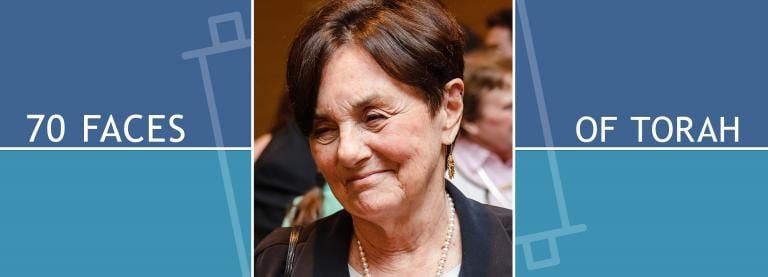
Parashat Vayikra (Leviticus 1:1-5:26)
By Lydia Kukoff
Between the months since I was assigned Parashat Vayikra and last week when I actually began to think about what I was going to say, so much has changed. COVID-19 has entered our world and seems to permeate our every thought and action. Routines are gone, contexts changed. No one, nothing seems safe. We are physically distant from one another. Normalcy is stripped away, leaving only vulnerability and dread.
It is in that frame of mind that I approach Vayikra this year. When I originally learned that I would be writing on this parasha, I groaned inwardly a bit. After all, each of the other four books of the Torah contain actual stories. And what stories they are! Creation, redemption, backsliding, covenant, journeys, complex personalities…. Genesis and Exodus bring us from the creation of the world to the end of the wilderness years.
Leviticus, Vayikra, with its litany of sacrifices and matters of the cult speaks of a system that can feel archaic, remote, and irrelevant to modern sensibilities. It has usually felt that way to me. But the seemingly abrupt change of tone and contents of Leviticus, as well as its placement in the center of the five books, seemed to speak to me of something else this year. This week’s parasha tells me that establishing the sanctuary and participating in the sacrifices that took place within it represents the way that our ancestors ordered and sustained their world.
Amidst the chaos of their world, our ancestors built a sanctuary, a place of order and of physical and spiritual beauty. And Vayikra is the manual that they created. “Korban”, “sacrifice” in English, comes from the Hebrew root which means “to come close”. If we look beyond the graphic details of the slaughtering of animals, we can get a sense of the larger purpose of sacrifice: how to come closer to what is higher.
The “manual” for sacrifices was for all Israel, not just the priests. Although priests were in charge of the service at the altar and the sacrifices, their activity were open to the scrutiny of the people as a whole. Ritual demystified.
Often, in prior years, I found the lists of sins and offerings eye-glazing. This year, I appreciated the concreteness of both the sins and the offerings. Intent and values came through more clearly. The whole concept of taking responsibility for wrong actions, righting the wrong, then bringing a sacrifice—publicly performed in a sacred place for a sacred purpose—seems psychologically sound, meaningful, and uplifting. The system acknowledged the human dignity and equality of all, providing for everyone to bring sacrifices according to their means. No one was exempt, including (especially) rulers, no one excluded. And, if we believe that the misdeeds of some could bring guilt upon all, we understand more about communal responsibility, as well as how an entire society can become corrupted by the actions of the few.
But I think this parasha, and the entire book, are about something larger, and maybe this is why, this year, Vayikra resonated with me in a different way. For our ancestors, Leviticus was a way of ordering the world. No less for us. Once I allowed myself to see beyond the images of animal sacrifice and the minutiae of offerings, I realized that important questions are implied. What does it mean to be a holy people and a nation of priests, a community bound by a covenant? How can we live in the world in such a way that we merit being partners in the covenant into which we all entered when we stood at Sinai? What does it mean to be partners with the God in whose image we are created, and who every day and always renews the work of creation?
Amidst the chaos of the world(ly), we seek an ordered place, a sanctuary. Life, especially now, when every day seems to bring a new “new normal”, can seem frightening, arbitrary, irrational. We live every day in the space between God’s good ordering of the world and human forces whose destructive actions seem to wreak havoc with that plan.
We know what sanctuary meant for our ancestors. What can it mean for us? Maybe the term “shelter in place” can mean more than an emergency measure. Maybe we can reclaim it for a loftier purpose. How can we come closer to what is higher? In this time of vulnerability, can we realize that, through our behavior we have the power to make God be more present in the world. Maybe we can use found hours to find solace in beginning to re-order our universe, to create a fixed center, as our ancestors did. Realizing that we live in a world of “not-yet”, maybe we can re-affirm what gives meaning to our lives as Jews, and as human beings. As Bahya ben Asher (1255-1340, Spain) said, “Days are scrolls. You may write on them what you wish”. What will the scroll of these days contain?
Our tradition bids us: “Choose life, that you may live”. In this time of disruption and uncharted days, may we make choices that are life-sustaining. May we go forward healthy and strengthened.
Shabbat shalom!
Lydia Kukoff is a member of the Hebrew College Board of Trustees.
Previous Post

March 20, 2020
Enough is Enough
Next Post
April 1, 2020 The Todah Offering in a Dark Time
Browse Our Archives
Select a Category Uncategorized
Select a Month April 2026 March 2026 December 2025 November 2025 October 2025 September 2025 August 2025 July 2025 June 2025 May 2025 April 2025 March 2025 February 2025 January 2025 December 2024 November 2024 October 2024 September 2024 August 2024 July 2024 June 2024 May 2024 April 2024 March 2024 February 2024 January 2024 December 2023 November 2023 October 2023 September 2023 August 2023 July 2023 June 2023 May 2023 April 2023 March 2023 February 2023 January 2023 December 2022 November 2022 October 2022 September 2022 August 2022 July 2022 June 2022 May 2022 April 2022 March 2022 February 2022 January 2022 December 2021 November 2021 October 2021 September 2021 August 2021 July 2021 June 2021 May 2021 April 2021 March 2021 February 2021 January 2021 December 2020 November 2020 October 2020 September 2020 August 2020 July 2020 June 2020 May 2020 April 2020 March 2020 February 2020 January 2020 December 2019 November 2019 October 2019 September 2019 August 2019 July 2019 June 2019 May 2019 April 2019 March 2019 February 2019 January 2019 December 2018 November 2018 October 2018 September 2018 August 2018 July 2018 June 2018 May 2018 April 2018 March 2018 February 2018 January 2018 December 2017 November 2017 October 2017 September 2017 August 2017 July 2017 June 2017
Follow Us!
TAKE THE
Religious Wisdom Quiz
Who were the first man and woman according to Genesis?
Select your answer to see how you score.
Adam and Eve Cain and Abel Noah and his wife Abram and Sarai
Related posts from Seventy Faces of Torah

The Holy Art of World Building

Parashat Tzav: Keeping the Sacred Fire Burning

Color Theory: What Joseph’s Coat Reveals
TRENDING AT PATHEOS Jewish

Yom Kippur : Is There Always Room for...
Making Room for Forgiveness Every year as Yom Kippur approaches, I find...

This Rosh Hashanah: Can I Find New Meaning?
A Sunrise, a New Year, and a Question On our way to...

Killing Amalek: The Torah’s Most Misunderstood Commandment
Few passages of the Torah have provoked more confusion, polemic, and misuse...

I have never trusted a first draft. I don’t mean that...

Back to School, Back to Reality—and a New...
A New School Year Begins… Back to Reality A new school year...

Out-Crowleying Crowley: The Emptiness of the O9A
O9A Neo-Crowley Racial Cosplay and Edgelord Atrocitism Aleister Crowley did not create...
view all Jewish blogs
Ad-Free & Subscriber Log-In Subscription Support
- About Us
- 2026 Calendar
- Videos
- Podcasts
- Library of World Religions
- Faith In Media Tracker
- Advertise With Us
- Write for Us
- Privacy Policy
- Terms of Service
- Do Not Sell My Data
- Contact Us
- Radiant Digital
- Manage Newsletter Subscriptions
- Unsubscribe From Notifications
- Sitemap
Copyright 2008-2026, Patheos. All rights reserved.
Subscription Support Ad-Free & Subscriber Log-In
Follow Patheos