
BuddhistCatholicContemplativeEvangelicalGeneral ChristianHinduJewishLatter-day SaintMuslimNew VisionsProgressive Christian
Beliefs
- Buddhist
- Catholic
- Contemplative
- Evangelical
- General Christian
- Hindu
- Jewish
- Latter-day Saint
- More Voices
- Muslim
- New Visions
- Pagan
- Progressive Christian
Topics
- Religion News
- Food and Religion
- Sports and Religion
- Religious Art
- Religious Music and Entertainment
- Religious Events
- History and Religion
- Style and Religion
- Politics and Religion
- Women in Religion
- Recreation Outdoors and Religion
- Business Finance and Religion
- Careers Workplace and Religion
- Education and Religion
- Family Parenting and Religion
- Health Fitness and Religion
- Home and Religion
- Relationships and Religion
- Technology and Religion
- Travel and Religion
Columnists
- Buddhist Columnists
- Business Finance and Religion Columnists
- Careers Workplace and Religion Columnists
- Catholic Columnists
- Contemplative Columnists
- Education and Religion Columnists
- Evangelists Columnists
- Family Parenting and Religion Columnists
- General Christian Columnists
- Health Fitness and Religion Columnists
- Hindu Columnists
- History and Religion Columnists
- Home and Religion Columnists
- Jewish Columnists
- More Voices Columnists
- Latter Day Columnists
- Muslim Columnists
- New Visions Columnists
- Nonreligious Columnists
- Pagan Columnists
- Politics and Religion Columnists
- Progressive Columnists
- Recreation Outdoors and Religion Columnists
- Relationships and Religion Columnists
- Religion News Columnists
- Religious Art Columnists
- Religious Events Columnists
- Religious Music and Entertainment Columnists
- Sports and Religion Columnists
- Style and Religion Columnists
- Technology and Religion Columnists
- Travel and Religion Columnists
- Women in Religion Columnists
Resource Library
- 2026 Calendar
- Library of World Religions
- The 100 Most Holy Places on Earth
- Patheos Answers
- Podcasts
- Videos
- Faith Leaders Database
- Anglican Episcopalian
- Bahai
- Baptist
- Buddhism
- Christianity
- Confucianism
- Eastern Orthodoxy
- Hinduism
- Holiness and Pentecostal
- ISKCON
- Islam
- Judaism
- Lutheran
- Methodist
- The Church of Jesus Christ of Latter-day Saints
- New Age
- Paganism
- Presbytarian and Reformed
- Protestantism
- Religion Behind the Scenes
- Roman Catholic
- Scientology
- Shia Islam
- Sikhism
- Sufism
- Sunni Islam
- Taoism
- Zen
- See all religions
Research Tools
 Ad-Free & Subscriber Log-In Subscription Support
Ad-Free & Subscriber Log-In Subscription Support
Follow Patheos 

- Trending:
- Forgiveness
- |
- Marriage
- |
- Consciousness
- |
- Death Penalty
- |
- Election
- |
- Halloween

- Home
- About Hebrew College
- The Rabbinical School of Hebrew College
- The Book of Psalms
- FREE NEWSLETTER
- Home
- Jewish
- Seeking God’s Face in the Age of Coronavirus
Seeking God’s Face in the Age of Coronavirus
Last updated on: March 11, 2020 at 9:45 am by Hebrew College
Seeking God’s Face in the Age of Coronavirus 2020-03-11T09:45:03-04:00 Hebrew College
Patheos Explore the world's faith through different perspectives on religion and spirituality! Patheos has the views of the prevalent religions and spiritualities of the world.
 Parashat Ki Tisa (Exodus 30:11-34:35)
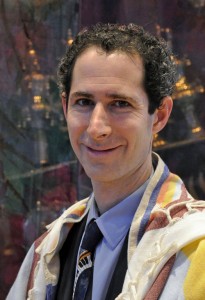
By Cantor Ken Richmond
Purim, the annual topsy-turvy holiday that we celebrated this week, provides an opportunity for thinking about God’s presence and absence, God’s quality of seeming alternately hidden or revealed, as we listen to the only Biblical book without God’s name and wonder whether the plot twists are ruled by God’s will or by lottery, and whether the vicissitudes of the world are meaningful or capricious. This tension seemed even stronger this year, the Divine presence more hidden than usual, as people of all religious and political persuasions united against a common enemy—the coronavirus. The holiday of joy took on elements of fear; some celebrations were canceled and others took place with trepidation (and attempts at improved hygiene), as a holiday of coming together as a community occurred with many of us in isolation.
Our Torah portion, Ki Tisa, also juxtaposes God’s presence and absence, sometimes in jarring ways. The parsha begins with instructions for the building of the mishkan, the ultimate community-building experience, constructed through everyone’s generosity and efforts, with the goal of encouraging God’s presence to dwell in their midst. Suddenly we read that while Moses is communing with God on Mount Sinai, the people despair in his absence, and in what they experience as a corresponding lack of Divine presence or Divine attention, attempt to fill the void by building a Golden Calf. While one could read the Divine anger that results as a perverted version of God’s presence, I prefer to see it as an acute absence in which the Levites slay 3000 of their fellow Israelites, with many more dying in a plague, parallel to the death toll at the hands of the Jews of Persia at the end of Megillat Esther.
Perhaps feeling that if he had been just a little more in harmony with God, the incident might have been avoided1, Moses then asks that God’s presence return to the people, and that God allow him to understand God’s ways. He goes on to say (33:18) “Har’eini na et Kevodecha,” “please show me your Presence.” God responds (33:19-23):
“I will make all My goodness pass before you, and I will proclaim before you the name Adonai, and I will grant grace to the one to whom I grant grace, and have compassion for whoever I have compassion for. But you cannot see My face, for a person may not see Me and live.” God said [further]: “Here is a place with Me. Station yourself on the rock and, as My Presence passes by, I will put you in a cleft of the rock and shield you with My hand until I have passed by. Then I will take My hand away and you will see My back; but My face will not be seen.”
Every time we read this parsha, I’m surprised and moved by Moses, who according to tradition has a incomparably close relationship with God, yet here yearns to become closer still. Rebbe Nachman of Bratslav, whose writings I’m studying this semester with my teacher Rabbi Ebn Leader at Hebrew College, writes about a spiritual quest starting from a place of doubt, a challenge to faith that one’s mind can’t resolve. Through searching and struggle, a person may find some resolution to this doubt. This only clears the way for a new doubt, a new challenge, and perhaps another insight and resolution, ideally with the process repeating, as one ascends higher and higher rungs of a ladder. And even so, according to Rebbe Nachman, “the end of knowledge is that we do not know.” The spiritual journey begins with and is punctuated by doubt, and only by beginning with God’s absence can we hope to reach, temporarily, a sense of God’s presence. The rest of us can be relieved and emboldened by Moses having his own doubts and yearnings, and we can emulate his desire to keep striving for renewed intimacy by overcoming God’s hiddenness.
Commentators bring a variety of interpretations as to the meaning of “God’s back,” which Moses and we can sense, as opposed to “God’s face,” which we can never comprehend. Seforno says that God’s back is the lower working of the heavens, while God’s face is the machinations and motivations of the Divine Mind itself. The Hatam Sofer says that God’s back is the limited understanding that we can have of God’s actions in the world as they occur, with a greater understanding possible later, perhaps only at the end of days. The Kotzker Rebbe, Menachem Mendl of Kotzk, says that everything puzzling and confused that people see is called “God’s back.” But no person can see God’s face, where everything is in harmony.
Sometimes we feel like we’re in a world like that of the Purim story, where God’s presence is hard to find, where we’re buffeted by forces beyond our control; we may have felt this way in some respects even before the latest challenge of the coronavirus, which threatens our health and sense of well-being, and limits the physical and social contact we depend on to form community. One may wonder if seeking God’s presence is something that we can even aspire to in an age of potential pandemic. I would argue that the search becomes even more important, and that the sense of fear and absence of God we may feel can become the catalyst for finding God’s presence in unexpected places, in people’s best efforts to keep each other safe, to care for each other, and to connect as best we can in a time of “social distancing.” We may have to settle for “God’s back,” as the Kotzker rebbe said, with everything still seeming puzzling and confused. But like Moses, we need to keep striving to see God’s face, where everything is in harmony, even if this experience may prove ephemeral, just out of reach. May Moses’ example remind us, especially in a time of uncertainty, to strive to come closer to the Divine and to other people, and in doing so, may we turn fear into caring, anxiety into moments of joy, and God’s hiddenness into revelation.
1 This insight from my teacher Rabbi Nehemia Polen
Ken Richmond has been the Cantor of Temple Israel of Natick since 2006, and has also served since then as adjunct faculty at Hebrew College’s School of Jewish Music. He is using sabbatical time to study at Hebrew College’s Rabbinical School, with an expected ordination date of spring 2021.
Previous Post

March 2, 2020
A Missing Moses – A Missing God – A Missing Spring
Next Post
March 20, 2020 Enough is Enough
Browse Our Archives
Select a Category Uncategorized
Select a Month April 2026 March 2026 December 2025 November 2025 October 2025 September 2025 August 2025 July 2025 June 2025 May 2025 April 2025 March 2025 February 2025 January 2025 December 2024 November 2024 October 2024 September 2024 August 2024 July 2024 June 2024 May 2024 April 2024 March 2024 February 2024 January 2024 December 2023 November 2023 October 2023 September 2023 August 2023 July 2023 June 2023 May 2023 April 2023 March 2023 February 2023 January 2023 December 2022 November 2022 October 2022 September 2022 August 2022 July 2022 June 2022 May 2022 April 2022 March 2022 February 2022 January 2022 December 2021 November 2021 October 2021 September 2021 August 2021 July 2021 June 2021 May 2021 April 2021 March 2021 February 2021 January 2021 December 2020 November 2020 October 2020 September 2020 August 2020 July 2020 June 2020 May 2020 April 2020 March 2020 February 2020 January 2020 December 2019 November 2019 October 2019 September 2019 August 2019 July 2019 June 2019 May 2019 April 2019 March 2019 February 2019 January 2019 December 2018 November 2018 October 2018 September 2018 August 2018 July 2018 June 2018 May 2018 April 2018 March 2018 February 2018 January 2018 December 2017 November 2017 October 2017 September 2017 August 2017 July 2017 June 2017
Follow Us!
TAKE THE
Religious Wisdom Quiz
What does "Jabez" mean in Hebrew?
Select your answer to see how you score.
The Lord Saves Strength Victory Sorrow
Related posts from Seventy Faces of Torah

The Holy Art of World Building

Parashat Tzav: Keeping the Sacred Fire Burning

Color Theory: What Joseph’s Coat Reveals
TRENDING AT PATHEOS Jewish

Building a Little Ark in a Frightening World
This past Shabbat, we read about Noah. I love this story. The...

Yom Kippur : Is There Always Room for...
Making Room for Forgiveness Every year as Yom Kippur approaches, I find...

This Rosh Hashanah: Can I Find New Meaning?
A Sunrise, a New Year, and a Question On our way to...

Killing Amalek: The Torah’s Most Misunderstood Commandment
Few passages of the Torah have provoked more confusion, polemic, and misuse...

I have never trusted a first draft. I don’t mean that...

Back to School, Back to Reality—and a New...
A New School Year Begins… Back to Reality A new school year...
view all Jewish blogs
Ad-Free & Subscriber Log-In Subscription Support
- About Us
- 2026 Calendar
- Videos
- Podcasts
- Library of World Religions
- Faith In Media Tracker
- Advertise With Us
- Write for Us
- Privacy Policy
- Terms of Service
- Do Not Sell My Data
- Contact Us
- Radiant Digital
- Manage Newsletter Subscriptions
- Unsubscribe From Notifications
- Sitemap
Copyright 2008-2026, Patheos. All rights reserved.
Subscription Support Ad-Free & Subscriber Log-In
Follow Patheos