
BuddhistCatholicContemplativeEvangelicalGeneral ChristianHinduJewishLatter-day SaintMuslimNew VisionsProgressive Christian
Beliefs
- Buddhist
- Catholic
- Contemplative
- Evangelical
- General Christian
- Hindu
- Jewish
- Latter-day Saint
- More Voices
- Muslim
- New Visions
- Pagan
- Progressive Christian
Topics
- Religion News
- Food and Religion
- Sports and Religion
- Religious Art
- Religious Music and Entertainment
- Religious Events
- History and Religion
- Style and Religion
- Politics and Religion
- Women in Religion
- Recreation Outdoors and Religion
- Business Finance and Religion
- Careers Workplace and Religion
- Education and Religion
- Family Parenting and Religion
- Health Fitness and Religion
- Home and Religion
- Relationships and Religion
- Technology and Religion
- Travel and Religion
Columnists
- Buddhist Columnists
- Business Finance and Religion Columnists
- Careers Workplace and Religion Columnists
- Catholic Columnists
- Contemplative Columnists
- Education and Religion Columnists
- Evangelists Columnists
- Family Parenting and Religion Columnists
- General Christian Columnists
- Health Fitness and Religion Columnists
- Hindu Columnists
- History and Religion Columnists
- Home and Religion Columnists
- Jewish Columnists
- More Voices Columnists
- Latter Day Columnists
- Muslim Columnists
- New Visions Columnists
- Nonreligious Columnists
- Pagan Columnists
- Politics and Religion Columnists
- Progressive Columnists
- Recreation Outdoors and Religion Columnists
- Relationships and Religion Columnists
- Religion News Columnists
- Religious Art Columnists
- Religious Events Columnists
- Religious Music and Entertainment Columnists
- Sports and Religion Columnists
- Style and Religion Columnists
- Technology and Religion Columnists
- Travel and Religion Columnists
- Women in Religion Columnists
Resource Library
- 2026 Calendar
- Library of World Religions
- The 100 Most Holy Places on Earth
- Patheos Answers
- Podcasts
- Videos
- Faith Leaders Database
- Anglican Episcopalian
- Bahai
- Baptist
- Buddhism
- Christianity
- Confucianism
- Eastern Orthodoxy
- Hinduism
- Holiness and Pentecostal
- ISKCON
- Islam
- Judaism
- Lutheran
- Methodist
- The Church of Jesus Christ of Latter-day Saints
- New Age
- Paganism
- Presbytarian and Reformed
- Protestantism
- Religion Behind the Scenes
- Roman Catholic
- Scientology
- Shia Islam
- Sikhism
- Sufism
- Sunni Islam
- Taoism
- Zen
- See all religions
Research Tools
 Ad-Free & Subscriber Log-In Subscription Support
Ad-Free & Subscriber Log-In Subscription Support
Follow Patheos 

- Trending:
- Forgiveness
- |
- Marriage
- |
- Consciousness
- |
- Death Penalty
- |
- Election
- |
- Halloween

- Home
- About Hebrew College
- The Rabbinical School of Hebrew College
- The Book of Psalms
- FREE NEWSLETTER
- Home
- Jewish
- Enough is Enough
Enough is Enough
Last updated on: March 20, 2020 at 12:53 pm by Hebrew College
Enough is Enough 2020-03-20T12:53:44-04:00 Hebrew College
Patheos Explore the world's faith through different perspectives on religion and spirituality! Patheos has the views of the prevalent religions and spiritualities of the world.
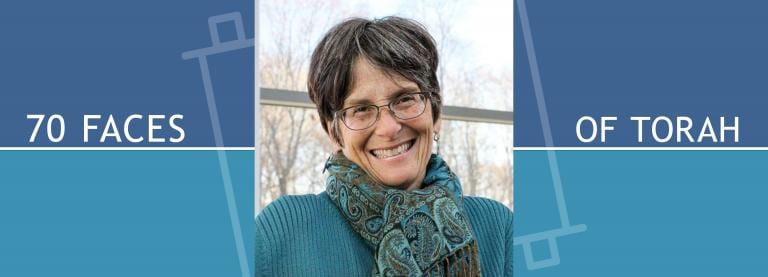
Parashat Vayakhel (Exodus 35:1-38:20)
By Rabbi Sharon Cohen Anisfeld
First, a confession. I am among those already exhausted by the amount of time I am now spending in front of a screen, rather than in the physical presence of other human beings.
Please don’t get me wrong.
I am grateful—deeply and daily—for the technology that is allowing us to stay connected to one another during this period of “social distancing” and to overcome, at least a little, the heightened sense of isolation and anxiety that can come with it.
I am grateful—deeply and daily—for the abundance of generosity and good will with which I see people everywhere undertaking the tremendous effort to, suddenly, strangely, learn to live so much of our lives online. To work, to meet, to study, to pray, to care for each other, to sing (I am particularly touched by the number of emails I’ve seen from people trying to find a way to sing together in this new virtual reality).
Of course, this has been happening in many quarters for a long time, but it feels like there is something undeniably, qualitatively different about the scope and scale of what we are experiencing now. I tend to believe those who say we are only in the first mile of a long-distance marathon. I tend to believe those who say the world will be forever changed by this experience, by this grand—involuntary—experiment in virtual connection, in virtual life.
So, how to orient ourselves to this new and unsettling reality, in which we find ourselves alone, together? Personally, when I feel that my world has been turned upside down, I am temperamentally inclined to look to wisdom that feels timeless. And so I am drawn back to this week’s parasha, to the fertile soil of Torah, to do as one of our sages invited millennia ago—“turn it, and turn it”—and see what emerges from that holy ground that speaks to me in this moment.
This time around, there is one word in particular that has grabbed hold of me and won’t let go.
That word is: “Enough.”
It shows up in Exodus 36:7. The people have responded to Moses’ call to help build the tabernacle, to bring gifts for the Lord—gifts of gold, silver, and copper, a rainbow of colored yarns, fine linens and animal skins, woods, oils, spices, and precious stones. In fact, they have responded with such an abundance of open-hearted generosity that the artisans charged with leading this holy building project come to Moses and say, “The people are bringing more than is needed for the work that the Lord has commanded to be done.”
And so Moses makes the following proclamation to the entire camp: “Let no one make further effort toward gifts for the sanctuary!” And then we are told, “So the people stopped bringing. The work was enough for them, for all they were to do, and more.”
What a breath-taking—or maybe breath-giving—moment.
The work was enough. They had brought enough. They had given enough. They had done enough. Actually, more than enough. How often do we allow ourselves to say this, to really believe this, about our own efforts?
And, particularly in a moment such as this, when the challenges facing us are so vast, not even fully fathomable to those who know enough to know how unfathomable they really are.
The word “enough” here, of course, takes us back to the very beginning of the parshaand shines a light on why the building of the mishkan begins with the reminder to rest on the Sabbath day. “On six days work may be done, but on the seventh day you shall have a Sabbath of complete rest.”
In other words: For six days, you may live in the awareness that that there no limit to the work that needs to be done. There is truth in that awareness, in that incessant knocking on the door of our hearts, asking us to step up to the task, asking us to give more than we thought we had in us, asking us to be generous and brave. But this is not the whole story. There is another truth, the truth embodied in the mitzvah of Shabbat, the truth of “enough”: We have to bring our offerings, and we have to know when it is time to stop bringing, stop building, stop giving, stop doing.
Enough.
We have to learn this not only for ourselves, not only to keep from burning out—though that’s important. We have to learn this because it is a form of idolatry to think that our gifts are so important—that everything and everyone depends so greatly on us—that we can’t stop bringing them, for even a moment.
Enough.
The Hasidic master, the Kedushat Levi teaches that when the verse says, “Their gifts were enough, and more” the Torah is also hinting at a deeper truth about our own mortality. In that moment, he suggests, the people understood that their gifts were sufficient, and they left room for the gifts of generations yet to come.
Shabbat allows us to practice every week saying, “enough”—I’ve done enough, I’ve given enough, I’ve brought enough”—so that when we reach the end of lives, whenever that may be, we can also say, “I’ve done enough, I’ve brought enough, I’ve given enough.” There are others who will follow, there are others who will bring their sacred gifts.
When we sing the Psalm for Shabbat this week, may we bring this awareness into our hearts—the awareness of enough.
Tzaddik katamar yifrach k’erez balvanon yisgeh
Shetulim b’veit Adonai b’hatzrot eloheinu yafrichu.
Plant yourself exactly where you are
For wherever you are is the House of the Holy One.
Everything you need is here.
You will grow tall like the palm,
You will thrive like the cedars of Lebanon
You will flourish and be refreshed,
You will bear fruit in your time.
Set aside your tools
Stop your work and your wanderings
For six days you are the gardener
But on this day you are the garden.
Rabbi Sharon Cohen Anisfeld is President of Hebrew College in Newton Centre, Mass.
Previous Post

March 11, 2020
Seeking God’s Face in the Age of Coronavirus
Next Post
March 23, 2020 Vayikra In These Days
Browse Our Archives
Select a Category Uncategorized
Select a Month April 2026 March 2026 December 2025 November 2025 October 2025 September 2025 August 2025 July 2025 June 2025 May 2025 April 2025 March 2025 February 2025 January 2025 December 2024 November 2024 October 2024 September 2024 August 2024 July 2024 June 2024 May 2024 April 2024 March 2024 February 2024 January 2024 December 2023 November 2023 October 2023 September 2023 August 2023 July 2023 June 2023 May 2023 April 2023 March 2023 February 2023 January 2023 December 2022 November 2022 October 2022 September 2022 August 2022 July 2022 June 2022 May 2022 April 2022 March 2022 February 2022 January 2022 December 2021 November 2021 October 2021 September 2021 August 2021 July 2021 June 2021 May 2021 April 2021 March 2021 February 2021 January 2021 December 2020 November 2020 October 2020 September 2020 August 2020 July 2020 June 2020 May 2020 April 2020 March 2020 February 2020 January 2020 December 2019 November 2019 October 2019 September 2019 August 2019 July 2019 June 2019 May 2019 April 2019 March 2019 February 2019 January 2019 December 2018 November 2018 October 2018 September 2018 August 2018 July 2018 June 2018 May 2018 April 2018 March 2018 February 2018 January 2018 December 2017 November 2017 October 2017 September 2017 August 2017 July 2017 June 2017
Follow Us!
TAKE THE
Religious Wisdom Quiz
Where did Elisha cure Naaman?
Select your answer to see how you score.
Jordan River Mediterranean Sea Sea of Galilee Dead Sea
Related posts from Seventy Faces of Torah

The Holy Art of World Building

Parashat Tzav: Keeping the Sacred Fire Burning

Color Theory: What Joseph’s Coat Reveals

TRENDING AT PATHEOS Jewish

Yom Kippur : Is There Always Room for...
Making Room for Forgiveness Every year as Yom Kippur approaches, I find...

This Rosh Hashanah: Can I Find New Meaning?
A Sunrise, a New Year, and a Question On our way to...

Killing Amalek: The Torah’s Most Misunderstood Commandment
Few passages of the Torah have provoked more confusion, polemic, and misuse...

I have never trusted a first draft. I don’t mean that...

Back to School, Back to Reality—and a New...
A New School Year Begins… Back to Reality A new school year...

Out-Crowleying Crowley: The Emptiness of the O9A
O9A Neo-Crowley Racial Cosplay and Edgelord Atrocitism Aleister Crowley did not create...
view all Jewish blogs
Ad-Free & Subscriber Log-In Subscription Support
- About Us
- 2026 Calendar
- Videos
- Podcasts
- Library of World Religions
- Faith In Media Tracker
- Advertise With Us
- Write for Us
- Privacy Policy
- Terms of Service
- Do Not Sell My Data
- Contact Us
- Radiant Digital
- Manage Newsletter Subscriptions
- Unsubscribe From Notifications
- Sitemap
Copyright 2008-2026, Patheos. All rights reserved.
Subscription Support Ad-Free & Subscriber Log-In
Follow Patheos