
BuddhistCatholicContemplativeEvangelicalGeneral ChristianHinduJewishLatter-day SaintMuslimNew VisionsProgressive Christian
Beliefs
- Buddhist
- Catholic
- Contemplative
- Evangelical
- General Christian
- Hindu
- Jewish
- Latter-day Saint
- More Voices
- Muslim
- New Visions
- Pagan
- Progressive Christian
Topics
- Religion News
- Food and Religion
- Sports and Religion
- Religious Art
- Religious Music and Entertainment
- Religious Events
- History and Religion
- Style and Religion
- Politics and Religion
- Women in Religion
- Recreation Outdoors and Religion
- Business Finance and Religion
- Careers Workplace and Religion
- Education and Religion
- Family Parenting and Religion
- Health Fitness and Religion
- Home and Religion
- Relationships and Religion
- Technology and Religion
- Travel and Religion
Columnists
- Buddhist Columnists
- Business Finance and Religion Columnists
- Careers Workplace and Religion Columnists
- Catholic Columnists
- Contemplative Columnists
- Education and Religion Columnists
- Evangelists Columnists
- Family Parenting and Religion Columnists
- General Christian Columnists
- Health Fitness and Religion Columnists
- Hindu Columnists
- History and Religion Columnists
- Home and Religion Columnists
- Jewish Columnists
- More Voices Columnists
- Latter Day Columnists
- Muslim Columnists
- New Visions Columnists
- Nonreligious Columnists
- Pagan Columnists
- Politics and Religion Columnists
- Progressive Columnists
- Recreation Outdoors and Religion Columnists
- Relationships and Religion Columnists
- Religion News Columnists
- Religious Art Columnists
- Religious Events Columnists
- Religious Music and Entertainment Columnists
- Sports and Religion Columnists
- Style and Religion Columnists
- Technology and Religion Columnists
- Travel and Religion Columnists
- Women in Religion Columnists
Resource Library
- 2026 Calendar
- Library of World Religions
- The 100 Most Holy Places on Earth
- Patheos Answers
- Podcasts
- Videos
- Faith Leaders Database
- Anglican Episcopalian
- Bahai
- Baptist
- Buddhism
- Christianity
- Confucianism
- Eastern Orthodoxy
- Hinduism
- Holiness and Pentecostal
- ISKCON
- Islam
- Judaism
- Lutheran
- Methodist
- The Church of Jesus Christ of Latter-day Saints
- New Age
- Paganism
- Presbytarian and Reformed
- Protestantism
- Religion Behind the Scenes
- Roman Catholic
- Scientology
- Shia Islam
- Sikhism
- Sufism
- Sunni Islam
- Taoism
- Zen
- See all religions
Research Tools
 Ad-Free & Subscriber Log-In Subscription Support
Ad-Free & Subscriber Log-In Subscription Support
Follow Patheos 

- Trending:
- Forgiveness
- |
- Marriage
- |
- Consciousness
- |
- Death Penalty
- |
- Election
- |
- Halloween

- Home
- About Hebrew College
- The Rabbinical School of Hebrew College
- The Book of Psalms
- FREE NEWSLETTER
- Home
- Jewish
- Turn It Over to God
Turn It Over to God
Last updated on: February 24, 2020 at 2:50 pm by Hebrew College
Turn It Over to God 2020-02-24T14:50:38-04:00 Hebrew College
Patheos Explore the world's faith through different perspectives on religion and spirituality! Patheos has the views of the prevalent religions and spiritualities of the world.
 Parashat Terumah (Exodus 25:1-27:19)
By Rabbi Avi Strausberg
A transatlantic flight to Israel. Two adults, two small children, two perfectly packed neatly-organized backpacks. One bag is replete with an assortment of Ziploc bags of all sizes, each sealed with its perfect in-the-air snack: chex mix with surprises (chocolate chips!), veggie straws, dried cranberries. Another bag chock full of smart travel toys: magnetic puzzle sets, shiny new crayons and coloring pads, stickers galore. There are cell phones, headphones, books with flaps, books without flaps, books that make noise (for the kids), books that don’t make noise (for the sake of the other passengers). We have thought through and prepared for every possible scenario. Except it turns out, just one. Airsickness. What did we fail to pack? A change of clothes. Hours later we deboard the plane, not as triumphant warriors who conquered the skies, but as exhausted parents with a naked kiddo wrapped in a sweatshirt not of her own.
We plan for everything. We try to anticipate and account for every moment and yet, it is beyond our control. There’s always something beyond our control.
In this week’s parashat Teruma, God instructs Moshe to invite all of the Israelite community to offer up their precious materials to God. We read, “Speak to the children of Israel, and have them take for Me an offering; from every person whose heart inspires him to generosity, you shall take My offering.” This is a verse inviting us to open up our hearts to God, to turn to God with whatever we have, our gold and silver, our oils and spices, in an attempt to show the Holy One our love. Our offering, our terumah, connected to the Hebrew root to raise up, is that which we lift up to God.
Rabbi Mordechai Yosef Leiner, the Izhbitza rebbe, one of the great Hasidic rebbes of the 19th century, offers a different understanding of just what’s being raised up in this verse. He suggests that that which we are raising up is none other than God Godself. In the Mei HaShiluach he writes, “that Israel should take God, the Blessed one, as exalted above all.” God is the terumah, God is that which is raised up, when we recognize that God is the source of all life and all nourishment.
Rabbi Leiner connects this to a sugya from Massechet Sanhedrin in which the rabbis ask a very specific question. When saying the blessing on bread, ha’motzi lehem min ha’aretz, blessed is the one who brings forth bread from the earth, it is customary to cut into the bread at the moment of blessing. But, where exactly on the bread do we make that cut? Manesseh, the King of Judea, answers: we cut into the bread at the place where the bread crusts. But, why? What’s the significance of the crust and why does it connect to this moment of blessing God for God’s role in bringing forth bread from the earth?
Rabbi Leiner explains: a person is required to do all sorts of things in order to produce a loaf of bread. A person must mix the ingredients, knead the dough, light the oven, and place the as-yet unbaked loaf into the oven. And, then a person has to step back and let the bread take shape. Rabbi Leiner writes, “The place from where the bread starts to cook, i.e. the crust, this is out of the control of the person.” And, when a person realizes this, that the exact mysteries of how and why bread bakes is beyond him, a person realizes that the crusting of the bread, the place where it begins to bake first, is determined by none other than the will of God.
For Rabbi Leiner, the crust represents the places in our lives in which we realize that we are not the ones in control. Rather, we turn our hearts to God, we lift God up as teruma, and we realize it is God that is above all, at all times. I am not a baker by any means. But, I’ve been around enough challah being made to have a sense that it’s not a precise science. Rather, try as one might to control the ingredients, the temperature, the timing and the rise, there’s a certain amount of letting go and letting God in when it comes to hoping and praying that all of one’s vigorous kneading yields a loaf delicious to eat. We do not control when the bread crusts.
When we cut the bread at the moment of blessing it, we are asked not only to acknowledge that there are things beyond control, we are asked to bless it. To bless the uncertainty. To bless a certain sense of powerlessness. To bless our own feeling of humility in the face of all that we cannot control.
We can pack our snack bags and backpacks of travel toys. We can pack our fancy screens and shiny crayons, and we can even remember to bring a change of clothes. I mean, we were traveling with a baby after all. (What were we thinking?). But, we cannot control everything. At a certain point, in all of our preparations, we have to accept that there will be things that we did not anticipate. There will be circumstances for which we are not prepared.
Praised are you, Oh Holy One, creator and sustainer of the universe, who brings forth bread from the earth, who determines the precise moment of the crusting of the bread. We acknowledge our powerlessness in the face of all of our planning, and we bless all that is unknown, that which is beyond our control.
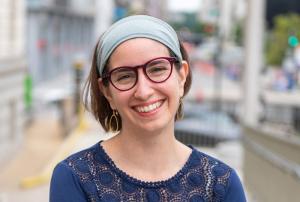
Rabbi Avi Strausberg is Director of National Learning Initiatives at Hadar in Washington, D.C. She was ordained in 2015 by Hebrew College.
Previous Post

February 18, 2020
36
Next Post
March 2, 2020 A Missing Moses – A Missing God – A Missing Spring
Browse Our Archives
Select a Category Uncategorized
Select a Month April 2026 March 2026 December 2025 November 2025 October 2025 September 2025 August 2025 July 2025 June 2025 May 2025 April 2025 March 2025 February 2025 January 2025 December 2024 November 2024 October 2024 September 2024 August 2024 July 2024 June 2024 May 2024 April 2024 March 2024 February 2024 January 2024 December 2023 November 2023 October 2023 September 2023 August 2023 July 2023 June 2023 May 2023 April 2023 March 2023 February 2023 January 2023 December 2022 November 2022 October 2022 September 2022 August 2022 July 2022 June 2022 May 2022 April 2022 March 2022 February 2022 January 2022 December 2021 November 2021 October 2021 September 2021 August 2021 July 2021 June 2021 May 2021 April 2021 March 2021 February 2021 January 2021 December 2020 November 2020 October 2020 September 2020 August 2020 July 2020 June 2020 May 2020 April 2020 March 2020 February 2020 January 2020 December 2019 November 2019 October 2019 September 2019 August 2019 July 2019 June 2019 May 2019 April 2019 March 2019 February 2019 January 2019 December 2018 November 2018 October 2018 September 2018 August 2018 July 2018 June 2018 May 2018 April 2018 March 2018 February 2018 January 2018 December 2017 November 2017 October 2017 September 2017 August 2017 July 2017 June 2017
Follow Us!
TAKE THE
Religious Wisdom Quiz
What does "Jubilee" mean?
Select your answer to see how you score.
Blessed year Offering Ram's horn Restoration
Related posts from Seventy Faces of Torah

The Holy Art of World Building

Parashat Tzav: Keeping the Sacred Fire Burning

Color Theory: What Joseph’s Coat Reveals
TRENDING AT PATHEOS Jewish

Building a Little Ark in a Frightening World
This past Shabbat, we read about Noah. I love this story. The...

Yom Kippur : Is There Always Room for...
Making Room for Forgiveness Every year as Yom Kippur approaches, I find...

This Rosh Hashanah: Can I Find New Meaning?
A Sunrise, a New Year, and a Question On our way to...

Killing Amalek: The Torah’s Most Misunderstood Commandment
Few passages of the Torah have provoked more confusion, polemic, and misuse...

I have never trusted a first draft. I don’t mean that...

Back to School, Back to Reality—and a New...
A New School Year Begins… Back to Reality A new school year...
view all Jewish blogs
Ad-Free & Subscriber Log-In Subscription Support
- About Us
- 2026 Calendar
- Videos
- Podcasts
- Library of World Religions
- Faith In Media Tracker
- Advertise With Us
- Write for Us
- Privacy Policy
- Terms of Service
- Do Not Sell My Data
- Contact Us
- Radiant Digital
- Manage Newsletter Subscriptions
- Unsubscribe From Notifications
- Sitemap
Copyright 2008-2026, Patheos. All rights reserved.
Subscription Support Ad-Free & Subscriber Log-In
Follow Patheos