
BuddhistCatholicContemplativeEvangelicalGeneral ChristianHinduJewishLatter-day SaintMuslimNew VisionsProgressive Christian
Beliefs
- Buddhist
- Catholic
- Contemplative
- Evangelical
- General Christian
- Hindu
- Jewish
- Latter-day Saint
- More Voices
- Muslim
- New Visions
- Pagan
- Progressive Christian
Topics
- Religion News
- Food and Religion
- Sports and Religion
- Religious Art
- Religious Music and Entertainment
- Religious Events
- History and Religion
- Style and Religion
- Politics and Religion
- Women in Religion
- Recreation Outdoors and Religion
- Business Finance and Religion
- Careers Workplace and Religion
- Education and Religion
- Family Parenting and Religion
- Health Fitness and Religion
- Home and Religion
- Relationships and Religion
- Technology and Religion
- Travel and Religion
Columnists
- Buddhist Columnists
- Business Finance and Religion Columnists
- Careers Workplace and Religion Columnists
- Catholic Columnists
- Contemplative Columnists
- Education and Religion Columnists
- Evangelists Columnists
- Family Parenting and Religion Columnists
- General Christian Columnists
- Health Fitness and Religion Columnists
- Hindu Columnists
- History and Religion Columnists
- Home and Religion Columnists
- Jewish Columnists
- More Voices Columnists
- Latter Day Columnists
- Muslim Columnists
- New Visions Columnists
- Nonreligious Columnists
- Pagan Columnists
- Politics and Religion Columnists
- Progressive Columnists
- Recreation Outdoors and Religion Columnists
- Relationships and Religion Columnists
- Religion News Columnists
- Religious Art Columnists
- Religious Events Columnists
- Religious Music and Entertainment Columnists
- Sports and Religion Columnists
- Style and Religion Columnists
- Technology and Religion Columnists
- Travel and Religion Columnists
- Women in Religion Columnists
Resource Library
- 2026 Calendar
- Library of World Religions
- The 100 Most Holy Places on Earth
- Patheos Answers
- Podcasts
- Videos
- Faith Leaders Database
- Anglican Episcopalian
- Bahai
- Baptist
- Buddhism
- Christianity
- Confucianism
- Eastern Orthodoxy
- Hinduism
- Holiness and Pentecostal
- ISKCON
- Islam
- Judaism
- Lutheran
- Methodist
- The Church of Jesus Christ of Latter-day Saints
- New Age
- Paganism
- Presbytarian and Reformed
- Protestantism
- Religion Behind the Scenes
- Roman Catholic
- Scientology
- Shia Islam
- Sikhism
- Sufism
- Sunni Islam
- Taoism
- Zen
- See all religions
Research Tools
 Ad-Free & Subscriber Log-In Subscription Support
Ad-Free & Subscriber Log-In Subscription Support
Follow Patheos 

- Trending:
- Forgiveness
- |
- Marriage
- |
- Consciousness
- |
- Death Penalty
- |
- Election
- |
- Halloween

- Home
- About Hebrew College
- The Rabbinical School of Hebrew College
- The Book of Psalms
- FREE NEWSLETTER
- Home
- Jewish
- Aligning Our Visions, Systems & Actions
Aligning Our Visions, Systems & Actions
Last updated on: February 13, 2020 at 11:36 am by Hebrew College
Aligning Our Visions, Systems & Actions 2020-02-13T11:36:29-04:00 Hebrew College
Patheos Explore the world's faith through different perspectives on religion and spirituality! Patheos has the views of the prevalent religions and spiritualities of the world.
Parashat Yitro (Exodus 18:1-20:23)
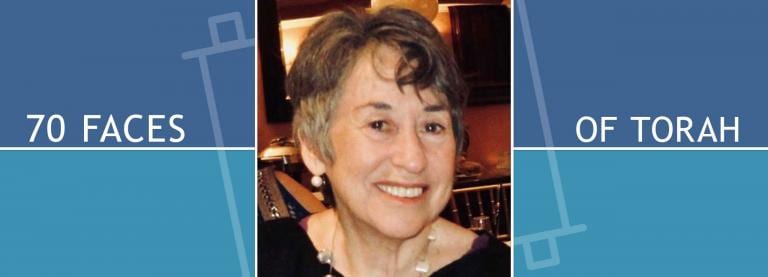
By Susan Shevitz
This week we read about the central event in the collective consciousness of the Jewish people: the revelation at Sinai. Parashat Yitro (the Torah portion of Jethro) vividly describes the activities and prohibitions that were to prepare the Israelites for the coming experience. Fire and smoke, blasting horns and quaking mountains lead to this seminal event in the memory of Am Yisrael (the Jewish people). And yet, if this great revelatory event was transcendent and other-worldly, it is immediately preceded and followed by texts that seem far more ordinary. In chapter 18 of Exodus we read what we might today call the community’s organizational system, and in the latter part of chapter 20 a set of rules about idolatry that continues into the next portion.
As a child, I learned a powerful insight from the great medieval commentator Rashi that has stuck with me over the years. In fine rabbinic fashion, he posed his insight in the form of a rhetorical question: “Mah inyan Shmitah etzel Har Sinai?“ Why is the matter of the Sabbatical Year [and the Jubilee] placed next to [a reference to] Mount Sinai?” What an inviting way to inquire about the relationship among adjacent, and seemingly unrelated, statements! The question can be used more broadly to consider the relationship between any two proximate items that appear at first glance to be disconnected.
There are many possible responses to Rashi’s question, of course. He argues (based on an earlier rabbinic teaching) that this juxtaposition teaches us that both the “general rules and minute details” of the Sabbatical Year were ordained on Mount Sinai! “So, too, were all commandments [in the Torah] with their general rules and minute details” revealed during this monumental event, even those that did not appear in the Ten Commandments.
Since Hebrew College educates leaders for the Jewish community and broader world, I offer my own commentary that relates to leaders and community organizations, drawing Rashi and a pair of modern scholars. Lee Bolman and Terry Deal argue that all organizations can be looked at from four different inter-related perspectives: (1) symbolic, (2) structural, (3) human resources, and (4) political. Our text embodies the first two perspectives, and hints here at the third (that is elaborated in many other Torah texts). We will leave the fourth for a future portion.
Symbolic: Expressing Foundational Values and Beliefs
Let’s start with the central event: the revelation at Sinai. This encounter expressed foundational values and beliefs around which the Israelites could coalesce and what they express is at the heart of Judaism. While of course not analogous to the awesome events at Sinai, contemporary Jewish community organizations likewise need to identify and proclaim their animating values and beliefs as well as nurture visionary leaders who know in their kishkes (guts) the power of symbolic expression. Stories that link the present with both the past and future, rituals that exemplify the values, ceremonies that involve their affirmation, and other rousing expressions of a group’s values and beliefs invite people’s enduring commitment and provide meaning to their lives.
Structural: Creating Structures to Enable Success
There are two different ways that we see evidence of the structural frame: by creating systems and specifying expectations, procedures and laws.
Creating Systems
It is not unusual for groups that form around novel insights, important purposes, and dedicated individuals, to be hampered by forces that members don’t seem to notice or deal with. Perhaps, like Moses, they work heroically just to keep things going. Or perhaps they don’t care much about practical details.
At the opening of the parashah, Moses’s father-in-law, the Midianite priest Yitro, offers us a powerful lesson. While at the Israelite encampment with his daughter and grandsons, Moses describes the exodus from Egypt. Yitro is so impressed by what God did for the Israelites that he spontaneously proclaims the supremacy of the Israelite deity and offers a sacrifice to God (Exodus 18:11). But the next day he encounters a grimmer reality: Day and night, Moses is the only person dealing with the people’s questions and disputes. Imagine his to-do list and the frustrations of the people who wait for his attention!
After first asking Moses why he acts like this, Yitro wisely confronts Moses: Doing this “is not right. You will surely wear yourself out for the task is too heavy for you. You cannot do it on your own.” Yitro then designs a well-differentiated judiciary and administrative system and even instructs Moses on the kind of people who should fill the roles (Exodus 18:13-23). Yitro’s challenge is as timely today as ever: Systems that support an inspiring enterprise are essential. And if people who structure them are, like Yitro, clear, forthright, and eager to empower others, they make it more likely that the endeavor will endure. At the same time the criteria Yitro suggests for people to fulfill the new roles also show concern for the human aspects of organizational life.
Establishing Expectations, Procedures and Laws
The laws that follow the giving of the Ten Commandments at the end of parashat Yitro and in the following portion also express the values and beliefs that are at the heart of God’s expectations for the Jewish people. They, for example, are to remember that they were once slaves because it leads to treating others compassionately, as God did with the Israelites. Like the effort to develop systems, the need to specify expectations, procedures, and laws can be taken-for-granted. But without attention they can develop haphazardly as people respond to whatever problems emerge. Alternatively, they might develop with minimal reference to the values and beliefs that are intended to be at the heart of the endeavor, so that a gap between what is said and what is done grows and the core values and beliefs erode. Principles and actions need to align. Leaders who are prepared to translate a group’s ideals, values, and aspirations into expectations, procedures and, laws are also essential.
Structures Aligned to the Grand Vision
God’s giving the Torah to the Jewish people at Sinai is the focus of Parashat Yitro and central to Jewish life throughout the ages. Jews will always be grappling with what this means and how to actualize God’s vision in the here and now. But in honor of its namesake, our text also reminds us that grand vision is not enough. We will always need bold visionaries to inspire and orient us. Organizations, whether large or small, also need leaders who design and implement what we might call the “delivery systems” of structures and rules. “The Word” is essential, but to make a difference in our lives, we must also consider how to turn words into actions and aspirations into reality.
Susan Shevitz is associate professor emerita at Brandeis University, where she taught in and then directed the Hornstein Program in Jewish Communal Service (now Jewish Professional Leadership). She has also taught a course on leading as clergy to each cohort of the Rabbinical School of Hebrew College as an adjunct faculty member, and currently serves as a member of the Hebrew College Board of Trustees.
Previous Post

February 4, 2020
Sighing Towards The Source of Life
Next Post
February 18, 2020 36
Browse Our Archives
Select a Category Uncategorized
Select a Month April 2026 March 2026 December 2025 November 2025 October 2025 September 2025 August 2025 July 2025 June 2025 May 2025 April 2025 March 2025 February 2025 January 2025 December 2024 November 2024 October 2024 September 2024 August 2024 July 2024 June 2024 May 2024 April 2024 March 2024 February 2024 January 2024 December 2023 November 2023 October 2023 September 2023 August 2023 July 2023 June 2023 May 2023 April 2023 March 2023 February 2023 January 2023 December 2022 November 2022 October 2022 September 2022 August 2022 July 2022 June 2022 May 2022 April 2022 March 2022 February 2022 January 2022 December 2021 November 2021 October 2021 September 2021 August 2021 July 2021 June 2021 May 2021 April 2021 March 2021 February 2021 January 2021 December 2020 November 2020 October 2020 September 2020 August 2020 July 2020 June 2020 May 2020 April 2020 March 2020 February 2020 January 2020 December 2019 November 2019 October 2019 September 2019 August 2019 July 2019 June 2019 May 2019 April 2019 March 2019 February 2019 January 2019 December 2018 November 2018 October 2018 September 2018 August 2018 July 2018 June 2018 May 2018 April 2018 March 2018 February 2018 January 2018 December 2017 November 2017 October 2017 September 2017 August 2017 July 2017 June 2017
Follow Us!
TAKE THE
Religious Wisdom Quiz
What did Jesus use to heal deaf man?
Select your answer to see how you score.
Fingers in ears Oil Mud Water
Related posts from Seventy Faces of Torah

The Holy Art of World Building

Parashat Tzav: Keeping the Sacred Fire Burning

Color Theory: What Joseph’s Coat Reveals
TRENDING AT PATHEOS Jewish

Building a Little Ark in a Frightening World
This past Shabbat, we read about Noah. I love this story. The...

Yom Kippur : Is There Always Room for...
Making Room for Forgiveness Every year as Yom Kippur approaches, I find...

This Rosh Hashanah: Can I Find New Meaning?
A Sunrise, a New Year, and a Question On our way to...

Killing Amalek: The Torah’s Most Misunderstood Commandment
Few passages of the Torah have provoked more confusion, polemic, and misuse...

I have never trusted a first draft. I don’t mean that...

Back to School, Back to Reality—and a New...
A New School Year Begins… Back to Reality A new school year...
view all Jewish blogs
Ad-Free & Subscriber Log-In Subscription Support
- About Us
- 2026 Calendar
- Videos
- Podcasts
- Library of World Religions
- Faith In Media Tracker
- Advertise With Us
- Write for Us
- Privacy Policy
- Terms of Service
- Do Not Sell My Data
- Contact Us
- Radiant Digital
- Manage Newsletter Subscriptions
- Unsubscribe From Notifications
- Sitemap
Copyright 2008-2026, Patheos. All rights reserved.
Subscription Support Ad-Free & Subscriber Log-In
Follow Patheos