
BuddhistCatholicContemplativeEvangelicalGeneral ChristianHinduJewishLatter-day SaintMuslimNew VisionsProgressive Christian
Beliefs
- Buddhist
- Catholic
- Contemplative
- Evangelical
- General Christian
- Hindu
- Jewish
- Latter-day Saint
- More Voices
- Muslim
- New Visions
- Pagan
- Progressive Christian
Topics
- Religion News
- Food and Religion
- Sports and Religion
- Religious Art
- Religious Music and Entertainment
- Religious Events
- History and Religion
- Style and Religion
- Politics and Religion
- Women in Religion
- Recreation Outdoors and Religion
- Business Finance and Religion
- Careers Workplace and Religion
- Education and Religion
- Family Parenting and Religion
- Health Fitness and Religion
- Home and Religion
- Relationships and Religion
- Technology and Religion
- Travel and Religion
Columnists
- Buddhist Columnists
- Business Finance and Religion Columnists
- Careers Workplace and Religion Columnists
- Catholic Columnists
- Contemplative Columnists
- Education and Religion Columnists
- Evangelists Columnists
- Family Parenting and Religion Columnists
- General Christian Columnists
- Health Fitness and Religion Columnists
- Hindu Columnists
- History and Religion Columnists
- Home and Religion Columnists
- Jewish Columnists
- More Voices Columnists
- Latter Day Columnists
- Muslim Columnists
- New Visions Columnists
- Nonreligious Columnists
- Pagan Columnists
- Politics and Religion Columnists
- Progressive Columnists
- Recreation Outdoors and Religion Columnists
- Relationships and Religion Columnists
- Religion News Columnists
- Religious Art Columnists
- Religious Events Columnists
- Religious Music and Entertainment Columnists
- Sports and Religion Columnists
- Style and Religion Columnists
- Technology and Religion Columnists
- Travel and Religion Columnists
- Women in Religion Columnists
Resource Library
- 2026 Calendar
- Library of World Religions
- The 100 Most Holy Places on Earth
- Patheos Answers
- Podcasts
- Videos
- Faith Leaders Database
- Anglican Episcopalian
- Bahai
- Baptist
- Buddhism
- Christianity
- Confucianism
- Eastern Orthodoxy
- Hinduism
- Holiness and Pentecostal
- ISKCON
- Islam
- Judaism
- Lutheran
- Methodist
- The Church of Jesus Christ of Latter-day Saints
- New Age
- Paganism
- Presbytarian and Reformed
- Protestantism
- Religion Behind the Scenes
- Roman Catholic
- Scientology
- Shia Islam
- Sikhism
- Sufism
- Sunni Islam
- Taoism
- Zen
- See all religions
Research Tools
 Ad-Free & Subscriber Log-In Subscription Support
Ad-Free & Subscriber Log-In Subscription Support
Follow Patheos 

- Trending:
- Forgiveness
- |
- Marriage
- |
- Consciousness
- |
- Death Penalty
- |
- Election
- |
- Halloween

- Home
- About Hebrew College
- The Rabbinical School of Hebrew College
- The Book of Psalms
- FREE NEWSLETTER
- Home
- Jewish
- Teshuvah: Wisdom from Teachers and Children
Teshuvah: Wisdom from Teachers and Children
Last updated on: September 26, 2019 at 11:07 am by Hebrew College
Teshuvah: Wisdom from Teachers and Children 2019-09-26T11:07:53-04:00 Hebrew College
Patheos Explore the world's faith through different perspectives on religion and spirituality! Patheos has the views of the prevalent religions and spiritualities of the world.
On Father’s Day 2015, I traveled with my children to New Haven, Connecticut to celebrate with my father-in-law. On our way home to Boston, we stopped in Hartford because my teacher, Rabbi Zalman Schachter-Shalomi (of blessed memory) had fallen gravely ill while teaching at a nearby retreat center. Knowing that my kids might not have many more opportunities to engage with Reb Zalman (as he is affectionately known), I asked them to think in advance about a question they might want to ask him.
When we arrived at his hospital room, I was surprised to see my lifelong mentor looking so fragile and connected to several machines. This was the person who held me in his arms at my circumcision, who helped me put on my prayer shawl at my bar mitzvah, and who, several years later was one of the rabbis to ordain me.
My daughter, however, was undaunted, and walked right up to Reb Zalman’s bed and told him that she had a question for him.
He smiled, adjusted his glasses, and said, “Go ahead, let’s hear it.”
“How did you become so smart?” she asked.
After suppressing a giggle, Reb Zalman took a deep breath and responded: “To tell you the truth, I am not so proud that I am smart. After all, God gave me my brain and my parents and teachers gave me a good education. What I am prouder of is that I have become wise.”
Without missing a beat, my daughter retorted: “So how did you become wise?”
This time, Reb Zalman let out a chuckle, then looked directly at her and said: “I became wise by making a lot of mistakes and trying to learn from them.” He paused for a moment, and with a characteristic glint in his eye, added, “And if you want to know more, ask your sabba (grandfather) and savta (grandmother) because they were there!”
I have been thinking a lot about that story lately. Not only because am I working on editing a collection of Reb Zalman’s teachings with a dear colleague, but it is the Hebrew month of Elul and this is a time for intensive introspection in preparation for the High Holy Days. This is the season to ask big questions–to sift and sort, seeking to clarify who we are and who we wish to be. In a word, it is the season of teshuvah, of turning and returning, to self, other, and to God.
In thinking about what was my last encounter with Reb Zalman and the process of teshuvah, the following insights (re)emerged for me:
- One cannot become wise without making mistakes, but one must also admit to their mistakes and work diligently to ameliorate them. On the one hand, our ancient sages teach us that God created teshuvah before creating the world (see, for example, BT Nedarim 39b). Why? Because the Divine understood that without failure there could be no growth. And without growth, life is meaningless. On the other hand, we have to honestly assess our actions–good and bad. The philosopher Martin Buber astutely notes that among the first acts of the first human beings in the Hebrew Bible is to sin and to hide (Genesis 3:8). He goes on to say that Adam and Eve begin their journey as mature people when they bravely decide to answer God’s call–to come out of hiding (The Way of Man, pp. 8-10).
- We need dedicated times for teshuvah like Rosh Hashanah and Yom Kippur, and these days are but reminders of an ongoing, lifelong process. Without the grandeur and intensity of the High Holy Days, it would be more difficult to attend to the work of repentance and repair the rest of the year. One of the gifts of religion (all religions) is the institution of sacred times and places at and in which to bring specific focus to different dimensions of our lives. These seasonal and physical markers remind us of what is most important in life. At the same time, the rabbis said long ago that while we symbolically close “the gates of teshuvah” at the end of Yom Kippur, they are, in fact, open every day (see, for example, Lamentations Rabbah 3:43). The question is if we are aware enough, and brave enough, to pass through them.
- We need to take full responsibility for our actions, and we need supportive and challenging companions to help us along the way. It is tempting to blame other people or institutions for our misbehavior. Life is not always fair, and there are individuals and societal structures that act against righteousness and justice. And, we are endowed with free will. We cannot control life, but we can respond to it in more or less thoughtful and compassionate ways. At the same time, surrounding ourselves with people who are caring and honest enough both to praise and criticize us when necessary is foundational to living a good and upright life. Returning to the image of Adam and Eve, the sages remark that Eve is to function as both one who both “helps” and “stands against” (BT Yevamot 63a, based on the Hebrew wording in Genesis 2:18). We all must serve both functions in the lives of those we call our lovers and friends.
One of my favorite passages in the Hebrew Bible (and liturgical texts) is Psalm 90, in which the ancient poet asks God for help in gaining a “heart of wisdom” (verse 12). In preparing for Rosh Hashanah, I am inspired by the wisdom of my teacher in his interaction with my intrepid daughter. Life is complicated, we will make mistakes, and we have the opportunity to grow and change. This is the season to take the next step.
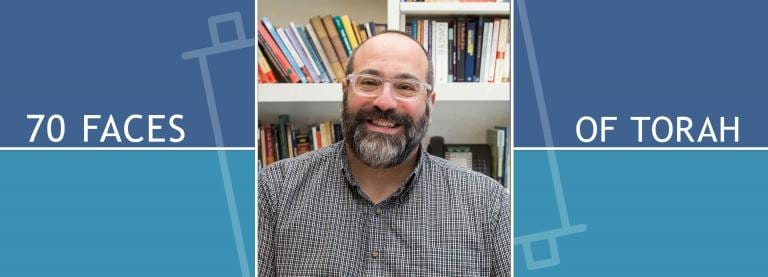
Rabbi Or N. Rose is Director of the Hebrew College Miller Center for Interreligious Learning & Leadership.
Previous Post

September 18, 2019
Telling Our Stories, Living Our Stories
Next Post
October 2, 2019 How Moses Comes to Terms with Mortality
Browse Our Archives
Select a Category Uncategorized
Select a Month April 2026 March 2026 December 2025 November 2025 October 2025 September 2025 August 2025 July 2025 June 2025 May 2025 April 2025 March 2025 February 2025 January 2025 December 2024 November 2024 October 2024 September 2024 August 2024 July 2024 June 2024 May 2024 April 2024 March 2024 February 2024 January 2024 December 2023 November 2023 October 2023 September 2023 August 2023 July 2023 June 2023 May 2023 April 2023 March 2023 February 2023 January 2023 December 2022 November 2022 October 2022 September 2022 August 2022 July 2022 June 2022 May 2022 April 2022 March 2022 February 2022 January 2022 December 2021 November 2021 October 2021 September 2021 August 2021 July 2021 June 2021 May 2021 April 2021 March 2021 February 2021 January 2021 December 2020 November 2020 October 2020 September 2020 August 2020 July 2020 June 2020 May 2020 April 2020 March 2020 February 2020 January 2020 December 2019 November 2019 October 2019 September 2019 August 2019 July 2019 June 2019 May 2019 April 2019 March 2019 February 2019 January 2019 December 2018 November 2018 October 2018 September 2018 August 2018 July 2018 June 2018 May 2018 April 2018 March 2018 February 2018 January 2018 December 2017 November 2017 October 2017 September 2017 August 2017 July 2017 June 2017
Follow Us!
TAKE THE
Religious Wisdom Quiz
My beloved is mine and I am his; he browses among these flowers. What flowers represent purity and beauty?
Select your answer to see how you score.
Roses Lilies Wildflowers Crocus
Related posts from Seventy Faces of Torah

The Holy Art of World Building

Parashat Tzav: Keeping the Sacred Fire Burning

Color Theory: What Joseph’s Coat Reveals
TRENDING AT PATHEOS Jewish

Building a Little Ark in a Frightening World
This past Shabbat, we read about Noah. I love this story. The...

Yom Kippur : Is There Always Room for...
Making Room for Forgiveness Every year as Yom Kippur approaches, I find...

This Rosh Hashanah: Can I Find New Meaning?
A Sunrise, a New Year, and a Question On our way to...

Killing Amalek: The Torah’s Most Misunderstood Commandment
Few passages of the Torah have provoked more confusion, polemic, and misuse...

I have never trusted a first draft. I don’t mean that...

Back to School, Back to Reality—and a New...
A New School Year Begins… Back to Reality A new school year...
view all Jewish blogs
Ad-Free & Subscriber Log-In Subscription Support
- About Us
- 2026 Calendar
- Videos
- Podcasts
- Library of World Religions
- Faith In Media Tracker
- Advertise With Us
- Write for Us
- Privacy Policy
- Terms of Service
- Do Not Sell My Data
- Contact Us
- Radiant Digital
- Manage Newsletter Subscriptions
- Unsubscribe From Notifications
- Sitemap
Copyright 2008-2026, Patheos. All rights reserved.
Subscription Support Ad-Free & Subscriber Log-In
Follow Patheos