
BuddhistCatholicContemplativeEvangelicalGeneral ChristianHinduJewishLatter-day SaintMuslimNew VisionsProgressive Christian
Beliefs
- Buddhist
- Catholic
- Contemplative
- Evangelical
- General Christian
- Hindu
- Jewish
- Latter-day Saint
- More Voices
- Muslim
- New Visions
- Pagan
- Progressive Christian
Topics
- Religion News
- Food and Religion
- Sports and Religion
- Religious Art
- Religious Music and Entertainment
- Religious Events
- History and Religion
- Style and Religion
- Politics and Religion
- Women in Religion
- Recreation Outdoors and Religion
- Business Finance and Religion
- Careers Workplace and Religion
- Education and Religion
- Family Parenting and Religion
- Health Fitness and Religion
- Home and Religion
- Relationships and Religion
- Technology and Religion
- Travel and Religion
Columnists
- Buddhist Columnists
- Business Finance and Religion Columnists
- Careers Workplace and Religion Columnists
- Catholic Columnists
- Contemplative Columnists
- Education and Religion Columnists
- Evangelists Columnists
- Family Parenting and Religion Columnists
- General Christian Columnists
- Health Fitness and Religion Columnists
- Hindu Columnists
- History and Religion Columnists
- Home and Religion Columnists
- Jewish Columnists
- More Voices Columnists
- Latter Day Columnists
- Muslim Columnists
- New Visions Columnists
- Nonreligious Columnists
- Pagan Columnists
- Politics and Religion Columnists
- Progressive Columnists
- Recreation Outdoors and Religion Columnists
- Relationships and Religion Columnists
- Religion News Columnists
- Religious Art Columnists
- Religious Events Columnists
- Religious Music and Entertainment Columnists
- Sports and Religion Columnists
- Style and Religion Columnists
- Technology and Religion Columnists
- Travel and Religion Columnists
- Women in Religion Columnists
Resource Library
- 2026 Calendar
- Library of World Religions
- The 100 Most Holy Places on Earth
- Patheos Answers
- Podcasts
- Videos
- Faith Leaders Database
- Anglican Episcopalian
- Bahai
- Baptist
- Buddhism
- Christianity
- Confucianism
- Eastern Orthodoxy
- Hinduism
- Holiness and Pentecostal
- ISKCON
- Islam
- Judaism
- Lutheran
- Methodist
- The Church of Jesus Christ of Latter-day Saints
- New Age
- Paganism
- Presbytarian and Reformed
- Protestantism
- Religion Behind the Scenes
- Roman Catholic
- Scientology
- Shia Islam
- Sikhism
- Sufism
- Sunni Islam
- Taoism
- Zen
- See all religions
Research Tools
 Ad-Free & Subscriber Log-In Subscription Support
Ad-Free & Subscriber Log-In Subscription Support
Follow Patheos 

- Trending:
- Forgiveness
- |
- Marriage
- |
- Consciousness
- |
- Death Penalty
- |
- Election
- |
- Halloween

- Home
- About Hebrew College
- The Rabbinical School of Hebrew College
- The Book of Psalms
- FREE NEWSLETTER
- Home
- Jewish
- Telling Our Stories, Living Our Stories
Telling Our Stories, Living Our Stories
Last updated on: September 18, 2019 at 4:28 pm by Hebrew College
Telling Our Stories, Living Our Stories 2019-09-18T16:28:57-04:00 Hebrew College
Patheos Explore the world's faith through different perspectives on religion and spirituality! Patheos has the views of the prevalent religions and spiritualities of the world.
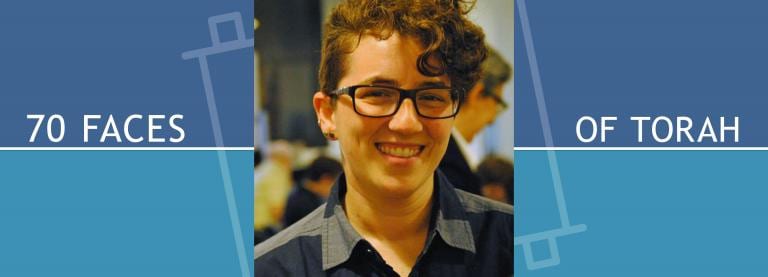
By Frankie Sandmel
Parashat Ki Tavo (Deuteronomy 26:1-29:8)
My fourth grade teacher was a Holocaust survivor. I don’t remember much about her beyond how kindly she welcomed me as a new kid into the school and that we built dioramas of Janush Korczak’s story out of model magic. Janush Korzak ran an orphanage for Jewish children in Poland in the 1930s and, when the Nazis came to bring the children to the concentration camps, he went with them to support them. (At least, that’s how I’ve retained the story so many years later).
This wasn’t the first holocaust story that I had internalized and it certainly won’t be the last, but I can still see the red and yellow clay children that I built, standing in lines in front of a construction paper orphanage.
Already in fourth grade, the story of the Holocaust, the story of “never again,” was real, live, and mine. I have always learned best through stories.
In this week’s parsha, we are given the guidelines for telling another story. It comes in the form of a formula to recite upon sacrificing our first fruits in the temple:
אֲרַמִּי אֹבֵד אָבִי וַיֵּרֶד מִצְרַיְמָה וַיָּגָר שָׁם בִּמְתֵי מְעָט וַיְהִי־שָׁם לְגוֹי גָּדוֹל עָצוּם וָרָב.
וַיָּרֵעוּ אֹתָנוּהַמִּצְרִים וַיְעַנּוּנוּ וַיִּתְּנוּ עָלֵינוּ עֲבֹדָה קָשָׁה
“Our ancestors were wandering Aramean. They went down to Egypt. They lived there as strangers, few in number. There they became a great nation, mighty and numerous. But the Egyptians were cruel to us. They afflicted us. They imposed hard labor upon us…” (Deut 26:5-6).
When I read these words, I hear them in the rhythm of communal recitation, in the English translation found in the CCAR’s 1981 haggadah, the one my brother and I carefully place at each seat at our family’s seder every year. I’ve heard them read so many times that I can recite many of them by heart. We learn in the Mishna that the same words from this week’s Parsha are our starting point for the Exodus story we tell at the seder. They open the answer to the age-old question, why is this night different than any other night?
This week, in the depths of Elul, as the moon fades towards Rosh Hashanah, this story comes to remind us where we came from, the stories that make us who we are, so that as we have a clear understanding of the path we should be on. On Passover we are commanded to internalize our story as if we, ourselves, lived it. We encounter these very same words again now we so we can reflect on them: how do I stand with regards to this story? How am I living a life such that my actions tell these stories too? What do I need to adjust or change? Where do I need to apologize and make amends?
The Jewish calendar offers us this beautiful rhythm of internalizing our people’s story and measuring ourselves against it. “אֲרַמִּי אֹבֵד אָבִי – Our anscestors were wandering Arameans.” Reading the words now necessarily calls to mind the passion and conviction with which we told our story at the seder table story in the middle of the year, the lenses through which we understood it, and the questions we asked about it. In light of these memories, when we retell our story in Elul in order to recommit, readjust and straighten our path. The Jewish calendar knows the power of a well-placed story.
This summer, our people’s stories have never been far from the front of my mind.
As our government’s treatment of immigrants and refugees grows more and more abhorrent, my Facebook feed has been filled with images of my fellow Jews protesting. I saw photos of signs that read “Never Again is Now” and “Close the Camps.” I read posts about so-and-so’s grandmother’s fear of being turned away at the border, the fate she narrowly escaped but for the grace of being let in, and how today that grandchild knows they must speak out as other future grandmothers face the same fear at our border. I watched livestreams full of Jews, immigrants, and allies standing together and telling their own personal stories while shutting down ICE buildings.
Protest, too, wield the power of a well-placed story.
Just as the month of Elul interrupts our lives with an urgent need to stop, reflect, and course correct before Rosh Hashanah, protests interrupt business as usual to force us to hear a story ask us to measure ourselves against it, and implore us to course correct.
As an organizer, living according the Jewish calendar is a vital way for me to interrupt the drolls of daily life and push myself to live in God’s story, the Jewish people’s story. Celebrating holidays and observing mitzvot give me a rhythm for checking my life against my values – making sure my feet are walking the story that my soul carries.
As a Jew, I have learned to use protest to bring the rest of the world into this process of reflecting. The protests I saw told our Jewish story loudly and apologetically, hoping that asking others to reflect on how our experience as Jews with xenophobia and white supremacy can help our country course correct now, before the situation escalates.
When I finally was able to join a protest, we repeated the same story over and over again in a formula, just like on Passover:
We’ve got our ancestors at our back, we’ve got generations forward, we’ve got land and spirit. Never again para nadie.
The more we repeated this story, the deeper I felt it in my bones. Sitting there, singing these words over and over again, I was struck: this is what it feels like to live our people’s story. I felt grateful for the way hearing the story told and retold all summer stirred my heart towards action, and I felt proud and humbled by the opportunity to join in its retelling and, hopefully, move others towards action.
As we inch closer and closer to Rosh Hashanah, to standing together and begging our Creator for forgiveness, I hope that we can use these stories that have been so lovingly instilled in us as our guides for teshuva, and the urgency of this moment as the driving force towards living out our stories with integrity.
Frankie Sandmel is a student at the Rabbinical School of Hebrew College in Newton Centre, MA.
Learn more about Hebrew College’s rabbinic, cantorial and rav-hazzan programs at our Open House & Day of Learning, Ta Sh’ma (Come & Hear), on November 18, 2019.
Previous Post

September 12, 2019
No Double Standards: Parashat Ki Tetzei
Next Post
September 25, 2019 Teshuvah: Wisdom from Teachers and Children
Browse Our Archives
Select a Category Uncategorized
Select a Month April 2026 March 2026 December 2025 November 2025 October 2025 September 2025 August 2025 July 2025 June 2025 May 2025 April 2025 March 2025 February 2025 January 2025 December 2024 November 2024 October 2024 September 2024 August 2024 July 2024 June 2024 May 2024 April 2024 March 2024 February 2024 January 2024 December 2023 November 2023 October 2023 September 2023 August 2023 July 2023 June 2023 May 2023 April 2023 March 2023 February 2023 January 2023 December 2022 November 2022 October 2022 September 2022 August 2022 July 2022 June 2022 May 2022 April 2022 March 2022 February 2022 January 2022 December 2021 November 2021 October 2021 September 2021 August 2021 July 2021 June 2021 May 2021 April 2021 March 2021 February 2021 January 2021 December 2020 November 2020 October 2020 September 2020 August 2020 July 2020 June 2020 May 2020 April 2020 March 2020 February 2020 January 2020 December 2019 November 2019 October 2019 September 2019 August 2019 July 2019 June 2019 May 2019 April 2019 March 2019 February 2019 January 2019 December 2018 November 2018 October 2018 September 2018 August 2018 July 2018 June 2018 May 2018 April 2018 March 2018 February 2018 January 2018 December 2017 November 2017 October 2017 September 2017 August 2017 July 2017 June 2017
Follow Us!
TAKE THE
Religious Wisdom Quiz
What did the biblical measurement of a cubit represent?
Select your answer to see how you score.
Length of forearm Length of foot Length of leg Length of hand
Related posts from Seventy Faces of Torah

The Holy Art of World Building

Parashat Tzav: Keeping the Sacred Fire Burning

Color Theory: What Joseph’s Coat Reveals
TRENDING AT PATHEOS Jewish

Building a Little Ark in a Frightening World
This past Shabbat, we read about Noah. I love this story. The...

Yom Kippur : Is There Always Room for...
Making Room for Forgiveness Every year as Yom Kippur approaches, I find...

This Rosh Hashanah: Can I Find New Meaning?
A Sunrise, a New Year, and a Question On our way to...

Killing Amalek: The Torah’s Most Misunderstood Commandment
Few passages of the Torah have provoked more confusion, polemic, and misuse...

I have never trusted a first draft. I don’t mean that...

Back to School, Back to Reality—and a New...
A New School Year Begins… Back to Reality A new school year...
view all Jewish blogs
Ad-Free & Subscriber Log-In Subscription Support
- About Us
- 2026 Calendar
- Videos
- Podcasts
- Library of World Religions
- Faith In Media Tracker
- Advertise With Us
- Write for Us
- Privacy Policy
- Terms of Service
- Do Not Sell My Data
- Contact Us
- Radiant Digital
- Manage Newsletter Subscriptions
- Unsubscribe From Notifications
- Sitemap
Copyright 2008-2026, Patheos. All rights reserved.
Subscription Support Ad-Free & Subscriber Log-In
Follow Patheos