
BuddhistCatholicContemplativeEvangelicalGeneral ChristianHinduJewishLatter-day SaintMuslimNew VisionsProgressive Christian
Beliefs
- Buddhist
- Catholic
- Contemplative
- Evangelical
- General Christian
- Hindu
- Jewish
- Latter-day Saint
- More Voices
- Muslim
- New Visions
- Pagan
- Progressive Christian
Topics
- Religion News
- Food and Religion
- Sports and Religion
- Religious Art
- Religious Music and Entertainment
- Religious Events
- History and Religion
- Style and Religion
- Politics and Religion
- Women in Religion
- Recreation Outdoors and Religion
- Business Finance and Religion
- Careers Workplace and Religion
- Education and Religion
- Family Parenting and Religion
- Health Fitness and Religion
- Home and Religion
- Relationships and Religion
- Technology and Religion
- Travel and Religion
Columnists
- Buddhist Columnists
- Business Finance and Religion Columnists
- Careers Workplace and Religion Columnists
- Catholic Columnists
- Contemplative Columnists
- Education and Religion Columnists
- Evangelists Columnists
- Family Parenting and Religion Columnists
- General Christian Columnists
- Health Fitness and Religion Columnists
- Hindu Columnists
- History and Religion Columnists
- Home and Religion Columnists
- Jewish Columnists
- More Voices Columnists
- Latter Day Columnists
- Muslim Columnists
- New Visions Columnists
- Nonreligious Columnists
- Pagan Columnists
- Politics and Religion Columnists
- Progressive Columnists
- Recreation Outdoors and Religion Columnists
- Relationships and Religion Columnists
- Religion News Columnists
- Religious Art Columnists
- Religious Events Columnists
- Religious Music and Entertainment Columnists
- Sports and Religion Columnists
- Style and Religion Columnists
- Technology and Religion Columnists
- Travel and Religion Columnists
- Women in Religion Columnists
Resource Library
- 2026 Calendar
- Library of World Religions
- The 100 Most Holy Places on Earth
- Patheos Answers
- Podcasts
- Videos
- Faith Leaders Database
- Anglican Episcopalian
- Bahai
- Baptist
- Buddhism
- Christianity
- Confucianism
- Eastern Orthodoxy
- Hinduism
- Holiness and Pentecostal
- ISKCON
- Islam
- Judaism
- Lutheran
- Methodist
- The Church of Jesus Christ of Latter-day Saints
- New Age
- Paganism
- Presbytarian and Reformed
- Protestantism
- Religion Behind the Scenes
- Roman Catholic
- Scientology
- Shia Islam
- Sikhism
- Sufism
- Sunni Islam
- Taoism
- Zen
- See all religions
Research Tools
 Ad-Free & Subscriber Log-In Subscription Support
Ad-Free & Subscriber Log-In Subscription Support
Follow Patheos 

- Trending:
- Forgiveness
- |
- Marriage
- |
- Consciousness
- |
- Death Penalty
- |
- Election
- |
- Halloween

- Home
- About Hebrew College
- The Rabbinical School of Hebrew College
- The Book of Psalms
- FREE NEWSLETTER
- Home
- Jewish
- We Rise and We Crash: Prayer and Resistance
We Rise and We Crash: Prayer and Resistance
Last updated on: August 15, 2019 at 1:20 pm by Hebrew College
We Rise and We Crash: Prayer and Resistance 2019-08-15T13:20:11-04:00 Hebrew College
Patheos Explore the world's faith through different perspectives on religion and spirituality! Patheos has the views of the prevalent religions and spiritualities of the world.
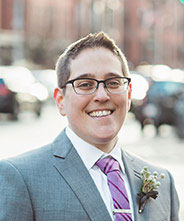 By Rabbi Becky SIlverstein
Parashat Va-etchanen (Deuteronomy 3:23-7:11)
“There’s an active mass shooting, we are fine.” My friend Jordyn and her spouse, Justin, live in El Paso. This text began a series of images from El Paso. Jordyn and Justin are photo-journalists, and so our text thread is often filled with images of detention camps on our border, of artwork made by children in Tornillo, of families waiting in Ciudad Juarez, of clergy demonstrating, and so on. These images are not unlike the photos of children grappling with the sudden absence of parents after ICE raids at food processing plants in Mississippi. These images are not unlike those of climate refugees seeking shelter and sustenance. The feeling in my heart and body is not unlike the feeling I have when I remember that people are marching in the streets yelling “Jews will not replace us” or when I see images of swastikas in dorm rooms.
Day after day the current events of the world call us to respond. What does it mean to be human? What is our connection to other people? What can we do?
As we approached this past weekend’s observance of Tisha B’Av, a holiday commemorating the destruction of the Temple, I wondered what it meant to remember one crash while in the midst of another. The language of crash, learned from my teacher R’ Benay Lappe, describes a moment in which one’s deeply held belief or understanding of how the world works is called into question. As a result of the destruction of the Temple, Judaism as it had been known ceased to exist. Amidst the fear and instability, Rabbinic Judaism, the seeds of which already existed, emerged. The crash of today may be different for each of us—climate change, white supremacy, racism, government policy— but it is happening to all of us.
Tisha B’Av provides one model for responding to crash: a connection to ancestors and lament. This past Sunday was one of public mourning both in our communities and in the streets.
In Parshat Vaetchanan, we find Moses in the midst of his own crash, confronted by the reality that he will not enter the land. Yes, Gd had told Moses that he would not enter the Holy Land and yet, wouldn’t any of us wonder if Gd might relent and forgive? How could it feel real until he stood, feet planted on the edge of the Jordan river, the weight of this truth—that he would never cross—settling onto his shoulders and into his heart? Moses standing on this border, at the edge of a river, evokes images of those standing on our border right now, gazing across the Rio Grande to a different kind of promised land. The Israelites standing at his feet, listening to his words of wisdom, prophecy, and counsel, calls to mind all of us witnessing the inhumanity on our national borders and borders all over the world, listening for the prophecy and the anguish in the words of those assembled.
In this moment of crash, Moses responds (Deut 3:23): “And I pleaded (vaetchanan) with Gd…” Rashi understands “vaetchanan” to be prayer that refers to a gift of free will and notes that pleading is one of the ten names of prayer. Moses’ response to crash is to pray, only then can he continue.
What Moses and Tisha B’Av lift up in responding to a crash moment is the role of emotion and spiritual wellbeing. Part of responding to a crash, to moments of intensity and tragedy, is noting your own emotional response and doing the work to care for it. This step is crucial in allowing us to show up in the greater world with the grounding and conviction and compassion that is deeply necessary.
Prayer can be a powerful modality in attending to our emotions. Midrash Tanchuma (Vaetchanan 1) expands the list of names for prayer that Rashi refers to. Though just a series of Hebrew words that the rabbis understand to mean “prayer”, this list also hints at different modalities. Prayer can be verbal expression—a more general use of words seeking intercession, seeking divine favor, crying out, expressing anguish. Prayer can also be action—meditation, falling, standing.
When faced with a crash, you might respond as Moses does in this moment, pleading with Gd. You might be more like Jacob who, on his journey from Beer Sheva to Haran, “vayifga b’makom,” encountered a place. The Rabbis understand this to mean that he encountered HaMakom, Gd. One midrash teaches that it was as if the ground came up to meet him, forming a wall that Jacob walked into. Perhaps you feel as though the world is physically causing you to stop and confront it. At least two other responses speak to our emotional lives but may not be coded as prayer by our tradition: tears and silence. Both of these have their own sources in our tradition, just like the names of prayer. In Talmud Berakhot 32b, we learn that although the gates of prayer were locked after the destruction of the Temple, the gates of tears are always open. After the death of his sons, the Torah teaches that Aaron was silent.
The call to attend to our own emotions in a moment of crash is not distinct from calls to action. Those who mourned in the streets on Tisha B’Av used the tools of our tradition to speak their fear and grief aloud in an act of resistance. Cultivating a prayer practice can prepare us to act, creating wells of patience and compassion often necessary in the streets. Expressing and confronting our fear together names it, gives us power over it, and connects us so that we can act from a place of intention rather than trauma.
“Comfort, comfort, my people, says your Gd. (Isaiah 40:1)” These are the opening lines to this week’s haftarah, the first in a series of seven haftarot of consolation that follow Tisha B’Av and bring us through Elul to Rosh Hashanah. May this year’s journey include the reflection and introspection necessary to move from destruction to potential, crash to resistance.
Rabbi Becky Silverstein, a 2014 graduate of the Rabbinical School of Hebrew College, believes in the power of Torah, community, and silliness to transform the world. He is the Rabbi/Founder of Beyn Kodesh l’Chol, a Jewish communal project in formation that seeks to center the lives of those who have historically been on the margins in all aspects of our communal lives.
Learn more about Hebrew College’s Rabbinical, Cantorial, and Rav-Hazzan programs at our fall Open House, Ta Sh’ma (Come & Hear) on Nov. 18, 2019.
Previous Post

August 8, 2019
Small Acts of Kindness
Next Post
August 19, 2019 Holding The Shattered Tablets
Browse Our Archives
Select a Category Uncategorized
Select a Month April 2026 March 2026 December 2025 November 2025 October 2025 September 2025 August 2025 July 2025 June 2025 May 2025 April 2025 March 2025 February 2025 January 2025 December 2024 November 2024 October 2024 September 2024 August 2024 July 2024 June 2024 May 2024 April 2024 March 2024 February 2024 January 2024 December 2023 November 2023 October 2023 September 2023 August 2023 July 2023 June 2023 May 2023 April 2023 March 2023 February 2023 January 2023 December 2022 November 2022 October 2022 September 2022 August 2022 July 2022 June 2022 May 2022 April 2022 March 2022 February 2022 January 2022 December 2021 November 2021 October 2021 September 2021 August 2021 July 2021 June 2021 May 2021 April 2021 March 2021 February 2021 January 2021 December 2020 November 2020 October 2020 September 2020 August 2020 July 2020 June 2020 May 2020 April 2020 March 2020 February 2020 January 2020 December 2019 November 2019 October 2019 September 2019 August 2019 July 2019 June 2019 May 2019 April 2019 March 2019 February 2019 January 2019 December 2018 November 2018 October 2018 September 2018 August 2018 July 2018 June 2018 May 2018 April 2018 March 2018 February 2018 January 2018 December 2017 November 2017 October 2017 September 2017 August 2017 July 2017 June 2017
Follow Us!
TAKE THE
Religious Wisdom Quiz
True or False: Jonathan was David's best friend and King Saul's son.
Select your answer to see how you score.
FALSE TRUE
Related posts from Seventy Faces of Torah

The Holy Art of World Building

Parashat Tzav: Keeping the Sacred Fire Burning

Color Theory: What Joseph’s Coat Reveals
TRENDING AT PATHEOS Jewish

Yom Kippur : Is There Always Room for...
Making Room for Forgiveness Every year as Yom Kippur approaches, I find...

This Rosh Hashanah: Can I Find New Meaning?
A Sunrise, a New Year, and a Question On our way to...

Killing Amalek: The Torah’s Most Misunderstood Commandment
Few passages of the Torah have provoked more confusion, polemic, and misuse...

I have never trusted a first draft. I don’t mean that...

Back to School, Back to Reality—and a New...
A New School Year Begins… Back to Reality A new school year...

Out-Crowleying Crowley: The Emptiness of the O9A
O9A Neo-Crowley Racial Cosplay and Edgelord Atrocitism Aleister Crowley did not create...
view all Jewish blogs
Ad-Free & Subscriber Log-In Subscription Support
- About Us
- 2026 Calendar
- Videos
- Podcasts
- Library of World Religions
- Faith In Media Tracker
- Advertise With Us
- Write for Us
- Privacy Policy
- Terms of Service
- Do Not Sell My Data
- Contact Us
- Radiant Digital
- Manage Newsletter Subscriptions
- Unsubscribe From Notifications
- Sitemap
Copyright 2008-2026, Patheos. All rights reserved.
Subscription Support Ad-Free & Subscriber Log-In
Follow Patheos