
BuddhistCatholicContemplativeEvangelicalGeneral ChristianHinduJewishLatter-day SaintMuslimNew VisionsProgressive Christian
Beliefs
- Buddhist
- Catholic
- Contemplative
- Evangelical
- General Christian
- Hindu
- Jewish
- Latter-day Saint
- More Voices
- Muslim
- New Visions
- Pagan
- Progressive Christian
Topics
- Religion News
- Food and Religion
- Sports and Religion
- Religious Art
- Religious Music and Entertainment
- Religious Events
- History and Religion
- Style and Religion
- Politics and Religion
- Women in Religion
- Recreation Outdoors and Religion
- Business Finance and Religion
- Careers Workplace and Religion
- Education and Religion
- Family Parenting and Religion
- Health Fitness and Religion
- Home and Religion
- Relationships and Religion
- Technology and Religion
- Travel and Religion
Columnists
- Buddhist Columnists
- Business Finance and Religion Columnists
- Careers Workplace and Religion Columnists
- Catholic Columnists
- Contemplative Columnists
- Education and Religion Columnists
- Evangelists Columnists
- Family Parenting and Religion Columnists
- General Christian Columnists
- Health Fitness and Religion Columnists
- Hindu Columnists
- History and Religion Columnists
- Home and Religion Columnists
- Jewish Columnists
- More Voices Columnists
- Latter Day Columnists
- Muslim Columnists
- New Visions Columnists
- Nonreligious Columnists
- Pagan Columnists
- Politics and Religion Columnists
- Progressive Columnists
- Recreation Outdoors and Religion Columnists
- Relationships and Religion Columnists
- Religion News Columnists
- Religious Art Columnists
- Religious Events Columnists
- Religious Music and Entertainment Columnists
- Sports and Religion Columnists
- Style and Religion Columnists
- Technology and Religion Columnists
- Travel and Religion Columnists
- Women in Religion Columnists
Resource Library
- 2026 Calendar
- Library of World Religions
- The 100 Most Holy Places on Earth
- Patheos Answers
- Podcasts
- Videos
- Faith Leaders Database
- Anglican Episcopalian
- Bahai
- Baptist
- Buddhism
- Christianity
- Confucianism
- Eastern Orthodoxy
- Hinduism
- Holiness and Pentecostal
- ISKCON
- Islam
- Judaism
- Lutheran
- Methodist
- The Church of Jesus Christ of Latter-day Saints
- New Age
- Paganism
- Presbytarian and Reformed
- Protestantism
- Religion Behind the Scenes
- Roman Catholic
- Scientology
- Shia Islam
- Sikhism
- Sufism
- Sunni Islam
- Taoism
- Zen
- See all religions
Research Tools
 Ad-Free & Subscriber Log-In Subscription Support
Ad-Free & Subscriber Log-In Subscription Support
Follow Patheos 

- Trending:
- Forgiveness
- |
- Marriage
- |
- Consciousness
- |
- Death Penalty
- |
- Election
- |
- Halloween

- Home
- About Hebrew College
- The Rabbinical School of Hebrew College
- The Book of Psalms
- FREE NEWSLETTER
- Home
- Jewish
- What My Neighbor Needs
What My Neighbor Needs
Last updated on: May 8, 2019 at 12:25 pm by Hebrew College
What My Neighbor Needs 2019-05-08T12:25:38-04:00 Hebrew College
Patheos Explore the world's faith through different perspectives on religion and spirituality! Patheos has the views of the prevalent religions and spiritualities of the world.
 Parashat Kedoshim (Leviticus 19:1-20: 27)
By Rabbi Josh Weisman
When you live in San Francisco some of your neighbors are likely to be Catholic. From the early Spanish missionaries and settlers to later Mexican and Central American immigrants, from Irish, Italian, Filipino, and Maltese immigrants to their descendants, San Francisco is a Catholic town. This might seem to contradict San Francisco’s more widely known image first as a city of libertines and later as a center for gay movements and cultures, but the two realities have long lived side by side, and often mingled with each other. Sometimes this mingling has been tense, and occasionally tragic, as when Irish Catholic Supervisor Dan White assassinated Mayor George Moscone and gay Jewish Supervisor Harvey Milk in San Francisco City Hall in 1978. Often it has been quotidian. Sometimes it has been neighborly, and occasionally truly so.
One place where these two cultures – Catholic and LGBTQ – are particularly visible as neighbors is the corner of Dolores and 16th, between the historically Latino Mission District and the famously gay Castro District (itself previously the Irish neighborhood of Eureka Valley). On one corner stands Mission Dolores Basilica, a Spanish Baroque church located next to the original Spanish mission where colonial settlement of the Bay Area began in 1776. Right across the street is Congregation Sha’ar Zahav, the City’s LGBTQ synagogue, one of the first in the world, founded nearby in 1977 and now located in this brightly-painted wooden two-story building. From the sanctuary in Sha’ar Zahav you can see the cupola of Mission Dolores through the windows just beneath the ceiling. It’s a lovely, if seemingly incongruous, view.
It was in Mission Dolores that I heard my most memorable sermon on this week’s Torah portion, Kedoshim. I was a community organizer working with several churches and synagogues throughout San Francisco, including Mission Dolores and Sha’ar Zahav, and I often found myself in services, getting to know the congregation, waiting to meet more congregants afterwards. This particular Sunday a visiting priest gave the sermon. He spoke about the commandment from our Torah portion, “Love your neighbor as yourself.” (Lev. 19:18) Or perhaps he was talking about the same commandment in the Christian Bible; no matter, Jesus was referencing Leviticus. The priest pointed out that to obey this commandment and have it mean anything, you have to first love yourself – if you do not love yourself, loving your neighbor in kind is no act of love at all. He said that you need to be able to look yourself in the mirror and truly love what you see in order to fulfill this commandment. I immediately liked this reversal of the usual way the verse is read as being only about love for the neighbor. But it was much more than a surprising twist, and even much more than a nice statement of self-love. Here, in a monumental Catholic basilica mere blocks from the center of the Castro District, a Catholic priest gave a loud, unmistakable call for unconditional self-love. For everybody. There were gay Catholics in the pews that day as there always are, and no doubt they knew he was speaking directly to them. This priest was not considering that Jews read Leviticus 19:18 in the same portion as Leviticus 20:13; when considered through a Jewish lens, the proximity of the verse he preached to the verse that has been the source of so much pain for LGBTQ people makes his message of gay self-love is even more powerful.
It was at another Catholic church in San Francisco around that time that I saw this commandment go from homiletic affirmation to love in action. It was at an interfaith clergy lunch, and among the scriptural texts under discussion was the same verse. Later in the lunch, Rabbi Camille Shira Angel from Sha’ar Zahav made a carefully crafted request of her colleagues around the table – over half of them Catholic priests – related to Proposition 8, the measure on the upcoming ballot that would outlaw same-sex marriage. She told about her Jewish wedding – not legally sanctioned – to her wife, which was followed later by a hurried civil marriage during the brief window when same-sex marriages had been legal. She shared what it meant to their daughter that her parents’ marriage lacked legal recognition, and what it meant to her congregants that they lacked the right to marry their partners. She laid bare her and her community’s aching need. Knowing that the Archdiocese was backing Prop. 8, she asked that – though they couldn’t actively oppose it – they not actively support it. A wrenching and amazing conversation ensued. One priest wondered whether later generations would universally judge him and his church as being on the wrong side of history, as it judged slave holders who had not believed themselves in the wrong. Another priest related that he had just returned from an Archdiocesan retreat where all the priests were exhorted to preach in favor of Prop. 8 from their pulpits. Now, at this table of his fellow priests and other clergy, following Rabbi Angel’s request, he asked aloud “Can I love my neighbor as myself if I deny him the ability to marry?”
I spoke to this priest the following week. He told me that the Archdiocese had sent him flyers in support of Proposition 8. He had recycled them. He did not preach in support of Proposition 8 from the pulpit. I encouraged him to call Rabbi Angel and tell her this, which he did. She reported the conversation to me and many others; she was flying high for a week. The lesbian rabbi who worked across the street from Mission Dolores had asked her neighbor to not deny her needs, to not do unto her what he would not have others do unto him. He had responded that he would respond to her needs, he would love her, his neighbor, as himself.
I, a young Jewish organizer, learned about this commandment from two priests and a rabbi, all of them my neighbors, all of them each other’s neighbors in San Francisco’s mixed streets of Catholics and Jews, LGBTQ folks and straight folks. It was out of these and other experiences working with those churches and synagogues that I decided to become a rabbi myself.
Much earlier, another rabbi, unembarrassed, had also learned a related lesson about this commandment from some Christian neighbors:
“And you shall love your neighbor as yourself…” It is told about R. Moshe Lieb of Sasov that he used to say: I learned “Ahavat Yisrael”(Love of the People of Israel) from a certain gentile. Once I saw two gentile villagers sitting in a pub wasting time and getting drunk. As their hearts were gladdened by burnt wine, they began to kiss each other. One asked the other:
“Do you really love me?”
“Certainly,” answered the next.
“How can you tell,” asked the first, “that you love me, unless you know what I need?”
At that moment, said R. Moshe Lieb, I learned that a Jew doesn’t truly love his neighbor unless he knows what he needs.
[1] This priest served a church elsewhere in San Francisco, not Mission Dolores itself.
[1] Iturei Torah, Aharon Yaakov Greenberg, ed. Yavneh: Tel Aviv, 1996. p 113-4. The translation is mine, in consultation from Rabbi Arthur Green.
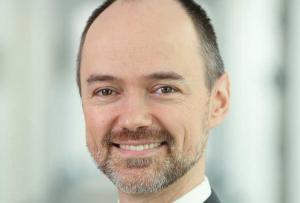
Rabbi Josh Weisman, a 2018 graduate of the Rabbinical School of Hebrew College in Newton, MA, is the Jewish Emergent Network Rabbinic Fellow at the Kavana Cooperative in Seattle.
Previous Post

April 29, 2019
“After Death, There is Ritual"
Next Post
May 15, 2019 Speakers of Infinity and Finitude
Browse Our Archives
Select a Category Uncategorized
Select a Month April 2026 March 2026 December 2025 November 2025 October 2025 September 2025 August 2025 July 2025 June 2025 May 2025 April 2025 March 2025 February 2025 January 2025 December 2024 November 2024 October 2024 September 2024 August 2024 July 2024 June 2024 May 2024 April 2024 March 2024 February 2024 January 2024 December 2023 November 2023 October 2023 September 2023 August 2023 July 2023 June 2023 May 2023 April 2023 March 2023 February 2023 January 2023 December 2022 November 2022 October 2022 September 2022 August 2022 July 2022 June 2022 May 2022 April 2022 March 2022 February 2022 January 2022 December 2021 November 2021 October 2021 September 2021 August 2021 July 2021 June 2021 May 2021 April 2021 March 2021 February 2021 January 2021 December 2020 November 2020 October 2020 September 2020 August 2020 July 2020 June 2020 May 2020 April 2020 March 2020 February 2020 January 2020 December 2019 November 2019 October 2019 September 2019 August 2019 July 2019 June 2019 May 2019 April 2019 March 2019 February 2019 January 2019 December 2018 November 2018 October 2018 September 2018 August 2018 July 2018 June 2018 May 2018 April 2018 March 2018 February 2018 January 2018 December 2017 November 2017 October 2017 September 2017 August 2017 July 2017 June 2017
Follow Us!
TAKE THE
Religious Wisdom Quiz
True or False: 1 John teaches that if we say we have no sin, we deceive ourselves.
Select your answer to see how you score.
TRUE FALSE
Related posts from Seventy Faces of Torah

The Holy Art of World Building

Parashat Tzav: Keeping the Sacred Fire Burning

Color Theory: What Joseph’s Coat Reveals
TRENDING AT PATHEOS Jewish

Yom Kippur : Is There Always Room for...
Making Room for Forgiveness Every year as Yom Kippur approaches, I find...

This Rosh Hashanah: Can I Find New Meaning?
A Sunrise, a New Year, and a Question On our way to...

Killing Amalek: The Torah’s Most Misunderstood Commandment
Few passages of the Torah have provoked more confusion, polemic, and misuse...

I have never trusted a first draft. I don’t mean that...

Back to School, Back to Reality—and a New...
A New School Year Begins… Back to Reality A new school year...

Out-Crowleying Crowley: The Emptiness of the O9A
O9A Neo-Crowley Racial Cosplay and Edgelord Atrocitism Aleister Crowley did not create...
view all Jewish blogs
Ad-Free & Subscriber Log-In Subscription Support
- About Us
- 2026 Calendar
- Videos
- Podcasts
- Library of World Religions
- Faith In Media Tracker
- Advertise With Us
- Write for Us
- Privacy Policy
- Terms of Service
- Do Not Sell My Data
- Contact Us
- Radiant Digital
- Manage Newsletter Subscriptions
- Unsubscribe From Notifications
- Sitemap
Copyright 2008-2026, Patheos. All rights reserved.
Subscription Support Ad-Free & Subscriber Log-In
Follow Patheos