
BuddhistCatholicContemplativeEvangelicalGeneral ChristianHinduJewishLatter-day SaintMuslimNew VisionsProgressive Christian
Beliefs
- Buddhist
- Catholic
- Contemplative
- Evangelical
- General Christian
- Hindu
- Jewish
- Latter-day Saint
- More Voices
- Muslim
- New Visions
- Pagan
- Progressive Christian
Topics
- Religion News
- Food and Religion
- Sports and Religion
- Religious Art
- Religious Music and Entertainment
- Religious Events
- History and Religion
- Style and Religion
- Politics and Religion
- Women in Religion
- Recreation Outdoors and Religion
- Business Finance and Religion
- Careers Workplace and Religion
- Education and Religion
- Family Parenting and Religion
- Health Fitness and Religion
- Home and Religion
- Relationships and Religion
- Technology and Religion
- Travel and Religion
Columnists
- Buddhist Columnists
- Business Finance and Religion Columnists
- Careers Workplace and Religion Columnists
- Catholic Columnists
- Contemplative Columnists
- Education and Religion Columnists
- Evangelists Columnists
- Family Parenting and Religion Columnists
- General Christian Columnists
- Health Fitness and Religion Columnists
- Hindu Columnists
- History and Religion Columnists
- Home and Religion Columnists
- Jewish Columnists
- More Voices Columnists
- Latter Day Columnists
- Muslim Columnists
- New Visions Columnists
- Nonreligious Columnists
- Pagan Columnists
- Politics and Religion Columnists
- Progressive Columnists
- Recreation Outdoors and Religion Columnists
- Relationships and Religion Columnists
- Religion News Columnists
- Religious Art Columnists
- Religious Events Columnists
- Religious Music and Entertainment Columnists
- Sports and Religion Columnists
- Style and Religion Columnists
- Technology and Religion Columnists
- Travel and Religion Columnists
- Women in Religion Columnists
Resource Library
- 2026 Calendar
- Library of World Religions
- The 100 Most Holy Places on Earth
- Patheos Answers
- Podcasts
- Videos
- Faith Leaders Database
- Anglican Episcopalian
- Bahai
- Baptist
- Buddhism
- Christianity
- Confucianism
- Eastern Orthodoxy
- Hinduism
- Holiness and Pentecostal
- ISKCON
- Islam
- Judaism
- Lutheran
- Methodist
- The Church of Jesus Christ of Latter-day Saints
- New Age
- Paganism
- Presbytarian and Reformed
- Protestantism
- Religion Behind the Scenes
- Roman Catholic
- Scientology
- Shia Islam
- Sikhism
- Sufism
- Sunni Islam
- Taoism
- Zen
- See all religions
Research Tools
 Ad-Free & Subscriber Log-In Subscription Support
Ad-Free & Subscriber Log-In Subscription Support
Follow Patheos 

- Trending:
- Forgiveness
- |
- Marriage
- |
- Consciousness
- |
- Death Penalty
- |
- Election
- |
- Halloween

- Home
- About Hebrew College
- The Rabbinical School of Hebrew College
- The Book of Psalms
- FREE NEWSLETTER
- Home
- Jewish
- Speakers of Infinity and Finitude
Speakers of Infinity and Finitude
Last updated on: May 16, 2019 at 9:22 am by Hebrew College
Speakers of Infinity and Finitude 2019-05-16T09:22:22-04:00 Hebrew College
Patheos Explore the world's faith through different perspectives on religion and spirituality! Patheos has the views of the prevalent religions and spiritualities of the world.
 Parashat Emor (Leviticus 21:1-24:23)
A few weeks ago, my mother sent me the novel A Wizard of Earthsea by Ursula K. Le Guin. One wizard from that book in particular has been pouring through my mind ever since. His name is Ogion. He says things like
to hear one must be silent,
then spends his life wandering the woods and mountains alone, wordlessly listening to the shape of unity, the language and life that blossom out of this unity.
Images of wizardly hermits like this set my daydreaming mind on fire – not only because I like the idea of being so consistently close to forests, pines, rocks, sky, but because I like the idea of absenting myself from a world that demands I produce thoughts on cue and spin them into words.
Over and over, Le Guin focuses our attention on how – when thoughts come to wizards like Ogion and they do transform these thoughts into language, their words are not frenzied or groping, stammering or appeasing or diffuse. On the contrary, when wizards like Ogion speak, they do so because some swirling bit of Infinity has presented itself to them, has demanded that it be bordered up into a discrete form, then transmitted to others. As a result of a wizard’s carrying Infinity into language, the people who hear him lose their sense of loneliness, division and alienation. For the wizard’s words contain within them slivers of wholeness, warps and woofs – weaves – of connection.
Set against Le Guin’s depiction of Ogion, the image of the Hasidic Tzaddik as offered by Menahem Nahum of Chernobyl (an 18th century Hasidic Tzaddik himself) takes on a rather striking cast. In the following piece, Menahem Nahum describes the wizardly craft of Joseph from Sefer Bereshit:
“And he made for him a coat of many colors.”
Although we normally read the pronouns of this verse as referring to Jacob and Joseph (i.e., and Jacob made Joseph a coat of many colors), the truth of the matter is that Joseph made a coat of many colors for God. But in what sense?
A “coat” here refers to words. For Joseph, standing upon the shore of the Primordial Sea of Wisdom, carried bits of this ocean into language, garbing the Infinite Sea of God within the finitude of words.[1]
For Menahem Nahum, Joseph becomes akin to Ogion. His language serves to slice off bits unity, then convey these bits of unity to the world. If one’s language does not convey this sense of Unity, this sense of Infinite, Primordial Sea, better to not speak them at all. Better to just wander the forests and mountains, watching silence, waiting for words to body themselves forth.
This week’s parashah, which begins with the command to speak (“emor!”), concludes with a figure who stands in stark contrast to Le Guin’s Ogion and Menahem Nahum’s Joseph. Unnamed, this figure is simply referred to as המקלל – the blasphemer. Watch carefully what this unnamed figure does to the Infinite nature of God:
And into the midst of the children of Israel, the son of an Israelite woman and Egyptian man went out.
And this son of the Israelite woman fought in the camp with an Israelite man.
And this son of the Israelite woman broke into (ויקב) the Name of God and blasphemed (Lev. 24:10-11).
This action of “breaking into” the name of God, a word which in Biblical Hebrew carries the connotations of perforation, puncturing, hollowing out, boring into, runs in an opposite direction to the work of a wizard. Whereas a wizard’s work is to encounter God’s unity, translate this unity into language, then carry this language out into community, the blasphemer bores into and perforates the community first, then uses words to bore into and perforate God. How do God and the community respond to such blasphemous behavior? Not well:
And God said to Moses…
“Bring the blasphemer to the outside of the camp. Let all the hearers lay their hands upon his head. Let all the congregation pelt him with stones until he remains lifeless” (Lev. 24:13-14).
Evidently, neither God nor Moses are able to integrate the rage, the recklessness, the otherness of this blasphemer. The blasphemer threatens their sense of cohesion, their sense of wholeness, too much. I know the feeling.
I think a part of why I daydream about being a wizard is to escape the ways in which being a part of the world means encountering day after day – not just some vision of a supernal rolling sea – not just the truth of some infinite peace or silence – but people who are struggling, angry, scattering their words like weapons. I know these people because I so often am one of them.
The reality is – I am much more of a blasphemer than a wizard. The reality is – I ultimately think this is okay. Because perhaps a wizard’s job shouldn’t just be listening to the infinite silence of that which is Beyond Words. Perhaps a wizard’s job should equally entail ensuring that people have the space to spew language that comes from their gut as much as from the sea. Perhaps a wizard’s job should be finding a community in which he too can occasionally spew language that comes as much from the gut as from the sea.
If, after all, the ocean that Menachem Nahum and Ursula Le Guin describe is truly infinite, surely it has the capacity to integrate the anguish, the anger, the dis-integrating finitude of so many of our words. And – to whoever else daydreams about being a wizard – surely we can do the same for each other, this world, the infinity arching above us, between us.
[1] Meor Eynaim, Parashat Va-yeshev.
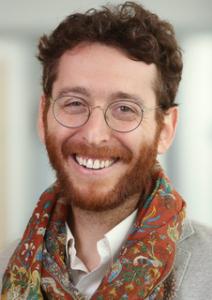
Rabbi Jordan Schuster is a 2018 graduate of the Rabbinical School of Hebrew College, where he now serves as a faculty member and Director of the Mekerot program.
Previous Post

May 8, 2019
What My Neighbor Needs
Next Post
May 22, 2019 Examining Our “Glory-Flaw”: A Brief Exercise for Sefirat Ha-Omer
Browse Our Archives
Select a Category Uncategorized
Select a Month April 2026 March 2026 December 2025 November 2025 October 2025 September 2025 August 2025 July 2025 June 2025 May 2025 April 2025 March 2025 February 2025 January 2025 December 2024 November 2024 October 2024 September 2024 August 2024 July 2024 June 2024 May 2024 April 2024 March 2024 February 2024 January 2024 December 2023 November 2023 October 2023 September 2023 August 2023 July 2023 June 2023 May 2023 April 2023 March 2023 February 2023 January 2023 December 2022 November 2022 October 2022 September 2022 August 2022 July 2022 June 2022 May 2022 April 2022 March 2022 February 2022 January 2022 December 2021 November 2021 October 2021 September 2021 August 2021 July 2021 June 2021 May 2021 April 2021 March 2021 February 2021 January 2021 December 2020 November 2020 October 2020 September 2020 August 2020 July 2020 June 2020 May 2020 April 2020 March 2020 February 2020 January 2020 December 2019 November 2019 October 2019 September 2019 August 2019 July 2019 June 2019 May 2019 April 2019 March 2019 February 2019 January 2019 December 2018 November 2018 October 2018 September 2018 August 2018 July 2018 June 2018 May 2018 April 2018 March 2018 February 2018 January 2018 December 2017 November 2017 October 2017 September 2017 August 2017 July 2017 June 2017
Follow Us!
TAKE THE
Religious Wisdom Quiz
Who was Ruth's first husband?
Select your answer to see how you score.
Mahlon Chilion Elimelech Boaz
Related posts from Seventy Faces of Torah

The Holy Art of World Building

Parashat Tzav: Keeping the Sacred Fire Burning

Color Theory: What Joseph’s Coat Reveals
TRENDING AT PATHEOS Jewish

Building a Little Ark in a Frightening World
This past Shabbat, we read about Noah. I love this story. The...

Yom Kippur : Is There Always Room for...
Making Room for Forgiveness Every year as Yom Kippur approaches, I find...

This Rosh Hashanah: Can I Find New Meaning?
A Sunrise, a New Year, and a Question On our way to...

Killing Amalek: The Torah’s Most Misunderstood Commandment
Few passages of the Torah have provoked more confusion, polemic, and misuse...

I have never trusted a first draft. I don’t mean that...

Back to School, Back to Reality—and a New...
A New School Year Begins… Back to Reality A new school year...
view all Jewish blogs
Ad-Free & Subscriber Log-In Subscription Support
- About Us
- 2026 Calendar
- Videos
- Podcasts
- Library of World Religions
- Faith In Media Tracker
- Advertise With Us
- Write for Us
- Privacy Policy
- Terms of Service
- Do Not Sell My Data
- Contact Us
- Radiant Digital
- Manage Newsletter Subscriptions
- Unsubscribe From Notifications
- Sitemap
Copyright 2008-2026, Patheos. All rights reserved.
Subscription Support Ad-Free & Subscriber Log-In
Follow Patheos