
BuddhistCatholicContemplativeEvangelicalGeneral ChristianHinduJewishLatter-day SaintMuslimNew VisionsProgressive Christian
Beliefs
- Buddhist
- Catholic
- Contemplative
- Evangelical
- General Christian
- Hindu
- Jewish
- Latter-day Saint
- More Voices
- Muslim
- New Visions
- Pagan
- Progressive Christian
Topics
- Religion News
- Food and Religion
- Sports and Religion
- Religious Art
- Religious Music and Entertainment
- Religious Events
- History and Religion
- Style and Religion
- Politics and Religion
- Women in Religion
- Recreation Outdoors and Religion
- Business Finance and Religion
- Careers Workplace and Religion
- Education and Religion
- Family Parenting and Religion
- Health Fitness and Religion
- Home and Religion
- Relationships and Religion
- Technology and Religion
- Travel and Religion
Columnists
- Buddhist Columnists
- Business Finance and Religion Columnists
- Careers Workplace and Religion Columnists
- Catholic Columnists
- Contemplative Columnists
- Education and Religion Columnists
- Evangelists Columnists
- Family Parenting and Religion Columnists
- General Christian Columnists
- Health Fitness and Religion Columnists
- Hindu Columnists
- History and Religion Columnists
- Home and Religion Columnists
- Jewish Columnists
- More Voices Columnists
- Latter Day Columnists
- Muslim Columnists
- New Visions Columnists
- Nonreligious Columnists
- Pagan Columnists
- Politics and Religion Columnists
- Progressive Columnists
- Recreation Outdoors and Religion Columnists
- Relationships and Religion Columnists
- Religion News Columnists
- Religious Art Columnists
- Religious Events Columnists
- Religious Music and Entertainment Columnists
- Sports and Religion Columnists
- Style and Religion Columnists
- Technology and Religion Columnists
- Travel and Religion Columnists
- Women in Religion Columnists
Resource Library
- 2026 Calendar
- Library of World Religions
- The 100 Most Holy Places on Earth
- Patheos Answers
- Podcasts
- Videos
- Faith Leaders Database
- Anglican Episcopalian
- Bahai
- Baptist
- Buddhism
- Christianity
- Confucianism
- Eastern Orthodoxy
- Hinduism
- Holiness and Pentecostal
- ISKCON
- Islam
- Judaism
- Lutheran
- Methodist
- The Church of Jesus Christ of Latter-day Saints
- New Age
- Paganism
- Presbytarian and Reformed
- Protestantism
- Religion Behind the Scenes
- Roman Catholic
- Scientology
- Shia Islam
- Sikhism
- Sufism
- Sunni Islam
- Taoism
- Zen
- See all religions
Research Tools
 Ad-Free & Subscriber Log-In Subscription Support
Ad-Free & Subscriber Log-In Subscription Support
Follow Patheos 

- Trending:
- Forgiveness
- |
- Marriage
- |
- Consciousness
- |
- Death Penalty
- |
- Election
- |
- Halloween

- Home
- About Hebrew College
- The Rabbinical School of Hebrew College
- The Book of Psalms
- FREE NEWSLETTER
- Home
- Jewish
- Examining Our “Glory-Flaw”: A Brief Exercise for Sefirat Ha-Omer
Examining Our “Glory-Flaw”: A Brief Exercise for Sefirat Ha-Omer
Last updated on: May 22, 2019 at 4:34 pm by Hebrew College
Examining Our “Glory-Flaw”: A Brief Exercise for Sefirat Ha-Omer 2019-05-22T16:34:20-04:00 Hebrew College
Patheos Explore the world's faith through different perspectives on religion and spirituality! Patheos has the views of the prevalent religions and spiritualities of the world.
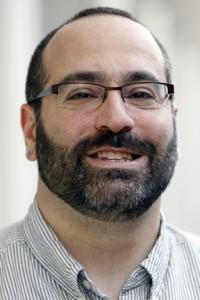 By Rabbi Or N. Rose
One of the joys of my work as a rabbi has been the opportunity to serve as the visiting rabbi at Netivot Torah: The Chatham Synagogue (TCS), in New York’s Hudson Valley. Founded twenty years ago by a small contingent of “weekenders” and permanent transplants from the Five Boroughs and other nearby locations, this independent “country shul” has been a key part of my spiritual and professional life for almost two decades.
Last weekend, I traveled to Chatham to facilitate Shabbat morning services and the weekly Torah discussion. The biblical reading for the week was parashat Emor (Leviticus 21:1-24:23), which contains, among other items, instructions about the ancient Israelite calendar. This includes a description of the Sabbath, the Three Pilgrimage Festivals, and the High Holy Days. (See Leviticus 23)
It also includes information about the practice of counting the omer: a fifty-day ritual count celebrating the unfolding of the spring harvest, beginning on the day when an omer measure of barley was offered in the Temple in Jerusalem and culminating with Shavuot, “The Feast of Weeks” (also called the “Festival of Reaping [Hag Ha’Katzir] among other names in the Torah; and later known as Pentecost [“Fifty” in Greek).
Over the centuries, this agricultural ritual evolved into a time for introspection and self-improvement as one journeys between the two great spring holidays of Pesach (Passover) and Shavuot. Symbolically, this involves reflection on the relationship between the story of the exodus from Egypt and the revelation at Mount Sinai (in keeping with rabbinic teachings about Shavuot). What does it mean to be a free person who consciously reenters a covenantal relationship with God through engagement in Torah every year?
The renewal of this ritual was aided significantly by the medieval mystics (Kabbalists), who associated each of the 49 days between the holidays with a different combination of spiritual-ethical virtues derived from their esoteric mapping of the elemental qualities—known as the sefirot (emanations)—of the Divine and of the human soul. Every day, one can contemplate her relationship to such qualities as “loving-kindness,” “rigor,” “beauty,” or “humility,” and the dynamic interaction of these soul traits. After all, if the Torah is supposed to serve as a guide for holy living, we need to carefully consider how we can best prepare ourselves to receive it anew and live into these sacred teachings.
Inspired by this medieval Kabbalistic innovation, my congregants and I read a brief source by the contemporary Jewish mystic, Rabbi Zalman Schachter-Shalomi (d. 2014), entitled “The Soul’s Flaw”:
Every soul… is possessed of a flaw. This flaw, like the fire of an opal, is also that soul’s special charm and attraction. The difference between the fire and the flaw is only in the refraction of the light. What we consider the person’s flaw can become a vice and that very same trait in a different light can become a virtue. The soul’s main task is to work on and with the flaw (Gate to the Heart, 1993, p. 36).
After reading this evocative text aloud (in which one can hear echoes of earlier Hasidic teachings), I asked the twenty or so people present to sit quietly for a few minutes and consider if there were any “glory-flaws,” as Reb Zalman refers to them, that they might want to explore on this 27th day of the Omer?
Using a gentle niggun (wordless melody) to call the group back together, I then invited people to share their thoughts and feelings. While it took this usually-talkative bunch a few minutes to begin speaking, soon enough several folks broke the ice and shared from the heart: One older man spoke of his fierce loyalty to friends and its shadow side: the need for external approval. A woman in her late thirties shared her struggle to balance her organizational expertise and her need for control. A third person reflected on the subtle difference between being a good judge of character and being judgmental.
After we finished this exercise and wound down our time together with kiddush (blessing over wine or grape juice and light refreshments), a member of the group wished me “Shabbat Shalom” (a peaceful Sabbath) and quipped, “That was a powerful experience; it felt a little like group therapy.” My first instinct was to try and deconstruct his comment, not wanting to allow him to collapse these activities too easily (or cynically). Instead, I paused for a moment and shared with him a statement I heard years ago attributed to the German-Jewish philosopher and educator Ernst (Akiva) Simon (d. 1988): “The people I pray with I cannot speak with, and the people I speak with I cannot pray with.” Without missing a beat, my conversation partner added, “And today we were able to do both.”
As I made my way home from synagogue that afternoon, I thought about another teaching from Reb Zalman. He often taught people to remember that our inherited liturgies and ceremonies are “freeze-dried,” and that we need to add water and stir! That is to say, while our forebears may provide us with wise and beautiful rites and litanies, we need to revitalize them in our particular time and place, pouring our experiences and intentions into these practices. In exploring sefirat ha’omer with my community, I felt blessed to be able to help folks engage in this age-old ritual and to witness them renew it through their brave and tender reflections.
Rabbi Or Rose is Director of the Miller Center for Interreligious Learning & Leadership at Hebrew College in Newton Centre, Mass.
Previous Post

May 15, 2019
Speakers of Infinity and Finitude
Next Post
May 28, 2019 Commemorating and Participating in Shavuot
Browse Our Archives
Select a Category Uncategorized
Select a Month April 2026 March 2026 December 2025 November 2025 October 2025 September 2025 August 2025 July 2025 June 2025 May 2025 April 2025 March 2025 February 2025 January 2025 December 2024 November 2024 October 2024 September 2024 August 2024 July 2024 June 2024 May 2024 April 2024 March 2024 February 2024 January 2024 December 2023 November 2023 October 2023 September 2023 August 2023 July 2023 June 2023 May 2023 April 2023 March 2023 February 2023 January 2023 December 2022 November 2022 October 2022 September 2022 August 2022 July 2022 June 2022 May 2022 April 2022 March 2022 February 2022 January 2022 December 2021 November 2021 October 2021 September 2021 August 2021 July 2021 June 2021 May 2021 April 2021 March 2021 February 2021 January 2021 December 2020 November 2020 October 2020 September 2020 August 2020 July 2020 June 2020 May 2020 April 2020 March 2020 February 2020 January 2020 December 2019 November 2019 October 2019 September 2019 August 2019 July 2019 June 2019 May 2019 April 2019 March 2019 February 2019 January 2019 December 2018 November 2018 October 2018 September 2018 August 2018 July 2018 June 2018 May 2018 April 2018 March 2018 February 2018 January 2018 December 2017 November 2017 October 2017 September 2017 August 2017 July 2017 June 2017
Follow Us!
TAKE THE
Religious Wisdom Quiz
What day is often called the day of rest in the Bible?
Select your answer to see how you score.
Monday Friday Sabbath Wednesday
Related posts from Seventy Faces of Torah

The Holy Art of World Building

Parashat Tzav: Keeping the Sacred Fire Burning

Color Theory: What Joseph’s Coat Reveals
TRENDING AT PATHEOS Jewish

Building a Little Ark in a Frightening World
This past Shabbat, we read about Noah. I love this story. The...

Yom Kippur : Is There Always Room for...
Making Room for Forgiveness Every year as Yom Kippur approaches, I find...

This Rosh Hashanah: Can I Find New Meaning?
A Sunrise, a New Year, and a Question On our way to...

Killing Amalek: The Torah’s Most Misunderstood Commandment
Few passages of the Torah have provoked more confusion, polemic, and misuse...

I have never trusted a first draft. I don’t mean that...

Back to School, Back to Reality—and a New...
A New School Year Begins… Back to Reality A new school year...
view all Jewish blogs
Ad-Free & Subscriber Log-In Subscription Support
- About Us
- 2026 Calendar
- Videos
- Podcasts
- Library of World Religions
- Faith In Media Tracker
- Advertise With Us
- Write for Us
- Privacy Policy
- Terms of Service
- Do Not Sell My Data
- Contact Us
- Radiant Digital
- Manage Newsletter Subscriptions
- Unsubscribe From Notifications
- Sitemap
Copyright 2008-2026, Patheos. All rights reserved.
Subscription Support Ad-Free & Subscriber Log-In
Follow Patheos