
BuddhistCatholicContemplativeEvangelicalGeneral ChristianHinduJewishLatter-day SaintMuslimNew VisionsProgressive Christian
Beliefs
- Buddhist
- Catholic
- Contemplative
- Evangelical
- General Christian
- Hindu
- Jewish
- Latter-day Saint
- More Voices
- Muslim
- New Visions
- Pagan
- Progressive Christian
Topics
- Religion News
- Food and Religion
- Sports and Religion
- Religious Art
- Religious Music and Entertainment
- Religious Events
- History and Religion
- Style and Religion
- Politics and Religion
- Women in Religion
- Recreation Outdoors and Religion
- Business Finance and Religion
- Careers Workplace and Religion
- Education and Religion
- Family Parenting and Religion
- Health Fitness and Religion
- Home and Religion
- Relationships and Religion
- Technology and Religion
- Travel and Religion
Columnists
- Buddhist Columnists
- Business Finance and Religion Columnists
- Careers Workplace and Religion Columnists
- Catholic Columnists
- Contemplative Columnists
- Education and Religion Columnists
- Evangelists Columnists
- Family Parenting and Religion Columnists
- General Christian Columnists
- Health Fitness and Religion Columnists
- Hindu Columnists
- History and Religion Columnists
- Home and Religion Columnists
- Jewish Columnists
- More Voices Columnists
- Latter Day Columnists
- Muslim Columnists
- New Visions Columnists
- Nonreligious Columnists
- Pagan Columnists
- Politics and Religion Columnists
- Progressive Columnists
- Recreation Outdoors and Religion Columnists
- Relationships and Religion Columnists
- Religion News Columnists
- Religious Art Columnists
- Religious Events Columnists
- Religious Music and Entertainment Columnists
- Sports and Religion Columnists
- Style and Religion Columnists
- Technology and Religion Columnists
- Travel and Religion Columnists
- Women in Religion Columnists
Resource Library
- 2026 Calendar
- Library of World Religions
- The 100 Most Holy Places on Earth
- Patheos Answers
- Podcasts
- Videos
- Faith Leaders Database
- Anglican Episcopalian
- Bahai
- Baptist
- Buddhism
- Christianity
- Confucianism
- Eastern Orthodoxy
- Hinduism
- Holiness and Pentecostal
- ISKCON
- Islam
- Judaism
- Lutheran
- Methodist
- The Church of Jesus Christ of Latter-day Saints
- New Age
- Paganism
- Presbytarian and Reformed
- Protestantism
- Religion Behind the Scenes
- Roman Catholic
- Scientology
- Shia Islam
- Sikhism
- Sufism
- Sunni Islam
- Taoism
- Zen
- See all religions
Research Tools
 Ad-Free & Subscriber Log-In Subscription Support
Ad-Free & Subscriber Log-In Subscription Support
Follow Patheos 

- Trending:
- Forgiveness
- |
- Marriage
- |
- Consciousness
- |
- Death Penalty
- |
- Election
- |
- Halloween

- Home
- About Hebrew College
- The Rabbinical School of Hebrew College
- The Book of Psalms
- FREE NEWSLETTER
- Home
- Jewish
- Giving Up Something of Our Inner Selves
Giving Up Something of Our Inner Selves
Last updated on: February 13, 2019 at 3:07 pm by Hebrew College
Giving Up Something of Our Inner Selves 2019-02-13T15:07:56-04:00 Hebrew College
Patheos Explore the world's faith through different perspectives on religion and spirituality! Patheos has the views of the prevalent religions and spiritualities of the world.
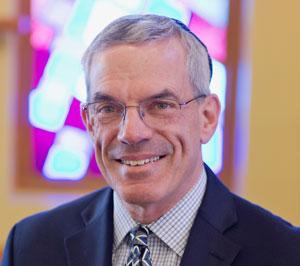 Parashat Tetzaveh (Exodus 27:20-30:10)
By Rabbi Brian Besser
This week’s Torah portion, Tetzaveh, contains an interesting anomaly; it is the only portion in the Torah (after the Book of Genesis) that fails to mention Moses by name. According to the Tur, a medieval commentator, the omission is no accident, but results directly from an earlier episode. When God, in divine wrath, was about to destroy the Israelites for worshipping the Golden Calf, Moses pleaded before God: “Alas! This people is guilty of a great sin… If You will not forgive their sin, then blot me out from Your book which You have written.” (Exodus 32:31-32) God acquiesced to Moses’s passionate, self-effacing plea, but erased Moses’s name anyway—from Tetzaveh!
In Tetzaveh, the focus shifts completely away from Moses onto his older brother Aaron (whose name repeats seven times in the first paragraph). Although Moses has led the people so far, Aaron, not Moses, is to serve as High Priest. Hence, the entire portion proceeds with detailed instructions regarding the priesthood: the lighting of the menorah, the lavish description of the priestly garments, and the intricate ceremony for the priestly investiture.
According to Midrash, Moses was disappointed at being passed over for the priesthood, but his magnanimity prevailed: “Moses told Aaron: God instructed me to appoint you High Priest. Aaron replied: you have labored so hard on the Sanctuary, and I am made High Priest? Moses said: Just as you rejoiced when I rose to greatness, so I now rejoice in your greatness. As you live, even though you have become High Priest, I feel as though I had become High Priest.” (Tanchuma Shemini 3)
What does a priest actually do? When we think of priests, we might visualize a Christian cleric presenting the wafer and wine to his parishioners lining up to receive the body and blood of Christ. Rabbis too are called to perform priestly functions, as when I stand before the bride and groom under the chuppah, or when I lay my hands upon the Bat Mitzvah girl’s head and intone the ancient priestly benediction over her. In such instances I, like the Roman Catholic priest, serve as the conduit for divine blessing.
For the priest to fully assume his role, his own personality must disappear. On the verses in Tetzaveh: “you shall clothe them in tunics, wind turbans upon them, and gird Aaron and his sons with sashes. So shall they possess the priesthood as their due for all time,” (Exodus 29:9) the Talmud comments: “At the time their raiment is upon them, their priesthood is upon them. When their raiment is not upon them, their priesthood is not upon them.” (Zevachim 17b) In other words, clothes make the priest. The costume renders the person underneath irrelevant; only the outer appearance and display matter.
How many times I’ve come home from a wedding and joked to my husband: “As soon as they smashed the glass, I felt like a piece of furniture!” Talk about loss of individuality! To the degree that any of us are in the position to serve others, we must subordinate our own desires and proclivities in order to devote ourselves to the task at hand. Regarding the priest, Biblical scholar Avivah Zornberg writes about the possibility for dissonance between inner intention and outer performance. However, dissonance evaporates whenever any of us single-mindedly focus our attention toward others—as their parent, friend, teacher, or in any other position we may occupy—because at such times we align our will with their good.
Once, as hospital chaplain, I visited an evangelical Christian patient. We started reading the New Testament together, trading examples of His (sic) grace, each animating the other. She talked about abandoning herself to Jesus, and as I cheered her on, she exclaimed: “Praise Jesus! Praise the Lord!” I responded: “Amen! Hallelujah!” and then we both laughed out loud—because what’s a Rabbi doing affirming the Lord Jesus?!
Until that moment, I had always struggled between my inclination to pray with Gentiles and unease around betraying my own Jewish identity. This time, there was no tension at all. I felt entirely joined with the patient. It was as if I temporarily forgot who I was; I underwent what the Hasidic sages term bittul, “self-abnegation.” Reflecting on the experience now, I realize that my sensation of loss-of-self exactly mirrored the patient’s surrender to Jesus. Hers was simply different vocabulary for what I would call avodat Hashem, that is, abdicating my own will in order to serve God’s will.
The well-known song Hinei Mah Tov is an idyll of harmony: “how good and pleasant it is for brothers to dwell together in unity.” Its original context (Psalm 133) clarifies that the “brothers” are none other than Moses and Aaron. In fact, the next verse captures the very moment when Moses turns over the priestly mantle to his older brother by anointing him with “fine oil upon the head, running down upon the beard, the beard of Aaron…” and here the poet expressly references the vestments characterizing the priestly office, “…over the collar of his robe.” (Recall that Moses’s humility and generosity facilitated Aaron’s ascent to the High Priesthood.)
Of course, Hinei Mah Tov is not just about Moses and Aaron; it’s about all of us. Moses renounced the priesthood in favor of his brother Aaron; Moses forfeited mention of his own name in Tetzaveh to intercede on behalf of the people; the religious officiant suppresses her individuality to fulfill her ceremonial duties; the hospital chaplain sets aside his own theology for the sake of the patient; the institutional leader may restrain personal ambition for the sake of her followers and the organization as a whole. At various times and in various roles, we are all called to give up something of our inner selves so that we may enter into relationship, fulfill our responsibilities to one another, and “dwell together in unity” as brothers and sisters.
Brian Besser, ordained at the Rabbinical School of Hebrew College in 2010, serves Congregation Beth Shalom in Bloomington, Indiana.
Interested in a possible career in the rabbinate? Read Rabbi Dan Judson’s article “Jewish Lessons on Meaningful Work.“ Rabbi Judson is Dean of the Rabbinical School of Hebrew College. He has a PhD in Jewish history from Brandeis University.
Previous Post

February 4, 2019
‘Wings of Desire’: God’s Presence in the Tabernacle
Next Post
February 19, 2019 Two Ways to Tell a Story
Browse Our Archives
Select a Category Uncategorized
Select a Month April 2026 March 2026 December 2025 November 2025 October 2025 September 2025 August 2025 July 2025 June 2025 May 2025 April 2025 March 2025 February 2025 January 2025 December 2024 November 2024 October 2024 September 2024 August 2024 July 2024 June 2024 May 2024 April 2024 March 2024 February 2024 January 2024 December 2023 November 2023 October 2023 September 2023 August 2023 July 2023 June 2023 May 2023 April 2023 March 2023 February 2023 January 2023 December 2022 November 2022 October 2022 September 2022 August 2022 July 2022 June 2022 May 2022 April 2022 March 2022 February 2022 January 2022 December 2021 November 2021 October 2021 September 2021 August 2021 July 2021 June 2021 May 2021 April 2021 March 2021 February 2021 January 2021 December 2020 November 2020 October 2020 September 2020 August 2020 July 2020 June 2020 May 2020 April 2020 March 2020 February 2020 January 2020 December 2019 November 2019 October 2019 September 2019 August 2019 July 2019 June 2019 May 2019 April 2019 March 2019 February 2019 January 2019 December 2018 November 2018 October 2018 September 2018 August 2018 July 2018 June 2018 May 2018 April 2018 March 2018 February 2018 January 2018 December 2017 November 2017 October 2017 September 2017 August 2017 July 2017 June 2017
Follow Us!
TAKE THE
Religious Wisdom Quiz
Who was the Roman emperor when Jesus was crucified?
Select your answer to see how you score.
Nero Caligula Augustus Tiberius
Related posts from Seventy Faces of Torah

The Holy Art of World Building

Parashat Tzav: Keeping the Sacred Fire Burning

Color Theory: What Joseph’s Coat Reveals
TRENDING AT PATHEOS Jewish

Building a Little Ark in a Frightening World
This past Shabbat, we read about Noah. I love this story. The...

Yom Kippur : Is There Always Room for...
Making Room for Forgiveness Every year as Yom Kippur approaches, I find...

This Rosh Hashanah: Can I Find New Meaning?
A Sunrise, a New Year, and a Question On our way to...

Killing Amalek: The Torah’s Most Misunderstood Commandment
Few passages of the Torah have provoked more confusion, polemic, and misuse...

I have never trusted a first draft. I don’t mean that...

Back to School, Back to Reality—and a New...
A New School Year Begins… Back to Reality A new school year...
view all Jewish blogs
Ad-Free & Subscriber Log-In Subscription Support
- About Us
- 2026 Calendar
- Videos
- Podcasts
- Library of World Religions
- Faith In Media Tracker
- Advertise With Us
- Write for Us
- Privacy Policy
- Terms of Service
- Do Not Sell My Data
- Contact Us
- Radiant Digital
- Manage Newsletter Subscriptions
- Unsubscribe From Notifications
- Sitemap
Copyright 2008-2026, Patheos. All rights reserved.
Subscription Support Ad-Free & Subscriber Log-In
Follow Patheos