
BuddhistCatholicContemplativeEvangelicalGeneral ChristianHinduJewishLatter-day SaintMuslimNew VisionsProgressive Christian
Beliefs
- Buddhist
- Catholic
- Contemplative
- Evangelical
- General Christian
- Hindu
- Jewish
- Latter-day Saint
- More Voices
- Muslim
- New Visions
- Pagan
- Progressive Christian
Topics
- Religion News
- Food and Religion
- Sports and Religion
- Religious Art
- Religious Music and Entertainment
- Religious Events
- History and Religion
- Style and Religion
- Politics and Religion
- Women in Religion
- Recreation Outdoors and Religion
- Business Finance and Religion
- Careers Workplace and Religion
- Education and Religion
- Family Parenting and Religion
- Health Fitness and Religion
- Home and Religion
- Relationships and Religion
- Technology and Religion
- Travel and Religion
Columnists
- Buddhist Columnists
- Business Finance and Religion Columnists
- Careers Workplace and Religion Columnists
- Catholic Columnists
- Contemplative Columnists
- Education and Religion Columnists
- Evangelists Columnists
- Family Parenting and Religion Columnists
- General Christian Columnists
- Health Fitness and Religion Columnists
- Hindu Columnists
- History and Religion Columnists
- Home and Religion Columnists
- Jewish Columnists
- More Voices Columnists
- Latter Day Columnists
- Muslim Columnists
- New Visions Columnists
- Nonreligious Columnists
- Pagan Columnists
- Politics and Religion Columnists
- Progressive Columnists
- Recreation Outdoors and Religion Columnists
- Relationships and Religion Columnists
- Religion News Columnists
- Religious Art Columnists
- Religious Events Columnists
- Religious Music and Entertainment Columnists
- Sports and Religion Columnists
- Style and Religion Columnists
- Technology and Religion Columnists
- Travel and Religion Columnists
- Women in Religion Columnists
Resource Library
- 2026 Calendar
- Library of World Religions
- The 100 Most Holy Places on Earth
- Patheos Answers
- Podcasts
- Videos
- Faith Leaders Database
- Anglican Episcopalian
- Bahai
- Baptist
- Buddhism
- Christianity
- Confucianism
- Eastern Orthodoxy
- Hinduism
- Holiness and Pentecostal
- ISKCON
- Islam
- Judaism
- Lutheran
- Methodist
- The Church of Jesus Christ of Latter-day Saints
- New Age
- Paganism
- Presbytarian and Reformed
- Protestantism
- Religion Behind the Scenes
- Roman Catholic
- Scientology
- Shia Islam
- Sikhism
- Sufism
- Sunni Islam
- Taoism
- Zen
- See all religions
Research Tools
 Ad-Free & Subscriber Log-In Subscription Support
Ad-Free & Subscriber Log-In Subscription Support
Follow Patheos 

- Trending:
- Forgiveness
- |
- Marriage
- |
- Consciousness
- |
- Death Penalty
- |
- Election
- |
- Halloween

- Home
- About Hebrew College
- The Rabbinical School of Hebrew College
- The Book of Psalms
- FREE NEWSLETTER
- Home
- Jewish
- Less talking, more walking: Deliberation and Exodus
Less talking, more walking: Deliberation and Exodus
Last updated on: January 17, 2019 at 3:16 pm by Hebrew College
Less talking, more walking: Deliberation and Exodus 2019-01-17T15:16:55-04:00 Hebrew College
Patheos Explore the world's faith through different perspectives on religion and spirituality! Patheos has the views of the prevalent religions and spiritualities of the world.
 Parashat Beshallah (Exodus 13:17-17:16)
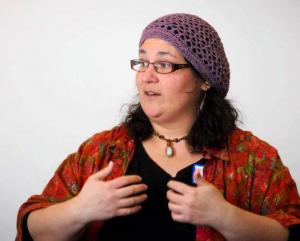
By Rabbi Minna Bromberg
Oh, deliberation. It might look like that word contains “liberation” within it. But no, a quick etymology search reveals that “deliberation” and “liberation” come from two different Latin roots. The latter has to do with freedom and the former has to do with weighing things (just like Libra whose symbol is the Scales).
Deliberation, weighing our options, is certainly important – whether in picking a brand of shampoo or in deciding whether to follow this Moses guy from the cozy sameness of stuckness and slavery into the complete unknown of freedom and the wilderness.
This is where we find the People of Israel in this week’s Torah portion, Beshallach (Exodus 13:17-17:16). Finally, after generations of enslavement, after Pharaoh’s heart being hardened against them through ten terrible plagues, the People are finally leaving the Narrow Places (as the Hebrew word for Egypt, “mitzrayim,” is creatively understood). They arrive at the shores of the Sea of Reeds and look back to see Pharaoh’s army in hot pursuit. (Pharaoh too has deliberation issues and once again changes his mind at the last minute). And suddenly the People are struck by a wave of fear and doubt about their own liberation. They attack Moses for bringing them out of slavery. They tell him that slavery would be “tov” (genuinely good) compared to dying in the desert. “Weren’t there enough graves in Egypt? Why did you bring us out here to die in the desert?,” they complain, “Didn’t we tell you in Egypt to leave us alone and let us work for the Egyptians? It would be better to be slaves in Egypt than to die in the desert!” (Exodus 14:11-12).
Moses tells the People to stand still and to be quiet; he doesn’t refute their concerns or get into a deliberating argument with them. And it’s only at that point, once they stop with the deliberating, that God tells Moses to tell the people to move forward, to walk into the sea which will part for them. Their faith, their willingness to take the next best step, is in their actions, not in their deliberations. They were never going to reach perfect intellectual clarity on this, they just needed to stop talking and start walking.
This moment of quieting our deliberations enough to move forward is such a key moment in so many of our journeys. It resonates deeply for me with how my husband and I have made decisions on our journey with infertility.
I did not want to try ivf. As a fat woman whose body is often over-medicalized and automatically seen as diseased, the last thing I wanted was a medicalized form of reproduction. I did not want the poking and prodding, I did not want to turn my body or our sex life over to a medical team. I would deeply have preferred that conception happen with just the two of us in the room rather than with a cast of hundreds. I didn’t want the frequent vaginal ultrasounds and copious needle pricks and hot flashes – definitely nobody warned me about the hot flashes – of ivf. But I did want to be a mother. And that was not going to happen if I stayed in my comfort zone. Assisted reproduction was the “desert” – the wild unknown – in which we were destined to wander if we wanted to take the next step in the direction of our heart’s truest desire.
The Children of Israel are not idiots; they really don’t want the “side effects” of the desert either: the thirst and the hunger, the attacks from behind, the wandering and wandering and wandering. It is easy to understand why they would feel torn about leaving the slavery they knew for the vague promise of a Promised Land. But they show their willingness to say, “Yes,” to all of this with those first steps forward into the Sea of Reeds.
Pharoah dies from the stuckness of deliberation. Up until now, the Book of Exodus has been full of his flip-flopping: Let the People go…bring them back…let them go…chase them down. He dies and he takes his whole army down with him. They drown because they are stuck in the mud.
I have deliberated over each move we make in this infertility journey. And with good reason: it’s a wilderness out here, with new technologies being tested all the time on us, the mostly-willing subjects (or at least on our eggs and sperm). There are real psychological, ethical, and, for most Americans, financial choices to be carefully made. But there are also moments when it’s time to put deliberation aside. I am grateful for every time I’ve had a Moses – either in my own head or in the voice of a trusted friend – who could witness my own deliberation, never arguing against it, but simply saying, “Honey, it’s time to shut up and walk.”
Rabbi Minna Bromberg is a singer, songwriter, rabbi, and voice teacher who lives in Jerusalem with her husband, Rabbi Alan Abrams, and their daughter. Believing that singing both demands and teaches an integration of body, mind, and spirit, Minna teaches voice to rabbis, rabbinical students, and lay people who use their voices in leading prayer. Ordained at the Rabbinical School of Hebrew College in 2010*, she currently runs the school’s Year-in-Israel Program for rabbinical students.*
Interested in a possible career in the rabbinate? Read Rabbi Dan Judson’s article “Jewish Lessons on Meaningful Work.“ Rabbi Judson is Dean of the Rabbinical School of Hebrew College. He has a PhD in Jewish history from Brandeis University.
Previous Post

January 9, 2019
Connecting Heart and Hand
Next Post
January 22, 2019 Valuing Work and Setting Limits
Browse Our Archives
Select a Category Uncategorized
Select a Month April 2026 March 2026 December 2025 November 2025 October 2025 September 2025 August 2025 July 2025 June 2025 May 2025 April 2025 March 2025 February 2025 January 2025 December 2024 November 2024 October 2024 September 2024 August 2024 July 2024 June 2024 May 2024 April 2024 March 2024 February 2024 January 2024 December 2023 November 2023 October 2023 September 2023 August 2023 July 2023 June 2023 May 2023 April 2023 March 2023 February 2023 January 2023 December 2022 November 2022 October 2022 September 2022 August 2022 July 2022 June 2022 May 2022 April 2022 March 2022 February 2022 January 2022 December 2021 November 2021 October 2021 September 2021 August 2021 July 2021 June 2021 May 2021 April 2021 March 2021 February 2021 January 2021 December 2020 November 2020 October 2020 September 2020 August 2020 July 2020 June 2020 May 2020 April 2020 March 2020 February 2020 January 2020 December 2019 November 2019 October 2019 September 2019 August 2019 July 2019 June 2019 May 2019 April 2019 March 2019 February 2019 January 2019 December 2018 November 2018 October 2018 September 2018 August 2018 July 2018 June 2018 May 2018 April 2018 March 2018 February 2018 January 2018 December 2017 November 2017 October 2017 September 2017 August 2017 July 2017 June 2017
Follow Us!
TAKE THE
Religious Wisdom Quiz
What Christian group refers to their main worship service as "Mass"?
Select your answer to see how you score.
Baptists Presbyterians Catholics Methodists
Related posts from Seventy Faces of Torah

The Holy Art of World Building

Parashat Tzav: Keeping the Sacred Fire Burning

Color Theory: What Joseph’s Coat Reveals
TRENDING AT PATHEOS Jewish

Building a Little Ark in a Frightening World
This past Shabbat, we read about Noah. I love this story. The...

Yom Kippur : Is There Always Room for...
Making Room for Forgiveness Every year as Yom Kippur approaches, I find...

This Rosh Hashanah: Can I Find New Meaning?
A Sunrise, a New Year, and a Question On our way to...

Killing Amalek: The Torah’s Most Misunderstood Commandment
Few passages of the Torah have provoked more confusion, polemic, and misuse...

I have never trusted a first draft. I don’t mean that...

Back to School, Back to Reality—and a New...
A New School Year Begins… Back to Reality A new school year...
view all Jewish blogs
Ad-Free & Subscriber Log-In Subscription Support
- About Us
- 2026 Calendar
- Videos
- Podcasts
- Library of World Religions
- Faith In Media Tracker
- Advertise With Us
- Write for Us
- Privacy Policy
- Terms of Service
- Do Not Sell My Data
- Contact Us
- Radiant Digital
- Manage Newsletter Subscriptions
- Unsubscribe From Notifications
- Sitemap
Copyright 2008-2026, Patheos. All rights reserved.
Subscription Support Ad-Free & Subscriber Log-In
Follow Patheos