
BuddhistCatholicContemplativeEvangelicalGeneral ChristianHinduJewishLatter-day SaintMuslimNew VisionsProgressive Christian
Beliefs
- Buddhist
- Catholic
- Contemplative
- Evangelical
- General Christian
- Hindu
- Jewish
- Latter-day Saint
- More Voices
- Muslim
- New Visions
- Pagan
- Progressive Christian
Topics
- Religion News
- Food and Religion
- Sports and Religion
- Religious Art
- Religious Music and Entertainment
- Religious Events
- History and Religion
- Style and Religion
- Politics and Religion
- Women in Religion
- Recreation Outdoors and Religion
- Business Finance and Religion
- Careers Workplace and Religion
- Education and Religion
- Family Parenting and Religion
- Health Fitness and Religion
- Home and Religion
- Relationships and Religion
- Technology and Religion
- Travel and Religion
Columnists
- Buddhist Columnists
- Business Finance and Religion Columnists
- Careers Workplace and Religion Columnists
- Catholic Columnists
- Contemplative Columnists
- Education and Religion Columnists
- Evangelists Columnists
- Family Parenting and Religion Columnists
- General Christian Columnists
- Health Fitness and Religion Columnists
- Hindu Columnists
- History and Religion Columnists
- Home and Religion Columnists
- Jewish Columnists
- More Voices Columnists
- Latter Day Columnists
- Muslim Columnists
- New Visions Columnists
- Nonreligious Columnists
- Pagan Columnists
- Politics and Religion Columnists
- Progressive Columnists
- Recreation Outdoors and Religion Columnists
- Relationships and Religion Columnists
- Religion News Columnists
- Religious Art Columnists
- Religious Events Columnists
- Religious Music and Entertainment Columnists
- Sports and Religion Columnists
- Style and Religion Columnists
- Technology and Religion Columnists
- Travel and Religion Columnists
- Women in Religion Columnists
Resource Library
- 2026 Calendar
- Library of World Religions
- The 100 Most Holy Places on Earth
- Patheos Answers
- Podcasts
- Videos
- Faith Leaders Database
- Anglican Episcopalian
- Bahai
- Baptist
- Buddhism
- Christianity
- Confucianism
- Eastern Orthodoxy
- Hinduism
- Holiness and Pentecostal
- ISKCON
- Islam
- Judaism
- Lutheran
- Methodist
- The Church of Jesus Christ of Latter-day Saints
- New Age
- Paganism
- Presbytarian and Reformed
- Protestantism
- Religion Behind the Scenes
- Roman Catholic
- Scientology
- Shia Islam
- Sikhism
- Sufism
- Sunni Islam
- Taoism
- Zen
- See all religions
Research Tools
 Ad-Free & Subscriber Log-In Subscription Support
Ad-Free & Subscriber Log-In Subscription Support
Follow Patheos 

- Trending:
- Forgiveness
- |
- Marriage
- |
- Consciousness
- |
- Death Penalty
- |
- Election
- |
- Halloween

- Home
- About Hebrew College
- The Rabbinical School of Hebrew College
- The Book of Psalms
- FREE NEWSLETTER
- Home
- Jewish
- Experiencing Exile
Experiencing Exile
Last updated on: December 19, 2018 at 4:12 pm by Hebrew College
Experiencing Exile 2018-12-19T16:12:19-04:00 Hebrew College
Patheos Explore the world's faith through different perspectives on religion and spirituality! Patheos has the views of the prevalent religions and spiritualities of the world.
 Parashat MIketz (Genesis 41:4-44-17)
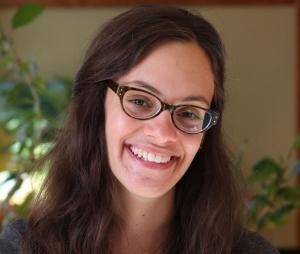
By Rabbi Leora Abelson
A caravan makes its way through the desert. Exhausted and hungry, families travel from a place of hardship and make their way towards hope and uncertainty. Traveling towards a land of plenty, a land of opportunity, they seek the well-being, the survival, of their families. They know not what awaits them at their destination: welcome or hostility. They are prepared to offer everything they have in exchange for food, for safety. Will the plenty be shared? Will they be turned away? Worst, will they be met with violence?
This is a contemporary story. Exhausted, hungry people make the impossible decision to leave their homes because the only thing more unbearable than leaving is staying. In the words of Warsan Shire, “you only leave home / when home won’t let you stay.”
This is an age-old story. Our ancestors have migrated in search of food, in search of survival, for tens of thousands of years. Humans have always migrated, navigating different climates, cultures, languages, crossing geographic and political borders, remaking our lives in new places.
This is a Jewish story. It is in our history; our ancestors have fled and remade their homes, fled and remade their homes, sometimes more than once in the same generation. Seeking safety, seeking survival.
This story is also in the Torah. In this week’s parsha, Miketz (Genesis 41:1 – 44:17), the eleven sons of our ancestor Jacob, renamed Israel, travel from Canaan to Mitzrayim (Egypt) in search of food. Famine has devastated all the lands, but due to the divinely inspired dream interpretation and management skills of Pharaoh’s right hand man (who happens to be Jacob’s twelfth son, Joseph, though his family does not know it), there is food in Mitzrayim. Jacob sends his sons with silver, hoping they will buy food and bring it home again. But in just a few chapters, the entire family will uproot from their home, cross a political border, navigate a new culture, and remake their lives in this new place.
When they do, (in next week’s parsha,) it is a joyful, hopeful journey. Joseph, and even Pharaoh, promise them comfort and abundance in their new home. All traveling together, their sense of home, belonging, and community are maintained. They are given their familiar vocations. They are able to build their communities and their lives. Would that every sojourner, every migrant, seeking survival and safety in a new place be met with such a welcome.
And yet, the welcome shown to Jacob’s family is shadowed by our knowledge that the people will never be fully welcomed, and will eventually be enslaved and experience tremendous suffering at the hands of the empire. The Torah foreshadows this with the verb root yud-resh-daled, meaning “to go down,” which it uses to describe the movement from Canaan to Mitzrayim. While there may be a geographical echo – they had to travel south – this verb certainly has a theological echo.
When Jacob tells his sons to go to Mitzrayim, he says, “רדו־שמה,” go down there (Gen 42:2). Rashi, drawing on an ancient midrash, writes about that verse, “He did not say l’chu, go. [r’du] hints at the 210 years that they are enslaved in Mitzrayim, for the numerical value of r’du is 210.”
The ancient rabbis understand the Torah’s language not only to be offering a hint of what is to come, but also to be calling attention to the magnitude of the moment: it is not just about Jacob’s immediate family fleeing famine, it is the moment when bnei Yisrael, the people of Israel, enter into exile.
The verb yud-resh-daled can be read metaphorically, as a comment about the experience of uprooting, of leaving a place of home and ancestors, a place of connection with God and community, and traveling to an uncertain, if hopeful, future. The experience of Jacob’s family – the initial fear of leaving their home; the uncertainty; the warm welcome shadowed by the readers’ knowledge of what is to come – reminds us how uncertain any experience of migration is, whether coerced or freely chosen, and how the experiences of home and exile often cannot be neatly mapped onto a binary of good and bad, dangerous and safe, hopeful and desperate.
Leaving home, leaving a place of connection to land, history, ancestors, and community, is painful. Leaving home when home isn’t safe is terrifying. Traveling to a new place might be hopeful, might be laden with possibility; it might also be uncertain, scary. It requires tremendous courage and faith.
For weeks, you may have searched for news stories about the caravan of individuals and families travelling from desperate poverty, persecution, and violence in their Central American homes, seeking survival and safety in the United States. They were stopped at our border, and thousands of them are living in temporary outdoor camps, awaiting the chance to seek asylum here. In a joint statement, representatives of the caravan wrote, “It’s been hard leaving our countries and part of our families behind, exposing our children and walking through unknown places just to have the option of living in the United States or in any other country that offers us the opportunity to work honestly and offers a better future for our kids.”
The hostility and violence with which they have been met at the border brings to mind another way of thinking about exile, found in Hasidic theology and expressed by the Hasidic master Rabbi Yehuda Leib Alter in a commentary on this parsha. We can be exiled not from land, not from home or place of origin, but from connection with and awareness of Divinity. Divine goodness is in everything, but it can be hidden. And when we hide from it, we are capable of perpetrating great harm.
In what ways do we hide from Divine goodness? By not seeing it in our fellow human beings; by treating them without the dignity due to one created b’tzelem Elokim, in the Divine image. How does Divinity become obscured? When we participate in systems that degrade the Godliness in humans, creatures, and our planet. I recently learned that the activist organization Mijente is working to expose the collaboration between Amazon and Immigration and Customs Enforcement. We send God into hiding when we buy Chanukah gifts on Amazon, unknowingly supporting the surveillance, separation, and deportation of immigrant families.
And how do we let God back in? How do we help reveal the Divine goodness that fills this world? By treating our fellow humans with dignity. By listening for their stories with empathy. By refusing to participate in, and working to dismantle, inhumane systems.
When we welcome in those who are seeking safety and survival among us, we also welcome in the Divine. May your Chanukah be filled with welcome, and wherever you are, may it feel like home.
Rabbi Leora Abelson is a 2017 graduate of the Rabbinical School of Hebrew College, serves as a congregational rabbi, and is training to be a healthcare chaplain. Leora is passionate about queer embodied theology and making the ancient wisdom of the Jewish tradition accessible to social movements and anyone building a just and peaceful world.
Interested in a possible career in the rabbinate? Read Rabbi Dan Judson’s article “Jewish Lessons on Meaningful Work.“ Rabbi Judson is Dean of the Rabbinical School of Hebrew College. He has a Ph.D. in Jewish history from Brandeis University.
Previous Post

November 19, 2018
Wrestling with Technology & Finding Connection
Next Post
December 12, 2018 Mirroring political struggles and victories at home
Browse Our Archives
Select a Category Uncategorized
Select a Month April 2026 March 2026 December 2025 November 2025 October 2025 September 2025 August 2025 July 2025 June 2025 May 2025 April 2025 March 2025 February 2025 January 2025 December 2024 November 2024 October 2024 September 2024 August 2024 July 2024 June 2024 May 2024 April 2024 March 2024 February 2024 January 2024 December 2023 November 2023 October 2023 September 2023 August 2023 July 2023 June 2023 May 2023 April 2023 March 2023 February 2023 January 2023 December 2022 November 2022 October 2022 September 2022 August 2022 July 2022 June 2022 May 2022 April 2022 March 2022 February 2022 January 2022 December 2021 November 2021 October 2021 September 2021 August 2021 July 2021 June 2021 May 2021 April 2021 March 2021 February 2021 January 2021 December 2020 November 2020 October 2020 September 2020 August 2020 July 2020 June 2020 May 2020 April 2020 March 2020 February 2020 January 2020 December 2019 November 2019 October 2019 September 2019 August 2019 July 2019 June 2019 May 2019 April 2019 March 2019 February 2019 January 2019 December 2018 November 2018 October 2018 September 2018 August 2018 July 2018 June 2018 May 2018 April 2018 March 2018 February 2018 January 2018 December 2017 November 2017 October 2017 September 2017 August 2017 July 2017 June 2017
Follow Us!
TAKE THE
Religious Wisdom Quiz
What does "Jezreel" mean?
Select your answer to see how you score.
God defends God fights God sows God reigns
Related posts from Seventy Faces of Torah

The Holy Art of World Building

Parashat Tzav: Keeping the Sacred Fire Burning

Color Theory: What Joseph’s Coat Reveals
TRENDING AT PATHEOS Jewish

Building a Little Ark in a Frightening World
This past Shabbat, we read about Noah. I love this story. The...

Yom Kippur : Is There Always Room for...
Making Room for Forgiveness Every year as Yom Kippur approaches, I find...

This Rosh Hashanah: Can I Find New Meaning?
A Sunrise, a New Year, and a Question On our way to...

Killing Amalek: The Torah’s Most Misunderstood Commandment
Few passages of the Torah have provoked more confusion, polemic, and misuse...

I have never trusted a first draft. I don’t mean that...

Back to School, Back to Reality—and a New...
A New School Year Begins… Back to Reality A new school year...
view all Jewish blogs
Ad-Free & Subscriber Log-In Subscription Support
- About Us
- 2026 Calendar
- Videos
- Podcasts
- Library of World Religions
- Faith In Media Tracker
- Advertise With Us
- Write for Us
- Privacy Policy
- Terms of Service
- Do Not Sell My Data
- Contact Us
- Radiant Digital
- Manage Newsletter Subscriptions
- Unsubscribe From Notifications
- Sitemap
Copyright 2008-2026, Patheos. All rights reserved.
Subscription Support Ad-Free & Subscriber Log-In
Follow Patheos