
BuddhistCatholicContemplativeEvangelicalGeneral ChristianHinduJewishLatter-day SaintMuslimNew VisionsProgressive Christian
Beliefs
- Buddhist
- Catholic
- Contemplative
- Evangelical
- General Christian
- Hindu
- Jewish
- Latter-day Saint
- More Voices
- Muslim
- New Visions
- Pagan
- Progressive Christian
Topics
- Religion News
- Food and Religion
- Sports and Religion
- Religious Art
- Religious Music and Entertainment
- Religious Events
- History and Religion
- Style and Religion
- Politics and Religion
- Women in Religion
- Recreation Outdoors and Religion
- Business Finance and Religion
- Careers Workplace and Religion
- Education and Religion
- Family Parenting and Religion
- Health Fitness and Religion
- Home and Religion
- Relationships and Religion
- Technology and Religion
- Travel and Religion
Columnists
- Buddhist Columnists
- Business Finance and Religion Columnists
- Careers Workplace and Religion Columnists
- Catholic Columnists
- Contemplative Columnists
- Education and Religion Columnists
- Evangelists Columnists
- Family Parenting and Religion Columnists
- General Christian Columnists
- Health Fitness and Religion Columnists
- Hindu Columnists
- History and Religion Columnists
- Home and Religion Columnists
- Jewish Columnists
- More Voices Columnists
- Latter Day Columnists
- Muslim Columnists
- New Visions Columnists
- Nonreligious Columnists
- Pagan Columnists
- Politics and Religion Columnists
- Progressive Columnists
- Recreation Outdoors and Religion Columnists
- Relationships and Religion Columnists
- Religion News Columnists
- Religious Art Columnists
- Religious Events Columnists
- Religious Music and Entertainment Columnists
- Sports and Religion Columnists
- Style and Religion Columnists
- Technology and Religion Columnists
- Travel and Religion Columnists
- Women in Religion Columnists
Resource Library
- 2026 Calendar
- Library of World Religions
- The 100 Most Holy Places on Earth
- Patheos Answers
- Podcasts
- Videos
- Faith Leaders Database
- Anglican Episcopalian
- Bahai
- Baptist
- Buddhism
- Christianity
- Confucianism
- Eastern Orthodoxy
- Hinduism
- Holiness and Pentecostal
- ISKCON
- Islam
- Judaism
- Lutheran
- Methodist
- The Church of Jesus Christ of Latter-day Saints
- New Age
- Paganism
- Presbytarian and Reformed
- Protestantism
- Religion Behind the Scenes
- Roman Catholic
- Scientology
- Shia Islam
- Sikhism
- Sufism
- Sunni Islam
- Taoism
- Zen
- See all religions
Research Tools
 Ad-Free & Subscriber Log-In Subscription Support
Ad-Free & Subscriber Log-In Subscription Support
Follow Patheos 

- Trending:
- Forgiveness
- |
- Marriage
- |
- Consciousness
- |
- Death Penalty
- |
- Election
- |
- Halloween

- Home
- About Hebrew College
- The Rabbinical School of Hebrew College
- The Book of Psalms
- FREE NEWSLETTER
- Home
- Jewish
- Vertical Ladders of Sky, Horizontal Ladders of Earth
Vertical Ladders of Sky, Horizontal Ladders of Earth
Last updated on: December 19, 2018 at 4:12 pm by Hebrew College
Vertical Ladders of Sky, Horizontal Ladders of Earth 2018-12-19T16:12:54-04:00 Hebrew College
Patheos Explore the world's faith through different perspectives on religion and spirituality! Patheos has the views of the prevalent religions and spiritualities of the world.
 Parashat Va-Yetze (Genesis 28:10-32:3)
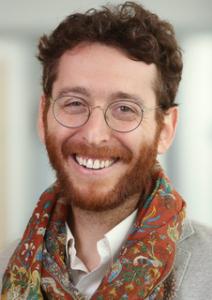
By Rabbi Jordan Schuster
I’ve been thinking about John Keats lately. About how he died at the age of 25. About how so much of his life up to that point was spent contemplating a way out of this world. Beauty, imagination, sleep – these were his exits and escapes. These were the paths he used to transcend reality, to free himself from the cruelty, the violence, the brokenness of this world. He writes in his “Ode to Sleep”:
O soft embalmer of the still midnight
Shutting with careful fingers and benign
Our willing eyes…
O soothest Sleep!…
Save me from curious conscience…
Seal the hushed casket of my soul.[1]
Keats is praying to sleep here. He is beseeching and commanding sleep to “shut” closed his eyes, to “save” him from consciousness, to “seal” his soul off from the darkness of the world. And Keats issues these prayers because, as he describes elsewhere, to fall asleep is to lift the soul up into “the light of heaven.” To fall asleep is to drift into an embrace of pure beauty. While to wake up – to wake up for Keats means plunging from a “vastness of sky” into the “muddy stream of real things.”[2]
This week, in Parashat Va-Yetze, Jacob shuts his eyes to the world and enters into a dream. Just as sleep offered Keats respite from the dark and shattered reality, so it seems initially to offer Jacob the same. After all, as our Parsahah opens, we find Jacob absconding from his life – fleeing from a murderous brother, a fractured family, a disintegrating home. Existential threat looms up around him, deceit and treachery come to define the world as he knows it. Sun sets. Darkness falls. Reality pitches into night. Jacob quails, climbs a mountain, lays his head upon a pile of stones, drifts at last into sleep. Here is what he sees:
And behold:
A ladder
standing
on earth,its head
touching
the sky.And behold:
Messengers
of God
ascending
and descending
upon it.And behold:
YHWH
stationed
upon it.
(28:12-13)
Out of the darkness of his world, Jacob watches a ladder grow – luminous, vertical, brushing its crown against the altitude of heaven.
If Jacob were Keats, he would clamber up that ladder, never to return. He would escape into the sky and attempt to linger there with God, gazing upon the “clear space of ether,” “Jove’s large eyebrow,” the “noise of harmony.”[3] He would contemplate these immaculate forms of beauty – perfectly proportioned, sublimely untouched by the world. He would sacrifice his existence to them. He would let go of his being alive, just in order to remain with them.
Not Jacob.
Jacob is decidedly not Keats.
When Jacob beholds a ladder spanning out between heaven and earth, what seems to compel him most is not what stands at the other end of the ladder. Rather, what seems to compel Jacob most is the sheer fact that such a ladder exists, binding the aching complexity of this world to the starlit transcendence of a world beyond. What seems to compel Jacob most, in other words, is the way his ladder helps him to identify an inextricable connection between the imperfect and perfect, the human and divine, our world and God’s. Jacob’s ladder teaches Jacob about how entwined heaven and earth actually are.
The Tanakh’s presentation of Jacob’s ladder as a bridge that links worlds together is stunning. But perhaps even more stunning is what Rashi does to the image:
The foot [of Jacob’s] ladder stood in Be’er Sheva, its middle slanted into Jerusalem, its head was in Beth El. (Rashi to Gen. 28:17).
Instead of seeing Jacob’s ladder as vertically stretching out from earth to sky, Rashi rotates it by 90 degrees. He spins it on its side. And as a result, it no longer serves to link this world to the next, but this world to itself.
If Keats’ ladder offers an escape into a realm of Divinity; if the Tanakh’s ladder scores Divinity as being indissolubly linked to our own world; Rashi’s ladder surfaces how even the most ruptured of relationships are still somehow connected. As much as Jacob tries to run away from his brother, his family, his home, his past, Jacob’s ladder reveals to him how profoundly he remains bound to them, how inevitably they remain bound to him. Regardless of how fissured his world feels, Jacob’s ladder helps him to discern the ways in which – teeming beneath everything – there remains the potential for relationship, there remains the possibility of ladders – like bridges – clacking out between you and me, between me and you.
To see these connections, to illuminate them the midst of so much dark division, is to wake up, is to reconsider the world, is to exclaim with Jacob:
Yes.
God is in this place.
I didn’t know.
(Genesis 28:16)
Rabbi Jordan Schuster spent most of October reading The Collected Works of John Keats at his kitchen table over breakfast. He was ordained at the Rabbinical School of Hebrew College in 2018. He is a faculty member at the Rabbinical School of Hebrew College and the Associate Director of the College’s Open Circle Jewish Living Mindful Living/Mysticism Track.
[1] See Keats’ “To Sleep” (1819).
[2] See Keats’ “Sleep and Poetry” (1816).
[3] See Keats’ “Sleep and Poetry.”
Interested in a possible career in the rabbinate? Read Rabbi Dan Judson’s article “Jewish Lessons on Meaningful Work.“ Rabbi Judson is Dean of the Rabbinical School of Hebrew College. He has a Ph.D. in Jewish history from Brandeis University.
Previous Post

November 5, 2018
Closed Wells, Closed Hearts
Next Post
November 19, 2018 Wrestling with Technology & Finding Connection
Browse Our Archives
Select a Category Uncategorized
Select a Month April 2026 March 2026 December 2025 November 2025 October 2025 September 2025 August 2025 July 2025 June 2025 May 2025 April 2025 March 2025 February 2025 January 2025 December 2024 November 2024 October 2024 September 2024 August 2024 July 2024 June 2024 May 2024 April 2024 March 2024 February 2024 January 2024 December 2023 November 2023 October 2023 September 2023 August 2023 July 2023 June 2023 May 2023 April 2023 March 2023 February 2023 January 2023 December 2022 November 2022 October 2022 September 2022 August 2022 July 2022 June 2022 May 2022 April 2022 March 2022 February 2022 January 2022 December 2021 November 2021 October 2021 September 2021 August 2021 July 2021 June 2021 May 2021 April 2021 March 2021 February 2021 January 2021 December 2020 November 2020 October 2020 September 2020 August 2020 July 2020 June 2020 May 2020 April 2020 March 2020 February 2020 January 2020 December 2019 November 2019 October 2019 September 2019 August 2019 July 2019 June 2019 May 2019 April 2019 March 2019 February 2019 January 2019 December 2018 November 2018 October 2018 September 2018 August 2018 July 2018 June 2018 May 2018 April 2018 March 2018 February 2018 January 2018 December 2017 November 2017 October 2017 September 2017 August 2017 July 2017 June 2017
Follow Us!
TAKE THE
Religious Wisdom Quiz
What does Paul say is hidden in Christ according to Colossians?
Select your answer to see how you score.
The mysteries of God The riches of glory Eternal life All the treasures of wisdom and knowledge
Related posts from Seventy Faces of Torah

The Holy Art of World Building

Parashat Tzav: Keeping the Sacred Fire Burning

Color Theory: What Joseph’s Coat Reveals
TRENDING AT PATHEOS Jewish

Building a Little Ark in a Frightening World
This past Shabbat, we read about Noah. I love this story. The...

Yom Kippur : Is There Always Room for...
Making Room for Forgiveness Every year as Yom Kippur approaches, I find...

This Rosh Hashanah: Can I Find New Meaning?
A Sunrise, a New Year, and a Question On our way to...

Killing Amalek: The Torah’s Most Misunderstood Commandment
Few passages of the Torah have provoked more confusion, polemic, and misuse...

I have never trusted a first draft. I don’t mean that...

Back to School, Back to Reality—and a New...
A New School Year Begins… Back to Reality A new school year...
view all Jewish blogs
Ad-Free & Subscriber Log-In Subscription Support
- About Us
- 2026 Calendar
- Videos
- Podcasts
- Library of World Religions
- Faith In Media Tracker
- Advertise With Us
- Write for Us
- Privacy Policy
- Terms of Service
- Do Not Sell My Data
- Contact Us
- Radiant Digital
- Manage Newsletter Subscriptions
- Unsubscribe From Notifications
- Sitemap
Copyright 2008-2026, Patheos. All rights reserved.
Subscription Support Ad-Free & Subscriber Log-In
Follow Patheos