
BuddhistCatholicContemplativeEvangelicalGeneral ChristianHinduJewishLatter-day SaintMuslimNew VisionsProgressive Christian
Beliefs
- Buddhist
- Catholic
- Contemplative
- Evangelical
- General Christian
- Hindu
- Jewish
- Latter-day Saint
- More Voices
- Muslim
- New Visions
- Pagan
- Progressive Christian
Topics
- Religion News
- Food and Religion
- Sports and Religion
- Religious Art
- Religious Music and Entertainment
- Religious Events
- History and Religion
- Style and Religion
- Politics and Religion
- Women in Religion
- Recreation Outdoors and Religion
- Business Finance and Religion
- Careers Workplace and Religion
- Education and Religion
- Family Parenting and Religion
- Health Fitness and Religion
- Home and Religion
- Relationships and Religion
- Technology and Religion
- Travel and Religion
Columnists
- Buddhist Columnists
- Business Finance and Religion Columnists
- Careers Workplace and Religion Columnists
- Catholic Columnists
- Contemplative Columnists
- Education and Religion Columnists
- Evangelists Columnists
- Family Parenting and Religion Columnists
- General Christian Columnists
- Health Fitness and Religion Columnists
- Hindu Columnists
- History and Religion Columnists
- Home and Religion Columnists
- Jewish Columnists
- More Voices Columnists
- Latter Day Columnists
- Muslim Columnists
- New Visions Columnists
- Nonreligious Columnists
- Pagan Columnists
- Politics and Religion Columnists
- Progressive Columnists
- Recreation Outdoors and Religion Columnists
- Relationships and Religion Columnists
- Religion News Columnists
- Religious Art Columnists
- Religious Events Columnists
- Religious Music and Entertainment Columnists
- Sports and Religion Columnists
- Style and Religion Columnists
- Technology and Religion Columnists
- Travel and Religion Columnists
- Women in Religion Columnists
Resource Library
- 2026 Calendar
- Library of World Religions
- The 100 Most Holy Places on Earth
- Patheos Answers
- Podcasts
- Videos
- Faith Leaders Database
- Anglican Episcopalian
- Bahai
- Baptist
- Buddhism
- Christianity
- Confucianism
- Eastern Orthodoxy
- Hinduism
- Holiness and Pentecostal
- ISKCON
- Islam
- Judaism
- Lutheran
- Methodist
- The Church of Jesus Christ of Latter-day Saints
- New Age
- Paganism
- Presbytarian and Reformed
- Protestantism
- Religion Behind the Scenes
- Roman Catholic
- Scientology
- Shia Islam
- Sikhism
- Sufism
- Sunni Islam
- Taoism
- Zen
- See all religions
Research Tools
 Ad-Free & Subscriber Log-In Subscription Support
Ad-Free & Subscriber Log-In Subscription Support
Follow Patheos 

- Trending:
- Forgiveness
- |
- Marriage
- |
- Consciousness
- |
- Death Penalty
- |
- Election
- |
- Halloween

- Home
- About Hebrew College
- The Rabbinical School of Hebrew College
- The Book of Psalms
- FREE NEWSLETTER
- Home
- Jewish
- Noah: Words above the Waters
Noah: Words above the Waters
Last updated on: October 8, 2018 at 8:15 am by Hebrew College
Noah: Words above the Waters 2018-10-08T08:15:37-04:00 Hebrew College
Patheos Explore the world's faith through different perspectives on religion and spirituality! Patheos has the views of the prevalent religions and spiritualities of the world.
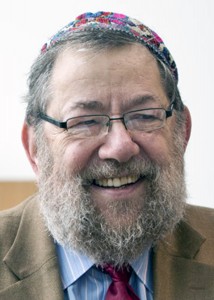 Parashat Noach (Genesis 6:9-11:32)
By Avraham Yizhak (Arthur) Green
The story of Noah’s flood remains one of the best-known and most powerful tales of our biblical heritage. Even in our secular age, there is hardly a child who has not heard the story told, seen it recreated in animation, or played with toys based on the animals in Noah’s ark. What is it about this story that seems to have such great enduring power? Is it just that it fits so well with children’s seemingly natural desire to care for animals? Or are there deeper truths that we sense are present within it, perhaps made more palatable to us because they appear in the guise of this childlike and dreamy narrative?
The largest and most challenging frame into which the tale forces us is the ultimate question of whether we, or our human society, deserve to exist. God is here our voice of self-judgment, thunderously asking, in the language of Gen. 6:13, “Are we too so filled with ḥamas – violence or malice – that we ought to be destroyed?” Would a Creator God, looking down upon our world, also conclude that “the inclination of the human heart is just evil, from their youth (8:21),” and that we are therefore irredeemable?
There is much in the headlines these days to support such a terrible read. We shudder to think that we might be judged by the leaders we choose. Our treatment of the vulnerable – women, minorities, immigrants – and our refusal to hear their voices – could go a long way toward condemning us. Our society’s willful disregard for the survival of the created world itself, requiring purity of air, water, and other basic resources of life, puts us on the course toward a naturalistic interpretation of the Noah story, one in which our actions bring us into a future where survival is possible only for a chosen few, the subject of endless dystopian films and computer games that themselves seem to pollute the cultural air we are forced to breathe.
Whence the redemption that has to accompany the Noah story, if it is to be deemed fit to be told to younger audiences, and thus passed down through the generations? How do we get beyond its utter gloom? The Hasidic authors, deeply seated in the tradition of Midrash, do it by a close reading of the story’s language. The term for “ark” used in the biblical tale is teyvah. The exact same term, in later Hebrew, has the meaning of “word.” It is the word, spoken with integrity, that saves us, sailing above the waters of destruction. Language, in the rabbinic imagination, is that which makes us human, distinguishing us from the animal kingdom. It is proper use of that great divine gift that renders meaning to our lives, offering us the possibility of transcendence, of reaching toward the sublime. In the very verbal cultural tradition of Judaism, it is the word, truly spoken (in contrast to the Hindu’s mantra or the Buddhist’s silence), that leads us on that path.
The Ba‘al Shem Tov, the first Hasidic master, began with a quip. God said to Noah: “You, enter the ark with your entire household (7:1).” When you speak, he admonished, bring your whole self into the word. Do not leave part of yourself outside it, questioning, doubting. You will never attain wholeness if you do. Others added: “Make a window for the ark (6:17)” – Let light shine in to your word. “Let there be lower, second, and third levels (ibid.)” – Discover ever higher levels of meaning within the word you speak, which has the potential to be the word of God.
A later master, the rabbi of Radomsk, added “The ark rested in the seventh month (8:4).” The seventh month, in the biblical calendar, is Tishrey, the month of the Days of Awe, which we have just concluded. It is there, in that time when integrity is most demanded, that the word finds rest. Ḥat’anu, “we have sinned,” is a word that is spoken with the whole self. So too is salaḥti, “I have forgiven.”
Integrity of language is terribly under threat in the world in which we live. False testimony seems to be taken for granted, even from those who seek to represent highest justice. “Facts” seem to disappear all too readily, whether due to the “spin” of politicians or the labyrinthine interpretations of post-modern historians and critics. Faith in the possibility of repairing our world might just have to begin with a renewed faith in our own ability to speak the truth.
Rabbi Arthur Green is Rector of the Rabbinical School of Hebrew College in Newton Centre, MA.

Learn more about Hebrew College’s rabbinical and cantorial programs on November 12, 2018 at Ta Sh’ma (Come & hear), a Fall Open House & Day of Learning for prospective rabbinical, rav-hazzan and cantorial students.
Previous Post

October 3, 2018
We Are Created Creative
Next Post
October 17, 2018 Sarah’s Silent Cry
Browse Our Archives
Select a Category Uncategorized
Select a Month April 2026 March 2026 December 2025 November 2025 October 2025 September 2025 August 2025 July 2025 June 2025 May 2025 April 2025 March 2025 February 2025 January 2025 December 2024 November 2024 October 2024 September 2024 August 2024 July 2024 June 2024 May 2024 April 2024 March 2024 February 2024 January 2024 December 2023 November 2023 October 2023 September 2023 August 2023 July 2023 June 2023 May 2023 April 2023 March 2023 February 2023 January 2023 December 2022 November 2022 October 2022 September 2022 August 2022 July 2022 June 2022 May 2022 April 2022 March 2022 February 2022 January 2022 December 2021 November 2021 October 2021 September 2021 August 2021 July 2021 June 2021 May 2021 April 2021 March 2021 February 2021 January 2021 December 2020 November 2020 October 2020 September 2020 August 2020 July 2020 June 2020 May 2020 April 2020 March 2020 February 2020 January 2020 December 2019 November 2019 October 2019 September 2019 August 2019 July 2019 June 2019 May 2019 April 2019 March 2019 February 2019 January 2019 December 2018 November 2018 October 2018 September 2018 August 2018 July 2018 June 2018 May 2018 April 2018 March 2018 February 2018 January 2018 December 2017 November 2017 October 2017 September 2017 August 2017 July 2017 June 2017
Follow Us!
TAKE THE
Religious Wisdom Quiz
What is the last word in the Bible?
Select your answer to see how you score.
Amen Jesus Hallelujah Forever
Related posts from Seventy Faces of Torah

The Holy Art of World Building

Parashat Tzav: Keeping the Sacred Fire Burning

Color Theory: What Joseph’s Coat Reveals
TRENDING AT PATHEOS Jewish

Yom Kippur : Is There Always Room for...
Making Room for Forgiveness Every year as Yom Kippur approaches, I find...

This Rosh Hashanah: Can I Find New Meaning?
A Sunrise, a New Year, and a Question On our way to...

Killing Amalek: The Torah’s Most Misunderstood Commandment
Few passages of the Torah have provoked more confusion, polemic, and misuse...

I have never trusted a first draft. I don’t mean that...

Back to School, Back to Reality—and a New...
A New School Year Begins… Back to Reality A new school year...

Out-Crowleying Crowley: The Emptiness of the O9A
O9A Neo-Crowley Racial Cosplay and Edgelord Atrocitism Aleister Crowley did not create...
view all Jewish blogs
Ad-Free & Subscriber Log-In Subscription Support
- About Us
- 2026 Calendar
- Videos
- Podcasts
- Library of World Religions
- Faith In Media Tracker
- Advertise With Us
- Write for Us
- Privacy Policy
- Terms of Service
- Do Not Sell My Data
- Contact Us
- Radiant Digital
- Manage Newsletter Subscriptions
- Unsubscribe From Notifications
- Sitemap
Copyright 2008-2026, Patheos. All rights reserved.
Subscription Support Ad-Free & Subscriber Log-In
Follow Patheos