
BuddhistCatholicContemplativeEvangelicalGeneral ChristianHinduJewishLatter-day SaintMuslimNew VisionsProgressive Christian
Beliefs
- Buddhist
- Catholic
- Contemplative
- Evangelical
- General Christian
- Hindu
- Jewish
- Latter-day Saint
- More Voices
- Muslim
- New Visions
- Pagan
- Progressive Christian
Topics
- Religion News
- Food and Religion
- Sports and Religion
- Religious Art
- Religious Music and Entertainment
- Religious Events
- History and Religion
- Style and Religion
- Politics and Religion
- Women in Religion
- Recreation Outdoors and Religion
- Business Finance and Religion
- Careers Workplace and Religion
- Education and Religion
- Family Parenting and Religion
- Health Fitness and Religion
- Home and Religion
- Relationships and Religion
- Technology and Religion
- Travel and Religion
Columnists
- Buddhist Columnists
- Business Finance and Religion Columnists
- Careers Workplace and Religion Columnists
- Catholic Columnists
- Contemplative Columnists
- Education and Religion Columnists
- Evangelists Columnists
- Family Parenting and Religion Columnists
- General Christian Columnists
- Health Fitness and Religion Columnists
- Hindu Columnists
- History and Religion Columnists
- Home and Religion Columnists
- Jewish Columnists
- More Voices Columnists
- Latter Day Columnists
- Muslim Columnists
- New Visions Columnists
- Nonreligious Columnists
- Pagan Columnists
- Politics and Religion Columnists
- Progressive Columnists
- Recreation Outdoors and Religion Columnists
- Relationships and Religion Columnists
- Religion News Columnists
- Religious Art Columnists
- Religious Events Columnists
- Religious Music and Entertainment Columnists
- Sports and Religion Columnists
- Style and Religion Columnists
- Technology and Religion Columnists
- Travel and Religion Columnists
- Women in Religion Columnists
Resource Library
- 2026 Calendar
- Library of World Religions
- The 100 Most Holy Places on Earth
- Patheos Answers
- Podcasts
- Videos
- Faith Leaders Database
- Anglican Episcopalian
- Bahai
- Baptist
- Buddhism
- Christianity
- Confucianism
- Eastern Orthodoxy
- Hinduism
- Holiness and Pentecostal
- ISKCON
- Islam
- Judaism
- Lutheran
- Methodist
- The Church of Jesus Christ of Latter-day Saints
- New Age
- Paganism
- Presbytarian and Reformed
- Protestantism
- Religion Behind the Scenes
- Roman Catholic
- Scientology
- Shia Islam
- Sikhism
- Sufism
- Sunni Islam
- Taoism
- Zen
- See all religions
Research Tools
 Ad-Free & Subscriber Log-In Subscription Support
Ad-Free & Subscriber Log-In Subscription Support
Follow Patheos 

- Trending:
- Forgiveness
- |
- Marriage
- |
- Consciousness
- |
- Death Penalty
- |
- Election
- |
- Halloween

- Home
- About Hebrew College
- The Rabbinical School of Hebrew College
- The Book of Psalms
- FREE NEWSLETTER
- Home
- Jewish
- Where have you come from and where are you going?
Where have you come from and where are you going?
Last updated on: July 10, 2018 at 3:05 pm by Hebrew College
Where have you come from and where are you going? 2018-07-10T15:05:06-04:00 Hebrew College
Patheos Explore the world's faith through different perspectives on religion and spirituality! Patheos has the views of the prevalent religions and spiritualities of the world.
 Starting Points & Destinations on our Journeys (Parashat Massei, Numbers 33:1-36:13)
By Cantor Ken Richmond
A middle school history teacher once asked my class why people immigrate; our suggestions all fell under her simple overarching answer, that people immigrate in search of a better life. Almost all Americans, the Jewish community included, are descendants of immigrants; many of us have stories of how our families came to the United States.
My Zayda, Sol (Shleime Zalmen) Richmond, was born in the village of Zvhil, Ukraine, in 1908. His father and uncle moved to Boston first and worked to send money back to the family. In 1913, my grandfather, together with his mother, grandmother, and two older sisters, left home and snuck over the Polish border in a wagon, hidden under bales of hay. They made their way across Europe and waited months to voyage in steerage to America. When he arrived in Boston, my Zayda ran to greet his uncle, who had left Ukraine a year before, but didn’t recognize his father, who had departed a year earlier. I know fewer details about the other branches of my family, but generally, they left Eastern Europe and its pogroms in the late 19th and early 20th centuries, sometimes whole families, sometimes teens traveling alone, braving the journey in search of a better life in di goldene medine, the golden land of America.
My forebears’ example makes me wonder: what does it take to begin a journey? What spurs us to embark on something new, to risk loss, to leave what is familiar in hopes of reaching a better destination?
This week we read the Torah portion Mas’ei, “the journeys (of),” the ultimate Torah portion for the wandering Jews. In it, we recount the 42 steps on the forty-year journey of our ancestors from Egypt to the land of Israel. The portion begins (Numbers 33:1-2): Eileh Mas’ei — These were the journeys of the Israelites who started out from the land of Egypt, troop by troop, in the charge of Moses and Aaron. Moses recorded the starting points of their journeys (et motsa’eihem l’mas’eihem), as directed by God, and these were their journeys by starting points: (v’eileh mas’eihem l’motsa’eihem).
The Hasidic commentators consider the wandering of our ancestors a metaphor for our spiritual peregrinations. The founder of Hasidism, the Baal Shem Tov, taught that “the forty-two stations from Egypt to the Promised Land are replayed in the life of every individual Jew, as the soul journeys from its descent to earth at birth to its return to its Source.” Rabbi Shneur Zalmen of Lyadi asks why the text says, “These were the journeys (plural) of the Israelites as they started out from the land of Egypt,” when coming out of Egypt only took one journey. He answers that:
“Mitzrayim, the Hebrew word for Egypt, means ‘borders’ and ‘narrows.’ On the spiritual level, the journey from Egypt is a journey from the boundaries that limit us—an exodus from the narrow straits of habit, convention and ego to the ‘good, broad land’ of the infinite potential of our Godly soul. And the journey from Mitzrayim is a perpetual one: what is expansive and uninhibited by yesterday’s standards, is narrow and confining in light of the added wisdom and new possibilities of today’s station. Thus, each of life’s journeys is an exodus from the land of Mitzrayim: having transcended yesterday’s limitations, we must again journey from the Mitzrayim that our present norm represents relative to our newly uncovered potential.”
Rabbi Shneur Zalmen’s teaching helps answer the question of how we can feel that we personally left slavery in Egypt every year at the Seders, what it means to recount the Exodus daily in our morning and evening liturgy as inspiration for our own odysseys, and what shape our journeys may take when we don’t feel compelled to move across the world.
In the first two verses of our portion, the word “journeys” appears three times, and each time it is accompanied by a form of the word motsa’eihem, their starting points, their coming outs. This threefold repetition acknowledges how difficult it is to take the first step of a journey, to give up a bad habit or take on a good one, to start a new relationship or mend (or end) a difficult one, to go back to school or look for a new job, to work on one’s character or take on new mitzvot, or to physically move in search of a better life, following the examples of Abraham and Sarah, Moses and the children of Israel, and our more recent ancestors. Sometimes it takes us many tries before we are able to start a journey. An article in Lilith magazine about Jewish women candidates for office said that women need to be asked five to seven times to run for office. Major life decisions may require multiple invitations from others or years of rumination ourselves before being sure of starting a new path. And even so, we don’t always have clarity along the way. The classical commentaries wonder why the text first says “the starting points for their journeys, as directed by God” and then, in the opposite order, “and these are their journeys, by starting points.” My own explanation is that sometimes the starting points for our journeys seem clear, and we may even feel Divine guidance in making a life-changing decision. At other times we may stumble into a journey, and only realize afterwards what was the turning point that led to our path. Whether or not our starting points are intentional and well-considered, we should do our best to choose our ways carefully, because as Yogi Berra said, “If you don’t know where you’re going, you’ll end up someplace else.”
May we find continued inspiration from the journeys of our ancestors, recent and long-ago. May we, like them, find the courage to forge new paths in pursuit of a better life for ourselves and our families. And may we find blessings in our starting points, our travels, and our destinations.
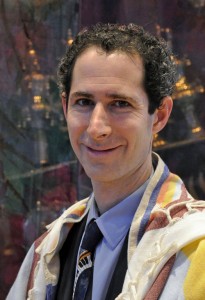
Ken Richmond has been the Cantor of Temple Israel of Natick since 2006, and has served as adjunct faculty at Hebrew College’s School of Jewish Music. He will use sabbatical time to begin classes this fall at the Rabbinical School of Hebrew College.
Interested in a possible career in the rabbinate? Read Rabbi Dan Judson’s article “Jewish Lessons on Meaningful Work.“ Rabbi Judson is Dean of the Rabbinical School of Hebrew College. He has a PhD in Jewish history from Brandeis University.
Previous Post

July 2, 2018
Asking for Change
Next Post
July 17, 2018 Take These Words: Deuteronomy and Carrying Torah With Us on Our Journey
Browse Our Archives
Select a Category Uncategorized
Select a Month April 2026 March 2026 December 2025 November 2025 October 2025 September 2025 August 2025 July 2025 June 2025 May 2025 April 2025 March 2025 February 2025 January 2025 December 2024 November 2024 October 2024 September 2024 August 2024 July 2024 June 2024 May 2024 April 2024 March 2024 February 2024 January 2024 December 2023 November 2023 October 2023 September 2023 August 2023 July 2023 June 2023 May 2023 April 2023 March 2023 February 2023 January 2023 December 2022 November 2022 October 2022 September 2022 August 2022 July 2022 June 2022 May 2022 April 2022 March 2022 February 2022 January 2022 December 2021 November 2021 October 2021 September 2021 August 2021 July 2021 June 2021 May 2021 April 2021 March 2021 February 2021 January 2021 December 2020 November 2020 October 2020 September 2020 August 2020 July 2020 June 2020 May 2020 April 2020 March 2020 February 2020 January 2020 December 2019 November 2019 October 2019 September 2019 August 2019 July 2019 June 2019 May 2019 April 2019 March 2019 February 2019 January 2019 December 2018 November 2018 October 2018 September 2018 August 2018 July 2018 June 2018 May 2018 April 2018 March 2018 February 2018 January 2018 December 2017 November 2017 October 2017 September 2017 August 2017 July 2017 June 2017
Follow Us!
TAKE THE
Religious Wisdom Quiz
Where did David hide from Saul for many years?
Select your answer to see how you score.
The wilderness Jerusalem Philistine camp Jericho
Related posts from Seventy Faces of Torah

The Holy Art of World Building

Parashat Tzav: Keeping the Sacred Fire Burning

Color Theory: What Joseph’s Coat Reveals
TRENDING AT PATHEOS Jewish

Building a Little Ark in a Frightening World
This past Shabbat, we read about Noah. I love this story. The...

Yom Kippur : Is There Always Room for...
Making Room for Forgiveness Every year as Yom Kippur approaches, I find...

This Rosh Hashanah: Can I Find New Meaning?
A Sunrise, a New Year, and a Question On our way to...

Killing Amalek: The Torah’s Most Misunderstood Commandment
Few passages of the Torah have provoked more confusion, polemic, and misuse...

I have never trusted a first draft. I don’t mean that...

Back to School, Back to Reality—and a New...
A New School Year Begins… Back to Reality A new school year...
view all Jewish blogs
Ad-Free & Subscriber Log-In Subscription Support
- About Us
- 2026 Calendar
- Videos
- Podcasts
- Library of World Religions
- Faith In Media Tracker
- Advertise With Us
- Write for Us
- Privacy Policy
- Terms of Service
- Do Not Sell My Data
- Contact Us
- Radiant Digital
- Manage Newsletter Subscriptions
- Unsubscribe From Notifications
- Sitemap
Copyright 2008-2026, Patheos. All rights reserved.
Subscription Support Ad-Free & Subscriber Log-In
Follow Patheos