
BuddhistCatholicContemplativeEvangelicalGeneral ChristianHinduJewishLatter-day SaintMuslimNew VisionsProgressive Christian
Beliefs
- Buddhist
- Catholic
- Contemplative
- Evangelical
- General Christian
- Hindu
- Jewish
- Latter-day Saint
- More Voices
- Muslim
- New Visions
- Pagan
- Progressive Christian
Topics
- Religion News
- Food and Religion
- Sports and Religion
- Religious Art
- Religious Music and Entertainment
- Religious Events
- History and Religion
- Style and Religion
- Politics and Religion
- Women in Religion
- Recreation Outdoors and Religion
- Business Finance and Religion
- Careers Workplace and Religion
- Education and Religion
- Family Parenting and Religion
- Health Fitness and Religion
- Home and Religion
- Relationships and Religion
- Technology and Religion
- Travel and Religion
Columnists
- Buddhist Columnists
- Business Finance and Religion Columnists
- Careers Workplace and Religion Columnists
- Catholic Columnists
- Contemplative Columnists
- Education and Religion Columnists
- Evangelists Columnists
- Family Parenting and Religion Columnists
- General Christian Columnists
- Health Fitness and Religion Columnists
- Hindu Columnists
- History and Religion Columnists
- Home and Religion Columnists
- Jewish Columnists
- More Voices Columnists
- Latter Day Columnists
- Muslim Columnists
- New Visions Columnists
- Nonreligious Columnists
- Pagan Columnists
- Politics and Religion Columnists
- Progressive Columnists
- Recreation Outdoors and Religion Columnists
- Relationships and Religion Columnists
- Religion News Columnists
- Religious Art Columnists
- Religious Events Columnists
- Religious Music and Entertainment Columnists
- Sports and Religion Columnists
- Style and Religion Columnists
- Technology and Religion Columnists
- Travel and Religion Columnists
- Women in Religion Columnists
Resource Library
- 2026 Calendar
- Library of World Religions
- The 100 Most Holy Places on Earth
- Patheos Answers
- Podcasts
- Videos
- Faith Leaders Database
- Anglican Episcopalian
- Bahai
- Baptist
- Buddhism
- Christianity
- Confucianism
- Eastern Orthodoxy
- Hinduism
- Holiness and Pentecostal
- ISKCON
- Islam
- Judaism
- Lutheran
- Methodist
- The Church of Jesus Christ of Latter-day Saints
- New Age
- Paganism
- Presbytarian and Reformed
- Protestantism
- Religion Behind the Scenes
- Roman Catholic
- Scientology
- Shia Islam
- Sikhism
- Sufism
- Sunni Islam
- Taoism
- Zen
- See all religions
Research Tools
 Ad-Free & Subscriber Log-In Subscription Support
Ad-Free & Subscriber Log-In Subscription Support
Follow Patheos 

- Trending:
- Forgiveness
- |
- Marriage
- |
- Consciousness
- |
- Death Penalty
- |
- Election
- |
- Halloween

- Home
- About Hebrew College
- The Rabbinical School of Hebrew College
- The Book of Psalms
- FREE NEWSLETTER
- Home
- Jewish
- Something of Redemption
Something of Redemption
Last updated on: June 25, 2018 at 11:06 am by Hebrew College
Something of Redemption 2018-06-25T11:06:51-04:00 Hebrew College
Patheos Explore the world's faith through different perspectives on religion and spirituality! Patheos has the views of the prevalent religions and spiritualities of the world.
 Parshat Balak (Numbers 22:2-25:9)
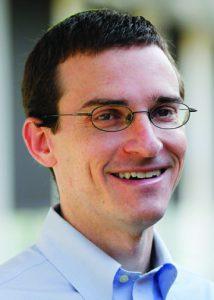
By Rabbi Dan Judson
This week’s Torah portion contains one of the more famous verses from the Torah, “How good are your tents Jacob, your dwelling places Israel/ mah tovu ohalekha Yaakov, mishkanotekha Yisrael” The context for the verse is the unusual tale of Balaam. Balaam is a foreign prophet who is called to curse Israel by Balak, a king who fears Israel’s might. But every time Balaam comes to curse Israel, blessings come out. In his final curse/blessing, he looks out over Israel and says the famous line that has become a standard part of Jewish liturgy. The story is one of inversion. Curses are turned into blessings.
Because the Balaam story is one of such hope that blessings will fall on Israel, it is a distinct surprise to read Yehuda Amichai’s poem about this moment in the Torah which has become a prayer. While Balaam has curses becoming blessing, Amichai, Israel’s most renowned poet, goes the other way. Here is the short poem:
“How Beautiful are your tents, Jacob”
even now, when there are neither tents nor Jacob’s
tribes, I saw, how beautifulOh, may there come something of redemption
An old song, a white letter,
A face in the crowd, a door opening
For the eye, multicolored
Ice cream for the throat.
Oil for the guts, a warm
Memory for the breastThen my mouth will open wide
In everlasting praise
Open like the belly of a
Wide-open calf hung on a hook
In a butcher’s shop of the Old City market
It’s of course a terrible and twisted image for the poem to end on. Glenda Abramson, a scholar of Amichai’s poetry, notes how the poem descends from the first stanza where he says how beautiful the land, even without the tents, to the last stanza where we are left with an image of a butchered animal. The poet is in effect reversing the Torah. In the Torah, we start out expecting curses and we get blessings. In Amichai, we start out expecting blessings and we end up with curses.
I think this poem has particular relevance for this moment in our public life. As a I reflect on a week in our country of seeing our leaders take children from their families for the “crime” of trying to find a better life, and where we hear a constant stream of xenophobia and racism which for Jewish ears can only sound like a bad song we have heard before, I cannot help but think we are living much closer to the world of Amichai than Balaam. The great blessings of America, degrading into curses.
Whereas in other poems, Amichai retains a hopeful humanity for his country, here we are left with bitterness. Amichai could have been looking out on America right now and written with the same irony, “how beautiful are your tents, Jacob.”
But one of the things which I appreciate about Amichai is even in his darkness, there always seems some light. “May there come something of redemption.” It is an ironic invocation of redemption. If it comes, the poet says his mouth will be open like a slaughtered animal. Not exactly a peaceful image of redemption. But nonetheless, the phrase, “may there come something of redemption,” feels so poignant. Amichai is not asking for a miracle to bring change, just something of it. Redemption will have come late and slow but a little something of it is what we need. Something of what we need to restore our souls. On this shabbat when we both pray and read from the Torah about the goodly tents of Israel, I will be praying for a little something of redemption.
Rabbi Judson is Dean of the Rabbinical School of Hebrew College.
Interested in a possible career in the rabbinate? Read Rabbi Dan Judson’s article “Jewish Lessons on Meaningful Work.“
Previous Post

June 18, 2018
Death as a Sacred Moment
Next Post
July 2, 2018 Justice in the Wilderness
Browse Our Archives
Select a Category Uncategorized
Select a Month April 2026 March 2026 December 2025 November 2025 October 2025 September 2025 August 2025 July 2025 June 2025 May 2025 April 2025 March 2025 February 2025 January 2025 December 2024 November 2024 October 2024 September 2024 August 2024 July 2024 June 2024 May 2024 April 2024 March 2024 February 2024 January 2024 December 2023 November 2023 October 2023 September 2023 August 2023 July 2023 June 2023 May 2023 April 2023 March 2023 February 2023 January 2023 December 2022 November 2022 October 2022 September 2022 August 2022 July 2022 June 2022 May 2022 April 2022 March 2022 February 2022 January 2022 December 2021 November 2021 October 2021 September 2021 August 2021 July 2021 June 2021 May 2021 April 2021 March 2021 February 2021 January 2021 December 2020 November 2020 October 2020 September 2020 August 2020 July 2020 June 2020 May 2020 April 2020 March 2020 February 2020 January 2020 December 2019 November 2019 October 2019 September 2019 August 2019 July 2019 June 2019 May 2019 April 2019 March 2019 February 2019 January 2019 December 2018 November 2018 October 2018 September 2018 August 2018 July 2018 June 2018 May 2018 April 2018 March 2018 February 2018 January 2018 December 2017 November 2017 October 2017 September 2017 August 2017 July 2017 June 2017
Follow Us!
TAKE THE
Religious Wisdom Quiz
Which writer besides Solomon and David contributed to Proverbs?
Select your answer to see how you score.
Agur Nathan Moses Asaph
Related posts from Seventy Faces of Torah

The Holy Art of World Building

Parashat Tzav: Keeping the Sacred Fire Burning

Color Theory: What Joseph’s Coat Reveals
TRENDING AT PATHEOS Jewish

Yom Kippur : Is There Always Room for...
Making Room for Forgiveness Every year as Yom Kippur approaches, I find...

This Rosh Hashanah: Can I Find New Meaning?
A Sunrise, a New Year, and a Question On our way to...

Killing Amalek: The Torah’s Most Misunderstood Commandment
Few passages of the Torah have provoked more confusion, polemic, and misuse...

I have never trusted a first draft. I don’t mean that...

Back to School, Back to Reality—and a New...
A New School Year Begins… Back to Reality A new school year...

Out-Crowleying Crowley: The Emptiness of the O9A
O9A Neo-Crowley Racial Cosplay and Edgelord Atrocitism Aleister Crowley did not create...
view all Jewish blogs
Ad-Free & Subscriber Log-In Subscription Support
- About Us
- 2026 Calendar
- Videos
- Podcasts
- Library of World Religions
- Faith In Media Tracker
- Advertise With Us
- Write for Us
- Privacy Policy
- Terms of Service
- Do Not Sell My Data
- Contact Us
- Radiant Digital
- Manage Newsletter Subscriptions
- Unsubscribe From Notifications
- Sitemap
Copyright 2008-2026, Patheos. All rights reserved.
Subscription Support Ad-Free & Subscriber Log-In
Follow Patheos