
BuddhistCatholicContemplativeEvangelicalGeneral ChristianHinduJewishLatter-day SaintMuslimNew VisionsProgressive Christian
Beliefs
- Buddhist
- Catholic
- Contemplative
- Evangelical
- General Christian
- Hindu
- Jewish
- Latter-day Saint
- More Voices
- Muslim
- New Visions
- Pagan
- Progressive Christian
Topics
- Religion News
- Food and Religion
- Sports and Religion
- Religious Art
- Religious Music and Entertainment
- Religious Events
- History and Religion
- Style and Religion
- Politics and Religion
- Women in Religion
- Recreation Outdoors and Religion
- Business Finance and Religion
- Careers Workplace and Religion
- Education and Religion
- Family Parenting and Religion
- Health Fitness and Religion
- Home and Religion
- Relationships and Religion
- Technology and Religion
- Travel and Religion
Columnists
- Buddhist Columnists
- Business Finance and Religion Columnists
- Careers Workplace and Religion Columnists
- Catholic Columnists
- Contemplative Columnists
- Education and Religion Columnists
- Evangelists Columnists
- Family Parenting and Religion Columnists
- General Christian Columnists
- Health Fitness and Religion Columnists
- Hindu Columnists
- History and Religion Columnists
- Home and Religion Columnists
- Jewish Columnists
- More Voices Columnists
- Latter Day Columnists
- Muslim Columnists
- New Visions Columnists
- Nonreligious Columnists
- Pagan Columnists
- Politics and Religion Columnists
- Progressive Columnists
- Recreation Outdoors and Religion Columnists
- Relationships and Religion Columnists
- Religion News Columnists
- Religious Art Columnists
- Religious Events Columnists
- Religious Music and Entertainment Columnists
- Sports and Religion Columnists
- Style and Religion Columnists
- Technology and Religion Columnists
- Travel and Religion Columnists
- Women in Religion Columnists
Resource Library
- 2026 Calendar
- Library of World Religions
- The 100 Most Holy Places on Earth
- Patheos Answers
- Podcasts
- Videos
- Faith Leaders Database
- Anglican Episcopalian
- Bahai
- Baptist
- Buddhism
- Christianity
- Confucianism
- Eastern Orthodoxy
- Hinduism
- Holiness and Pentecostal
- ISKCON
- Islam
- Judaism
- Lutheran
- Methodist
- The Church of Jesus Christ of Latter-day Saints
- New Age
- Paganism
- Presbytarian and Reformed
- Protestantism
- Religion Behind the Scenes
- Roman Catholic
- Scientology
- Shia Islam
- Sikhism
- Sufism
- Sunni Islam
- Taoism
- Zen
- See all religions
Research Tools
 Ad-Free & Subscriber Log-In Subscription Support
Ad-Free & Subscriber Log-In Subscription Support
Follow Patheos 

- Trending:
- Forgiveness
- |
- Marriage
- |
- Consciousness
- |
- Death Penalty
- |
- Election
- |
- Halloween

- Home
- About Hebrew College
- The Rabbinical School of Hebrew College
- The Book of Psalms
- FREE NEWSLETTER
- Home
- Jewish
- Death as a Sacred Moment
Death as a Sacred Moment
Last updated on: June 18, 2018 at 4:00 pm by Hebrew College
Death as a Sacred Moment 2018-06-18T16:00:38-04:00 Hebrew College
Patheos Explore the world's faith through different perspectives on religion and spirituality! Patheos has the views of the prevalent religions and spiritualities of the world.
 Parashat Chukkat (Numbers 19:1-22:1)
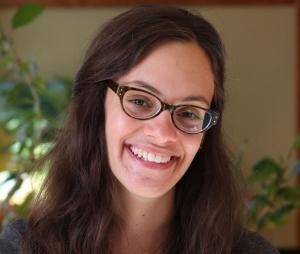
By Rabbi Leora Abelson
When June rolls around, I feel a certain sadness that contrasts with the natural world, with the bursting of life in the temperate northeast where I live. June is when the trees are in full flower, the grass is thick, and the days are long. This joyful context means it always takes me a minute to remember why I feel sad—because my grandfathers died in June, both of them, and even though it was more than a decade ago, my body responds to this season with a feeling of sadness.
My grandfathers died just a couple of days apart from one another, but their deaths were very different. My grandpa Art had a devastating stroke and then lived for a few months in the hospital, unable to communicate. His loved ones spent those months by his side and their expressions of love were powerful and moving, but the experience was anxious and confusing for all of us, as we prayed for him to die as quickly as possible. My grandpa Ted had pancreatic cancer, and after a year and a half of treatment, moved into my family’s living room to die. He ate all of his favorite food, including pie every day, and called loved ones, students, and friends from throughout his life to say goodbye. It was still painful, humiliating, and uncomfortable, but it was also deeply connected and meaningful.
Though spending time with people before, during, and after death has become a more regular part of my life as a rabbi and a chaplain, I always think of my grandfathers as examples of different experiences of death. Both of them had tremendous privilege that gave them access to outstanding medical care, and both of them had supportive families who knew what their wishes were and could access resources to meet those desires. Yet they still had very different experiences of death.
It is a deeply human experience to wonder about how we will die, and even to hope for certain things—for a long life, to die with comfort, without anxiety or pain. This is reflected in a powerful midrash about the death of Aaron, which takes place in Parshat Chukkat. In the parsha, God instructs Moshe to take Aaron and his son Eleazar up to Mount Hor, and to strip Aaron of his clothes and put them on Eleazar. There, the Torah says, “Aaron shall be gathered unto the dead” (Numbers 20:26).
Curious about why God instructed Moshe to strip Aaron of his clothing and put them on Eleazar, the ancient rabbis wrote a midrash in which they expanded this act into one of spiritual accompaniment, imagining the steps through which Moshe guided his brother Aaron to his death. Aaron’s death is beautifully rendered, and the spiritual care Moshe offers him is exquisite.
As the midrash imagines it, Moshe first asks God for help in figuring out how to let his brother know that his “time has arrived.” Moshe first tries speaking in metaphor: “My brother, could it be that God entrusted a pledge to you, and now God is seeking its return from you?” But Aaron doesn’t get the hint. Instead, he wonders if he has somehow failed in his priestly service. Moshe tries again: “God gave you a menorah with seven lamps.” The light of the menorah is understood to be a clear metaphor for the human soul, as we say in Proverbs (20:27), “a person’s soul is the lamp of God.” Yet Aaron, as we might say in modern parlance, wasn’t feeling it: lo hirgish badavar. So finally Moshe says, “My brother Aaron, your time has come to pass from this world,” and Aaron puts his hands on his head and weeps.
The way Moshe communicates is gentle and spacious, and, when needed, direct. Once Aaron understands the news, Moshe comforts him with words from Psalms.
Then Moshe says, “Aaron, our ancestors died in this place, and you are wearing the garments of the priesthood. Take them off and Eleazar will wear them, and you and I will go into the cave.” The garments will be rendered unfit for ritual service if Aaron wears them into the burial chamber, but Moshe offers Aaron the utmost dignity when he invites him to take them off, by calling in their ancestors. They, who are so revered to us, died too. You are going to be with them; you don’t need these earthly garments any more. He also reminds Aaron that Aaron’s son will carry on Aaron’s legacy. The emphasis is not on preserving the ritual purity of the clothes, but on supporting Aaron’s transition out of them.
When they enter, they see a lamp has been lit and a bed spread out. Moshe says, “Aaron, my brother, ascend to this bed,” and Aaron does so. The midrash does not use the word shachav, lie down, but alah, rise. Moshe uplifts the sanctity of Aaron’s experience every step of the way. And he attends to every part of Aaron’s body with gentleness, care, and clarity. Moshe says, “Spread out your hands,” and Aaron spreads out his hands. He says, “Close your eyes,” and Aaron closes his eyes. He says, “Close your mouth,” and Aaron closes his mouth, and in that moment his soul departs.
In its typical succinct style, the midrash conveys the searing pain, the astonishing tenderness, and the profound mystery of the moment, a holy moment. Earlier in the parsha, the Torah catalogues the myriad ways proximity to death renders someone impure and describes a processing for cleansing oneself of the impurity conveyed by death. It suggests that death is taboo, dangerous, and needs to be contained. The midrash, in contrast, uplifts death as a sacred moment worth being present for.
The midrash offers a beautiful testimony to how we might accompany our loved ones through their death, but it also reads like a fantasy, as few deaths are ever so measured, so predictable, so calm. The midrash goes on to say that when Moshe saw Aaron die, he longed for his own death. It is, again, an exquisite expression of a deeply human experience: to long to be loved and comforted in our death, just as we long for that in our life. I, too, when witnessing the peaceful death of someone who has lived a long life and is surrounded by loving hands, have felt to myself, “I hope my death is something like this one.” That longing resides within uncertainty, the impossibility of knowing how we will die and what our deaths will be like.
I wasn’t there for the moment when either of my grandfathers died, because death is inevitably messy and complex, and it’s very hard to know where we need to be. But we do the best we can. During that time, I imagined the deaths of my parents and my own death. I felt acutely aware of both the privilege and the arbitrariness that allowed my grandfathers to live long lives, and to die in relative comfort. This June, I give thanks for my grandfathers and the way their memory still blesses my life. I give thanks for the wisdom of our tradition which teaches us to sanctify death. And I pray for a world in which everyone can be surrounded by love and gentle guidance when they die.
Rabbi Leora Abelson is a 2017 graduate of the Rabbinical School of Hebrew College and serves as a congregational rabbi and is training to be a healthcare chaplain. Leora is passionate about queer embodied theology and making the ancient wisdom of the Jewish tradition accessible to social movements and anyone building a just and peaceful world.
Interested in a possible career in the rabbinate? Read Rabbi Dan Judson’s article “Jewish Lessons on Meaningful Work.“ Rabbi Judson is Dean of the Rabbinical School of Hebrew College. He has a PhD in Jewish history from Brandeis University.
Previous Post

June 12, 2018
Look Inward: Learning from Korach’s Downfall
Next Post
June 25, 2018 Something of Redemption
Browse Our Archives
Select a Category Uncategorized
Select a Month April 2026 March 2026 December 2025 November 2025 October 2025 September 2025 August 2025 July 2025 June 2025 May 2025 April 2025 March 2025 February 2025 January 2025 December 2024 November 2024 October 2024 September 2024 August 2024 July 2024 June 2024 May 2024 April 2024 March 2024 February 2024 January 2024 December 2023 November 2023 October 2023 September 2023 August 2023 July 2023 June 2023 May 2023 April 2023 March 2023 February 2023 January 2023 December 2022 November 2022 October 2022 September 2022 August 2022 July 2022 June 2022 May 2022 April 2022 March 2022 February 2022 January 2022 December 2021 November 2021 October 2021 September 2021 August 2021 July 2021 June 2021 May 2021 April 2021 March 2021 February 2021 January 2021 December 2020 November 2020 October 2020 September 2020 August 2020 July 2020 June 2020 May 2020 April 2020 March 2020 February 2020 January 2020 December 2019 November 2019 October 2019 September 2019 August 2019 July 2019 June 2019 May 2019 April 2019 March 2019 February 2019 January 2019 December 2018 November 2018 October 2018 September 2018 August 2018 July 2018 June 2018 May 2018 April 2018 March 2018 February 2018 January 2018 December 2017 November 2017 October 2017 September 2017 August 2017 July 2017 June 2017
Follow Us!
TAKE THE
Religious Wisdom Quiz
Who fell from a window and died while Paul was preaching, then was raised back to life?
Select your answer to see how you score.
Erastus Eutychus Tychicus Timothy
Related posts from Seventy Faces of Torah

The Holy Art of World Building

Parashat Tzav: Keeping the Sacred Fire Burning

Color Theory: What Joseph’s Coat Reveals
TRENDING AT PATHEOS Jewish

Building a Little Ark in a Frightening World
This past Shabbat, we read about Noah. I love this story. The...

Yom Kippur : Is There Always Room for...
Making Room for Forgiveness Every year as Yom Kippur approaches, I find...

This Rosh Hashanah: Can I Find New Meaning?
A Sunrise, a New Year, and a Question On our way to...

Killing Amalek: The Torah’s Most Misunderstood Commandment
Few passages of the Torah have provoked more confusion, polemic, and misuse...

I have never trusted a first draft. I don’t mean that...

Back to School, Back to Reality—and a New...
A New School Year Begins… Back to Reality A new school year...
view all Jewish blogs
Ad-Free & Subscriber Log-In Subscription Support
- About Us
- 2026 Calendar
- Videos
- Podcasts
- Library of World Religions
- Faith In Media Tracker
- Advertise With Us
- Write for Us
- Privacy Policy
- Terms of Service
- Do Not Sell My Data
- Contact Us
- Radiant Digital
- Manage Newsletter Subscriptions
- Unsubscribe From Notifications
- Sitemap
Copyright 2008-2026, Patheos. All rights reserved.
Subscription Support Ad-Free & Subscriber Log-In
Follow Patheos