
BuddhistCatholicContemplativeEvangelicalGeneral ChristianHinduJewishLatter-day SaintMuslimNew VisionsProgressive Christian
Beliefs
- Buddhist
- Catholic
- Contemplative
- Evangelical
- General Christian
- Hindu
- Jewish
- Latter-day Saint
- More Voices
- Muslim
- New Visions
- Pagan
- Progressive Christian
Topics
- Religion News
- Food and Religion
- Sports and Religion
- Religious Art
- Religious Music and Entertainment
- Religious Events
- History and Religion
- Style and Religion
- Politics and Religion
- Women in Religion
- Recreation Outdoors and Religion
- Business Finance and Religion
- Careers Workplace and Religion
- Education and Religion
- Family Parenting and Religion
- Health Fitness and Religion
- Home and Religion
- Relationships and Religion
- Technology and Religion
- Travel and Religion
Columnists
- Buddhist Columnists
- Business Finance and Religion Columnists
- Careers Workplace and Religion Columnists
- Catholic Columnists
- Contemplative Columnists
- Education and Religion Columnists
- Evangelists Columnists
- Family Parenting and Religion Columnists
- General Christian Columnists
- Health Fitness and Religion Columnists
- Hindu Columnists
- History and Religion Columnists
- Home and Religion Columnists
- Jewish Columnists
- More Voices Columnists
- Latter Day Columnists
- Muslim Columnists
- New Visions Columnists
- Nonreligious Columnists
- Pagan Columnists
- Politics and Religion Columnists
- Progressive Columnists
- Recreation Outdoors and Religion Columnists
- Relationships and Religion Columnists
- Religion News Columnists
- Religious Art Columnists
- Religious Events Columnists
- Religious Music and Entertainment Columnists
- Sports and Religion Columnists
- Style and Religion Columnists
- Technology and Religion Columnists
- Travel and Religion Columnists
- Women in Religion Columnists
Resource Library
- 2026 Calendar
- Library of World Religions
- The 100 Most Holy Places on Earth
- Patheos Answers
- Podcasts
- Videos
- Faith Leaders Database
- Anglican Episcopalian
- Bahai
- Baptist
- Buddhism
- Christianity
- Confucianism
- Eastern Orthodoxy
- Hinduism
- Holiness and Pentecostal
- ISKCON
- Islam
- Judaism
- Lutheran
- Methodist
- The Church of Jesus Christ of Latter-day Saints
- New Age
- Paganism
- Presbytarian and Reformed
- Protestantism
- Religion Behind the Scenes
- Roman Catholic
- Scientology
- Shia Islam
- Sikhism
- Sufism
- Sunni Islam
- Taoism
- Zen
- See all religions
Research Tools
 Ad-Free & Subscriber Log-In Subscription Support
Ad-Free & Subscriber Log-In Subscription Support
Follow Patheos 

- Trending:
- Forgiveness
- |
- Marriage
- |
- Consciousness
- |
- Death Penalty
- |
- Election
- |
- Halloween

- Home
- About Hebrew College
- The Rabbinical School of Hebrew College
- The Book of Psalms
- FREE NEWSLETTER
- Home
- Jewish
- On Partial Truths
On Partial Truths
Last updated on: April 4, 2018 at 8:04 am by Hebrew College
On Partial Truths 2018-04-04T08:04:47-04:00 Hebrew College
Patheos Explore the world's faith through different perspectives on religion and spirituality! Patheos has the views of the prevalent religions and spiritualities of the world.
Parasha for the Last Day of Pesach
** By Rabbi Elisha Herb
A fire and brimstone Christian preacher once taught me that the cunning of the snake in Eden was his mastery of “half-truths.” He knew he could hook Eve by saying of the fruit of the forbidden tree, “You will not ‘surely die’— – God knows that on the day you eat of its fruit, your eyes will be opened and you will become like one of the Divine Powers, knowing good and evil.”
“It’s true!” the preacher ranted. “They did not physically die for eating the fruit. But spiritually they were dead. Dead as doornails.” This is the power of deception, he maintained: to speak in half-truths; partial truths have power.
In the Pesach Haggada, we sing, “This is the bread of poverty … let all who are hungry come and eat.” There is an inner tension in this song. Is this truly an invitation to all who are hungry? Or is it merely aspiration?
It is said of Rav Huna (Talmud Bavli, Taanit 20b), that when sitting down to a meal, he would open his door and cry out, “Whoever needs to eat, come and eat!” Rava, hearing this anecdote from a student of Rav Huna, responded that he could not emulate this behavior. “There are a great many poor people [in this town] and I could not feed them all.” So, too, our recitation of “let all who are hungry” is not entirely an invitation, nor is it merely aspiration.
In a similar vein, a dynamic tension exists in the Torah reading on Shabbat, the last day of Pesach. In one verse, we chant (Deut. 15:4-5), “There shall be no needy among you—since Hashem your God will bless you in the land that Hashem your God is giving you as a hereditary portion—if only you heed Hashem your God and take care to keep all this Instruction [Torah] that I enjoin upon you this day.” Only a few verses later, we hear the Instructor saying (Deut 15:11), “For there will never cease to be needy ones in your land, which is why I command you: open your hand to the poor and needy kinsman in your land.”
The contradiction drives our questions. Each statement is only partially true; each is the seduction of the serpent, “You will not surely die … rather you will become like one of the Divine Powers, knowing good and evil.”
A partial truth is dynamic; the false part and the true part are in tension with each other. A partial truth is a bow drawn back; there is energy and potential in the “half-truth.” And … there is great danger. We are terribly attracted to partial truths; their magnetism draws us in.
And yet, there may be some sense in our kishkes that all is not as it seems. We sense something untrue or incomplete. Something inauthentic. In some cases, an individual will force themselves to ignore that niggling conscience, the inner compass that cries out in a still, small voice (I Kings 19:12-13), “What are you doing here, Elijah?” We are captivated, motivated, and inspired by those forces created through dynamic tension: a raging wind, an earthquake, fire. But that still, small voice that asks us, “What are you doing here, Elijah?” —this voice is much less dynamic, it would seem. It is thus often tuned out, drowned out, unperceived. Yet it is there, creating within us a dynamic tension that sympathetically resonates with the vibration of a partial truth. We feel, if we are paying attention, the energy of the bow drawn back with in us: our imagination storming and our still, small voice … niggling.
Our Rabbinical School of Hebrew College teacher (and now Hebrew College President-Elect), Rabbi Sharon Cohen Anisfeld, once told us that the art of composing a very careful devar Torah is listening for, and paying attention to, that niggling voice. “Something is not quite right,” it says. The danger is that we ignore this sacred voice, that we ignore the dynamic tension of a partial truth: part of it is not true.
We idealists peddle partial truths. We—serpents who are both inspired and seek to inspire—say things like “There should be no poor in our lands,” but we know: “There will always be the poor in our lands.” Why? Because “There are a great many poor people in our lands, and I can not feed them all.”
The Jewish tradition, as modeled by our Rabbinical School of Hebrew College teacher Rabbi Art Green, is to say with regard to sacred contradictions, “Nu? Which is it?” And respond, “The answer is, of course, ‘Yes.’”
There is nothing trite about this answer. So, too, there is nothing trite about saying, “These and those are the words of the living God” or “There are seventy faces of Torah.” It is to acknowledge the limits of knowledge. It is not merely to say, “There are two sides to every coin.” Rather it is to admit, and honor, the dynamic of the half-truth. In the average proverb or axiom or “truth” lies the potential for creation and destruction, for good and evil. To admit the limitations of our knowing is to express love and caring for the effect of our half-truths; it is, I hope, to take responsibility for the power of the half-truth.
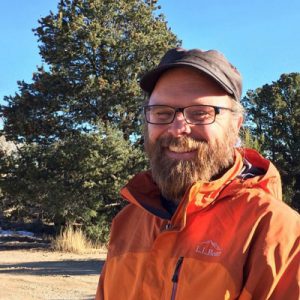
Rabbi Elisha Herb serves the community of Temple Beth Sholom in Salem, Oregon. A 2016 graduate of the Rabbinical School of Hebrew College, he is also a wilderness river guide for the Four Corners School of Outdoor Education in Monticello, Utah.
Interested in a possible career in the rabbinate? Read Rabbi Dan Judson’s article “Jewish Lessons on Meaningful Work.“ Rabbi Judson is Dean of the Rabbinical School of Hebrew College. He has a PhD in Jewish history from Brandeis University.
Previous Post

March 26, 2018
Bring More Liberation to Your Seder Table: A Song of Complaints
Next Post
April 9, 2018 Teaching at the Edge of Mystery
Browse Our Archives
Select a Category Uncategorized
Select a Month April 2026 March 2026 December 2025 November 2025 October 2025 September 2025 August 2025 July 2025 June 2025 May 2025 April 2025 March 2025 February 2025 January 2025 December 2024 November 2024 October 2024 September 2024 August 2024 July 2024 June 2024 May 2024 April 2024 March 2024 February 2024 January 2024 December 2023 November 2023 October 2023 September 2023 August 2023 July 2023 June 2023 May 2023 April 2023 March 2023 February 2023 January 2023 December 2022 November 2022 October 2022 September 2022 August 2022 July 2022 June 2022 May 2022 April 2022 March 2022 February 2022 January 2022 December 2021 November 2021 October 2021 September 2021 August 2021 July 2021 June 2021 May 2021 April 2021 March 2021 February 2021 January 2021 December 2020 November 2020 October 2020 September 2020 August 2020 July 2020 June 2020 May 2020 April 2020 March 2020 February 2020 January 2020 December 2019 November 2019 October 2019 September 2019 August 2019 July 2019 June 2019 May 2019 April 2019 March 2019 February 2019 January 2019 December 2018 November 2018 October 2018 September 2018 August 2018 July 2018 June 2018 May 2018 April 2018 March 2018 February 2018 January 2018 December 2017 November 2017 October 2017 September 2017 August 2017 July 2017 June 2017
Follow Us!
TAKE THE
Religious Wisdom Quiz
James compares faith without works to what?
Select your answer to see how you score.
A tree without fruit A body without spirit (dead) A house without foundation A lamp without oil
Related posts from Seventy Faces of Torah

The Holy Art of World Building

Parashat Tzav: Keeping the Sacred Fire Burning

Color Theory: What Joseph’s Coat Reveals
TRENDING AT PATHEOS Jewish

Yom Kippur : Is There Always Room for...
Making Room for Forgiveness Every year as Yom Kippur approaches, I find...

This Rosh Hashanah: Can I Find New Meaning?
A Sunrise, a New Year, and a Question On our way to...

Killing Amalek: The Torah’s Most Misunderstood Commandment
Few passages of the Torah have provoked more confusion, polemic, and misuse...

I have never trusted a first draft. I don’t mean that...

Back to School, Back to Reality—and a New...
A New School Year Begins… Back to Reality A new school year...

Out-Crowleying Crowley: The Emptiness of the O9A
O9A Neo-Crowley Racial Cosplay and Edgelord Atrocitism Aleister Crowley did not create...
view all Jewish blogs
Ad-Free & Subscriber Log-In Subscription Support
- About Us
- 2026 Calendar
- Videos
- Podcasts
- Library of World Religions
- Faith In Media Tracker
- Advertise With Us
- Write for Us
- Privacy Policy
- Terms of Service
- Do Not Sell My Data
- Contact Us
- Radiant Digital
- Manage Newsletter Subscriptions
- Unsubscribe From Notifications
- Sitemap
Copyright 2008-2026, Patheos. All rights reserved.
Subscription Support Ad-Free & Subscriber Log-In
Follow Patheos