
BuddhistCatholicContemplativeEvangelicalGeneral ChristianHinduJewishLatter-day SaintMuslimNew VisionsProgressive Christian
Beliefs
- Buddhist
- Catholic
- Contemplative
- Evangelical
- General Christian
- Hindu
- Jewish
- Latter-day Saint
- More Voices
- Muslim
- New Visions
- Pagan
- Progressive Christian
Topics
- Religion News
- Food and Religion
- Sports and Religion
- Religious Art
- Religious Music and Entertainment
- Religious Events
- History and Religion
- Style and Religion
- Politics and Religion
- Women in Religion
- Recreation Outdoors and Religion
- Business Finance and Religion
- Careers Workplace and Religion
- Education and Religion
- Family Parenting and Religion
- Health Fitness and Religion
- Home and Religion
- Relationships and Religion
- Technology and Religion
- Travel and Religion
Columnists
- Buddhist Columnists
- Business Finance and Religion Columnists
- Careers Workplace and Religion Columnists
- Catholic Columnists
- Contemplative Columnists
- Education and Religion Columnists
- Evangelists Columnists
- Family Parenting and Religion Columnists
- General Christian Columnists
- Health Fitness and Religion Columnists
- Hindu Columnists
- History and Religion Columnists
- Home and Religion Columnists
- Jewish Columnists
- More Voices Columnists
- Latter Day Columnists
- Muslim Columnists
- New Visions Columnists
- Nonreligious Columnists
- Pagan Columnists
- Politics and Religion Columnists
- Progressive Columnists
- Recreation Outdoors and Religion Columnists
- Relationships and Religion Columnists
- Religion News Columnists
- Religious Art Columnists
- Religious Events Columnists
- Religious Music and Entertainment Columnists
- Sports and Religion Columnists
- Style and Religion Columnists
- Technology and Religion Columnists
- Travel and Religion Columnists
- Women in Religion Columnists
Resource Library
- 2026 Calendar
- Library of World Religions
- The 100 Most Holy Places on Earth
- Patheos Answers
- Podcasts
- Videos
- Faith Leaders Database
- Anglican Episcopalian
- Bahai
- Baptist
- Buddhism
- Christianity
- Confucianism
- Eastern Orthodoxy
- Hinduism
- Holiness and Pentecostal
- ISKCON
- Islam
- Judaism
- Lutheran
- Methodist
- The Church of Jesus Christ of Latter-day Saints
- New Age
- Paganism
- Presbytarian and Reformed
- Protestantism
- Religion Behind the Scenes
- Roman Catholic
- Scientology
- Shia Islam
- Sikhism
- Sufism
- Sunni Islam
- Taoism
- Zen
- See all religions
Research Tools
 Ad-Free & Subscriber Log-In Subscription Support
Ad-Free & Subscriber Log-In Subscription Support
Follow Patheos 

- Trending:
- Forgiveness
- |
- Marriage
- |
- Consciousness
- |
- Death Penalty
- |
- Election
- |
- Halloween

- Home
- About Hebrew College
- The Rabbinical School of Hebrew College
- The Book of Psalms
- FREE NEWSLETTER
- Home
- Jewish
- Components of Faith
Components of Faith
Last updated on: January 22, 2018 at 3:12 pm by Hebrew College
Components of Faith 2018-01-22T15:12:11-04:00 Hebrew College
Patheos Explore the world's faith through different perspectives on religion and spirituality! Patheos has the views of the prevalent religions and spiritualities of the world.
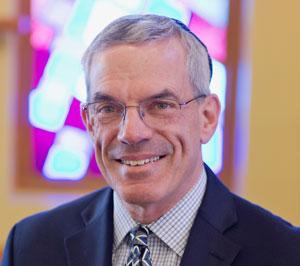 By Rabbi Brian Besser
Parashat B’Shalach (Exodus 13:17-17:15)
A congregant I’ll call K. just found out she has cancer. “I can’t halt the parade of anxious thoughts,” she tells me. “All my hair will fall out. What if the treatment doesn’t work? I’m going to die.” K. has a good relationship with God. She says “modah ani,” wraps tefillin, and meditates every morning. With the news, however, none of her spiritual practices seem to help. “How fickle my faith turns out to be! Now is when I need it most.”
This week’s Torah portion B’Shallach begins with God’s extraordinary deliverance. “When Israel saw the great hand that Adonai wielded against Egypt, then the people had faith (va-ya’aminu) in Adonai.” (Exodus 14:31) Of course, they have faith! After marching through the sea on dry ground, the waters piling up in great walls on either side, who wouldn’t believe God’s awesome might at that point? On the other hand, “faith” isn’t really the right word. Faith, emunah, operates in the realm of doubt and uncertainty, whereas the Israelites witnessed the miracle with their own eyes. “To have faith” has to mean something more than “to know.”
Whatever “faith” the people express at the Red Sea, it is remarkably short-lived. Only three days later, at Marah, they take up the first of their querulous complaints against Moses—a motif that will characterize their entire journey through the wilderness. For the Hasidic master Mei Ha’Shiloach, their bitterness stems from profound letdown: “after the great revelation at the sea, they traveled without God granting them any further renewal, and their spirits fell.” (Mei Ha’Shiloach 1 on Exodus 15:22) It seems to be human nature to take miracles (or good fortune) for granted. A key aspect of faith, therefore, is endurance, as in the verse: “Your testimonies, Adonai, are enduring (ne’emnu).” (Psalm 93:5) No matter what your outside circumstances, can you still find things to be grateful for?
In the next episode, God tests the children of Israel by raining down bread from the sky. (Exodus 16:4) Commentators wonder how the daily sustenance of manna could constitute a “test.” The Ramban’s explanation is perceptive. At issue is their willingness to depend upon God’s care, day in and day out, rather than frantically gathering surplus in case God fails to provide. (Ramban on Exodus 16:4) Another connotation of faith is reliance. The word emunah may originally derive from omein, meaning “nurse.” When you are ailing, can you allow yourself to be nurtured, loved, and cared for completely by others, the way a baby is carried in his nurse’s bosom, or do you struggle to go it alone?
A little further along, the Israelites desperately exclaim: “Is Adonai in our midst, or not?” (Exodus 17:7) Biblical scholar Avivah Zornberg writes: “In a most powerful sentence, the Torah condenses the essential problem… Against the backdrop of Ayin, of non-being, [represented by the wilderness,] the people ask, not about the existence of God or about His power—they have had ample evidence of that; but about His being ‘in our midst’—or else, *ayin—*there is nothingness.” (The Particulars of Rapture, page 237) In your suffering, you pour out your heart to God, but what if, as part of you suspects, there isn’t Anyone out there listening? Then you’re crying into the void! Rashi makes a wordplay between emunah and umanut, the “craft” of the ancestors, which is prayer. (Rashi on Exodus 14:10) Faith is not a precursor to prayer. Faith is prayer. Believing in God is the same thing as longing for God, and, moreover, acting as if God existed.
This brings us to the final scene, the great battle between Israel and Amalek. “Whenever Moses held up his hand, Israel prevailed, but whenever he let down his hand, Amalek prevailed.” (Exodus 17:11) It is striking to compare the imagery of hands in this verse and in the verse with which we began: “When Israel saw the great hand that Adonai wielded against Egypt, then the people had faith in Adonai.” By the end of the Torah portion, the human hand of Moses has replaced the divine hand as the instrument of redemption. The Midrash makes clear that Moses maintains influence not through magic but inspiration: “Did Moses’s hands themselves strengthen Israel or break Amalek? No! Only, as long as Moses raised his hands toward heaven, the Israelites would look at him, and have faith.” (Mechilta on Exodus on 17:11)
I think, sometimes, we maintain a false dichotomy between initiative and faith—either we act on our own, or we look to an outside Force to come and rescue us. A more nuanced outlook would allow us to have faith in the future, even as we strive to bring about the very vision of the future that we uphold. The Jewish Publication Society renders vayehi yadav emunah as “[Moses’s] hands remained steady.” (Exodus 17:12) But a more precise translation is: “his hand was faith.” I take this to mean that faith is cultivated through action, literally, in the works of our hands.
What do I say to K. who is questioning her faith? I encourage her to enumerate things to be thankful for, even now, with this devastating diagnosis. I help her seek out and accept support, care and love from her friends, family, and community. I remind her that doubt is a necessary ingredient for faith. And I tell her to take the next step, one step at a time.
As K. leaves my office, I realize that I am no less vulnerable than she. My vocation as a Rabbi does not protect me from misfortune nor immunize me against anxiety and despair. Faith is a muscle that strengthens with regular exercise. Should I not heed my own advice? I resolve, again, to practice expressing gratitude, giving up control, admitting my fears, and “acting as if,” each and every day.
Brian Besser, ordained at the Rabbinical School of Hebrew College in 2010, serves Congregation Beth Shalom in Bloomington, Indiana.
Interested in a possible career in the rabbinate? Read Rabbi Dan Judson’s article “Jewish Lessons on Meaningful Work.“ Rabbi Judson is Dean of the Rabbinical School of Hebrew College. He has a PhD in Jewish history from Brandeis University.
Previous Post

January 16, 2018
On Approaching the Tyrannical Heart
Next Post
January 29, 2018 You Cannot Do It Alone
Browse Our Archives
Select a Category Uncategorized
Select a Month April 2026 March 2026 December 2025 November 2025 October 2025 September 2025 August 2025 July 2025 June 2025 May 2025 April 2025 March 2025 February 2025 January 2025 December 2024 November 2024 October 2024 September 2024 August 2024 July 2024 June 2024 May 2024 April 2024 March 2024 February 2024 January 2024 December 2023 November 2023 October 2023 September 2023 August 2023 July 2023 June 2023 May 2023 April 2023 March 2023 February 2023 January 2023 December 2022 November 2022 October 2022 September 2022 August 2022 July 2022 June 2022 May 2022 April 2022 March 2022 February 2022 January 2022 December 2021 November 2021 October 2021 September 2021 August 2021 July 2021 June 2021 May 2021 April 2021 March 2021 February 2021 January 2021 December 2020 November 2020 October 2020 September 2020 August 2020 July 2020 June 2020 May 2020 April 2020 March 2020 February 2020 January 2020 December 2019 November 2019 October 2019 September 2019 August 2019 July 2019 June 2019 May 2019 April 2019 March 2019 February 2019 January 2019 December 2018 November 2018 October 2018 September 2018 August 2018 July 2018 June 2018 May 2018 April 2018 March 2018 February 2018 January 2018 December 2017 November 2017 October 2017 September 2017 August 2017 July 2017 June 2017
Follow Us!
TAKE THE
Religious Wisdom Quiz
What was worn as a sign of mourning in biblical times?
Select your answer to see how you score.
Fur Sackcloth Linen Purple robe
Related posts from Seventy Faces of Torah

The Holy Art of World Building

Parashat Tzav: Keeping the Sacred Fire Burning

Color Theory: What Joseph’s Coat Reveals
TRENDING AT PATHEOS Jewish

Yom Kippur : Is There Always Room for...
Making Room for Forgiveness Every year as Yom Kippur approaches, I find...

This Rosh Hashanah: Can I Find New Meaning?
A Sunrise, a New Year, and a Question On our way to...

Killing Amalek: The Torah’s Most Misunderstood Commandment
Few passages of the Torah have provoked more confusion, polemic, and misuse...

I have never trusted a first draft. I don’t mean that...

Back to School, Back to Reality—and a New...
A New School Year Begins… Back to Reality A new school year...

Out-Crowleying Crowley: The Emptiness of the O9A
O9A Neo-Crowley Racial Cosplay and Edgelord Atrocitism Aleister Crowley did not create...
view all Jewish blogs
Ad-Free & Subscriber Log-In Subscription Support
- About Us
- 2026 Calendar
- Videos
- Podcasts
- Library of World Religions
- Faith In Media Tracker
- Advertise With Us
- Write for Us
- Privacy Policy
- Terms of Service
- Do Not Sell My Data
- Contact Us
- Radiant Digital
- Manage Newsletter Subscriptions
- Unsubscribe From Notifications
- Sitemap
Copyright 2008-2026, Patheos. All rights reserved.
Subscription Support Ad-Free & Subscriber Log-In
Follow Patheos