
BuddhistCatholicContemplativeEvangelicalGeneral ChristianHinduJewishLatter-day SaintMuslimNew VisionsProgressive Christian
Beliefs
- Buddhist
- Catholic
- Contemplative
- Evangelical
- General Christian
- Hindu
- Jewish
- Latter-day Saint
- More Voices
- Muslim
- New Visions
- Pagan
- Progressive Christian
Topics
- Religion News
- Food and Religion
- Sports and Religion
- Religious Art
- Religious Music and Entertainment
- Religious Events
- History and Religion
- Style and Religion
- Politics and Religion
- Women in Religion
- Recreation Outdoors and Religion
- Business Finance and Religion
- Careers Workplace and Religion
- Education and Religion
- Family Parenting and Religion
- Health Fitness and Religion
- Home and Religion
- Relationships and Religion
- Technology and Religion
- Travel and Religion
Columnists
- Buddhist Columnists
- Business Finance and Religion Columnists
- Careers Workplace and Religion Columnists
- Catholic Columnists
- Contemplative Columnists
- Education and Religion Columnists
- Evangelists Columnists
- Family Parenting and Religion Columnists
- General Christian Columnists
- Health Fitness and Religion Columnists
- Hindu Columnists
- History and Religion Columnists
- Home and Religion Columnists
- Jewish Columnists
- More Voices Columnists
- Latter Day Columnists
- Muslim Columnists
- New Visions Columnists
- Nonreligious Columnists
- Pagan Columnists
- Politics and Religion Columnists
- Progressive Columnists
- Recreation Outdoors and Religion Columnists
- Relationships and Religion Columnists
- Religion News Columnists
- Religious Art Columnists
- Religious Events Columnists
- Religious Music and Entertainment Columnists
- Sports and Religion Columnists
- Style and Religion Columnists
- Technology and Religion Columnists
- Travel and Religion Columnists
- Women in Religion Columnists
Resource Library
- 2026 Calendar
- Library of World Religions
- The 100 Most Holy Places on Earth
- Patheos Answers
- Podcasts
- Videos
- Faith Leaders Database
- Anglican Episcopalian
- Bahai
- Baptist
- Buddhism
- Christianity
- Confucianism
- Eastern Orthodoxy
- Hinduism
- Holiness and Pentecostal
- ISKCON
- Islam
- Judaism
- Lutheran
- Methodist
- The Church of Jesus Christ of Latter-day Saints
- New Age
- Paganism
- Presbytarian and Reformed
- Protestantism
- Religion Behind the Scenes
- Roman Catholic
- Scientology
- Shia Islam
- Sikhism
- Sufism
- Sunni Islam
- Taoism
- Zen
- See all religions
Research Tools
 Ad-Free & Subscriber Log-In Subscription Support
Ad-Free & Subscriber Log-In Subscription Support
Follow Patheos 

- Trending:
- Forgiveness
- |
- Marriage
- |
- Consciousness
- |
- Death Penalty
- |
- Election
- |
- Halloween

- Home
- About Hebrew College
- The Rabbinical School of Hebrew College
- The Book of Psalms
- FREE NEWSLETTER
- Home
- Jewish
- Lighting Up the Darkness One Good Point at a Time
Lighting Up the Darkness One Good Point at a Time
Last updated on: December 12, 2017 at 10:46 am by Hebrew College
Lighting Up the Darkness One Good Point at a Time 2017-12-12T10:46:53-04:00 Hebrew College
Patheos Explore the world's faith through different perspectives on religion and spirituality! Patheos has the views of the prevalent religions and spiritualities of the world.
 Parshat Vayeishev (Genesis 37:1-40:23)
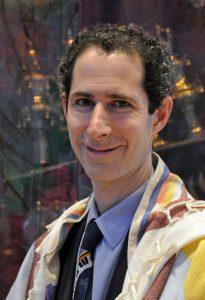
By Cantor Ken Richmond
As someone who, by nature of my profession, has the privilege of leading my congregation in prayer on a regular basis, I have long taken inspiration and instruction from a quote from the Hasidic master Rebbe Nachman of Breslov (1772-1810), who said in his teaching “Azamra”:
…The one who can create these melodies by finding the good points in every Jew… is fit to be the prayer leader. The leader of the communal prayers must represent the whole congregation. He [or she] must find and gather all the good points in each of the worshippers. All these good points must be joined together in him so that when he stands before God in prayer he comes with the power of all this good.
A teacher once taught me to picture this metaphor literally, by visualizing each fellow congregant’s good point as a musical note, my task being to weave them together into a melody, a musical score if you will. Taking Rebbe Nachman’s advice, the shaliach tsibur, the prayer leader or “messenger of the community,” should strive in each moment to sense each person in the congregation and let this inform when to sing a joyful melody and when a contemplative one, when the group needs a familiar melody and when a fresh one, and how to shape the improvisations that connect the melodies. I sometimes include the favorite melody of someone I see in the room, temper the joy of a melody in respect for someone in mourning, or otherwise modulate the mood based on the feeling coming from the assembled daveners. While I can’t match every tune to the needs of every member of the community, it is essential to keep everyone in mind, to be receptive to their voices, moods, and needs, as we encounter our sacred texts and melodies together in an effort to lift up our prayers.
While Rebbe Nachman’s advice to seek out the good points in others may be important in leading prayer, it can serve us well in our lives in general, at home and at work. When someone comes to me to discuss a personal problem, when a student might act out in class, or when our board is struggling with how best to lead our congregation, I serve my congregation best when I recognize everyone’s good intentions and give them the benefit of the doubt. As it says in Pirkei Avot, Teachings of our Sages, 1:6 “Asei lecha rav, uknei lecha chaveir, v’hevei dan et kol ha’adam l’chaf zechut” “Find yourself a teacher, acquire for yourself a friend, and judge each person favorably.” The same applies all the more so at home; what relationship isn’t strengthened by seeing good in the other and judging one another charitably? We can learn these lessons from this week’s Torah portion.
Our portion, Vayeishev, begins the roller-coaster tale of Joseph, a journey of character that takes him, as contemporary Torah scholar Dr. Avivah Zornberg describes, from being narcissistic to empathetic, from using his talents for self-promotion to using them selflessly. In the very first sentence describing Joseph as a 17-year-old (Genesis 37:2), we hear that he brought bad reports of his brothers to his father. The Sefat Emet, the Hasidic rebbe from 19th century Ger, Poland, said that Joseph needed to undergo experiences and difficulties in order to stop being the kind of person who brought bad reports about his brothers and become the kind of tsadik, the kind of righteous person, that raised up people’s good points. An earlier Hasidic leader, Reb Simcha Bunim of Pshische, had a similar teaching about a verse shortly thereafter (Genesis 37:14), when Jacob asks Joseph to see how his brothers are doing, or what they are up to, using the phrase “R’ei et sh’lom achecha,” which literally means “see the peace (or integrity) of your brothers.” Reb Simcha Bunim comments: “Look at your brothers’ good points, not their imperfections. You who brought back bad reports, go and discover their good qualities.”
At this time of year, at least here in New England, the days are at their shortest, the nights at their longest, and a deep cold is descending. It is a time of year when many of us grow less social, crankier, and more depressed. Rebbe Nachman, who counseled joy to his followers but struggled with depression himself, writes further, within the same teaching quoted above, that not only do we need to find the good points in others, but that we need to find and nurture the good points in ourselves. This, he says, can steer us away from depression and self-doubt. And recognizing the good in ourselves can better enable us to find the same generosity of spirit towards others.
This parsha always comes shortly before Hanukkah, the holiday when we celebrate victory in the most unlikely circumstances, and increasing light shining in our windows at the darkest and coldest time of the year. As the story of Joseph unfolds over the next few weeks, he learns, matures, and changes from someone who brings bad reports of his brothers to someone more compassionate, forgiving, and big-hearted, who is able to see the good points in people despite their flaws, and who is able to nurture his better side in the process.
May we be inspired by his growth and his example. By cultivating our own good points and by seeking the good in others, may we bring warmth into the world and light into the darkness this season.
Ken Richmond has been the Cantor at Temple Israel of Natick since 2006, and serves as adjunct faculty at Hebrew College’s School of Jewish Music. He graduated from the Jewish Theological Seminary’s cantorial school in 2004 as a Wexner Graduate Fellow, and was a member of the Lev Shalem Mahzor Committee. He and his wife, Rabbi Shira Shazeer (HCRS ‘10) are klezmer musicians and are raising their boys with Yiddish as their first language.
Previous Post

November 28, 2017
Are these blessings really mine?
Next Post

December 12, 2017 Joseph, Pharaoh, and the Perpetual Stranger
Browse Our Archives
Select a Category Uncategorized
Select a Month April 2026 March 2026 December 2025 November 2025 October 2025 September 2025 August 2025 July 2025 June 2025 May 2025 April 2025 March 2025 February 2025 January 2025 December 2024 November 2024 October 2024 September 2024 August 2024 July 2024 June 2024 May 2024 April 2024 March 2024 February 2024 January 2024 December 2023 November 2023 October 2023 September 2023 August 2023 July 2023 June 2023 May 2023 April 2023 March 2023 February 2023 January 2023 December 2022 November 2022 October 2022 September 2022 August 2022 July 2022 June 2022 May 2022 April 2022 March 2022 February 2022 January 2022 December 2021 November 2021 October 2021 September 2021 August 2021 July 2021 June 2021 May 2021 April 2021 March 2021 February 2021 January 2021 December 2020 November 2020 October 2020 September 2020 August 2020 July 2020 June 2020 May 2020 April 2020 March 2020 February 2020 January 2020 December 2019 November 2019 October 2019 September 2019 August 2019 July 2019 June 2019 May 2019 April 2019 March 2019 February 2019 January 2019 December 2018 November 2018 October 2018 September 2018 August 2018 July 2018 June 2018 May 2018 April 2018 March 2018 February 2018 January 2018 December 2017 November 2017 October 2017 September 2017 August 2017 July 2017 June 2017
Follow Us!
TAKE THE
Religious Wisdom Quiz
True or False: Romans teaches that all Israel will be saved.
Select your answer to see how you score.
TRUE FALSE
Related posts from Seventy Faces of Torah

The Holy Art of World Building

Parashat Tzav: Keeping the Sacred Fire Burning

Color Theory: What Joseph’s Coat Reveals
TRENDING AT PATHEOS Jewish

Yom Kippur : Is There Always Room for...
Making Room for Forgiveness Every year as Yom Kippur approaches, I find...

This Rosh Hashanah: Can I Find New Meaning?
A Sunrise, a New Year, and a Question On our way to...

Killing Amalek: The Torah’s Most Misunderstood Commandment
Few passages of the Torah have provoked more confusion, polemic, and misuse...

I have never trusted a first draft. I don’t mean that...

Back to School, Back to Reality—and a New...
A New School Year Begins… Back to Reality A new school year...

Out-Crowleying Crowley: The Emptiness of the O9A
O9A Neo-Crowley Racial Cosplay and Edgelord Atrocitism Aleister Crowley did not create...
view all Jewish blogs
Ad-Free & Subscriber Log-In Subscription Support
- About Us
- 2026 Calendar
- Videos
- Podcasts
- Library of World Religions
- Faith In Media Tracker
- Advertise With Us
- Write for Us
- Privacy Policy
- Terms of Service
- Do Not Sell My Data
- Contact Us
- Radiant Digital
- Manage Newsletter Subscriptions
- Unsubscribe From Notifications
- Sitemap
Copyright 2008-2026, Patheos. All rights reserved.
Subscription Support Ad-Free & Subscriber Log-In
Follow Patheos