
BuddhistCatholicContemplativeEvangelicalGeneral ChristianHinduJewishLatter-day SaintMuslimNew VisionsProgressive Christian
Beliefs
- Buddhist
- Catholic
- Contemplative
- Evangelical
- General Christian
- Hindu
- Jewish
- Latter-day Saint
- More Voices
- Muslim
- New Visions
- Pagan
- Progressive Christian
Topics
- Religion News
- Food and Religion
- Sports and Religion
- Religious Art
- Religious Music and Entertainment
- Religious Events
- History and Religion
- Style and Religion
- Politics and Religion
- Women in Religion
- Recreation Outdoors and Religion
- Business Finance and Religion
- Careers Workplace and Religion
- Education and Religion
- Family Parenting and Religion
- Health Fitness and Religion
- Home and Religion
- Relationships and Religion
- Technology and Religion
- Travel and Religion
Columnists
- Buddhist Columnists
- Business Finance and Religion Columnists
- Careers Workplace and Religion Columnists
- Catholic Columnists
- Contemplative Columnists
- Education and Religion Columnists
- Evangelists Columnists
- Family Parenting and Religion Columnists
- General Christian Columnists
- Health Fitness and Religion Columnists
- Hindu Columnists
- History and Religion Columnists
- Home and Religion Columnists
- Jewish Columnists
- More Voices Columnists
- Latter Day Columnists
- Muslim Columnists
- New Visions Columnists
- Nonreligious Columnists
- Pagan Columnists
- Politics and Religion Columnists
- Progressive Columnists
- Recreation Outdoors and Religion Columnists
- Relationships and Religion Columnists
- Religion News Columnists
- Religious Art Columnists
- Religious Events Columnists
- Religious Music and Entertainment Columnists
- Sports and Religion Columnists
- Style and Religion Columnists
- Technology and Religion Columnists
- Travel and Religion Columnists
- Women in Religion Columnists
Resource Library
- 2026 Calendar
- Library of World Religions
- The 100 Most Holy Places on Earth
- Patheos Answers
- Podcasts
- Videos
- Faith Leaders Database
- Anglican Episcopalian
- Bahai
- Baptist
- Buddhism
- Christianity
- Confucianism
- Eastern Orthodoxy
- Hinduism
- Holiness and Pentecostal
- ISKCON
- Islam
- Judaism
- Lutheran
- Methodist
- The Church of Jesus Christ of Latter-day Saints
- New Age
- Paganism
- Presbytarian and Reformed
- Protestantism
- Religion Behind the Scenes
- Roman Catholic
- Scientology
- Shia Islam
- Sikhism
- Sufism
- Sunni Islam
- Taoism
- Zen
- See all religions
Research Tools
 Ad-Free & Subscriber Log-In Subscription Support
Ad-Free & Subscriber Log-In Subscription Support
Follow Patheos 

- Trending:
- Forgiveness
- |
- Marriage
- |
- Consciousness
- |
- Death Penalty
- |
- Election
- |
- Halloween

- Home
- About Hebrew College
- The Rabbinical School of Hebrew College
- The Book of Psalms
- FREE NEWSLETTER
- Home
- Jewish
- Are these blessings really mine?
Are these blessings really mine?
Last updated on: November 28, 2017 at 2:04 pm by Hebrew College
Are these blessings really mine? 2017-11-28T14:04:38-04:00 Hebrew College
Patheos Explore the world's faith through different perspectives on religion and spirituality! Patheos has the views of the prevalent religions and spiritualities of the world.
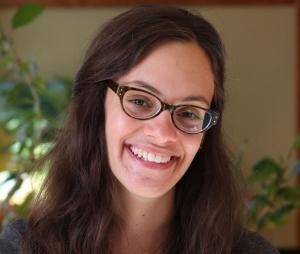 Parshat Vayishlach (Genesis 32:4 – 36:43)
By Rabbi Leora Abelson
Not long ago, a young man approached me in the parking lot of the synagogue where I serve as the rabbi. He wanted permission to park his car in our parking lot overnight. He would be sleeping in his car. It felt safer than parking somewhere more public, he said.
The man had lost his home in the California wildfires and made his way to Massachusetts, where he had hoped to stay with a family member, but it hadn’t worked out. He was sleeping in his car while he waited for a bed in a shelter, but since priority goes to families, there was no guarantee about when that might be.
We were able to offer some blankets, a hot meal, and phone numbers for some of the extraordinary organizations and individuals offering direct services in our community, the people who have the best chance of getting him a spot in a shelter, housing assistance, food stamps. We offered those things, and then we went home, to our warm houses and full bellies.
The painfulness of walking away from a human being in need. The complexity of figuring how to help a stranger in a society structured around keeping us separate, teaching us to fear the other, and concentrating wealth in the hands of a few. These were among the questions my synagogue staff and I were asking. We also wondered: Why me and not him? Why him and not me? These blessings I have—a warm house, a full belly—are they really mine?
In our parsha this week, Vayishlach, our ancestor Jacob faces existential questions about whether the blessings he has received are really his. A few weeks ago, we read in Parshat Toldot how Jacob, with the help of his mother Rebecca, deceived his father Isaac in order to steal, so to speak, Isaac’s “soul’s blessing,” which was intended for Isaac’s firstborn son Esau. Thinking it was Esau, Isaac bestowed the blessing on Jacob. Jacob, in a sense, intercepted the blessing—it was directed towards someone else, but he, standing in the way, grabbed it.
Since then, Jacob has come into his own, but he has continued to wonder about his right to the blessing he received from his father. His brother’s anguish at losing the blessing turned to anger, which forced Jacob to flee their home. He traveled to Paddan-Aram, married twice, worked for many years, fathered 13 children, and experienced his own betrayals as well as tremendous success. Our parsha finds him traveling with a huge camp—wives, children, servants, animals, tents. Preparing to pass through Esau’s land, he learns from messengers that Esau himself is coming to meet the entourage. The night before this encounter, Jacob sends his whole camp ahead of him, and the text tells us:
“Jacob was left alone. And a man wrestled with him until the break of dawn.” Jacob is injured, but neither prevails over the other. Finally the man says, “‘Let me go, for dawn is breaking.’ But he answered, ‘I will not let you go, unless you bless me.’ Said the other, ‘What is your name?’ He replied, ‘Jacob.’ Said he, ‘Your name shall no longer be Jacob, but Israel, for you have striven with beings divine and human, and have prevailed.’”
It is a ripe moment. It is impossible to miss the psychological significance of Jacob’s midnight wrestling with a mysterious figure the night before he has to face his past, the brother he betrayed. Rashi invites us to read this whole encounter as Jacob struggling with his right to the stolen blessing. When Jacob says, “I will not let you go until you bless me,” Rashi understands him to be saying, “Admit my right to the blessings which my father gave me and to which Esau lays claim.” Despite his material success, he still craves affirmation. He has no idea whether or not Esau still lays claim to the first born’s blessing, but he is not settled about it within himself.
This experience of wondering about our blessings— it’s human. It can come up when, like Jacob, we know we have compromised our values in order to gain something. And it can come up in relationship with someone who does not have what we have.
In Jacob’s world, rights, rewards, and punishments are bestowed by God. Success flows from finding favor with God, unlike in our world, where access to resources like wealth and health is powerfully shaped by structural realities, by power and privilege. The Torah teaches that all humans are created in the Divine image. Today, we understand that we are equally worthy of access to certain resources. You may have worked hard to achieve something, but that doesn’t make you more inherently worthy of comfort and safety, dignity and freedom. You may have made mistakes or poor choices, but that doesn’t make you any less worthy of comfort and safety, dignity and freedom.
When we encounter someone who does not have access to those things, it is good to wonder about it. It is important to wonder why you get to go home to a warm house and a full belly, while someone else is considered lucky to have a car to live in. It should make you feel grateful; it should help you remember that material success is ephemeral, and it should inspire you to build a world where no one goes without a home, and no one has a hungry belly.
Rabbi Leora Abelson, Rab`17, serves as a rabbi at Congregation Agudas Achim in Attleboro, MA, Brigham and Women’s Hospital in Boston, and with a Shabbat minyan (prayer gathering) for members of the Jewish Voice for Peace Boston chapter. Leora is passionate about queer embodied theology and making the ancient wisdom of the Jewish tradition accessible to social movements and anyone building a just and peaceful world. She is a graduate of the Rabbinical School of Hebrew College in Newton Centre, MA.
Interested in a possible career in the rabbinate? Read Rabbi Dan Judson’s article “Jewish Lessons on Meaningful Work.“ Rabbi Judson teaches history, oversees the professional development program, and serves as the placement director for the Hebrew College Rabbinical School. He has a PhD in Jewish history from Brandeis University.
Previous Post

November 20, 2017
When the Holy One is a No-Show (Parshat Vayetze (Genesis 28:10-32:3)
Next Post
December 5, 2017 Lighting Up the Darkness One Good Point at a Time
Browse Our Archives
Select a Category Uncategorized
Select a Month April 2026 March 2026 December 2025 November 2025 October 2025 September 2025 August 2025 July 2025 June 2025 May 2025 April 2025 March 2025 February 2025 January 2025 December 2024 November 2024 October 2024 September 2024 August 2024 July 2024 June 2024 May 2024 April 2024 March 2024 February 2024 January 2024 December 2023 November 2023 October 2023 September 2023 August 2023 July 2023 June 2023 May 2023 April 2023 March 2023 February 2023 January 2023 December 2022 November 2022 October 2022 September 2022 August 2022 July 2022 June 2022 May 2022 April 2022 March 2022 February 2022 January 2022 December 2021 November 2021 October 2021 September 2021 August 2021 July 2021 June 2021 May 2021 April 2021 March 2021 February 2021 January 2021 December 2020 November 2020 October 2020 September 2020 August 2020 July 2020 June 2020 May 2020 April 2020 March 2020 February 2020 January 2020 December 2019 November 2019 October 2019 September 2019 August 2019 July 2019 June 2019 May 2019 April 2019 March 2019 February 2019 January 2019 December 2018 November 2018 October 2018 September 2018 August 2018 July 2018 June 2018 May 2018 April 2018 March 2018 February 2018 January 2018 December 2017 November 2017 October 2017 September 2017 August 2017 July 2017 June 2017
Follow Us!
TAKE THE
Religious Wisdom Quiz
Who lost his strength when his hair was cut?
Select your answer to see how you score.
Samson Elijah David Absalom
Related posts from Seventy Faces of Torah

The Holy Art of World Building

Parashat Tzav: Keeping the Sacred Fire Burning

Color Theory: What Joseph’s Coat Reveals
TRENDING AT PATHEOS Jewish

Yom Kippur : Is There Always Room for...
Making Room for Forgiveness Every year as Yom Kippur approaches, I find...

This Rosh Hashanah: Can I Find New Meaning?
A Sunrise, a New Year, and a Question On our way to...

Killing Amalek: The Torah’s Most Misunderstood Commandment
Few passages of the Torah have provoked more confusion, polemic, and misuse...

I have never trusted a first draft. I don’t mean that...

Back to School, Back to Reality—and a New...
A New School Year Begins… Back to Reality A new school year...

Out-Crowleying Crowley: The Emptiness of the O9A
O9A Neo-Crowley Racial Cosplay and Edgelord Atrocitism Aleister Crowley did not create...
view all Jewish blogs
Ad-Free & Subscriber Log-In Subscription Support
- About Us
- 2026 Calendar
- Videos
- Podcasts
- Library of World Religions
- Faith In Media Tracker
- Advertise With Us
- Write for Us
- Privacy Policy
- Terms of Service
- Do Not Sell My Data
- Contact Us
- Radiant Digital
- Manage Newsletter Subscriptions
- Unsubscribe From Notifications
- Sitemap
Copyright 2008-2026, Patheos. All rights reserved.
Subscription Support Ad-Free & Subscriber Log-In
Follow Patheos