
BuddhistCatholicContemplativeEvangelicalGeneral ChristianHinduJewishLatter-day SaintMuslimNew VisionsProgressive Christian
Beliefs
- Buddhist
- Catholic
- Contemplative
- Evangelical
- General Christian
- Hindu
- Jewish
- Latter-day Saint
- More Voices
- Muslim
- New Visions
- Pagan
- Progressive Christian
Topics
- Religion News
- Food and Religion
- Sports and Religion
- Religious Art
- Religious Music and Entertainment
- Religious Events
- History and Religion
- Style and Religion
- Politics and Religion
- Women in Religion
- Recreation Outdoors and Religion
- Business Finance and Religion
- Careers Workplace and Religion
- Education and Religion
- Family Parenting and Religion
- Health Fitness and Religion
- Home and Religion
- Relationships and Religion
- Technology and Religion
- Travel and Religion
Columnists
- Buddhist Columnists
- Business Finance and Religion Columnists
- Careers Workplace and Religion Columnists
- Catholic Columnists
- Contemplative Columnists
- Education and Religion Columnists
- Evangelists Columnists
- Family Parenting and Religion Columnists
- General Christian Columnists
- Health Fitness and Religion Columnists
- Hindu Columnists
- History and Religion Columnists
- Home and Religion Columnists
- Jewish Columnists
- More Voices Columnists
- Latter Day Columnists
- Muslim Columnists
- New Visions Columnists
- Nonreligious Columnists
- Pagan Columnists
- Politics and Religion Columnists
- Progressive Columnists
- Recreation Outdoors and Religion Columnists
- Relationships and Religion Columnists
- Religion News Columnists
- Religious Art Columnists
- Religious Events Columnists
- Religious Music and Entertainment Columnists
- Sports and Religion Columnists
- Style and Religion Columnists
- Technology and Religion Columnists
- Travel and Religion Columnists
- Women in Religion Columnists
Resource Library
- 2026 Calendar
- Library of World Religions
- The 100 Most Holy Places on Earth
- Patheos Answers
- Podcasts
- Videos
- Faith Leaders Database
- Anglican Episcopalian
- Bahai
- Baptist
- Buddhism
- Christianity
- Confucianism
- Eastern Orthodoxy
- Hinduism
- Holiness and Pentecostal
- ISKCON
- Islam
- Judaism
- Lutheran
- Methodist
- The Church of Jesus Christ of Latter-day Saints
- New Age
- Paganism
- Presbytarian and Reformed
- Protestantism
- Religion Behind the Scenes
- Roman Catholic
- Scientology
- Shia Islam
- Sikhism
- Sufism
- Sunni Islam
- Taoism
- Zen
- See all religions
Research Tools
 Ad-Free & Subscriber Log-In Subscription Support
Ad-Free & Subscriber Log-In Subscription Support
Follow Patheos 

- Trending:
- Forgiveness
- |
- Marriage
- |
- Consciousness
- |
- Death Penalty
- |
- Election
- |
- Halloween

- Home
- About Hebrew College
- The Rabbinical School of Hebrew College
- The Book of Psalms
- FREE NEWSLETTER
- Home
- Jewish
- What is Written in the Book of Human Begettings?
What is Written in the Book of Human Begettings?
Last updated on: October 10, 2017 at 11:45 am by Hebrew College
What is Written in the Book of Human Begettings? 2017-10-06T08:26:13-04:00 Hebrew College
Patheos Explore the world's faith through different perspectives on religion and spirituality! Patheos has the views of the prevalent religions and spiritualities of the world.
 Parashat Bereishit (Genesis, 1:1-6:8)
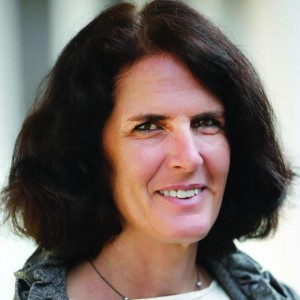
By Rachel Adelman, Ph.D.
As the saying goes: “All beginnings are difficult.” We are reading Bereshit, “In the beginning…,” again. It is the start of a New Year and I am filled with the tentative joy and trepidation of Yom Kippur in Jerusalem.
Just at the opening of the gates at Kol Nidrei, I stood with my three-month-old granddaughter, Naomi Tzipora, in my arms—my daughter and son-in-law by my side—filled with hope and awe, holding our wholeness along with the shards. We were bound by tiny threads, but I felt that any blast–a hurricane or a harsh word—could tear us apart.
That day, Rabba Tamar Elad-Appelbaum, the founder of Congregation Tzion in Jerusalem, spoke about the opening of a book, or rather, the Book of Life.
What is inscribed there? According to the sages, when Adam was first created, God presented the Book of Life to him, as it says, “This is the book of human begettings [zeh sefer toledot adam]…” (Gen. 5:2). He showed him his progeny, but also the progeny of every generation to follow [dor ve-dorshav], the generations of the prophets, the generations of the scribes, and the generations of wise Rabbis, and so forth. Each and every soul that was to be born and to die was inscribed in the Book (Seder ‘Olam Rabbah ch. 30, cf. Babylonian Talmud Sanhedrin 38b). Why show Adam the Book, if the fate of each being was already determined? Wherefore free will? Why would we pray to be inscribed in the Book of Life if our fate has already been set? What does that prayer even mean? Even the most secular of us tremble at the words: “who will live and who will die…who by fire, who by water…” from the great liturgical poem of U-n’taneh Tokef of Rosh Hashana and Yom Kippur. Especially in Israel, we feel our fragility close to the bone. Yet, as the sages teach, we can change our fate. During the Days of Awe, God may move from the Seat of Judgement [kis’ei ha-din] to the Mercy Seat [kis’ei ha-rahamim] (Babylonian Talmud Rosh Hashana 16b).
So too, Adam was shown the Book in order to teach him a great principle, as the quote continues: “This is the book of human begettings [zeh sefer toledot adam]. When God created humankind, he made them in the likeness of God” (Gen. 5:1). Being made in the image of God implies that you can change the inscription in the Book. The midrash teaches us that Repentance was created before the world )Babylonian Talmud 54a). The possibility of change was built into the fabric of Creation, was built into the seeming irreversibility of time’s arrow. Repentance rages against the “slings and arrows of outrageous fortune.”
That is, we may move our own lives from the “Judgement Seat [kis’ei ha-din],” from being judged in the image of our ancestors, imprinted with the mistakes of our parents, our grandparents, in cycles of wrong-doing without end, to the “Mercy Seat [kis’ei ha-rahamim]”. Teshuva allows us to step out of that circle, to change. Rabba Appelbaum asked us to consider the story of Esther. She was beautiful (Est. 2:7), like her ancestors—King Saul (1 Sam. 9:2) and Joseph (Gen. 39:6), and like the matriarch, Rachel (Gen. 29:17). But she was caught in a web of external appearances, a victim of her good looks like Rachel—the most beloved of Jacob, whose marriage was tragically deferred—and like Joseph, who refused the wife of Potiphar’s advances and was thrown in jail, and like Saul, admired for the way humans see, but not as God sees, “for the LORD does not see as mortals see; they look with the eyes, but the LORD looks on the heart” (1 Sam 16:7). When does Esther step out of what is inscribed for her in the Book? When she breaks out of the cycle of her ancestors’ characteristic and transforms her beauty into a source of salvation.
Likewise, consider the stories of deception that lead up to the Davidic line in the Bible: the story of Lot’s daughters lying with their drunken father and conceiving the founding fathers of Ammon and Moab (Gen. 19); the story of Tamar’s seduction of her father-in-law, Judah, posing as a harlot by the crossroads (Gen. 38); and Boaz and Ruth, the Moabite, in the granary (Ruth 3). As a descendant of Judah, Boaz might too have been duped, seduced, for the sake of conceiving a child; Ruth, the Moabite, might have played the same bedtrick as her ancestress, Lot’s daughter. When do they step out of the fate inscribed in the Book? When Boaz wakes up at a midnight, startled to see Ruth lying at his feet, and asks:“Who are you” (Ruth 3:9). As a result of their union, which entails recognition before the seed is planted in the womb, a child is born who becomes the grandfather of King David, founder of the messianic dynasty.
We each have our dark secrets in the family, cycles bound to be repeated inexorably, but we can choose not to replay them again. So God presents the Book to Adam, and tells him: You are made in the image of God. You can change. You are a partner with God in that image making.
I hold my beautiful granddaughter in my arms, Naomi Tzipora, named after my own Bubby (Frances “Fayge” Bromstein, z”l), and I pray that she will carry her grandmother’s laughter and light, but also that she not be bound by the dark fate of our own family tragedies. I look into the Book and hold those words that could be unbearably heavy or buoyant, inscribed as cuneiform letters in stone tablets or as feathered wisps of ink, and know that she will determine her own fate. I can only show her the Book of her begettings.
All beginnings are difficult, but may this year’s Bereshit, “In the beginning…”, set you free.
Rachel Adelman is assistant professor of Hebrew Bible at the Hebrew College Rabbinical School. She received her PhD at Hebrew University, in Jerusalem. When she is not writing books, articles, or divrei torah, it is poetry that flows from her pen.
Don’t miss the Hebrew College Ordination Programs Open House and Day of Learning, Ta Sh’ma (Come & Hear) on November 6, 2017. Meet Professor Adelman and learn more about our Rabbinical School at Hebrew College.
Previous Post

October 2, 2017
A Pink Sukkah: A Suggestion for New Jewish Ritual
Next Post
October 16, 2017 Where Is God in the Flood?
Browse Our Archives
Select a Category Uncategorized
Select a Month April 2026 March 2026 December 2025 November 2025 October 2025 September 2025 August 2025 July 2025 June 2025 May 2025 April 2025 March 2025 February 2025 January 2025 December 2024 November 2024 October 2024 September 2024 August 2024 July 2024 June 2024 May 2024 April 2024 March 2024 February 2024 January 2024 December 2023 November 2023 October 2023 September 2023 August 2023 July 2023 June 2023 May 2023 April 2023 March 2023 February 2023 January 2023 December 2022 November 2022 October 2022 September 2022 August 2022 July 2022 June 2022 May 2022 April 2022 March 2022 February 2022 January 2022 December 2021 November 2021 October 2021 September 2021 August 2021 July 2021 June 2021 May 2021 April 2021 March 2021 February 2021 January 2021 December 2020 November 2020 October 2020 September 2020 August 2020 July 2020 June 2020 May 2020 April 2020 March 2020 February 2020 January 2020 December 2019 November 2019 October 2019 September 2019 August 2019 July 2019 June 2019 May 2019 April 2019 March 2019 February 2019 January 2019 December 2018 November 2018 October 2018 September 2018 August 2018 July 2018 June 2018 May 2018 April 2018 March 2018 February 2018 January 2018 December 2017 November 2017 October 2017 September 2017 August 2017 July 2017 June 2017
Follow Us!
TAKE THE
Religious Wisdom Quiz
According to Jesus, what defiles a person?
Select your answer to see how you score.
Clothing What comes out of the heart Food eaten Money
Related posts from Seventy Faces of Torah

The Holy Art of World Building

Parashat Tzav: Keeping the Sacred Fire Burning

Color Theory: What Joseph’s Coat Reveals
TRENDING AT PATHEOS Jewish

Building a Little Ark in a Frightening World
This past Shabbat, we read about Noah. I love this story. The...

Yom Kippur : Is There Always Room for...
Making Room for Forgiveness Every year as Yom Kippur approaches, I find...

This Rosh Hashanah: Can I Find New Meaning?
A Sunrise, a New Year, and a Question On our way to...

Killing Amalek: The Torah’s Most Misunderstood Commandment
Few passages of the Torah have provoked more confusion, polemic, and misuse...

I have never trusted a first draft. I don’t mean that...

Back to School, Back to Reality—and a New...
A New School Year Begins… Back to Reality A new school year...
view all Jewish blogs
Ad-Free & Subscriber Log-In Subscription Support
- About Us
- 2026 Calendar
- Videos
- Podcasts
- Library of World Religions
- Faith In Media Tracker
- Advertise With Us
- Write for Us
- Privacy Policy
- Terms of Service
- Do Not Sell My Data
- Contact Us
- Radiant Digital
- Manage Newsletter Subscriptions
- Unsubscribe From Notifications
- Sitemap
Copyright 2008-2026, Patheos. All rights reserved.
Subscription Support Ad-Free & Subscriber Log-In
Follow Patheos