
BuddhistCatholicContemplativeEvangelicalGeneral ChristianHinduJewishLatter-day SaintMuslimNew VisionsProgressive Christian
Beliefs
- Buddhist
- Catholic
- Contemplative
- Evangelical
- General Christian
- Hindu
- Jewish
- Latter-day Saint
- More Voices
- Muslim
- New Visions
- Pagan
- Progressive Christian
Topics
- Religion News
- Food and Religion
- Sports and Religion
- Religious Art
- Religious Music and Entertainment
- Religious Events
- History and Religion
- Style and Religion
- Politics and Religion
- Women in Religion
- Recreation Outdoors and Religion
- Business Finance and Religion
- Careers Workplace and Religion
- Education and Religion
- Family Parenting and Religion
- Health Fitness and Religion
- Home and Religion
- Relationships and Religion
- Technology and Religion
- Travel and Religion
Columnists
- Buddhist Columnists
- Business Finance and Religion Columnists
- Careers Workplace and Religion Columnists
- Catholic Columnists
- Contemplative Columnists
- Education and Religion Columnists
- Evangelists Columnists
- Family Parenting and Religion Columnists
- General Christian Columnists
- Health Fitness and Religion Columnists
- Hindu Columnists
- History and Religion Columnists
- Home and Religion Columnists
- Jewish Columnists
- More Voices Columnists
- Latter Day Columnists
- Muslim Columnists
- New Visions Columnists
- Nonreligious Columnists
- Pagan Columnists
- Politics and Religion Columnists
- Progressive Columnists
- Recreation Outdoors and Religion Columnists
- Relationships and Religion Columnists
- Religion News Columnists
- Religious Art Columnists
- Religious Events Columnists
- Religious Music and Entertainment Columnists
- Sports and Religion Columnists
- Style and Religion Columnists
- Technology and Religion Columnists
- Travel and Religion Columnists
- Women in Religion Columnists
Resource Library
- 2026 Calendar
- Library of World Religions
- The 100 Most Holy Places on Earth
- Patheos Answers
- Podcasts
- Videos
- Faith Leaders Database
- Anglican Episcopalian
- Bahai
- Baptist
- Buddhism
- Christianity
- Confucianism
- Eastern Orthodoxy
- Hinduism
- Holiness and Pentecostal
- ISKCON
- Islam
- Judaism
- Lutheran
- Methodist
- The Church of Jesus Christ of Latter-day Saints
- New Age
- Paganism
- Presbytarian and Reformed
- Protestantism
- Religion Behind the Scenes
- Roman Catholic
- Scientology
- Shia Islam
- Sikhism
- Sufism
- Sunni Islam
- Taoism
- Zen
- See all religions
Research Tools
 Ad-Free & Subscriber Log-In Subscription Support
Ad-Free & Subscriber Log-In Subscription Support
Follow Patheos 

- Trending:
- Forgiveness
- |
- Marriage
- |
- Consciousness
- |
- Death Penalty
- |
- Election
- |
- Halloween

- Home
- About Hebrew College
- The Rabbinical School of Hebrew College
- The Book of Psalms
- FREE NEWSLETTER
- Home
- Jewish
- Will We Listen?
Will We Listen?
Last updated on: September 6, 2017 at 9:01 am by Hebrew College
Will We Listen? 2017-09-06T09:01:47-04:00 Hebrew College
Patheos Explore the world's faith through different perspectives on religion and spirituality! Patheos has the views of the prevalent religions and spiritualities of the world.
 (Ki Tavo, Deuteronomy 26:1-29:8)
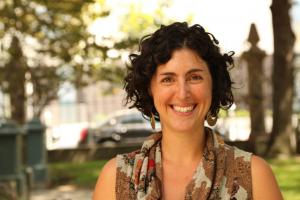
By Rabbi Adina Allen
In this week’s parsha, Moses sets two paths before the Israelites as they prepare to enter the land. If they heed God’s word, the Israelites will be blessed in every way possible and will be established as am kadosh, a holy people to God. If, however, they do not heed God, they will be cursed in every way imaginable. Their communities will be torn apart, their cities ravaged, their flocks decimated, their spirits broken, their hearts to be forever consumed by terror and dread.
Introducing these two paths to the Israelites Moses says, “If you listen, listen to the voice of Adonai your God” all blessings will follow, however, “if you do not listen to God’s voice” then every curse will ensue. From this choice of words we can understand that listening, more than any other action, is the essential practice for living a life in service to God and is at the heart of what it means to bring blessing into the world.
What is the voice of God and what does it mean to listen to this voice?
On first read, these verses seem to portray God’s voice as that of a dictator who will punish us if we don’t obey. In this read, to listen to God is to heed an abuser who holds power over us in order to force us to follow his will. There is a good reason why this view of God, though unappealing in some ways, is held by so many. In this read, the path we are meant to take is clear and is given to us, thereby relieving us of the burden of discernment. We either follow and are good, or disobey and are punished.
If, rather, we think of the voice of God as the sacred intuition within each one of us, we hear these lines differently. In this read, the listening that is being asked of us is a constant practice in each moment. It comes not from on high but rather from within. Though perhaps appealing on the surface, the challenge here is that this sort of listening requires continual engagement to find the path of blessing in each moment. The imperative of this view is that there are myriad right possibilities. Each of us hear certain aspects of God’s voice and the full truth requires all voices.
Amid such a divisive and challenging time in our country, the act of listening feels as essential as it does impossible. On all sides of the political spectrum voices are shouting to drown out those whom they see as threatening their existence. The higher the stakes, the louder we speak. We scream at one another at protests in the streets, in comment feeds on Facebook, and across the dinner table. The more threatened we feel, the more hopeless and hateful our speech becomes. So consumed by our own views, so entrenched within our own positions, we refuse to listen. It is times like these when listening to the other is most challenging that it is most crucial.
In my own experience, when I am not listened to I observe the chasm between me and the person with whom I’m speaking deepen and the chance for human connection diminishes. Ralph G. Nichols, founder of the International Listening Association explains why. “The most basic of all human needs is the need to understand and be understood. The best way to understand people is to listen to them.” Listening is the root of authentic relationship. In the framework of philosopher Martin Buber, listening is what allows us to develop an I-thou, rather than an I-it relationship. He described listening as “Something we do with our full selves by sensing and feeling what another is trying to convey” so we may remove the barrier between us.
In his book Seven Thousand Ways to Listen, author Mark Nepo describes listening as “a personal pilgrimage…we are asked to put down our conclusions and feel and think anew.” To put down our conclusions so that we might feel and think anew is exactly our task during this season of change and transformation as we approach the High Holy Days. And during such an intense time in our country, it’s never been more vital.
In this season we make teshuva, repair, ben adam l’makom—between ourselves and the Divine—and ben adam l’havero—between ourselves and our fellow humans. We are called to this task by the sounding of the shofar. Remarkably, the mandate is not to blowthe shofar, but to hear its sound. The act of hearing the shofar is meant to awaken our capacity to listen. The shofar’s cry calls us to scan our year and search our souls for those times in which we failed to listen.
This is a year in which the teshuva we’re being asked to make is not only for the ways we’ve failed as individuals, it is for our collective failure to hear the complex and challenging voice of the Divine as it comes through each one of us. The strands of suffering, disenfranchisement and hopelessness that are demanding to be heard are those that have been denied for centuries. The stakes are high and the task is daunting. Will we listen? Our futures are inextricably bound, and curse and blessing hang in the balance.
Entrepreneur and artist Rabbi Adina Allen is the Co-founder and Creative Director of The Jewish Studio Project — an arts-based nonprofit in Berkeley, CA that blends traditional Jewish learning with a creative arts studio. She is a 2014 graduate from the Rabbinical School of Hebrew College and one of the authors in the new Hebrew College High Holiday Companion (published in August 2017) available now for study and reflection during the High Holidays.
Learn more about the Rabbinical School of Hebrew College at our fall Open House and Day of Learning, Ta Sh’ma (Come & Hear) on November 6. Info and registration.
Previous Post

August 29, 2017
First Questions
Next Post
September 12, 2017 Not in Heaven: Neutrality or Responsibility
Browse Our Archives
Select a Category Uncategorized
Select a Month April 2026 March 2026 December 2025 November 2025 October 2025 September 2025 August 2025 July 2025 June 2025 May 2025 April 2025 March 2025 February 2025 January 2025 December 2024 November 2024 October 2024 September 2024 August 2024 July 2024 June 2024 May 2024 April 2024 March 2024 February 2024 January 2024 December 2023 November 2023 October 2023 September 2023 August 2023 July 2023 June 2023 May 2023 April 2023 March 2023 February 2023 January 2023 December 2022 November 2022 October 2022 September 2022 August 2022 July 2022 June 2022 May 2022 April 2022 March 2022 February 2022 January 2022 December 2021 November 2021 October 2021 September 2021 August 2021 July 2021 June 2021 May 2021 April 2021 March 2021 February 2021 January 2021 December 2020 November 2020 October 2020 September 2020 August 2020 July 2020 June 2020 May 2020 April 2020 March 2020 February 2020 January 2020 December 2019 November 2019 October 2019 September 2019 August 2019 July 2019 June 2019 May 2019 April 2019 March 2019 February 2019 January 2019 December 2018 November 2018 October 2018 September 2018 August 2018 July 2018 June 2018 May 2018 April 2018 March 2018 February 2018 January 2018 December 2017 November 2017 October 2017 September 2017 August 2017 July 2017 June 2017
Follow Us!
TAKE THE
Religious Wisdom Quiz
Who said, "You are the Christ, the Son of the living God"?
Select your answer to see how you score.
Peter James John Paul
Related posts from Seventy Faces of Torah

The Holy Art of World Building

Parashat Tzav: Keeping the Sacred Fire Burning

Color Theory: What Joseph’s Coat Reveals
TRENDING AT PATHEOS Jewish

Building a Little Ark in a Frightening World
This past Shabbat, we read about Noah. I love this story. The...

Yom Kippur : Is There Always Room for...
Making Room for Forgiveness Every year as Yom Kippur approaches, I find...

This Rosh Hashanah: Can I Find New Meaning?
A Sunrise, a New Year, and a Question On our way to...

Killing Amalek: The Torah’s Most Misunderstood Commandment
Few passages of the Torah have provoked more confusion, polemic, and misuse...

I have never trusted a first draft. I don’t mean that...

Back to School, Back to Reality—and a New...
A New School Year Begins… Back to Reality A new school year...
view all Jewish blogs
Ad-Free & Subscriber Log-In Subscription Support
- About Us
- 2026 Calendar
- Videos
- Podcasts
- Library of World Religions
- Faith In Media Tracker
- Advertise With Us
- Write for Us
- Privacy Policy
- Terms of Service
- Do Not Sell My Data
- Contact Us
- Radiant Digital
- Manage Newsletter Subscriptions
- Unsubscribe From Notifications
- Sitemap
Copyright 2008-2026, Patheos. All rights reserved.
Subscription Support Ad-Free & Subscriber Log-In
Follow Patheos