
BuddhistCatholicContemplativeEvangelicalGeneral ChristianHinduJewishLatter-day SaintMuslimNew VisionsProgressive Christian
Beliefs
- Buddhist
- Catholic
- Contemplative
- Evangelical
- General Christian
- Hindu
- Jewish
- Latter-day Saint
- More Voices
- Muslim
- New Visions
- Pagan
- Progressive Christian
Topics
- Religion News
- Food and Religion
- Sports and Religion
- Religious Art
- Religious Music and Entertainment
- Religious Events
- History and Religion
- Style and Religion
- Politics and Religion
- Women in Religion
- Recreation Outdoors and Religion
- Business Finance and Religion
- Careers Workplace and Religion
- Education and Religion
- Family Parenting and Religion
- Health Fitness and Religion
- Home and Religion
- Relationships and Religion
- Technology and Religion
- Travel and Religion
Columnists
- Buddhist Columnists
- Business Finance and Religion Columnists
- Careers Workplace and Religion Columnists
- Catholic Columnists
- Contemplative Columnists
- Education and Religion Columnists
- Evangelists Columnists
- Family Parenting and Religion Columnists
- General Christian Columnists
- Health Fitness and Religion Columnists
- Hindu Columnists
- History and Religion Columnists
- Home and Religion Columnists
- Jewish Columnists
- More Voices Columnists
- Latter Day Columnists
- Muslim Columnists
- New Visions Columnists
- Nonreligious Columnists
- Pagan Columnists
- Politics and Religion Columnists
- Progressive Columnists
- Recreation Outdoors and Religion Columnists
- Relationships and Religion Columnists
- Religion News Columnists
- Religious Art Columnists
- Religious Events Columnists
- Religious Music and Entertainment Columnists
- Sports and Religion Columnists
- Style and Religion Columnists
- Technology and Religion Columnists
- Travel and Religion Columnists
- Women in Religion Columnists
Resource Library
- 2026 Calendar
- Library of World Religions
- The 100 Most Holy Places on Earth
- Patheos Answers
- Podcasts
- Videos
- Faith Leaders Database
- Anglican Episcopalian
- Bahai
- Baptist
- Buddhism
- Christianity
- Confucianism
- Eastern Orthodoxy
- Hinduism
- Holiness and Pentecostal
- ISKCON
- Islam
- Judaism
- Lutheran
- Methodist
- The Church of Jesus Christ of Latter-day Saints
- New Age
- Paganism
- Presbytarian and Reformed
- Protestantism
- Religion Behind the Scenes
- Roman Catholic
- Scientology
- Shia Islam
- Sikhism
- Sufism
- Sunni Islam
- Taoism
- Zen
- See all religions
Research Tools
 Ad-Free & Subscriber Log-In Subscription Support
Ad-Free & Subscriber Log-In Subscription Support
Follow Patheos 

- Trending:
- Forgiveness
- |
- Marriage
- |
- Consciousness
- |
- Death Penalty
- |
- Election
- |
- Halloween

- Home
- About Hebrew College
- The Rabbinical School of Hebrew College
- The Book of Psalms
- FREE NEWSLETTER
- Home
- Jewish
- Lifting Each Other Up: Preparing for Tish’a B’av with Joy as well as Sorrow
Lifting Each Other Up: Preparing for Tish’a B’av with Joy as well as Sorrow
Last updated on: July 25, 2017 at 9:20 am by Hebrew College
Lifting Each Other Up: Preparing for Tish’a B’av with Joy as well as Sorrow 2017-07-25T09:20:39-04:00 Hebrew College
Patheos Explore the world's faith through different perspectives on religion and spirituality! Patheos has the views of the prevalent religions and spiritualities of the world.
 Parshat Devarim / Shabbat Hazon (Deuteronomy 1:1-3.22)
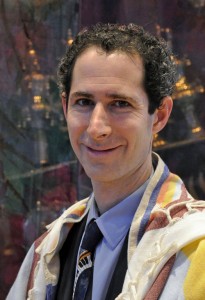
By Cantor Ken Richmond
The Talmud says that when the month of Adar with its manic Purim holiday begins, joy increases, and conversely, when the current Hebrew month of Av arrives, with its impending ninth day, Tish’a B’av, which commemorates the destruction of the two Temples in Jerusalem, joy is diminished. I wonder annually how seriously to link my personal emotional fluctuations with our cycle of communal ones, and ponder what to do when one doesn’t feel in sync with the community. Traditional Ashkenazic observances help one prepare for Tish’a B’avby avoiding shaving, live music, and weddings for three weeks, and abstaining from meat, wine, and swimming for the final nine days, on top of the traditional fast of Tish’a B’av itself. How do we balance the joy of summer, with its outdoor concerts, BBQs, short haircuts, lakes and pools, with participation in communal mourning for tragedies that happened long ago and far away?
This Shabbat, Shabbat Hazon, the Sabbath of Vision, is named after the first words of the Haftarah, from the prophet Isaiah, which accompanies the Torah portion from the opening of Deuteronomy, Moses’ final, epic speech to the Jewish people before they enter the Promised Land. Both Torah and Haftarah are linked by word and melody to the holiday of Tish’a B’av that they anticipate. The word Eicha, the Hebrew name for the Book of Lamentations that we chant on Tish’a B’av, and its opening word (an exclamatory version of the word “how”), is found in both the Torah portion: “How can I bear unaided the trouble…” (Deuteronomy 1:12) and the Haftarah: “How [Jerusalem] has become a harlot.” (Isaiah 1:21) Both of these verses, along with much of the Haftarah, are chanted to the beautiful, melancholy melodies of Lamentations. The midrash (Eicha Raba) says that there are three who prophesied using the word “Eicha”: Moses, who saw Israel in her tranquility, Isaiah, who witnessed her recklessness, and Jeremiah, in Lamentations, who saw her abandoned.
The Piacezner Rebbe, Kalonymos Kalman Shapira (1889-1943), who perished in the Holocaust, but whose words of Torah from the Warsaw Ghetto survived the war in a buried canister, recorded his final words of Torah for Shabbat Hazon in July 1942, writing about Isaiah’s vision. He writes that the harshest form of prophecy is a vision in which one experiences someone’s pain: “When in Scripture and in the writings of our blessed sages we studied descriptions of the agony endured at the destruction of the Temple, we thought we had some notion of pain. At times we even cried while learning their teachings. But now, it is plain that hearing about sufferings is vastly different from seeing them, let alone enduring them, God forbid.” The Piacezner Rebbe, who witnessed and endured horrible atrocities, reminds us that empathy is difficult to achieve. How can we comprehend the suffering of others, and how much should we immerse ourselves in current calamities, locally or around the world, as well as the devastation chronicled in our history?
Our Torah portion helps us frame our answers in a variety of ways. On the one hand, Moses’ depiction of the forty years wandering in the desert reminds us of the importance of telling and retelling our stories, and of identifying with the travails of our ancestors. On the other hand, God tells us twice in this portion that it’s time to move on, that we’ve had too much sitting around or going around in circles. This teaches us to avoid becoming completely consumed by the sorrows of the past or paralyzed by the latest tragedy we read about in the news.
Finally, I would like to look at these issues through my favorite verse from this portion. Moses portrays the incident with the spies with images of God fighting for us and scouting out the land, and he then uses this striking language (Deut. 1:31): “in the desert, where you saw how your God carried you, as a person carries his [or her] child,” a metaphor I can relate to as I’ve been shlepping sleeping (and growing) children in from the car on recent summer evenings. The midrash in the Mekhilta of Rabbi Shimon Bar Yochai recounts God’s protective cloud at the Red Sea moving from in front of the Israelites to behind them, to protect them from the advancing Egyptian army, and likens this to a person walking in the desert with his son. If robbers approach in front to abduct him (the son), the father would place him behind. If a wolf approached from behind, he would carry him on his shoulders, as God did for us, metaphorically, in the desert.
According to Talmudic legend, the Second Temple was destroyed on Tish’a B’av 1,947 years ago because of sin’at chinam, baseless hatred. The description of Divine assistance above provides us with a model of how to treat not only our children but all people with love, by fighting for them, showing them the way, and when needed, lifting them up. Perhaps when we help each other, as the bumper sticker says, with “Senseless Acts of Love,” this can be an antidote to the baseless hatred that still lingers in the world and a counterweight to the sorrow of remembering communal adversity. The Hasidic Rebbe Chaim Elazar Spira (1861-1937) interprets the Talmudic saying, “When the month of Av begins, joy decreases (mema’atin besimcha),” by parsing it instead: “When the month of Av begins, decrease… with joy,” indicating that even our mourning should contain some element of happiness. So however we approach Tish’a B’av this year, may we be able to balance the empathic experience of the suffering of others with the joy generated by lifting each other up.
Ken Richmond has been the Cantor at Temple Israel of Natick since 2006, and serves as adjunct faculty at Hebrew College’s School of Jewish Music. He graduated from the Jewish Theological Seminary’s cantorial school in 2004 as a Wexner Graduate Fellow, and was a member of the Lev Shalem Mahzor Committee. He and his wife, Rabbi Shira Shazeer (HCRS ‘10) are klezmer musicians and are raising their boys with Yiddish as their first language.
Interested in a possible career in the rabbinate? Read Rabbi Dan Judson’s article “Jewish Lessons on Meaningful Work.“ Rabbi Judson teaches history, oversees the professional development program, and serves as the placement director for the Hebrew College Rabbinical School. He has a PhD in Jewish history from Brandeis University.

Next Post

August 2, 2017 Wisdom for Crossing Over
Browse Our Archives
Select a Category Uncategorized
Select a Month April 2026 March 2026 December 2025 November 2025 October 2025 September 2025 August 2025 July 2025 June 2025 May 2025 April 2025 March 2025 February 2025 January 2025 December 2024 November 2024 October 2024 September 2024 August 2024 July 2024 June 2024 May 2024 April 2024 March 2024 February 2024 January 2024 December 2023 November 2023 October 2023 September 2023 August 2023 July 2023 June 2023 May 2023 April 2023 March 2023 February 2023 January 2023 December 2022 November 2022 October 2022 September 2022 August 2022 July 2022 June 2022 May 2022 April 2022 March 2022 February 2022 January 2022 December 2021 November 2021 October 2021 September 2021 August 2021 July 2021 June 2021 May 2021 April 2021 March 2021 February 2021 January 2021 December 2020 November 2020 October 2020 September 2020 August 2020 July 2020 June 2020 May 2020 April 2020 March 2020 February 2020 January 2020 December 2019 November 2019 October 2019 September 2019 August 2019 July 2019 June 2019 May 2019 April 2019 March 2019 February 2019 January 2019 December 2018 November 2018 October 2018 September 2018 August 2018 July 2018 June 2018 May 2018 April 2018 March 2018 February 2018 January 2018 December 2017 November 2017 October 2017 September 2017 August 2017 July 2017 June 2017
Follow Us!
TAKE THE
Religious Wisdom Quiz
Which book of the Bible contains the "Armor of God" passage?
Select your answer to see how you score.
Galatians Ephesians Colossians Romans
Related posts from Seventy Faces of Torah

The Holy Art of World Building

Parashat Tzav: Keeping the Sacred Fire Burning

Color Theory: What Joseph’s Coat Reveals
TRENDING AT PATHEOS Jewish

Building a Little Ark in a Frightening World
This past Shabbat, we read about Noah. I love this story. The...

Yom Kippur : Is There Always Room for...
Making Room for Forgiveness Every year as Yom Kippur approaches, I find...

This Rosh Hashanah: Can I Find New Meaning?
A Sunrise, a New Year, and a Question On our way to...

Killing Amalek: The Torah’s Most Misunderstood Commandment
Few passages of the Torah have provoked more confusion, polemic, and misuse...

I have never trusted a first draft. I don’t mean that...

Back to School, Back to Reality—and a New...
A New School Year Begins… Back to Reality A new school year...
view all Jewish blogs
Ad-Free & Subscriber Log-In Subscription Support
- About Us
- 2026 Calendar
- Videos
- Podcasts
- Library of World Religions
- Faith In Media Tracker
- Advertise With Us
- Write for Us
- Privacy Policy
- Terms of Service
- Do Not Sell My Data
- Contact Us
- Radiant Digital
- Manage Newsletter Subscriptions
- Unsubscribe From Notifications
- Sitemap
Copyright 2008-2026, Patheos. All rights reserved.
Subscription Support Ad-Free & Subscriber Log-In
Follow Patheos