
BuddhistCatholicContemplativeEvangelicalGeneral ChristianHinduJewishLatter-day SaintMuslimNew VisionsProgressive Christian
Beliefs
- Buddhist
- Catholic
- Contemplative
- Evangelical
- General Christian
- Hindu
- Jewish
- Latter-day Saint
- More Voices
- Muslim
- New Visions
- Pagan
- Progressive Christian
Topics
- Religion News
- Food and Religion
- Sports and Religion
- Religious Art
- Religious Music and Entertainment
- Religious Events
- History and Religion
- Style and Religion
- Politics and Religion
- Women in Religion
- Recreation Outdoors and Religion
- Business Finance and Religion
- Careers Workplace and Religion
- Education and Religion
- Family Parenting and Religion
- Health Fitness and Religion
- Home and Religion
- Relationships and Religion
- Technology and Religion
- Travel and Religion
Columnists
- Buddhist Columnists
- Business Finance and Religion Columnists
- Careers Workplace and Religion Columnists
- Catholic Columnists
- Contemplative Columnists
- Education and Religion Columnists
- Evangelists Columnists
- Family Parenting and Religion Columnists
- General Christian Columnists
- Health Fitness and Religion Columnists
- Hindu Columnists
- History and Religion Columnists
- Home and Religion Columnists
- Jewish Columnists
- More Voices Columnists
- Latter Day Columnists
- Muslim Columnists
- New Visions Columnists
- Nonreligious Columnists
- Pagan Columnists
- Politics and Religion Columnists
- Progressive Columnists
- Recreation Outdoors and Religion Columnists
- Relationships and Religion Columnists
- Religion News Columnists
- Religious Art Columnists
- Religious Events Columnists
- Religious Music and Entertainment Columnists
- Sports and Religion Columnists
- Style and Religion Columnists
- Technology and Religion Columnists
- Travel and Religion Columnists
- Women in Religion Columnists
Resource Library
- 2026 Calendar
- Library of World Religions
- The 100 Most Holy Places on Earth
- Patheos Answers
- Podcasts
- Videos
- Faith Leaders Database
- Anglican Episcopalian
- Bahai
- Baptist
- Buddhism
- Christianity
- Confucianism
- Eastern Orthodoxy
- Hinduism
- Holiness and Pentecostal
- ISKCON
- Islam
- Judaism
- Lutheran
- Methodist
- The Church of Jesus Christ of Latter-day Saints
- New Age
- Paganism
- Presbytarian and Reformed
- Protestantism
- Religion Behind the Scenes
- Roman Catholic
- Scientology
- Shia Islam
- Sikhism
- Sufism
- Sunni Islam
- Taoism
- Zen
- See all religions
Research Tools
 Ad-Free & Subscriber Log-In Subscription Support
Ad-Free & Subscriber Log-In Subscription Support
Follow Patheos 

- Trending:
- Forgiveness
- |
- Marriage
- |
- Consciousness
- |
- Death Penalty
- |
- Election
- |
- Halloween
 Dowsing for Divinity
-
Books
- Home
- Pagan
- Binary Thinking and Dealing with Abuse
Binary Thinking and Dealing with Abuse
Last updated on: September 16, 2016 at 6:54 am by Yvonne Aburrow
Binary Thinking and Dealing with Abuse 2016-09-16T06:54:04-04:00 Yvonne Aburrow
Patheos Explore the world's faith through different perspectives on religion and spirituality! Patheos has the views of the prevalent religions and spiritualities of the world.
“My friends can’t possibly be abusers – they are good people, they couldn’t possibly be sexual predators.”
“That person is an abuser – that means they are completely and utterly bad.”
I have seen both these statements over the last few days, weeks, and months, the first one from those who are defending abusive people, and the second from people who are condemning them.
It’s not just the outrage over the Frosts that gives rise to this binary thinking – it is all instances of abuse and rape.
Look at the judge in the case of Brock Turner – according to that judge, Turner was a “good person” so should not be punished for sexually assaulting an unconscious woman. Look at the letter that Turner’s mother wrote to try to get him off the hook.
According to the judge in the Steubenville rape case, the perpetrators were “good people” so should not have been imprisoned – but meanwhile, the whistleblower who brought the matter to the attention of the authorities could be given sixteen years imprisonment for the hacking that led to the crime being exposed. (Crimes against property are always more harshly punished than crimes against the person, especially if the person is Black, trans, female, or disabled.)
Look at the people who defended Kenny Klein – he was apparently a “good person” who therefore couldn’t have committed any crime. And those who condemned him rejected absolutely everything he did.
Or look what happened when Jimmy Saville was revealed to have been a serial abuser – any good that he did was immediately wiped out.
People tend to take the view that people are either 100% good, or 100% bad. This is obviously unrealistic, and leads to a very dangerous situation – that people strenuously deny that anyone they know could possibly be a rapist or an abuser, because they are “good people”. And once someone is revealed to have perpetrated abuse or rape, they are immediately cast out into the outer darkness, with no hope of rehabilitation, and people assume that they are 100% bad, and want to obliterate their memory.
Both these facts make it extremely hard to bring abusers to justice or to hold them to account, because the stakes are so high. That is why those who are defending the Frosts feel the need to assert that they did nothing wrong, or to claim that they repudiated their original position. That is why many people who are horrified by what the Frosts wrote about deflowering virgins with a wooden dildo preparatory to making them have sex with coven elders (which is abusive whether or not the virgin is over 18) want to vilify everything about them.
Life is complex
But life is more complex than that. People are a mixture of good and bad impulses and behaviours. That does not mean we should excuse their bad actions; it does mean that it is unhelpful and unrealistic to dismiss everything they did (though their bad actions may call the motives for their good actions into question – did they just do them to cover up their bad behaviour?)
The biggest problem with this binary view of 100% good people & 100% bad people is that people tend to take the view that preventing abuse and rape is simply a matter of getting rid of the “few bad apples in the barrel”. They think that if only we had a perfect means of identifying abusers and preventing them from getting in to the Pagan community, we would be able to fix this problem. If only we could eject abusers from the community once and for all when they were discovered to be abusers, they think. And surely the witchy intuition of coven leaders is good enough to prevent abusers from getting into covens, they claim. Ah, but what if the abuser is a coven leader? Pagan women are strong enough to protect ourselves from abusers, they reckon. (As if the onus should be on us to protect ourselves.) They also think that once we have got rid of these abusers (who obviously have an evil look about them so are very easy to spot), the Pagan community will be safe for everyone.
That is why abuse gets swept under the carpet, because people don’t want to face up to the fact that the “good person” they hang out with is abusing others, and they know that there will be no hope of them ever being rehabilitated once it has been widely accepted that they are abusers.
Sadly, we won’t get rid of abusive behaviour by getting rid of the few bad apples in the barrel. We live in a rape culture (a culture that creates the social conditions where rape is easy to get away with). We live in a society where violation of consent is routinely validated, approved of, and promoted. Where the existence of valid consent is constantly erased and undermined. The view of mainstream culture is that women should not have sexual desire. A woman who does have sexual desire is viewed as deviant and a “slut”. Because she is viewed as an object and not a subject, once she has become sexually available, she is therefore available to all men, and can be raped with impunity. A “pure” woman, on the other hand, has to be cajoled and persuaded into sex. Because she is seen as not wanting sex, she can only consent if she is offered an inducement – the security of marriage, a nice dinner, a few drinks, a compliment. (Obviously this is a caricature of mainstream society’s views, but you can see echoes of this as being the underlying attitude in many conversations and interactions.)
Paganism is a subculture that seeks to regard women as subjects and to validate women’s sexual desires. However, the attitudes of the mainstream can and do find their way into Pagan discourse, because not everyone is perfectly acculturated to the Pagan world-view, and because we are still subject to the influences of mainstream society. This means that it isn’t the bad apples that taint the barrel – it’s the barrel that allows the bad apples to rot.
So, if it is not a matter of finding and ejecting abusers – what is the solution? As with any complex problem, there is no simple and easy quick fix. It is something we are all going to have to work at.
Culture shift
In their chapter in Pagan Consent Culture, Kim and Tracey Dent-Brown present a four-part model, which is summarised below, though I would strongly recommend reading their chapter, as it explains in considerable depth how they arrived at this conclusion.
1) Reducing motivation to abuse — this needs to be done on a societal / communal level (what are the wider societal factors that promote abuse, i.e. rape culture?)
2) Reinforcing internal inhibitions (shame, knowing right from wrong, empathy for others, understanding what valid consent is) — “How can we all develop a state of mind that makes us more likely to take others’ consent very seriously.”
3) Strengthening situational barriers (procedures or systems that protect potential victims) — “This is the area most ripe for action, because it is where communities, groups, covens, organizing committees and so on can have influence.”
4) Reinforcing the individual victim’s own defences (to coercion, physical means etc) — “This is the last level of defence and if the rest of the pagan community does nothing at levels 1-3, this puts the potential victim in the position of being entirely responsible for defending themselves. Hopefully the more active the community has been at earlier levels, the less likely action at this level is to be needed.”
Creating consent culture
This is how I think we need to go about creating consent culture.
(1) promote consent culture within Paganism and wider society, e.g. run workshops about consent, promote conversation about what consent is, what consent culture is, etc. Embed consent culture within the Pagan world-view by relating it to Pagan theologies and mythologies. (These were some of our aims in continuing and spreading the conversation about consent culture by editing the book, Pagan Consent Culture.)
(2) promote the Pagan & Heathen Symposium Code of Conduct, because what this does is to create a situation where both potential victims and potential perpetrators know that the event staff & organisers take consent and violations of consent seriously, and will act on reports. Obviously the Code of Conduct is not going to fix the issues on its own – it is only one prong of a multi-faceted approach, which includes holding workshops, writing articles, etc. This approach worked really well in the SFF and IT communities – we didn’t invent it.
(3) educate everyone about consent and what it means, as this will strengthen individuals’ resistance to violations, and discourage potential perpetrators from committing violations.
(4) reduce our tendency to binary thinking, in order to prevent abuse being swept under the carpet. This would also allow those who have committed abuse to be rehabilitated – provided they made a full disclosure and agreed to be accompanied by someone who would keep an eye on them at all times. The possibility of carefully managed rehabilitation would increase the likelihood of abusers being held to account and prevented from continuing with the abuse. If those who protect abusers knew that they would not be regarded as 100% evil once the abuse has been revealed, they would be less likely to try to shield them from justice.
Further reading
Christine Hoff Kraemer and Yvonne Aburrow (eds), Pagan Consent Culture: Building Communities of Empathy and Autonomy. Asphodel Press, 2016.
Recommended Pagan articles
Creating consent culture
- Erotic Ethics and Pagan Consent Culture – Christine Hoff Kraemer
- Creating a Consent Culture – Yvonne Aburrow
- Sex! Witches!!! Nudity!!!!! And yes, ethics…. – Kim Dent-Brown
- Approaching Groups – Phil Hine
- Wicca and Sex – Melissa Harrington
The issues
- Allegations Emerge After Pagan Author Charged With Possessing Child Pornography | The Wild Hunt – Jason Pitzl-Waters
- Silence equals complicity: making Pagan groups safe for everyone – Yvonne Aburrow
- Predators in Paganism – T Thorn Coyle
- The Fish Rots from the Head Down: Squid Eye and Sexual Exploitation – Lydia Crabtree
- The Frosts – Pedophiles in our Midst – Rob / Jo (2011)
- Finding a Group – Yvonne Aburrow
- The Frosts and Consent Culture – Shauna Aura Knight (2014)
- Compassion, Truth, and Bonesetting – Shauna Aura Knight (2016)
- Inclusive Wicca; Statement on the Frosts (2016)
- Gardnerian Wicca: Statement on the Frosts (2016)
Recommended general articles
- The Pervocracy: the Myth of the Boner Werewolf
- The Pervocracy: The Missing Stair
- Yes means yes: Meet the predators
- Ada Initiative: Conference anti-harassment campaigns do work: Three existence proofs from SF&F, atheism/skepticism, and open source
- rockstar dinosaur pirate princess: Consent – not actually that complicated (the famous tea and consent blogpost)
- The Healthy Sex Talk: Teaching Kids Consent, Ages 1-21
- More Than Two: The Relationship Bill of Rights (with sections for both monogamous and polyamorous relationships)
- Why Kids Need Touch, and How Consent Culture Helps Them Get It
Previous Post

September 15, 2016
"Good" people do bad things: statement on the Frosts
Next Post
September 17, 2016 Fraud, and why it matters
Browse Our Archives
Select a Category A Beginner's Guide Announcements Conversations Creative Endarkenment Embodied Spirituality General Interviews My Story News Commentary Pagan Studies Poetry Praxis Related topics Reviews Ritual Sacred Endarkenment Storytime Theology
Select a Month February 2017 December 2016 November 2016 October 2016 September 2016 August 2016 July 2016 June 2016 May 2016 April 2016 March 2016 February 2016 January 2016 December 2015 November 2015 October 2015 September 2015 August 2015 July 2015 June 2015 May 2015 April 2015 March 2015 February 2015 January 2015 December 2014 November 2014 October 2014 September 2014 August 2014 July 2014 June 2014 May 2014 April 2014 March 2014 February 2014 January 2014 December 2013 November 2013 October 2013 September 2013 August 2013 July 2013 June 2013 May 2013 April 2013 March 2013 February 2013 January 2013 December 2012 November 2012
Follow Us!
TAKE THE
Religious Wisdom Quiz
What city is known as the birthplace of Jesus?
Select your answer to see how you score.
Jerusalem Nazareth Galilee Bethlehem
Related posts from Dowsing for Divinity

"Good" people do bad things: statement on the...
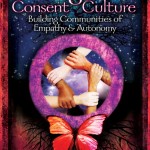
PAGAN CONSENT CULTURE Anthology Is Available!


TRENDING AT PATHEOS Pagan

I was recently chatting with someone on Instagram. She asked me what...

While there are many people who share their results, the end of...

On July 23, I saw Christopher Nolan's The Odyssey which is Homer’s...

As I write this two big events have just finished up. One...

Restoring the Watershed of Divine Love
Perhaps cooperation is not something we manufacture through legislation, ideology, or moral...

Many UUs don’t pray because of bad experiences in a previous religion,...
view all Pagan blogs
Ad-Free & Subscriber Log-In Subscription Support
- About Us
- 2026 Calendar
- Videos
- Podcasts
- Library of World Religions
- Faith In Media Tracker
- Advertise With Us
- Write for Us
- Privacy Policy
- Terms of Service
- Do Not Sell My Data
- Contact Us
- Radiant Digital
- Manage Newsletter Subscriptions
- Unsubscribe From Notifications
- Sitemap
Copyright 2008-2026, Patheos. All rights reserved.
Subscription Support Ad-Free & Subscriber Log-In
Follow Patheos