
BuddhistCatholicContemplativeEvangelicalGeneral ChristianHinduJewishLatter-day SaintMuslimNew VisionsProgressive Christian
Beliefs
- Buddhist
- Catholic
- Contemplative
- Evangelical
- General Christian
- Hindu
- Jewish
- Latter-day Saint
- More Voices
- Muslim
- New Visions
- Pagan
- Progressive Christian
Topics
- Religion News
- Food and Religion
- Sports and Religion
- Religious Art
- Religious Music and Entertainment
- Religious Events
- History and Religion
- Style and Religion
- Politics and Religion
- Women in Religion
- Recreation Outdoors and Religion
- Business Finance and Religion
- Careers Workplace and Religion
- Education and Religion
- Family Parenting and Religion
- Health Fitness and Religion
- Home and Religion
- Relationships and Religion
- Technology and Religion
- Travel and Religion
Columnists
- Buddhist Columnists
- Business Finance and Religion Columnists
- Careers Workplace and Religion Columnists
- Catholic Columnists
- Contemplative Columnists
- Education and Religion Columnists
- Evangelists Columnists
- Family Parenting and Religion Columnists
- General Christian Columnists
- Health Fitness and Religion Columnists
- Hindu Columnists
- History and Religion Columnists
- Home and Religion Columnists
- Jewish Columnists
- More Voices Columnists
- Latter Day Columnists
- Muslim Columnists
- New Visions Columnists
- Nonreligious Columnists
- Pagan Columnists
- Politics and Religion Columnists
- Progressive Columnists
- Recreation Outdoors and Religion Columnists
- Relationships and Religion Columnists
- Religion News Columnists
- Religious Art Columnists
- Religious Events Columnists
- Religious Music and Entertainment Columnists
- Sports and Religion Columnists
- Style and Religion Columnists
- Technology and Religion Columnists
- Travel and Religion Columnists
- Women in Religion Columnists
Resource Library
- 2026 Calendar
- Library of World Religions
- The 100 Most Holy Places on Earth
- Patheos Answers
- Podcasts
- Videos
- Faith Leaders Database
- Anglican Episcopalian
- Bahai
- Baptist
- Buddhism
- Christianity
- Confucianism
- Eastern Orthodoxy
- Hinduism
- Holiness and Pentecostal
- ISKCON
- Islam
- Judaism
- Lutheran
- Methodist
- The Church of Jesus Christ of Latter-day Saints
- New Age
- Paganism
- Presbytarian and Reformed
- Protestantism
- Religion Behind the Scenes
- Roman Catholic
- Scientology
- Shia Islam
- Sikhism
- Sufism
- Sunni Islam
- Taoism
- Zen
- See all religions
Research Tools
 Ad-Free & Subscriber Log-In Subscription Support
Ad-Free & Subscriber Log-In Subscription Support
Follow Patheos 

- Trending:
- Forgiveness
- |
- Marriage
- |
- Consciousness
- |
- Death Penalty
- |
- Election
- |
- Halloween
 Dowsing for Divinity
-
Books
- Home
- Pagan
- Paganism and the Body Class Sneak Peek
Paganism and the Body Class Sneak Peek
Last updated on: August 26, 2016 at 12:10 pm by Christine Kraemer
Paganism and the Body Class Sneak Peek 2016-08-26T12:10:54-04:00 Christine Kraemer
Patheos Explore the world's faith through different perspectives on religion and spirituality! Patheos has the views of the prevalent religions and spiritualities of the world.
 This Fall I’m offering Paganism and the Body, a 14-week graduate-level online class in body theology and sexual ethics, at Cherry Hill Seminary. Some of you may have already heard about CHS’s uncertain future, so this may be the last time a class like this is available for some years. If you’re thinking about signing up, please do it soon! We start Sept. 12.
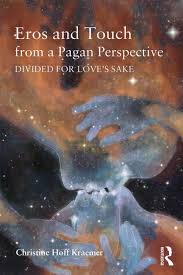
Additionally, I just noticed that the price of Eros and Touch from a Pagan Perspective has popped up again to its retail price on Amazon. (There are some copies from third-party sellers still available for around $50.) If the price of the book is a problem, don’t worry; talk to me and we’ll make other arrangements.
In the meantime, here’s a sneak peek at the syllabus! And here’s where you can register. [Write me at chkraemer13 at gmail dot com if you haven’t taken a CHS class before — I believe you’ll need instructor permission.]
Note: This syllabus is subject to change.
Course Number and Title: N6650 Paganism and the Body
Semester: Spring 2016
Class meeting time: Mondays, 9pm ET
Instructor(s): Christine Hoff Kraemer, PhD
Description of the Course
For most Pagans, the human body and the manifest world are sacred centers of religious practice. But what are the consequences of that belief for our daily lives? What do our Pagan theologies of the body call us to do in terms of justice work? Because of the significant percentage of gender and sexual minorities in the Pagan movement, this class will have a special focus on sexual ethics and alternative sexualities and gender expressions. We will also explore other important aspects of embodiment such as health and disability; race; relationship with food, water, and the natural environment; and more.
Prerequisite: C5121 Contemporary Global Paganisms OR C5141 Introduction to Pagan Theology OR written permission of the instructor
Required Texts
- Jennifer Hunter, Rites of Pleasure: Sexuality in Wicca and NeoPaganism, Citadel Press, 2004
- Christine Hoff Kraemer, Eros and Touch from a Pagan Perspective: Divided for Love’s Sake, Routledge, 2013
- A book of your choice on embodiment issues
Other readings will be posted as PDFs or links to web pages in the Moodle classroom.
Course Objectives
This course is intended to provide you with an introduction to contemporary thought examining embodiment issues in a Pagan religious context. Our study will include both academic peer-reviewed articles and personal or journalistic accounts by Pagan practitioners and others. These goals will be achieved through regular reading, discussion, and writing. You will also need to demonstrate your engagement and understanding of the material through a final project.
By the end of this class, you should be able to:
- Articulate your own religious beliefs about bodies and embodiment
- Reflect critically and constructively on existing theologies of embodiment
- Have the foundation to deal sensitively and knowledgeably with both Pagans and non-Pagans around issues of the body
General Expectations
Paganism and the Body is a graduate-level course. Students will be expected to digest difficult written material and attend discussions prepared with their own observations and questions. The instructor’s role in the course is primarily as a facilitator and knowledge resource; it is the students who will decide what elements of the assigned readings we will explore most deeply.
Forum posts may be written conversationally. For formal written assignments, students are expected to adhere to academic writing conventions, including the use of proper citation format (Chicago, MLA, or another academic style). The Office of Assertion by Scott F. Crider is recommended as a good basic text on academic writing.
Because clear and mechanically correct writing is essential for effective communication, grammar and organization will be considered in the evaluation process. If successful academic writing has been a challenge for you in the past, it is recommended that you submit a rough draft to the instructor a week before the assignment is due so that she may assist you in revisions.
Plagiarism is a serious violation of ethics, and its consequences may include failing this class. Check with your instructor if you are unclear on how to quote or cite work that is not your own.
See the Catalog for details about additional issues of policy.
Participation
If you attend and participate in at least eight class chats, you will receive an 85 or above for participation. In order to receive a participation grade in the A range, students should participate in additional chats and engage in discussion in the forums. Participation grades will be assigned at the discretion of the instructor.
During each class chat, we will discuss the readings assigned during the previous week.
Weekly Homework
For Week 1, you will briefly define a list of key terms for the study of theologies of embodiment. One- or two-sentence answers are sufficient. Many of these terms can be found in your Week 1 readings. For additional information, Wikipedia is a sufficiently reliable resource for this assignment and (due to how frequently it is updated) may even be superior to standard encyclopedias and dictionaries. Please note, however, that Wikipedia is not an appropriate resource to cite for a research paper.
Other weekly homework assignments will include reflective responses, summaries, or summary/responses in a specific format (see below). Each week, you will be asked to post one of your written assignments to the Forum by Thursday for group discussion; the rest are due by the end of Sunday. Respond to at least one other student post before the next chat.
Students are encouraged to use the Forums for any additional questions, reflections, or reactions that come up in the course of the class.
Summary/Response
Your weekly homework is due by the end of the day on Wednesday. Each reading summary should be around 200-250 words. You will not be penalized for additional length, but it will make the best use of your time and the instructor’s time if your writing is dense and to the point.
In addition to submitting your assignment through the assignment link, choose one reading summary to post in the Forum by the end of Thursday. Turn in the remainder of your homework by the end of Sunday. Respond to at least one other student Forum post before the following week’s chat.
In paragraphs or in outline form, summarize the reading and then respond to it both analytically and personally.
Below is an example of a student reading summary in this format, from a chapter of Jordan Paper’s The Deities Are Many.
Jordan Paper states:
- that when we depend on wild plants and animals, we see them as numinous/deities
- that when we domesticate the plants and animals on which we still depend, we see them as gifts of the numinous/deities rather than as the numinous/deities themselves
- that plant and animal deities have powers humans need in our lives
- that humans are weak in relation to wild animals
- that we know about deities because they communicate with us
I affirm:
- that my life is dependent on the deaths – the sacrifices – of plants and animals, as well as the gifts of plants and animals (mammals do not have to die to give milk, or fowl to give eggs, for example)
- my respect for and gratitude to the plants and animals whose deaths sustain my life
- that I recognize the plant and animal beings I encounter each day as Sacred, and strive to do so more consciously
- my bird feeding as a sacrifice of appreciation to some of the bird deities in my new location, as a freely-chosen religious/spiritual obligation during certain seasons
- that the conscious cultivation of relationship with plants and animals may restore a numinous quality that supermarket culture has removed
Assignments that receive a grade in the A range will:
- be specific
- go beyond mere description and begin to ask/answer “why?”, “how?”, and “so what?”
- pick up on nuances in the readings that require more than skimming to grasp
- present students’ most controversial, radical, or challenging personal theologies
- present statements from students’ experience that are likely to be unique
The instructor may choose a few particularly insightful or provocative excerpts from these assignments to share anonymously with the class as springboards for further discussion.
Term Assignments
Book Review: This assignment gives you an opportunity to read an additional book related to theology and embodiment. Suggestions for acceptable books will be provided by the instructor; other choices must be approved. This assignment is due at the end of Week 5.
Your book review will contain the following elements:
- Summary of the book’s contents and main argument(s)
- Evaluation of the book’s effectiveness with its intended audience
- Reflective response on how this book might be useful in your ministry or personally
Assume that your reader is an educated fellow student who has not read the book. Your summary must give the reader enough information to understand your evaluation of it. Make sure your review is more than summary, however! Your job is to present an educated opinion about the book you read; summary is a tool in this process and is not a sufficient end product by itself. Your thoughts and reflections should make up at least half of the review.
Consider questions such as these as you take notes for your review.
- What is the topic?
- What are the author’s subjects?
- To whom is the author writing?
- What is the author’s opinion of her subject and what tone does she use?
- How does the author support her statements?
- Is the argument convincing? If not, why not?
- How am I reacting to the text?
- How does this text fit into what I already know about the subject?
- Who would benefit most from reading this text?
Your review should contain a minimum of 750 double-spaced words. Organization, grammar, clarity, and the use of proper citation format (MLA, Chicago, or another academic format) will be considered in the evaluation of your essay.
A sample book review: http://inhumandecency.org/christine/eisler.html
Autobiography: You will compose an approximately 1000-word personal reflection and account considering the role of the body in your religious and spiritual life. In order to focus your narrative, you may wish to choose a specific incident from your life and contextualize it using the theological ideas and issues that we will study in class. These narratives will be shared with the class in a non-judgmental environment, so students are encouraged to share as openly as they feel comfortable. Potential starting places for beginning such narratives include:
- experiences of the body’s limits, such as while running a marathon or dealing with a serious illness
- memories of the onset of puberty or menstruation
- reflections on one’s personal relationship to traditional gender roles, particularly during life transitions such as marriage or parenthood
- aging
- growing, preparing, and eating one’s own food
- coming out regarding sexual orientation or gender identity
- sacred experiences of touch (with human or other-than-human persons)
- experiences of the body while recovering from abuse
- experiences of the body in “natural” environments
Questions you may wish to address in order to link your personal experiences with class materials:
- How did I experience divinity (or the absence of divinity) in this incident or period of my life?
- How did my spiritual practice and beliefs at the time shape this experience?
- How has this experience shaped my spiritual practice and beliefs?
- What are the ethical issues that are relevant to my experience?
- How did I relate to my community and my loved ones with regard to this issue? How did they relate to me?
- What did my experiences teach me about the nature of the body?
Assignments will be graded for clarity, originality, and their success in framing a personal experience within a theological framework. Students may wish to consider carefully before writing about an issue that is emotionally volatile for them, as it may be difficult to submit such experiences to theological analysis. A successful autobiography assignment will balance emotional engagement with thoughtful, well-reasoned theological reflections.
This assignment is due at the end of Week 8, and the writing process should be considered part of the preparation for your Final Project Question, described below.
Final Project Question: By the end of Week 8, you will have developed a sense of what you are curious about and how that might become a project. Your project question may still be broad and open-ended, but it should also be provocative and express a real area of curiosity and concern for you.
Post your question to the Final Project Questions forum for instructor and student feedback. There, we will begin to narrow your field of inquiry so that it can be tackled in a final project.
Examples of viable project questions:
- What is the role of a religious community in supporting its members around coming-out issues?
- Why was ritual sex important in early twentieth-century occultism?
- How can Pagan beliefs about the body support food and water justice work?
- How can large Pagan groups balance disability accommodation with the desire to offer ritual in wild or out of the way natural settings?
- How can Pagans best represent the sexual and gender diversity of the Pagan community in an interfaith context?
- How do Pagan beliefs inform our ethics about reproductive rights?
- What do children need to know about their bodies in order to understand them as sacred?
- What education does my community need around racial justice, and how does its existing beliefs about the religious role of ancestry help or hinder that effort?
Final Project: You will design, implement as is appropriate, and present a project based on your personal learning goals, readings, autobiography, reading responses, and your final project question.
This project is not necessarily a research paper, although you may write a paper if research is the best format in which to address your question. You might choose to outline a workshop, create a game, design a ritual, prepare a speech, develop a meditation series, or any other creative and useful vehicle for your project. The project will be presented to the class during one of the two final chats.
Written materials should be 12-15 pages long. Other types of projects should involve about as much work as a 15-page paper and must include a verbal or written component that contextualizes the project for the class (or other intended audience). If you are choosing to work in an artistic medium, speak to the instructor about how substantial the written or verbal presentation should be.
Project Proposal
Your project proposal of approximately 250 words is due by the end of Week 9 and must be approved by the instructor. It should include:
- A description of the project, including your (brief) anticipated answer to your Project Question (your “thesis sentence”)
- A rationale for the project – why this topic? Why this approach?
- Whom you intend the project to serve
- How you see this project as serving this population
- Logistical considerations, including how you will present the project for grading and to the class
- A list of the resources you will draw on to complete the project (books, websites, people, etc.)
Project Presentation
You will present your project or excerpts from it to the class at the end of the semester. During Week 13, post an approximately 200-word summary of your project (an abstract such as you might provide for a conference presentation) to the Final Projects forum.
The written part of your project is due at the end of Week 13. Project materials may be posted to the Forum, or you may share a link to Dropbox or another service if they are very large.
Presentations may be made verbally via Skype, with Powerpoint, via recorded MP3, and/or by another instructor-approved method. Your presentation of the project to the class should be no more than 10 minutes long. Each student will take questions and comments after their presentation.
Note that you will certainly not be able to cover every aspect of your project in ten minutes, so come prepared to adequately summarize and point out the highlights of your paper or project for the class. The effectiveness with which you present the project will be considered in grading.
Grading
Grades will be given according to the rubric described in the Student Handbook. Please note that in a graduate-level class, a B is given for solid, above-average work. Grades in the A range require substantial analytical thinking and creativity. Contact the instructor if you need clarification on what “analysis” means in the study of theology.
Book Review 15%
Weekly Homework 15%
Participation 15%
Autobiography 20%
Project Question 5%
Final Project Proposal 5%
Final Project 20%
Final Project Presentation 5%
Summary of Assignments
Forum posts are due by Thursday of the week assigned. All other assignments should be submitted by the Sunday of the week they are due. Late assignments may receive a grade penalty, up to one letter grade per week, at the discretion of the instructor.
If you find you need an extension on an assignment, contact the instructor immediately.
Weekly
Definitions, 200-word reflective responses, or summary/responses
Forum posts and replies
Assigned readings
Week 2
Title of book for review
Week 5
Book Review
Week 8
Autobiography
Final Project Question
Week 9
Final Project Proposal
Week 13-14
Final Projects
Schedule
Week 1: Defining Terms
- Kraemer, “Pagan Traditions: Sacralizing the Body” (2016)
- Kraemer, Eros and Touch (2013), Introduction and Conclusion
- Fuller, Spirituality in the Flesh (2008), Introduction and Conclusion
Week 2: Theologies of the Embodied Self/Soul(s)
- Kraemer, Seeking the Mystery (2012) Chp 4, 83-85; 91-94
- Weidenbaum, “You Have to Take It With You” (2008)
- Abram, “The Perceptual Implications of Gaia” (1990)
- Whiting, “On Being a Holy Mother” (2011)
Week 3: Pain, Illness, and Disability
- Fuller, Spirituality In the Flesh, Chp 6
- Matthews, “Rooted in This Body: Learning Pantheism from Chronic Illness” (2013)
- Pearson, “Disabled Rites?: Ritual and Disability in Wicca” (2011)
- Pearson, “Embracing the Lash: Pain and Ritual as Spiritual Tools” (2011)
- Aldag, “How to Include the Physically Challenged in Group Rituals”
Week 4: Pleasure, Healing, and Touch
- Kraemer, Eros and Touch Chp 1 & 4
- Kirner, “Healing Community” (2014)
- Brown, “Touch and American Religions” (2009)
Week 5: Food and Water Justice
- Harvey, Animism (2005) Chp 6
- Rifkin, “Pagan Kosher” series (2013) (http://witchesandpagans.com/tags/tag/pagan-kosher.html)
- Larson, “Holy Water and Human Rights” (2011)
- UUA, “Ethical Eating: Food and Environmental Justice”
- Clifton, “The Hunter’s Eucharist” (1993)
- Adams, Neither Man Nor Beast (1995) excerpts
Week 6: Sexual and Erotic Diversity
- Rubin, “Thinking Sex” (1984/1992)
- Kraemer, Eros and Touch Chp 3
Week 7: Erotic Justice
- Kraemer, Eros and Touch Chp 2
- Hunter, Rites of Pleasure (2004) pp. 90-118, 142-146
- Kraemer and Aburrow, Pagan Consent Culture Introduction (2016)
- Betkowski, “Seeking a Morality of Difference” (2016)
Week 8: Race, Rac(ial)ism, and Ancestry
- Gallagher, “Weaving a Tangled Web? Pagan Ethics and Issues of History, ‘Race’ and Ethnicity in Pagan Identity” (2009)
- Bel, “Ancestors and Heritage in Paganism” (2016)
- Blanton, “Understanding the Definition of Racism” (2015)
- Skallagrimsson, “Racism in Asatru”
- Hale, “Marketing Rad Trad” (2015)
- Theurer, “Ancestor Work and Anti-Racism” (2015)
Week 9: Sexuality and Gender
- Kraemer, “Gender and Sexuality in Contemporary Paganism” (2012)
- Urban, Magia Sexualis (2006) Chp 6
- Salomonsen, Enchanted Feminism (2002) Chp 7
- Blain and Wallis, “The Ergi Seidman” (2001)
Week 10: Queer and Transgender Issues
- Hunter, Rites of Pleasure (2004) pp. 119-142
- Eller, Am I a Woman? (2003) Chp 1 & 2
- Kaldera, “The Third Voice” (2012)
- Stover, “When Pan Met Wendy: Gendered Membership Debates Among the Radical Faeries” (2008)
- Greene, “Transgender Inclusion Debates Reignite in Pagan Community” (2016)
Week 11: BDSM and Alternative Relationship Structures
- Hunter, Rites of Pleasure (2004) pp. 64-89, 147-173
- Henkin, “Counseling Bisexuals on BDSM Lifestyle Issues” (2005)
- Kaldera, “Walking the Underworld Paths: BDSM, Power Exchange, and Consent in a Sacred Context” (2016)
- Hoff and Sprott, “Therapy Experiences of Clients with BDSM Sexualities” (2009)
- Zell, “A Bouquet of Lovers” (1990)
- Weitzman, “Counseling Bisexuals in Polyamorous Relationships” (2005)
- Hutchins, “Playing with Sacred Fire: Building Erotic Communities” (2005)
Week 12: The Myth of the Temple Prostitute and the Contemporary “Sacred Harlot”
- Hunter, Rites of Pleasure (2004) pp. 174-194
- Hutchins, “Bisexual Women as Emblematic Sexual Healers and the Problematics of the Embodied Sacred Whore” (2002)
- Budin, The Myth of Sacred Prostitution (2008) Introduction, Chp 11
- Urban, Magia Sexualis (2006), Conclusion
Week 13: Final Projects
Week 14: Final Projects
Previous Post

August 17, 2016
My Polytheism
Next Post

September 3, 2016 Living Traditions
Browse Our Archives
Select a Category A Beginner's Guide Announcements Conversations Creative Endarkenment Embodied Spirituality General Interviews My Story News Commentary Pagan Studies Poetry Praxis Related topics Reviews Ritual Sacred Endarkenment Storytime Theology
Select a Month February 2017 December 2016 November 2016 October 2016 September 2016 August 2016 July 2016 June 2016 May 2016 April 2016 March 2016 February 2016 January 2016 December 2015 November 2015 October 2015 September 2015 August 2015 July 2015 June 2015 May 2015 April 2015 March 2015 February 2015 January 2015 December 2014 November 2014 October 2014 September 2014 August 2014 July 2014 June 2014 May 2014 April 2014 March 2014 February 2014 January 2014 December 2013 November 2013 October 2013 September 2013 August 2013 July 2013 June 2013 May 2013 April 2013 March 2013 February 2013 January 2013 December 2012 November 2012
Follow Us!
TAKE THE
Religious Wisdom Quiz
Which Psalm is entirely focused on God's word, using each letter of the Hebrew alphabet?
Select your answer to see how you score.
Psalm 23 Psalm 51 Psalm 24 Psalm 119
Related posts from Dowsing for Divinity



Erotic Religion: The Body and Sex for Wiccans...

Misconceptions about cultural appropriation
TRENDING AT PATHEOS Pagan

I was recently chatting with someone on Instagram. She asked me what...

While there are many people who share their results, the end of...

On July 23, I saw Christopher Nolan's The Odyssey which is Homer’s...

As I write this two big events have just finished up. One...

Restoring the Watershed of Divine Love
Perhaps cooperation is not something we manufacture through legislation, ideology, or moral...

Many UUs don’t pray because of bad experiences in a previous religion,...
view all Pagan blogs
Ad-Free & Subscriber Log-In Subscription Support
- About Us
- 2026 Calendar
- Videos
- Podcasts
- Library of World Religions
- Faith In Media Tracker
- Advertise With Us
- Write for Us
- Privacy Policy
- Terms of Service
- Do Not Sell My Data
- Contact Us
- Radiant Digital
- Manage Newsletter Subscriptions
- Unsubscribe From Notifications
- Sitemap
Copyright 2008-2026, Patheos. All rights reserved.
Subscription Support Ad-Free & Subscriber Log-In
Follow Patheos