
BuddhistCatholicContemplativeEvangelicalGeneral ChristianHinduJewishLatter-day SaintMuslimNew VisionsProgressive Christian
Beliefs
- Buddhist
- Catholic
- Contemplative
- Evangelical
- General Christian
- Hindu
- Jewish
- Latter-day Saint
- More Voices
- Muslim
- New Visions
- Pagan
- Progressive Christian
Topics
- Religion News
- Food and Religion
- Sports and Religion
- Religious Art
- Religious Music and Entertainment
- Religious Events
- History and Religion
- Style and Religion
- Politics and Religion
- Women in Religion
- Recreation Outdoors and Religion
- Business Finance and Religion
- Careers Workplace and Religion
- Education and Religion
- Family Parenting and Religion
- Health Fitness and Religion
- Home and Religion
- Relationships and Religion
- Technology and Religion
- Travel and Religion
Columnists
- Buddhist Columnists
- Business Finance and Religion Columnists
- Careers Workplace and Religion Columnists
- Catholic Columnists
- Contemplative Columnists
- Education and Religion Columnists
- Evangelists Columnists
- Family Parenting and Religion Columnists
- General Christian Columnists
- Health Fitness and Religion Columnists
- Hindu Columnists
- History and Religion Columnists
- Home and Religion Columnists
- Jewish Columnists
- More Voices Columnists
- Latter Day Columnists
- Muslim Columnists
- New Visions Columnists
- Nonreligious Columnists
- Pagan Columnists
- Politics and Religion Columnists
- Progressive Columnists
- Recreation Outdoors and Religion Columnists
- Relationships and Religion Columnists
- Religion News Columnists
- Religious Art Columnists
- Religious Events Columnists
- Religious Music and Entertainment Columnists
- Sports and Religion Columnists
- Style and Religion Columnists
- Technology and Religion Columnists
- Travel and Religion Columnists
- Women in Religion Columnists
Resource Library
- 2026 Calendar
- Library of World Religions
- The 100 Most Holy Places on Earth
- Patheos Answers
- Podcasts
- Videos
- Faith Leaders Database
- Anglican Episcopalian
- Bahai
- Baptist
- Buddhism
- Christianity
- Confucianism
- Eastern Orthodoxy
- Hinduism
- Holiness and Pentecostal
- ISKCON
- Islam
- Judaism
- Lutheran
- Methodist
- The Church of Jesus Christ of Latter-day Saints
- New Age
- Paganism
- Presbytarian and Reformed
- Protestantism
- Religion Behind the Scenes
- Roman Catholic
- Scientology
- Shia Islam
- Sikhism
- Sufism
- Sunni Islam
- Taoism
- Zen
- See all religions
Research Tools
 Ad-Free & Subscriber Log-In Subscription Support
Ad-Free & Subscriber Log-In Subscription Support
Follow Patheos 

- Trending:
- Forgiveness
- |
- Marriage
- |
- Consciousness
- |
- Death Penalty
- |
- Election
- |
- Halloween
 Dowsing for Divinity
-
Books
- Home
- Pagan
- Respect, Memory, and Human Remains
Respect, Memory, and Human Remains
Last updated on: May 9, 2016 at 4:09 pm by Yvonne Aburrow
Respect, Memory, and Human Remains 2016-05-09T16:09:20-04:00 Yvonne Aburrow
Patheos Explore the world's faith through different perspectives on religion and spirituality! Patheos has the views of the prevalent religions and spiritualities of the world.
In 2008, I founded a group, Pagans for Archaeology. I did that because I believe that without archaeology, we would know considerably less about ancient pagans and polytheists than we do today. I even wonder if the Pagan revival would have happened the same way without input from archaeological research.
The Pagans for Archaeology Facebook page now has around 15,000 likes – so even if many of those people haven’t read the “manifesto” of the group, that shows a very big interest in archaeology among Pagans.
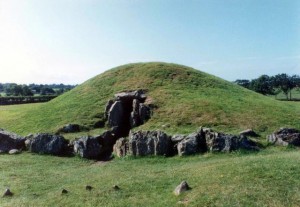
Bryn Celli Ddu – “The Mound in a Dark Grove”. Originally a Neolithic burial chamber, later a passage grave. © Copyright Paul Allison and licensed for reuse under this Creative Commons Licence.
What Pagans for Archaeology stands for
- We’re Pagans who love archaeology and believe that it has contributed hugely to our knowledge of our ancestors and the religions of the past.
- Without archaeology, people would still think ancient peoples were fur-clad smelly cannibals and that ancient paganism involved frequent human sacrifice.
- In addition, we are opposed to the reburial of ancient human remains, and want them to be preserved so that the memory of the ancestors can be perpetuated and rescued from oblivion, and the remains can be studied scientifically for the benefit of everyone.
- Of course we want human remains to be treated with respect, but respect does not automatically mean reburial. Respect should mean memory, which involves recovering the stories of past people.
- We also believe that the excavation of Seahenge was a good thing, contributing hugely to our knowledge of Bronze Age religious practices.
- We are also vehemently opposed to people leaving tealights, candles, crystals and other non-biodegradable “offerings” at sacred sites. Take only photographs, leave only footprints. Follow the Country Code.
The case for retaining human remains
The case for studying remains
- Osteoarchaeology can tell us a great deal about past people, both populations and individuals: what they ate, what diseases they had, where they lived, how far they travelled, what they worked at, where they were born. Putting all this information together for a large number of people gives us a picture of a whole society and the lives of individuals within it.
- Associated grave goods can also give us a picture of what mattered to the individual who was buried there. Grave goods should remain with the skeleton where possible, as they are an integral part of the assemblage, and may have been intended to accompany them into the afterlife.
- The more knowledge we gain about people of the past, the more it perpetuates their memory. People of the past wanted to be remembered, that’s why they built monuments in the landscape. Also, ancient texts such as the Hávamál talk about a person’s name living on after they die (another indication that people in the past wanted to be remembered).
- There was a lot of ethnic and cultural diversity in the past, and because human remains can tell us where people came from, this prevents fascists from claiming that Britain was ever inhabited solely by one particular ethnic group.
The case for displaying them in museums
- Neolithic long-barrows were not private; people interacted ritually with the remains after they had been placed in the mound.
- It helps to perpetuate the memory of the dead person.
- Museums are Pagan shrines; the name means “temple of the Muses” (okay so the proprietors of the museums may not see it that way, but we can choose to do so).
- It helps us to understand their culture and connect with them.
- It might help us to come to terms with death.
The case for not reburying
- In many cases, the original burial context may have been lost or destroyed. The Zuni (or A:shiwi as they refer to themselves in their own language) people of New Mexico see no point in reburying remains, because disinterring them destroys the sacred context of the original burial
- Looters might steal the grave-goods or the bones
- We don’t know what ritual the dead person might have preferred
- The remains should be stored for future study (analytical techniques are improving all the time)
- Reburial means that we will no longer have access to the knowledge and memory of the person, and will quickly forget them
- It is difficult to know which group of contemporary Pagans should receive remains for reburial, since we do not have cultural continuity with pagans of the past (who may well have had very different beliefs from us about the soul and the afterlife, and definitely had different practices from us).
Remains from other cultures
I think that human remains from indigenous cultures (such as Native Americans / First Nations and Australian Aborigines) are a different situation than that of British prehistory.
One of the ways in which indigenous peoples have gained political and cultural leverage is by campaigning for the return of their ancestors’ human remains (and British reburial campaigns often appropriate the narratives of indigenous campaigns). Very often, these remains are more recent than prehistoric British remains, and the indigenous people still have cultural continuity with the cultures that buried these remains. The people excavating these remains are usually from a different culture which has a history of colonial oppression towards the indigenous people.
In the case of British prehistoric remains, everyone in Britain is culturally (and genetically) descended from them, including the archaeologists doing the excavating. In the case of indigenous human remains, only the indigenous people are culturally (and genetically) descended from them.
Why archaeology is important
Archaeology matters to us because:
Archaeology means the difference between fantasy ideas and facts to me, okay they don’t always get it right, but they do try.
History is something we need to learn things from, in my opinion, not because I have this vision of some sort of golden age of yore, but that there are skills and mistakes that we need to learn from.
Many of the basic skills we all once would have had are gone and are now only known to a few, fire-making for one instance. Society might not require those skills right now, not with all the technology we have, but that does not mean they should be lost totally and that’s what archaeology means to me, the saving and keeping of our past, because one day we may need that knowledge again.
~ Blu, PFA member
I find archaeology fascinating, like a little kid in a candy shop discovering new and exciting pieces of our evolution and our history.
Whilst I haven’t formally studied archaeology at university, I have always found it interesting and particularly in high school studying art my interest was piqued by Ancient Egyptian and Roman crafts and ideals, and now especially as a Witch and a Pagan the Gods and Goddesses and the beliefs of the Ancient Egyptians.
It is amazing to see how we have developed from those times in each little piece we discover. I am in awe of prehistoric times and little pieces of skeletons of dinosaurs that form the now extinct creatures.
The evolution and growth of plant life and animals, and of humans…I love hearing about medieval times and the discovery of beautiful pieces of silverware, pottery and jewellery which ties into the history of the Celts and Avalonian times, a magical period that really resonates with me.
History is an important part of our development, our past, our present and the future in both advancing technology and in terms of our spiritual development as we can call on our history, our Gods and Goddesses to help with our present and our future…
~ Kali Cox, PFA member
Part of my Pagan outlook is a respect for the wisdom of the past, and the people of the past, so I think we need to know the real stories of past people. Not the history that was written by the winners. The only way we can do that is through archaeology, because ordinary people did not often leave written records (the exciting exceptions being the Paston letters, the Vindolanda Letters, the Book of Margery Kempe, and not much else that I can think of).
I also think that as Pagans we draw on the cultures of the past, and archaeology can really help us make sense of those cultures.
~ Yvonne, PFA member
For me, it adds to my understanding of the present. By studying the past I get a better sense of why and how we came to be as we are now.
~ Kim Hunter, PFA member
Previous Post

May 4, 2016
Cultural Appropriation and Racism
Next Post

May 7, 2016 Metaphors for Religion
Browse Our Archives
Select a Category A Beginner's Guide Announcements Conversations Creative Endarkenment Embodied Spirituality General Interviews My Story News Commentary Pagan Studies Poetry Praxis Related topics Reviews Ritual Sacred Endarkenment Storytime Theology
Select a Month February 2017 December 2016 November 2016 October 2016 September 2016 August 2016 July 2016 June 2016 May 2016 April 2016 March 2016 February 2016 January 2016 December 2015 November 2015 October 2015 September 2015 August 2015 July 2015 June 2015 May 2015 April 2015 March 2015 February 2015 January 2015 December 2014 November 2014 October 2014 September 2014 August 2014 July 2014 June 2014 May 2014 April 2014 March 2014 February 2014 January 2014 December 2013 November 2013 October 2013 September 2013 August 2013 July 2013 June 2013 May 2013 April 2013 March 2013 February 2013 January 2013 December 2012 November 2012
Follow Us!
TAKE THE
Religious Wisdom Quiz
What is the largest Christian denomination in the world?
Select your answer to see how you score.
Catholic Protestant Lutheran Orthodox
Related posts from Dowsing for Divinity

Imagining Other Possible Worlds

You say you want a revolution? (Review)

A Meditation: The Trees and the Forest

TRENDING AT PATHEOS Pagan

I was recently chatting with someone on Instagram. She asked me what...

While there are many people who share their results, the end of...

On July 23, I saw Christopher Nolan's The Odyssey which is Homer’s...

As I write this two big events have just finished up. One...

Restoring the Watershed of Divine Love
Perhaps cooperation is not something we manufacture through legislation, ideology, or moral...

Many UUs don’t pray because of bad experiences in a previous religion,...
view all Pagan blogs
Ad-Free & Subscriber Log-In Subscription Support
- About Us
- 2026 Calendar
- Videos
- Podcasts
- Library of World Religions
- Faith In Media Tracker
- Advertise With Us
- Write for Us
- Privacy Policy
- Terms of Service
- Do Not Sell My Data
- Contact Us
- Radiant Digital
- Manage Newsletter Subscriptions
- Unsubscribe From Notifications
- Sitemap
Copyright 2008-2026, Patheos. All rights reserved.
Subscription Support Ad-Free & Subscriber Log-In
Follow Patheos