
BuddhistCatholicContemplativeEvangelicalGeneral ChristianHinduJewishLatter-day SaintMuslimNew VisionsProgressive Christian
Beliefs
- Buddhist
- Catholic
- Contemplative
- Evangelical
- General Christian
- Hindu
- Jewish
- Latter-day Saint
- More Voices
- Muslim
- New Visions
- Pagan
- Progressive Christian
Topics
- Religion News
- Food and Religion
- Sports and Religion
- Religious Art
- Religious Music and Entertainment
- Religious Events
- History and Religion
- Style and Religion
- Politics and Religion
- Women in Religion
- Recreation Outdoors and Religion
- Business Finance and Religion
- Careers Workplace and Religion
- Education and Religion
- Family Parenting and Religion
- Health Fitness and Religion
- Home and Religion
- Relationships and Religion
- Technology and Religion
- Travel and Religion
Columnists
- Buddhist Columnists
- Business Finance and Religion Columnists
- Careers Workplace and Religion Columnists
- Catholic Columnists
- Contemplative Columnists
- Education and Religion Columnists
- Evangelists Columnists
- Family Parenting and Religion Columnists
- General Christian Columnists
- Health Fitness and Religion Columnists
- Hindu Columnists
- History and Religion Columnists
- Home and Religion Columnists
- Jewish Columnists
- More Voices Columnists
- Latter Day Columnists
- Muslim Columnists
- New Visions Columnists
- Nonreligious Columnists
- Pagan Columnists
- Politics and Religion Columnists
- Progressive Columnists
- Recreation Outdoors and Religion Columnists
- Relationships and Religion Columnists
- Religion News Columnists
- Religious Art Columnists
- Religious Events Columnists
- Religious Music and Entertainment Columnists
- Sports and Religion Columnists
- Style and Religion Columnists
- Technology and Religion Columnists
- Travel and Religion Columnists
- Women in Religion Columnists
Resource Library
- 2026 Calendar
- Library of World Religions
- The 100 Most Holy Places on Earth
- Patheos Answers
- Podcasts
- Videos
- Faith Leaders Database
- Anglican Episcopalian
- Bahai
- Baptist
- Buddhism
- Christianity
- Confucianism
- Eastern Orthodoxy
- Hinduism
- Holiness and Pentecostal
- ISKCON
- Islam
- Judaism
- Lutheran
- Methodist
- The Church of Jesus Christ of Latter-day Saints
- New Age
- Paganism
- Presbytarian and Reformed
- Protestantism
- Religion Behind the Scenes
- Roman Catholic
- Scientology
- Shia Islam
- Sikhism
- Sufism
- Sunni Islam
- Taoism
- Zen
- See all religions
Research Tools
 Ad-Free & Subscriber Log-In Subscription Support
Ad-Free & Subscriber Log-In Subscription Support
Follow Patheos 

- Trending:
- Forgiveness
- |
- Marriage
- |
- Consciousness
- |
- Death Penalty
- |
- Election
- |
- Halloween
 Dowsing for Divinity
-
Books
- Home
- Pagan
- Tradition and change
Tradition and change
Last updated on: April 17, 2015 at 8:15 am by Yvonne Aburrow
Tradition and change 2015-04-17T08:15:30-04:00 Yvonne Aburrow
Patheos Explore the world's faith through different perspectives on religion and spirituality! Patheos has the views of the prevalent religions and spiritualities of the world.
What is a tradition?
In English, we use the word ‘tradition’ in two distinct ways.
There is tradition in the sense of an entire set of practices, beliefs, and values – a cohesive religious tradition. Examples include the Wiccan tradition, the Mennonite tradition, and the Quaker tradition.
There is a tradition in the sense of a traditional practice or ritual, such as marriage, initiation, invocation, a Passover Seder, lighting lamps for Diwali, decorating a Christmas tree, and so on.
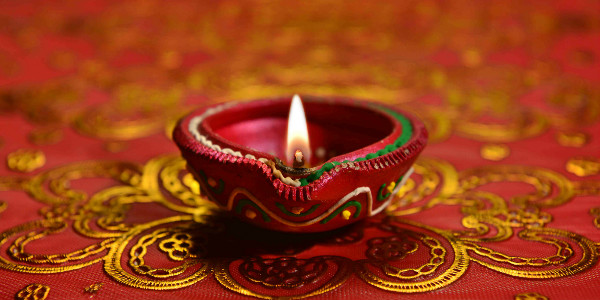
Image by JOAT, courtesy of Shutterstock
What is the function of tradition?
Traditional practices function to bring groups together by acting out their shared values, commemorating previous generations, acting out their mythology and stories, and reinforcing group identity. Examples include the Passover Seder – a beautiful and effective ritual for commemorating past generations, teaching the story of the Exodus from Egypt to future generations, reinforcing the identity and values of the group, and transmitting Jewish values and culture to the next generation.
Other traditional practices (such as marriage) function to make a connection between the individual and the tribe. When you get married, you affirm the relationship with your partner in front of your tribe (family and friends) and your deities or deity. When you undergo a rite of passage (e.g. Bat Mitzvah, Bar Mitzvah), you make the transition from child to adult, and your connection to your community or tribe is reaffirmed. When you get initiated into Wicca, you make the transition from uninitiated to initiated, and you become a full member of the Wiccan community.
Traditions that affirm identity and community can be a wonderful and life-affirming thing. They make us feel whole and loved and part of something bigger than ourselves.
Traditions can harm or heal
Some traditional practices are obviously harmful – examples include foot-binding, female genital mutilation, and so on. Other traditional practices are disputed, because they are regarded as harmful by one community, but helpful by another (e.g. male circumcision).
Other practices are widely regarded as desirable, but may exclude some categories of people – the obvious example being marriage. I would argue that a traditional practice that excludes a whole category of people is broken, and needs to change to include that category, provided that making that change harms no-one. (Clearly, a child or an animal cannot meaningfully consent to marriage, so that rules out underage spouses and bestiality, because being forced into an arrangement to which you cannot consent is obviously harmful).
In my video on Gender and Sexuality in Wicca, I said, “If a tradition is broken, then it needs fixing”. I was referring to harmful traditional practices, or practices that exclude entire categories of people, not to an entire religious tradition. However, if you equate a particular practice or set of practices with the whole of your tradition, or as the most important part of your tradition, and that set of practices excludes a whole category of people, then maybe your entire religious tradition does need re-examining.
In that video, I argued that certain traditional practices within Wicca, such as those that appear to value heterosexuality more than other sexual orientations, or that prevent LGBT people from doing certain magical activities together, harm LGBT people by excluding us from those practices. They also fail to represent the lived reality of gender and sexual diversity, and they may be preventing everyone within Wicca from experiencing the full spectrum of magical possibilities available to us.
Why might traditions change?
Traditions evolve and change all the time in response to the changing needs of the community. This applies both to religious traditions as a whole, and to traditional practices within them.
If a traditional practice excludes a whole category of people because of their core identity, then I would argue that it needs to be expanded to include them. There is no need to abolish the practice for the people for whom it works. The obvious example here is Wiccan initiation. For the vast majority of people, male / female initiation works just fine. If you are cisgender and heterosexual, there is no reason to change how you will be initiated. But what if a person is transgender? Should they be initiated by someone of the opposite gender identity to themselves, or someone of the opposite physical sex? Or should they be allowed to choose? What about genderqueer people? What about those who are exclusively attracted to members of the same sex? This depends on whether you think initiation depends on polarity, and what you think polarity is, and how you think it is created. Is it created by erotic attraction, biological characteristics, or other differences?
What are valid criteria for changing a traditional practice?
If the traditional practice is actively harmful to a large group of people (examples include child marriage, genital mutilation, and footbinding) either physically or psychologically, then it needs to be modified or abolished.
If the traditional practice excludes a category of people because of their innate characteristics (e.g. not allowing same-sex couples to get married, or refusing Wiccan initiation to people with a disability), then it needs to be expanded to include that category, provided that it does not harm anyone else.
If the traditional practice affirms the identity of your group at the expense of making derogatory claims about other groups, then it needs to be changed so that it is not derogatory towards the identity of another group. An example might be a Christian affirmation that they are ‘not like the heathen’, or that they renounce ‘wicked idolatry’. The Vatican officially dropped a part of the Catholic liturgy that said something rude about the Jews, for example.
If it is claimed that the traditional practice excludes a category of people because of an acquired characteristic that is not part of their core identity, then we need to think a bit harder about modifying it. For example, I would argue strongly that the Wiccan practice of working skyclad is empowering and life-affirming and enhances group trust, but some people claim that it is harmful for people who have been raped or molested. I would certainly not want to add to their trauma by insisting that they work skyclad, but I would want to encourage them to work towards a state of trust and self-confidence where they felt able to work skyclad.
What are valid criteria for retaining a practice unchanged?
Is the practice life-affirming? Does everyone in your group or religious tradition feel included in it? Does it affirm the core identity of everyone in your group? Does it express and affirm the core values of your group or religious tradition? Does it help to transmit your values, beliefs, stories, and identity to new members of the group? Does it accurately describe a key magical or cosmological concept or experience? Does it help rather than harm? If the answer to all or most of these questions is yes, then congratulations, you have a really worthwhile traditional practice.
Previous Post

March 20, 2015
Move over Easter Bunny, here comes the Easter Fox
Next Post

April 20, 2015 Re-Imagining the Hero's Journey
Browse Our Archives
Select a Category A Beginner's Guide Announcements Conversations Creative Endarkenment Embodied Spirituality General Interviews My Story News Commentary Pagan Studies Poetry Praxis Related topics Reviews Ritual Sacred Endarkenment Storytime Theology
Select a Month February 2017 December 2016 November 2016 October 2016 September 2016 August 2016 July 2016 June 2016 May 2016 April 2016 March 2016 February 2016 January 2016 December 2015 November 2015 October 2015 September 2015 August 2015 July 2015 June 2015 May 2015 April 2015 March 2015 February 2015 January 2015 December 2014 November 2014 October 2014 September 2014 August 2014 July 2014 June 2014 May 2014 April 2014 March 2014 February 2014 January 2014 December 2013 November 2013 October 2013 September 2013 August 2013 July 2013 June 2013 May 2013 April 2013 March 2013 February 2013 January 2013 December 2012 November 2012
Follow Us!
TAKE THE
Religious Wisdom Quiz
In Hebrews, what did Moses consider more valuable than the treasures of Egypt?
Select your answer to see how you score.
The promised land Eternal life Disgrace for the sake of Christ God's covenant
Related posts from Dowsing for Divinity

Review of Queer Paganism by Jo Green



A Meditation: The Trees and the Forest
TRENDING AT PATHEOS Pagan

I was recently chatting with someone on Instagram. She asked me what...

While there are many people who share their results, the end of...

On July 23, I saw Christopher Nolan's The Odyssey which is Homer’s...

As I write this two big events have just finished up. One...

Restoring the Watershed of Divine Love
Perhaps cooperation is not something we manufacture through legislation, ideology, or moral...

Many UUs don’t pray because of bad experiences in a previous religion,...
view all Pagan blogs
Ad-Free & Subscriber Log-In Subscription Support
- About Us
- 2026 Calendar
- Videos
- Podcasts
- Library of World Religions
- Faith In Media Tracker
- Advertise With Us
- Write for Us
- Privacy Policy
- Terms of Service
- Do Not Sell My Data
- Contact Us
- Radiant Digital
- Manage Newsletter Subscriptions
- Unsubscribe From Notifications
- Sitemap
Copyright 2008-2026, Patheos. All rights reserved.
Subscription Support Ad-Free & Subscriber Log-In
Follow Patheos