
BuddhistCatholicContemplativeEvangelicalGeneral ChristianHinduJewishLatter-day SaintMuslimNew VisionsProgressive Christian
Beliefs
- Buddhist
- Catholic
- Contemplative
- Evangelical
- General Christian
- Hindu
- Jewish
- Latter-day Saint
- More Voices
- Muslim
- New Visions
- Pagan
- Progressive Christian
Topics
- Religion News
- Food and Religion
- Sports and Religion
- Religious Art
- Religious Music and Entertainment
- Religious Events
- History and Religion
- Style and Religion
- Politics and Religion
- Women in Religion
- Recreation Outdoors and Religion
- Business Finance and Religion
- Careers Workplace and Religion
- Education and Religion
- Family Parenting and Religion
- Health Fitness and Religion
- Home and Religion
- Relationships and Religion
- Technology and Religion
- Travel and Religion
Columnists
- Buddhist Columnists
- Business Finance and Religion Columnists
- Careers Workplace and Religion Columnists
- Catholic Columnists
- Contemplative Columnists
- Education and Religion Columnists
- Evangelists Columnists
- Family Parenting and Religion Columnists
- General Christian Columnists
- Health Fitness and Religion Columnists
- Hindu Columnists
- History and Religion Columnists
- Home and Religion Columnists
- Jewish Columnists
- More Voices Columnists
- Latter Day Columnists
- Muslim Columnists
- New Visions Columnists
- Nonreligious Columnists
- Pagan Columnists
- Politics and Religion Columnists
- Progressive Columnists
- Recreation Outdoors and Religion Columnists
- Relationships and Religion Columnists
- Religion News Columnists
- Religious Art Columnists
- Religious Events Columnists
- Religious Music and Entertainment Columnists
- Sports and Religion Columnists
- Style and Religion Columnists
- Technology and Religion Columnists
- Travel and Religion Columnists
- Women in Religion Columnists
Resource Library
- 2026 Calendar
- Library of World Religions
- The 100 Most Holy Places on Earth
- Patheos Answers
- Podcasts
- Videos
- Faith Leaders Database
- Anglican Episcopalian
- Bahai
- Baptist
- Buddhism
- Christianity
- Confucianism
- Eastern Orthodoxy
- Hinduism
- Holiness and Pentecostal
- ISKCON
- Islam
- Judaism
- Lutheran
- Methodist
- The Church of Jesus Christ of Latter-day Saints
- New Age
- Paganism
- Presbytarian and Reformed
- Protestantism
- Religion Behind the Scenes
- Roman Catholic
- Scientology
- Shia Islam
- Sikhism
- Sufism
- Sunni Islam
- Taoism
- Zen
- See all religions
Research Tools
 Ad-Free & Subscriber Log-In Subscription Support
Ad-Free & Subscriber Log-In Subscription Support
Follow Patheos 

- Trending:
- Forgiveness
- |
- Marriage
- |
- Consciousness
- |
- Death Penalty
- |
- Election
- |
- Halloween
 Dowsing for Divinity
-
Books
- Home
- Pagan
- The Thirteen Vanic Virtues
The Thirteen Vanic Virtues
Last updated on: February 19, 2015 at 4:05 pm by Sarah Sadie
The Thirteen Vanic Virtues 2015-02-19T16:05:33-05:00 Sarah Sadie
Patheos Explore the world's faith through different perspectives on religion and spirituality! Patheos has the views of the prevalent religions and spiritualities of the world.
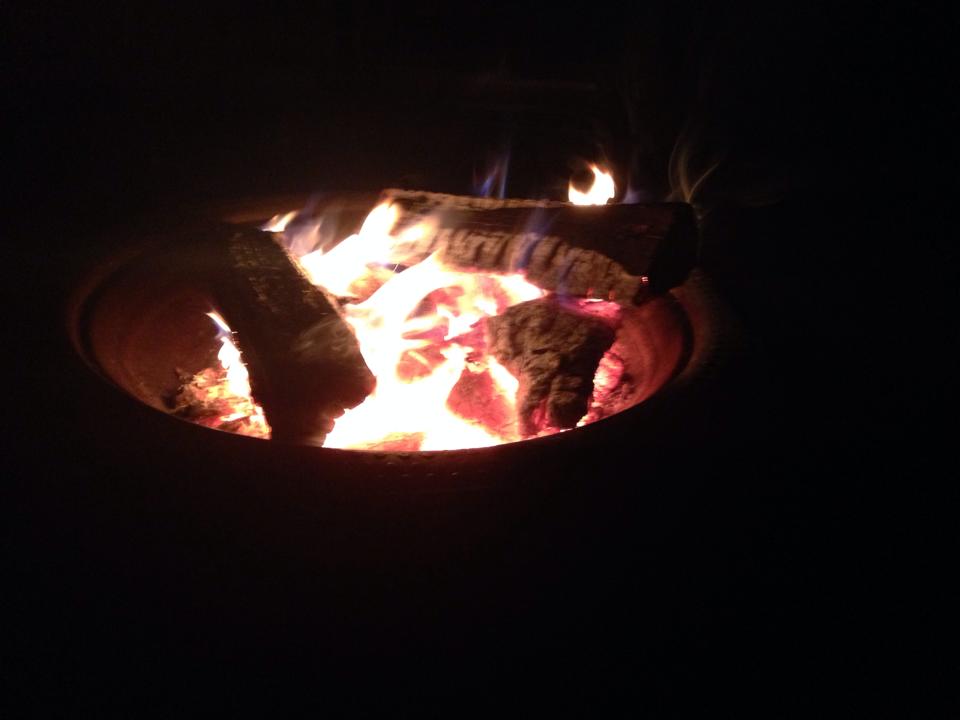 “Why did you change your name?” people ask, when they see the name on my book’s cover is different than the one I use in here.
I had a hundred and one reasons for changing my writing name but (attention, Facebook) none of them are nefarious. And the answer I give depends on the day, my mood, and the phase of the moon. They’re all true. It was a change coming for years and it was a moment’s decision.
“Why didn’t you go all the way and change your legal name, then?”
To this there is only one answer, but it stands up to all 101 on the other side and balances them: my husband asked me not to, and I adore my husband.
So I walk the world divided, and that provides the tension that sings through me, my poems, and keeps my pulse quick. I’m hardly alone. Writers and pagans are two communities who know all about pseudonyms, pen names, craft names.
Years ago I met a Sadie who has been a fundamental influence on me. Recently I’ve been thinking about her again:
Sadie and Maud
Maud went to college.
Sadie stayed at home.
Sadie scraped life
With a fine-tooth comb.She didn’t leave a tangle in.
Her comb found every strand.
Sadie was one of the livingest chits
In all the land.Sadie bore two babies
Under her maiden name.
Maud and Ma and Papa
Nearly died of shame.When Sadie said her last so-long
Her girls struck out from home.
(Sadie had left as heritage
Her fine-tooth comb.)Maud, who went to college,
Is a thin brown mouse.
She is living all alone
In this old house.
I discovered this poem when I myself was… in college. And that may be why I read it not so much as a diatribe against education as an argument that the quality of one’s engagement with life has more to do with attitude than privilege. Maud had the privilege and played out the script, and look where she is at poem’s end. Sadie got nothing, and yet she leaves a rich legacy behind her…and had a good time in the meantime, by the sound of it.
Reading that poem at twenty, I decided a fine-tooth comb sounded like a fine way to live. But…what comprises such a comb? Where shall we find the thing, and how shall we know it?
And what do we do if we temporarily lose it?
I found myself remembering that fine-tooth comb again this week, as I’m reading excerpts from Bill Plotkin’s book Soulcraft (New World Library, 2003). Here’s an extended passage on the figure of the Wanderer: 
…This is the time in life when a person is most intensely in search of her deepest self, a self she knows she will not find reflected back to her from within the familiar arenas of her merely human culture. She searches for the seeds of her destiny in the more diverse, wild, and mysterious world of nature. She no longer conforms to nor rebels against society. She chooses a third way. She wanders, beyond the confines of her previous identity.
The Wanderer crosses and recrosses borders in order to find something whose location is unknown and unknowable. She will conclude she has found it not by its location in a certain place or by its matching a prior image, but by how it feels, how it resonates within her upon discovery. She doesn’t know where or when or how clues will appear, so she wanders incessantly, both inwardly and outwardly, always looking, imagining, feeling. In her wandering, she makes her own path.
The Wanderer discovers her unique path by perceiving the world with imagination and feeling. She senses what is possible as well as actual. She sees into people and places and possibilities, and she cultivates a relationship with the invisible realm as much as with the visible. She is in conversation with the mysteries of the world, on the lookout for signs and omens. She attend especially to the edges, those places where one thing merges with another, where consciousness shifts and opens, where the world becomes something different from what it initially appeared to be.
Plotkin’s Wanderer sounds a lot like a “livingest chit,” doncha think? And maybe, just maybe, what I’m writing my way towards in here is a Theology of the Livingest Chit.
By definition, there aren’t too many maps in this work I’m embarked upon. The Northern gods I’m tangled up with don’t set down rules to obey…but they do espouse virtues. Traditionally, these are
- Courage
- Truth
- Honor
- Fidelity
- Hospitality
- Discipline
- Industriousness
- Self-Reliance
- Perseverance
The nine Norse virtues are all honorable ideals but honestly they never fit me very well. Trying to bend myself to that list feels, well, like a slog. That probably doesn’t say anything very good about me, but there it is. I realize this morning this could be because these virtues are community oriented and I am at heart a solitary. They seek to weave a group together into a village or town or other workable society and I live at the far edge. My true home is not…the home. (Which is, yes, another source of creative tension for someone currently in the role of at home parent.)
But I have discovered another set of virtues…
Some of you will know the Northern gods are divided up into two groups: Aesir and Vanir. The Aesir are the ones most people know (thank you Marvel): Odin, Thor, Heimdall, Baldur, Tyr, Frigga…They tend to be sky gods, gods of justice and community. The Nine Virtues are Aesir virtues, for the most part.
The Vanir, on the other hand, are closer to the land, the seasons, the magics of earth. (And yes, I am grossly generalizing here…there is much subtlety in the system that I’m choosing not to go into in this space.) The Vanir deal a little more in the wild and fey. Frey, Freya, Njord are all Vanir…and so, by most contemporary accountings, is the Smith, Wayland.
And, I just discovered, searching online, they have their own set of virtues. Originally the list was twelve, but I split up Courage and Passion, which seem to me related, but separate:
For the original list, created by Nicanthiel Hrafnhild and Svartesol, see this link. I have slightly edited their list of Virtues and reworked the descriptions of each. (Author’s note: Svartesol is Nornoriel Lokason, whose more recent writings can be found here at Patheos Pagan at Ride the Spiral. And here is his official website.)
The Thirteen Vanic Virtues
Beauty
The pursuit of beauty and elegance in thought, form and speech, and the valuation of beauty as worthy in itself.
Courage
The strength of will to see a course of action through. The ability to face difficulty and danger.
Passion
Zeal, vigor; wholehearted zest for life.
Even-mood
Harmonious and balanced thought and action; tranquility, calm, serenity.
Openness
The quality of being receptive to the world around one, non-judgmental. To listen deeply.
Wildness/Ecstasy
Music and dance; the nurturing of inner wildness and radical innocence, being “fey”
Land-rightness
The recognition of nature and the environment as worthy of respect, care and reverence.
Love
The all-encompassing force which expands outward: love for family, for kin, for humanity, for all beings.
Frith
The peace and goodwill between people bound together; loyalty and the keeping of one’s word.
Giving
The binding of two parties into one common bond, generosity and hospitality.
Joy
The ability and willingness to surrender to overwhelming grace, the ability to feel happiness in the moment.
Faith/Piety
The trust that the Gods exist and are worthy of our worship, and Their ways worth following.
Brother(ahem, Sister)hood
The recognition that we – humans, animals, plants, spirits – are all part of the grander scheme of life,
and we share a common heritage, as children of the Earth.
So there it is. I think the Vanir have provided me my fine-tooth comb. At least for a while. This list connects me to myself, my true home (which may be no home?), and this earth that continually spins out from under my feet, leaving me dizzy.
Meanwhile, over my desk I’ve taped this up:
Do no harm.
Take no shit.
Be a “livingest chit.”
As they say at the end of church service every weekend, May it be so.
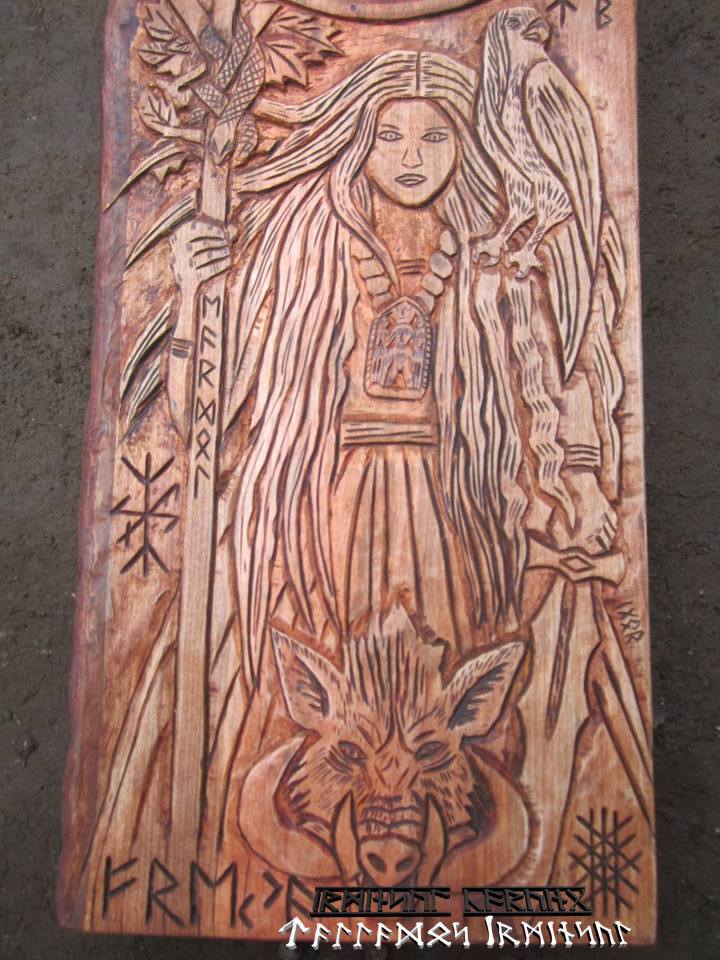
Freya, by Igor Alexis Osorio Solis
Previous Post

October 15, 2014
Art, Agriculture, and Ancestors
Next Post

October 29, 2014 Storytime: Wayland's Tale
Browse Our Archives
Select a Category A Beginner's Guide Announcements Conversations Creative Endarkenment Embodied Spirituality General Interviews My Story News Commentary Pagan Studies Poetry Praxis Related topics Reviews Ritual Sacred Endarkenment Storytime Theology
Select a Month February 2017 December 2016 November 2016 October 2016 September 2016 August 2016 July 2016 June 2016 May 2016 April 2016 March 2016 February 2016 January 2016 December 2015 November 2015 October 2015 September 2015 August 2015 July 2015 June 2015 May 2015 April 2015 March 2015 February 2015 January 2015 December 2014 November 2014 October 2014 September 2014 August 2014 July 2014 June 2014 May 2014 April 2014 March 2014 February 2014 January 2014 December 2013 November 2013 October 2013 September 2013 August 2013 July 2013 June 2013 May 2013 April 2013 March 2013 February 2013 January 2013 December 2012 November 2012
Follow Us!
TAKE THE
Religious Wisdom Quiz
Who said, “I am the way and the truth and the life”?
Select your answer to see how you score.
John Paul Peter Jesus
Related posts from Dowsing for Divinity


A Meditation: The Trees and the Forest

The safety pin: a reminder to resist bigotry

Erotic Religion: The Body and Sex for Wiccans...
TRENDING AT PATHEOS Pagan

I was recently chatting with someone on Instagram. She asked me what...

While there are many people who share their results, the end of...

On July 23, I saw Christopher Nolan's The Odyssey which is Homer’s...

As I write this two big events have just finished up. One...

Restoring the Watershed of Divine Love
Perhaps cooperation is not something we manufacture through legislation, ideology, or moral...

Many UUs don’t pray because of bad experiences in a previous religion,...
view all Pagan blogs
Ad-Free & Subscriber Log-In Subscription Support
- About Us
- 2026 Calendar
- Videos
- Podcasts
- Library of World Religions
- Faith In Media Tracker
- Advertise With Us
- Write for Us
- Privacy Policy
- Terms of Service
- Do Not Sell My Data
- Contact Us
- Radiant Digital
- Manage Newsletter Subscriptions
- Unsubscribe From Notifications
- Sitemap
Copyright 2008-2026, Patheos. All rights reserved.
Subscription Support Ad-Free & Subscriber Log-In
Follow Patheos