
BuddhistCatholicContemplativeEvangelicalGeneral ChristianHinduJewishLatter-day SaintMuslimNew VisionsProgressive Christian
Beliefs
- Buddhist
- Catholic
- Contemplative
- Evangelical
- General Christian
- Hindu
- Jewish
- Latter-day Saint
- More Voices
- Muslim
- New Visions
- Pagan
- Progressive Christian
Topics
- Religion News
- Food and Religion
- Sports and Religion
- Religious Art
- Religious Music and Entertainment
- Religious Events
- History and Religion
- Style and Religion
- Politics and Religion
- Women in Religion
- Recreation Outdoors and Religion
- Business Finance and Religion
- Careers Workplace and Religion
- Education and Religion
- Family Parenting and Religion
- Health Fitness and Religion
- Home and Religion
- Relationships and Religion
- Technology and Religion
- Travel and Religion
Columnists
- Buddhist Columnists
- Business Finance and Religion Columnists
- Careers Workplace and Religion Columnists
- Catholic Columnists
- Contemplative Columnists
- Education and Religion Columnists
- Evangelists Columnists
- Family Parenting and Religion Columnists
- General Christian Columnists
- Health Fitness and Religion Columnists
- Hindu Columnists
- History and Religion Columnists
- Home and Religion Columnists
- Jewish Columnists
- More Voices Columnists
- Latter Day Columnists
- Muslim Columnists
- New Visions Columnists
- Nonreligious Columnists
- Pagan Columnists
- Politics and Religion Columnists
- Progressive Columnists
- Recreation Outdoors and Religion Columnists
- Relationships and Religion Columnists
- Religion News Columnists
- Religious Art Columnists
- Religious Events Columnists
- Religious Music and Entertainment Columnists
- Sports and Religion Columnists
- Style and Religion Columnists
- Technology and Religion Columnists
- Travel and Religion Columnists
- Women in Religion Columnists
Resource Library
- 2026 Calendar
- Library of World Religions
- The 100 Most Holy Places on Earth
- Patheos Answers
- Podcasts
- Videos
- Faith Leaders Database
- Anglican Episcopalian
- Bahai
- Baptist
- Buddhism
- Christianity
- Confucianism
- Eastern Orthodoxy
- Hinduism
- Holiness and Pentecostal
- ISKCON
- Islam
- Judaism
- Lutheran
- Methodist
- The Church of Jesus Christ of Latter-day Saints
- New Age
- Paganism
- Presbytarian and Reformed
- Protestantism
- Religion Behind the Scenes
- Roman Catholic
- Scientology
- Shia Islam
- Sikhism
- Sufism
- Sunni Islam
- Taoism
- Zen
- See all religions
Research Tools
 Ad-Free & Subscriber Log-In Subscription Support
Ad-Free & Subscriber Log-In Subscription Support
Follow Patheos 

- Trending:
- Forgiveness
- |
- Marriage
- |
- Consciousness
- |
- Death Penalty
- |
- Election
- |
- Halloween
 Dowsing for Divinity
-
Books
- Home
- Pagan
- Now the green blade rises: a Pagan perspective on Easter
Now the green blade rises: a Pagan perspective on Easter
Last updated on: December 26, 2014 at 11:35 am by Yvonne Aburrow
Now the green blade rises: a Pagan perspective on Easter 2014-12-26T11:35:35-05:00 Yvonne Aburrow
Patheos Explore the world's faith through different perspectives on religion and spirituality! Patheos has the views of the prevalent religions and spiritualities of the world.
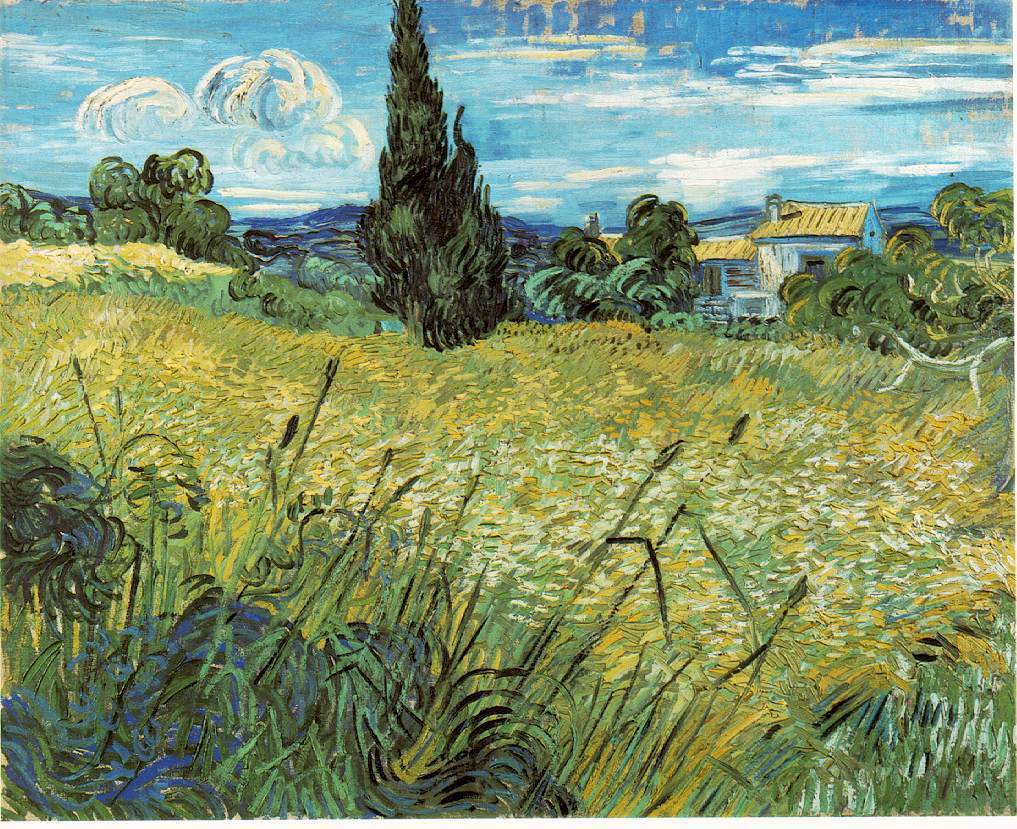
Vincent Van Gogh, Wheat Field (1889) Source: Wikipedia
From a Pagan perspective, the Easter story is one of many stories of dying and resurrecting deities. In these stories, the hero dies, descends to the underworld, and returns to the mortal world bringing some blessing or new knowledge.
Persephone is taken to the Underworld by force (though in earlier versions, it seems to have been voluntary), but returns every six months; Gilgamesh goes to the Faraway to try to find a herb of immportality to revive his friend (possibly lover) Enkidu; Orpheus goes to rescue Eurydice; Inanna descends to the underworld, though her reasons for doing so are unclear. Jesus goes there to rescue the souls of those trapped in Gehenna (this is referenced in the only letter of the Apostle Peter). In Christus Victor theology, which is prevalent among the Eastern Orthodox churches, Jesus “tramples down death by death” and because he is God, cannot be contained by death, and so transcends it. He then returns transformed into a being who can manifest as he chooses — by the Sea of Galilee, or on the road to Emmaus.
The mythical journey undergone by all these heroes and heroines is a descent into death and the underworld, returning transformed into something greater, and bringing back a gift for humanity. The hymn Now the green blade rises references this mythological and transformational aspect of the Easter story.
Now the green blade rises from the buried grain,
Wheat that in the dark earth many years has lain;
Love lives again, that with the dead has been:
Love is come again, like wheat that springs up green.
The spiritual journey involves the same transformation — the death of the ego, the descent into the dark night of the soul, and the resurrection as the True Self. In Orthodox Christian theology, this transformation is called theosis, literally deification, making us divine. It’s not too hard to see an analogy with the Buddhist concept of enlightenment. As James Martineau, the 19th century Unitarian theologian, said, “The Incarnation is true, not of Christ exclusively, but of Man universally, and God everlastingly. Humanity is the susceptible organ of the Divine, and he bends into it to dwell there.”
In Orthodox churches, Easter is celebrated as a unified event, and is regarded as being in the present, the eternal Now. So on Easter Sunday, people greet each other with “Christos Anesti” (Christ is risen) – because he is risen in their hearts and in the church which is his mystical body.
In the Eleusinian Mysteries, people witnessed the unfolding drama of the story of Persephone’s descent into the Underworld, and underwent a profound transformation or initiation as a result.
You can enjoy Easter on a mythical and mystical level. There’s no need to take it literally to enjoy the unfolding drama of the Mystery. We can witness the many stories of death and resurrection, and experience transformation ourselves, like participants in a mystery tradition.
Next Post

April 17, 2014 Consent Culture 101: Basic Practices and Teaching Games
Browse Our Archives
Select a Category A Beginner's Guide Announcements Conversations Creative Endarkenment Embodied Spirituality General Interviews My Story News Commentary Pagan Studies Poetry Praxis Related topics Reviews Ritual Sacred Endarkenment Storytime Theology
Select a Month February 2017 December 2016 November 2016 October 2016 September 2016 August 2016 July 2016 June 2016 May 2016 April 2016 March 2016 February 2016 January 2016 December 2015 November 2015 October 2015 September 2015 August 2015 July 2015 June 2015 May 2015 April 2015 March 2015 February 2015 January 2015 December 2014 November 2014 October 2014 September 2014 August 2014 July 2014 June 2014 May 2014 April 2014 March 2014 February 2014 January 2014 December 2013 November 2013 October 2013 September 2013 August 2013 July 2013 June 2013 May 2013 April 2013 March 2013 February 2013 January 2013 December 2012 November 2012
Follow Us!
TAKE THE
Religious Wisdom Quiz
Who was thrown into a muddy cistern for prophesying Jerusalem's fall?
Select your answer to see how you score.
Isaiah Baruch Jeremiah Micah
Related posts from Dowsing for Divinity

Imagining Other Possible Worlds

You say you want a revolution? (Review)

A Meditation: The Trees and the Forest

TRENDING AT PATHEOS Pagan

I was recently chatting with someone on Instagram. She asked me what...

While there are many people who share their results, the end of...

On July 23, I saw Christopher Nolan's The Odyssey which is Homer’s...

As I write this two big events have just finished up. One...

Restoring the Watershed of Divine Love
Perhaps cooperation is not something we manufacture through legislation, ideology, or moral...

Many UUs don’t pray because of bad experiences in a previous religion,...
view all Pagan blogs
Ad-Free & Subscriber Log-In Subscription Support
- About Us
- 2026 Calendar
- Videos
- Podcasts
- Library of World Religions
- Faith In Media Tracker
- Advertise With Us
- Write for Us
- Privacy Policy
- Terms of Service
- Do Not Sell My Data
- Contact Us
- Radiant Digital
- Manage Newsletter Subscriptions
- Unsubscribe From Notifications
- Sitemap
Copyright 2008-2026, Patheos. All rights reserved.
Subscription Support Ad-Free & Subscriber Log-In
Follow Patheos