
BuddhistCatholicContemplativeEvangelicalGeneral ChristianHinduJewishLatter-day SaintMuslimNew VisionsProgressive Christian
Beliefs
- Buddhist
- Catholic
- Contemplative
- Evangelical
- General Christian
- Hindu
- Jewish
- Latter-day Saint
- More Voices
- Muslim
- New Visions
- Pagan
- Progressive Christian
Topics
- Religion News
- Food and Religion
- Sports and Religion
- Religious Art
- Religious Music and Entertainment
- Religious Events
- History and Religion
- Style and Religion
- Politics and Religion
- Women in Religion
- Recreation Outdoors and Religion
- Business Finance and Religion
- Careers Workplace and Religion
- Education and Religion
- Family Parenting and Religion
- Health Fitness and Religion
- Home and Religion
- Relationships and Religion
- Technology and Religion
- Travel and Religion
Columnists
- Buddhist Columnists
- Business Finance and Religion Columnists
- Careers Workplace and Religion Columnists
- Catholic Columnists
- Contemplative Columnists
- Education and Religion Columnists
- Evangelists Columnists
- Family Parenting and Religion Columnists
- General Christian Columnists
- Health Fitness and Religion Columnists
- Hindu Columnists
- History and Religion Columnists
- Home and Religion Columnists
- Jewish Columnists
- More Voices Columnists
- Latter Day Columnists
- Muslim Columnists
- New Visions Columnists
- Nonreligious Columnists
- Pagan Columnists
- Politics and Religion Columnists
- Progressive Columnists
- Recreation Outdoors and Religion Columnists
- Relationships and Religion Columnists
- Religion News Columnists
- Religious Art Columnists
- Religious Events Columnists
- Religious Music and Entertainment Columnists
- Sports and Religion Columnists
- Style and Religion Columnists
- Technology and Religion Columnists
- Travel and Religion Columnists
- Women in Religion Columnists
Resource Library
- 2026 Calendar
- Library of World Religions
- The 100 Most Holy Places on Earth
- Patheos Answers
- Podcasts
- Videos
- Faith Leaders Database
- Anglican Episcopalian
- Bahai
- Baptist
- Buddhism
- Christianity
- Confucianism
- Eastern Orthodoxy
- Hinduism
- Holiness and Pentecostal
- ISKCON
- Islam
- Judaism
- Lutheran
- Methodist
- The Church of Jesus Christ of Latter-day Saints
- New Age
- Paganism
- Presbytarian and Reformed
- Protestantism
- Religion Behind the Scenes
- Roman Catholic
- Scientology
- Shia Islam
- Sikhism
- Sufism
- Sunni Islam
- Taoism
- Zen
- See all religions
Research Tools
 Ad-Free & Subscriber Log-In Subscription Support
Ad-Free & Subscriber Log-In Subscription Support
Follow Patheos 

- Trending:
- Forgiveness
- |
- Marriage
- |
- Consciousness
- |
- Death Penalty
- |
- Election
- |
- Halloween
 Dowsing for Divinity
-
Books
- Home
- Pagan
- Human Flesh: Beginning a Pagan Theology
Human Flesh: Beginning a Pagan Theology
Last updated on: March 23, 2016 at 1:21 pm by Christine Kraemer
Human Flesh: Beginning a Pagan Theology 2016-03-23T13:21:07-04:00 Christine Kraemer
Patheos Explore the world's faith through different perspectives on religion and spirituality! Patheos has the views of the prevalent religions and spiritualities of the world.
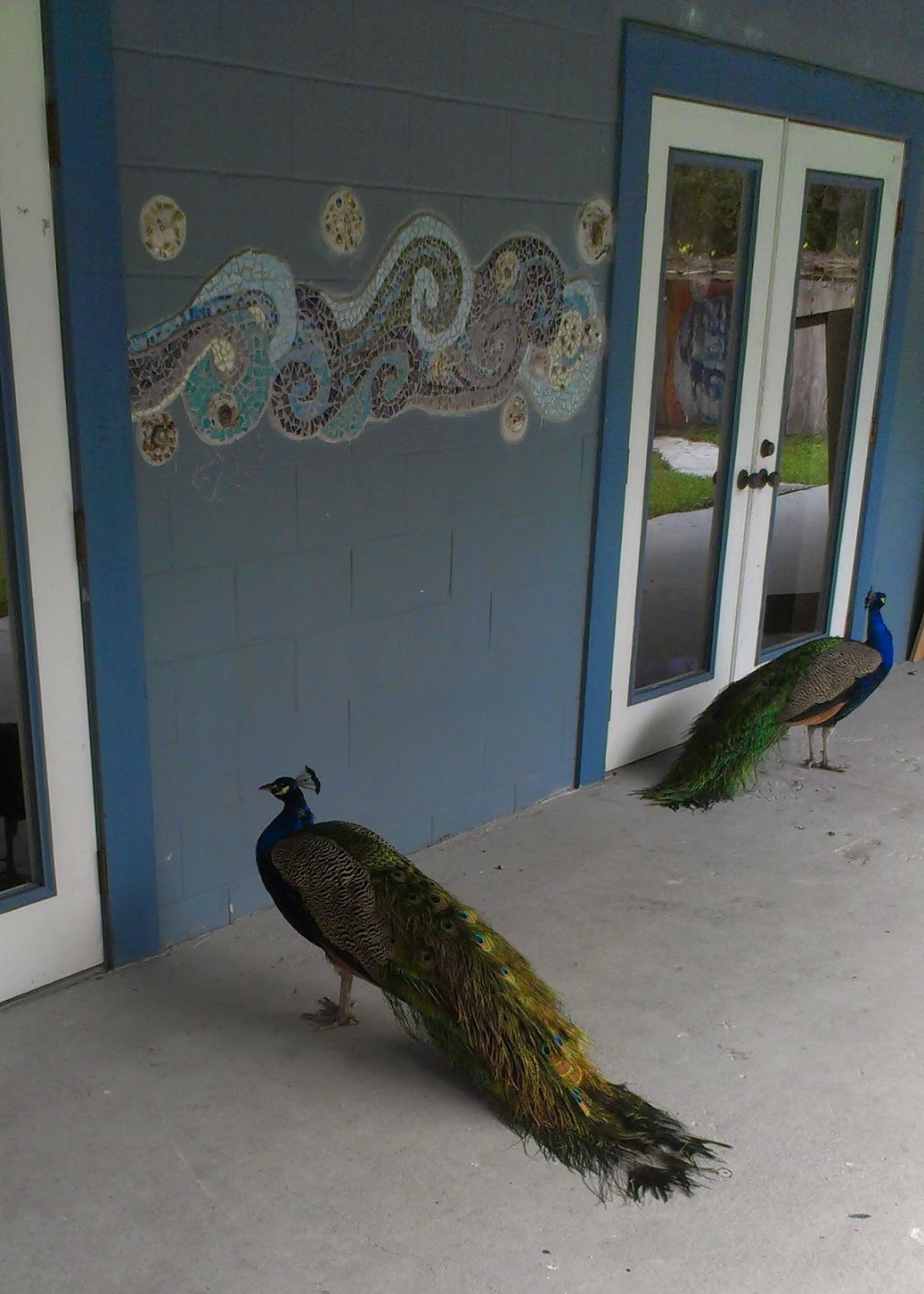 I spent last weekend at the Florida School of Massage, where I communed with their peacocks, soaked up the sun, and learned a new bodywork modality from one of my favorite bodywork writers, Deane Juhan. Deane is equally delightful in person as in text, if not more so. In fact, I wrote down a number of his sayings in my notes word for word. (My favorite, on the nature of having a body: “Our birthright is ecstasy, not freedom from pain.”)
I was aware that, like me, Deane had a background in the academic study of religion and literature, but I didn’t know the full extent of our parallels until I heard his story last weekend. Deane and I both made the choice to become bodyworkers around our first Saturn return, at age 28. He had been studying the poetry of William Blake at UC Berkeley, and was about a year from finishing his dissertation. (William Blake is an amazing eighteenth- and nineteenth-century mystic, artist, and poet of the flesh. His rejection of the standard Western mind/body dichotomy has a lot to offer Pagans. In fact, here at Patheos, I see Aidan Kelly has been writing about Blake just this week!)
On Deane’s birthday, a friend took him to Esalen in Big Sur. It was the 1970s, and Esalen was in its heyday as a center for the human potential movement, bodywork, and alternative spirituality. As Deane tells it, he received professional-level bodywork for the first time while in the bathhouses, looking out at the ocean: a beautiful experience that put him fully in his body. When it came time to leave, he got into his car to go, but one of the people in charge stopped him. Another employee had just quit; did Deane want a job? He thought, “I can go home and write about this kind of experience, or I can stay here and live it.” So he put his car keys away, and the rest is history.
So what does any of this have to do with Pagan theology?
My Pagan theology begins with the body. All of my experiences, even ones like dreams or trance journeys that appear to separate me from my body, cannot become part of me unless I experience them with my senses and process them with my squishy, wet brain. So long as we are human, we are our bodies, and our consciousness is both of a manifestation of that body and fully integrated with it. We do not think with our brains alone; we think with our whole nervous system. We do not love with our hearts, but with the totality of our flesh.
That which we think of as “spirit” is fully a part of that bodily system. In my witchcraft tradition, we often speak of human beings as having three souls. Each of these “souls” has a different function and makes up part of the human being. But some (myself included) prefer to speak of these souls as “subtle bodies”—integral parts of the human self whose essence is the same as the physical body, but which we cannot so easily see or touch. So when I say that body and spirit are one, I don’t deny that there is more to the world than can be perceived by our physical senses. Rather, I want to emphasize that our bodies are us, and that what we think of as the soul is not separate.
Bodyworkers know this on a visceral level. Many of us come to bodywork as a spiritual calling, because we’ve experienced what it means to lay hands on another person in a conscious way. When you touch another’s flesh, it’s not just skin, blood, and bone that you’re contacting: it’s that person’s entire history, all the experiences ever had by that perceiving body. People bind emotions into their bodies that are sometimes stirred up or released through bodywork. Sometimes our clients cry on the table; sometimes they see visions, or laugh hysterically, or remember something they’d long forgotten. There is nothing like working with hundreds of people’s bodies in an attentive way to convince a person that the body and mind are absolutely one.

“Glad Day” or “The Dance of Albion,” by William Blake
In his most famous book, Job’s Body, Deane Juhan argues that the body is the vehicle of all our experiences. We relate to everything that is through our bodies, including—and perhaps especially—the divine. Yet many of our bodies are trapped in habitual or even painful physical and emotional patterns: restricted breathing, frozen muscles, collapsed posture, all often relating to depression, anxiety, or trauma. Some of us suffer constantly with chronic pain that doctors can’t satisfactorily diagnose or treat.
Deane suggests that if we are able to teach our bodies new patterns of movement, breaking up the old, chronic patterns of dysfunction, we can do more than simply lessen pain. Rather, we may be able to expand our ability to sense, experience, and perceive with our bodies—in effect, to expand consciousness and open ourselves to the possibility of divine ecstasy. For Deane, and for me, full engagement with the body is the direct path to deepening relationship with self, divinity, and the world.
Obviously, the path toward health and then toward joy is not always an easy one. At age thirty-four, I’ve had my share of health struggles, and I’ve spent years being frustrated with the treatment available to me. Although bodywork is hardly a cure-all, it’s helped me facilitate my own healing. Perhaps more importantly, though, engagement with my body has become a cornerstone of my spiritual practice. The human body, with all its amazing complexity, is the temple where I worship. For me, knowing the body is a path to the Gods.
Most theologies begin with considering the nature of divinity, with the nature of humanity as a secondary concern. I like the idea that my Pagan theology should begin with the human, with the very flesh I’m using to write these words. For if we come to know our own flesh, I believe, in the same moment we will also perceive the divine.
Previous Post

December 7, 2012
Opening a Pagan Theological Dialogue
Next Post

December 14, 2012 Yvonne Aburrow Joins "Sermons"; Gender and Sexuality Article
Browse Our Archives
Select a Category A Beginner's Guide Announcements Conversations Creative Endarkenment Embodied Spirituality General Interviews My Story News Commentary Pagan Studies Poetry Praxis Related topics Reviews Ritual Sacred Endarkenment Storytime Theology
Select a Month February 2017 December 2016 November 2016 October 2016 September 2016 August 2016 July 2016 June 2016 May 2016 April 2016 March 2016 February 2016 January 2016 December 2015 November 2015 October 2015 September 2015 August 2015 July 2015 June 2015 May 2015 April 2015 March 2015 February 2015 January 2015 December 2014 November 2014 October 2014 September 2014 August 2014 July 2014 June 2014 May 2014 April 2014 March 2014 February 2014 January 2014 December 2013 November 2013 October 2013 September 2013 August 2013 July 2013 June 2013 May 2013 April 2013 March 2013 February 2013 January 2013 December 2012 November 2012
Follow Us!
TAKE THE
Religious Wisdom Quiz
Which Christian holiday is celebrated on December 25th in most Western churches?
Select your answer to see how you score.
Epiphany Advent Pentecost Christmas
Related posts from Dowsing for Divinity

Review of Queer Paganism by Jo Green


A Meditation: The Trees and the Forest

Erotic Religion: The Body and Sex for Wiccans...
TRENDING AT PATHEOS Pagan

I was recently chatting with someone on Instagram. She asked me what...

While there are many people who share their results, the end of...

On July 23, I saw Christopher Nolan's The Odyssey which is Homer’s...

As I write this two big events have just finished up. One...

Restoring the Watershed of Divine Love
Perhaps cooperation is not something we manufacture through legislation, ideology, or moral...

Many UUs don’t pray because of bad experiences in a previous religion,...
view all Pagan blogs
Ad-Free & Subscriber Log-In Subscription Support
- About Us
- 2026 Calendar
- Videos
- Podcasts
- Library of World Religions
- Faith In Media Tracker
- Advertise With Us
- Write for Us
- Privacy Policy
- Terms of Service
- Do Not Sell My Data
- Contact Us
- Radiant Digital
- Manage Newsletter Subscriptions
- Unsubscribe From Notifications
- Sitemap
Copyright 2008-2026, Patheos. All rights reserved.
Subscription Support Ad-Free & Subscriber Log-In
Follow Patheos