
BuddhistCatholicContemplativeEvangelicalGeneral ChristianHinduJewishLatter-day SaintMuslimNew VisionsProgressive Christian
Beliefs
- Buddhist
- Catholic
- Contemplative
- Evangelical
- General Christian
- Hindu
- Jewish
- Latter-day Saint
- More Voices
- Muslim
- New Visions
- Pagan
- Progressive Christian
Topics
- Religion News
- Food and Religion
- Sports and Religion
- Religious Art
- Religious Music and Entertainment
- Religious Events
- History and Religion
- Style and Religion
- Politics and Religion
- Women in Religion
- Recreation Outdoors and Religion
- Business Finance and Religion
- Careers Workplace and Religion
- Education and Religion
- Family Parenting and Religion
- Health Fitness and Religion
- Home and Religion
- Relationships and Religion
- Technology and Religion
- Travel and Religion
Columnists
- Buddhist Columnists
- Business Finance and Religion Columnists
- Careers Workplace and Religion Columnists
- Catholic Columnists
- Contemplative Columnists
- Education and Religion Columnists
- Evangelists Columnists
- Family Parenting and Religion Columnists
- General Christian Columnists
- Health Fitness and Religion Columnists
- Hindu Columnists
- History and Religion Columnists
- Home and Religion Columnists
- Jewish Columnists
- More Voices Columnists
- Latter Day Columnists
- Muslim Columnists
- New Visions Columnists
- Nonreligious Columnists
- Pagan Columnists
- Politics and Religion Columnists
- Progressive Columnists
- Recreation Outdoors and Religion Columnists
- Relationships and Religion Columnists
- Religion News Columnists
- Religious Art Columnists
- Religious Events Columnists
- Religious Music and Entertainment Columnists
- Sports and Religion Columnists
- Style and Religion Columnists
- Technology and Religion Columnists
- Travel and Religion Columnists
- Women in Religion Columnists
Resource Library
- 2026 Calendar
- Library of World Religions
- The 100 Most Holy Places on Earth
- Patheos Answers
- Podcasts
- Videos
- Faith Leaders Database
- Anglican Episcopalian
- Bahai
- Baptist
- Buddhism
- Christianity
- Confucianism
- Eastern Orthodoxy
- Hinduism
- Holiness and Pentecostal
- ISKCON
- Islam
- Judaism
- Lutheran
- Methodist
- The Church of Jesus Christ of Latter-day Saints
- New Age
- Paganism
- Presbytarian and Reformed
- Protestantism
- Religion Behind the Scenes
- Roman Catholic
- Scientology
- Shia Islam
- Sikhism
- Sufism
- Sunni Islam
- Taoism
- Zen
- See all religions
Research Tools
 Ad-Free & Subscriber Log-In Subscription Support
Ad-Free & Subscriber Log-In Subscription Support
Follow Patheos 

- Trending:
- Forgiveness
- |
- Marriage
- |
- Consciousness
- |
- Death Penalty
- |
- Election
- |
- Halloween
 Seeking Shanti
- Home
- Hindu
- The Who, What and Why of WISDOM – Part 3
The Who, What and Why of WISDOM – Part 3
Last updated on: August 29, 2016 at 7:47 am by Padma Kuppa
The Who, What and Why of WISDOM – Part 3 2016-08-29T07:47:12-04:00 Padma Kuppa
Patheos Explore the world's faith through different perspectives on religion and spirituality! Patheos has the views of the prevalent religions and spiritualities of the world.
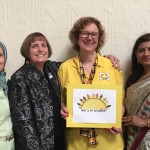
As explained in the prior two posts, three of us from WISDOM – a Catholic, a Hindu and a Muslim – came together with the NACCC organizers to present about this interfaith women’s organization here in Metro-Detroit. I took the role of speaking to the reason why I continue to serve on WISDOM’s Advisory Board, amidst my often over-extended civic commitments. A Board member of both the Hindu American Foundation, a national civil and human rights advocacy organization promoting pluralism and mutual understanding, and the Michigan Roundtable for Diversity and Inclusion, a regional social justice organization building relationships and working to create equal opportunity for all, WISDOM gives me the space to explain why I do what I do and encourage others to do the same. Promoting pluralism is rooted in my understanding of being Hindu – a foundational concept of Hinduism explained by Ekam Sat, Vipraha Bahuda Vadanti – as is working for social justice, built on one of the central pillars of a Hindu’s life: the pursuit of dharma.
WISDOM was especially important in the interfaith landscape here in Michigan, which I entered over a decade ago. The standard interfaith panel usually consisted of a Christian, a Jew and a Muslim – like the standard punchline about a priest, a rabbi and an imam. However, WISDOM was a space where one didn’t have to be part of the Abrahamic “Big Three” – what someone in the metro Detroit interfaith community called it a few years ago – perhaps meaning to be funny, but underlining how challenging inclusiveness actually is. Neither was it dominated by male faith leadership, or “people of the cloth” – it was lay leaders, women of deep faith, who were open to deep friendship and listening, an essential component of dialogue. The who and what of WISDOM was followed by the why, with a call to action: to engage the religious diversity of our region, our country and our planet. The third and final part of WISDOM’s presentation speaks of something that anyone interested in living out the American dream of religious freedom can take up – but specifically those among the audience at the NACCC conference themed “Who is your Neighbor?”
Padma Kuppa on the Why of WISDOM: Deepening Wisdom in Challenging Times
So my story of why I came to WISDOM might explain the why of interfaith – why is it important to engage the diversity we live amidst. I grew up in the suburbs of NY before the internet, before social media, before our religious landscape in America became as multi-faith as it is now. After the 1965 changes to immigration law, United States has become home to many immigrants and refugees from all over the world. Today, we are constantly coming into contact, both virtually and in person, with people who are different from us. You will find a mosque, a mandir or a gurudwara in most metro areas where immigrants have settled.
In fact, one of the reasons I moved to Troy was because there was a Hindu temple there. Troy is a microcosm of the world, with 28% pf our residents born in another country, more than 80 languages spoken in the homes of students in the Troy School District, and home to a synagogue, and one of Michigan’s largest and oldest Hindu temples. I was always involved in something, so when I came to Troy, I volunteered in the temple, the school, and the city. I was part of a city of Troy Board when I met with exclusion from a city sponsored religious event because I was a Hindu. Because I was not included in this event, I found ways to connect with others in my community and the Troy-area Interfaith Group was formed to “Gather, Give and Grow.” The WISDOM book, Friendship and Faith, has that story, so I won’t spill the beans here.
In 2006, I was invited to be part of the Interfaith Partners, a loosely knit interfaith arm of the Michigan Roundtable for Diversity and Inclusion, because there was no other Hindu at the table – in fact there was no one outside an Abrahamic faith. I, a typical suburban mini-van mom, felt somewhat out of place there: it was mostly men who were about 15-20 years older than me – Christian priests, ministers and pastors, imams, rabbis. During the group’s quarterly meetings, a few Jewish women befriended me and I plodded on, trying to explain misconceptions about Hinduism and breakdown stereotypes they had of Hindus. And then one of them, [WISDOM co-founder] Gail Katz invited me in mid 2007 to be part of this new women’s organization that she had started with a few friends, called WISDOM. My first meeting was to review the 501(c)3 paperwork with the WISDOM Board members – and if you’ve done that before, gone through the minutiae of non-profit paperwork, you can really understand how the foundation was laid for what would become a strong friendship amongst a VERY diverse group of women.
We are not just from different religious paths, we are in different stages of our lives, different ethnic, social and economic backgrounds and so on. A daughter of holocaust survivors, an immigrant, a daughter of immigrants, a lawyer, a real estate agent, social worker, a teacher, a homemaker. But we had a common purpose, we had the interest in not isolating the Other, and we wanted to practice pluralism – critical need in our current political climate.
So, what is pluralism? Prof Diana Eck of Harvard University, who started the Pluralism Project 25 years ago, defines pluralism as follows.
First, pluralism is not diversity alone, but the energetic engagement with diversity. Diversity can and has meant the creation of religious ghettoes with little traffic between or among them. Today, religious diversity is a given, but pluralism is not a given; it is an achievement. Mere diversity without real encounter and relationship will yield increasing tensions in our societies.
Second, pluralism is not just tolerance, but the active seeking of understanding across lines of difference. Tolerance is a necessary public virtue, but it does not require Christians and Muslims, Hindus, Jews, and ardent secularists to know anything about one another. Tolerance is too thin a foundation for a world of religious difference and proximity. It does nothing to remove our ignorance of one another, and leaves in place the stereotype, the half-truth, the fears that underlie old patterns of division and violence. In the world in which we live today, our ignorance of one another will be increasingly costly.
Third, pluralism is not relativism, but the encounter of commitments. The new paradigm of pluralism does not require us to leave our identities and our commitments behind, for pluralism is the encounter of commitments. It means holding our deepest differences, even our religious differences, not in isolation, but in relationship to one another.
Fourth, pluralism is based on dialogue. The language of pluralism is that of dialogue and encounter, give and take, criticism and self-criticism. Dialogue means both speaking and listening, and that process reveals both common understandings and real differences. Dialogue does not mean everyone at the “table” will agree with one another. Pluralism involves the commitment to being at the table — with one’s commitments.
WISDOM has survived and succeeded because we model pluralism in our friendship with each other. We have heard each other as we share our stories at the 5 Women 5 Journeys programs, as fellow panelists and fellow-bridge builders. Answering the questions when I participate in a 5W5J panel often helps me to clarify my own faith practices, or has me seeking “what does my tradition say” when I hear someone else’s answer. I’ve had conversations with both Christian and Muslim WISDOM sisters, on conversion – a touchy topic with many members of the Hindu, Sikh and Jain community for whom actively sharing their faith is not a pillar of their practice. I’ve heard from a Muslims sister about her fears for her children because of Islamophobia, and the challenges faced over decades, from an LGBT friend who was finally able to get married to her partner.
I’ve been honored as WISDOM sisters celebrated along with me, when four cities in MI first issued Diwali proclamations in 2013, to honor this “Festival of Lights,” important to over a billion Hindus, Jains and Sikhs around the world. They also learned why my Christmas lights go up a month or so early – for the no-moon night of Diwali. I’ve invited WISDOM sisters to come to my home during the Hindu festival of Sankranti. The celebration of this holiday involves a mother and her daughter setting up steps with different dolls and religious icons that one collects over the years and inviting other women and girls to come see. Rehana, one of my WISDOM sisters, an immigrant from Pakistan, on seeing the things that were on display, later brought me bride and groom figurines from the South Asian Muslim tradition which are now included in this Hindu household’s annual display. While we WISDOM sisters focus on building friendship across multiple ethnicities and faiths at the local level, my interactions with them help shape my understanding and advocacy on the national stage, as a Board member of the Hindu American Foundation, which seeks to build mutual understanding and promote pluralism. You will find in your conference materials links and resources that encourage this as well: a frequently asked questions booklet about Hinduism, a book about Ramadan by an interfaith partner, Najah Bazzy, who helped arrange a visit for conference attendees to the largest mosque in the US, right here in Dearborn. There is a panel on Tuesday on how Christians can engage in pluralism in a multi-faith world, how you can know who is your neighbor.
When the three of us got together to discuss this presentation, Trish reminded me of something I said early in our WISDOM years ago. It’s my quote from the book that still holds true: When we are our best as people, we are able to see our communities and our world as a loving family. Interfaith interactions with my WISDOM sisters are part of making me a better person. That’s why WISDOM, that’s why interfaith.
Previous Post
June 28, 2016
The Who, What and Why of WISDOM – Part 2
Next Post

July 11, 2016 A Foundation for Constructive Interfaith Dialogue: Equity in Education
Browse Our Archives
Select a Category acttochange Advocacy african american American Apocalyspse Autism Belief bhagavad gita Bhumi Project Bullying caste caste report Catholic Climate Change conversion Creation Story development dfn Dharma Diversity and Inclusion Divine Feminine Draupadi Education Environment EquityInEducation ethics evangelism Evil faith in the public square genocide God Goddess guru Hijab Hindu Hindu American Hindu American Foundation Hindu practices Holidays Holocaust human rights human trafficking identity India Indian American interfaith Internship Jewish Justice Kashmiri Hindus LGBT LGBT Rights Mahabharata Martin Luther King Jr Celebration meditation MLK Muslim National Day of Prayer NoDAPL Pakistani Hindu Peace Advocacy pluralism Prayer predatory proselytization Religious Freedom SacredSites Sari science self-realization Social Action spock Telugu Truth TSOG Uncategorized Urban monk Vegetarian Vote
Select a Month November 2017 October 2017 September 2017 April 2017 March 2017 February 2017 January 2017 December 2016 November 2016 October 2016 September 2016 August 2016 July 2016 June 2016 May 2016 April 2016 February 2016 January 2016 December 2015 November 2015 October 2015 September 2015 July 2015 June 2015 May 2015 April 2015 March 2015 February 2015 August 2014 July 2014 June 2014 May 2014 April 2014 March 2014 February 2014 January 2014 November 2013 October 2013 September 2013 February 2013 January 2013 December 2012 November 2012 October 2012 September 2012 August 2012 July 2012 June 2012 May 2012 April 2012
Follow Us!
TAKE THE
Religious Wisdom Quiz
My beloved is mine and I am his; he browses among these flowers. What flowers represent purity and beauty?
Select your answer to see how you score.
Lilies Wildflowers Roses Crocus
Related posts from Seeking Shanti

Hindus in America: Acting on Our Values, Alleviating...

Green Diwali Webinar: Lighting the Way to Protect...

Watching Marshall, Lighting the Diwali Lamp for Dharma

Eclipse-Nirvana: Contemporary Devotional Music by Aks & Lakshmi
TRENDING AT PATHEOS Hindu

Indian Hindu pilot’s valor in line of duty...
There is a hoary maritime tradition that the captain of the...

Movie on Neem Karoli Baba’s life is a...
Neem Karoli Baba’s life (1900-1973) is associated with miracles he made in...

20 Questions to Ask Before an Interfaith Marriage,...
Four questions every interfaith couple should discuss before marriage: Conversion. Will either...

Avadhānam: The Art of Concentration and Intellectual Mastery
What is Avadhānam? In the summer of 2015, during a three-day Sanskrit...

Jesus in the Dharma: Where Christ Fits in...
Where Does Jesus Fit in Hinduism? That’s a question I get often...

Hormuz: A Shared Hindu and Zoroastrian Heritage
Every evening, somewhere in the world, a newsreader utters the words: "The...
view all Hindu blogs
Ad-Free & Subscriber Log-In Subscription Support
- About Us
- 2026 Calendar
- Videos
- Podcasts
- Library of World Religions
- Faith In Media Tracker
- Advertise With Us
- Write for Us
- Privacy Policy
- Terms of Service
- Do Not Sell My Data
- Contact Us
- Radiant Digital
- Manage Newsletter Subscriptions
- Unsubscribe From Notifications
- Sitemap
Copyright 2008-2026, Patheos. All rights reserved.
Subscription Support Ad-Free & Subscriber Log-In
Follow Patheos