
BuddhistCatholicContemplativeEvangelicalGeneral ChristianHinduJewishLatter-day SaintMuslimNew VisionsProgressive Christian
Beliefs
- Buddhist
- Catholic
- Contemplative
- Evangelical
- General Christian
- Hindu
- Jewish
- Latter-day Saint
- More Voices
- Muslim
- New Visions
- Pagan
- Progressive Christian
Topics
- Religion News
- Food and Religion
- Sports and Religion
- Religious Art
- Religious Music and Entertainment
- Religious Events
- History and Religion
- Style and Religion
- Politics and Religion
- Women in Religion
- Recreation Outdoors and Religion
- Business Finance and Religion
- Careers Workplace and Religion
- Education and Religion
- Family Parenting and Religion
- Health Fitness and Religion
- Home and Religion
- Relationships and Religion
- Technology and Religion
- Travel and Religion
Columnists
- Buddhist Columnists
- Business Finance and Religion Columnists
- Careers Workplace and Religion Columnists
- Catholic Columnists
- Contemplative Columnists
- Education and Religion Columnists
- Evangelists Columnists
- Family Parenting and Religion Columnists
- General Christian Columnists
- Health Fitness and Religion Columnists
- Hindu Columnists
- History and Religion Columnists
- Home and Religion Columnists
- Jewish Columnists
- More Voices Columnists
- Latter Day Columnists
- Muslim Columnists
- New Visions Columnists
- Nonreligious Columnists
- Pagan Columnists
- Politics and Religion Columnists
- Progressive Columnists
- Recreation Outdoors and Religion Columnists
- Relationships and Religion Columnists
- Religion News Columnists
- Religious Art Columnists
- Religious Events Columnists
- Religious Music and Entertainment Columnists
- Sports and Religion Columnists
- Style and Religion Columnists
- Technology and Religion Columnists
- Travel and Religion Columnists
- Women in Religion Columnists
Resource Library
- 2026 Calendar
- Library of World Religions
- The 100 Most Holy Places on Earth
- Patheos Answers
- Podcasts
- Videos
- Faith Leaders Database
- Anglican Episcopalian
- Bahai
- Baptist
- Buddhism
- Christianity
- Confucianism
- Eastern Orthodoxy
- Hinduism
- Holiness and Pentecostal
- ISKCON
- Islam
- Judaism
- Lutheran
- Methodist
- The Church of Jesus Christ of Latter-day Saints
- New Age
- Paganism
- Presbytarian and Reformed
- Protestantism
- Religion Behind the Scenes
- Roman Catholic
- Scientology
- Shia Islam
- Sikhism
- Sufism
- Sunni Islam
- Taoism
- Zen
- See all religions
Research Tools
 Ad-Free & Subscriber Log-In Subscription Support
Ad-Free & Subscriber Log-In Subscription Support
Follow Patheos 

- Trending:
- Forgiveness
- |
- Marriage
- |
- Consciousness
- |
- Death Penalty
- |
- Election
- |
- Halloween
 Seeking Shanti
- Home
- Hindu
- The Story of God & Evil: Dichotomy or Complexity?
The Story of God & Evil: Dichotomy or Complexity?
Last updated on: March 21, 2017 at 12:52 pm by Padma Kuppa
The Story of God & Evil: Dichotomy or Complexity? 2017-03-21T12:52:50-04:00 Padma Kuppa
Patheos Explore the world's faith through different perspectives on religion and spirituality! Patheos has the views of the prevalent religions and spiritualities of the world.
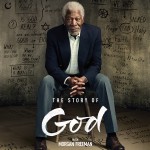
My father, an English professor, always told me that the opposite of love was apathy – not hate. Similarly, we’ve discussed how the opposite of God and all that is good has less to do with evil and the devil, and more to do with all that is bad – and how Shakespeare had it right: there is no absolute, where one is good and the other is evil, but rather a perspective that shapes our understanding The next National Geographic episode of The Story of God with Morgan Freeman attempts to understand the concept of evil, and how different religions understand it. While I found the simplification of the concept helpful to someone with minimal or no exposure to Hinduism, it really didn’t explain the complexity around the understanding of what a Hindu might consider to be evil. The framing of the segment – “Christianity has God and devil, what about Hinduism” simplifies the ancient philosophy that provides a pluralistic understanding of humanity, evil and our relationship to it.
In my understanding of the Christian tradition, evil is traditionally associated with original sin – and the all-powerful God who is pitted against the devil. The traditional interpretation is that those who accept this fatherly figure, guiding and controlling Creation, will be saved but those who do not, will be left to the devil. Hinduism, however does not have this type of binary with a heaven and a hell, encompassing as it does, a range of sampradayas with a wide range of understandings of the Divine. There is no struggle to understand why evil exists – but it is a quest on which Morgan Freeman goes – and in doing so, has conversations with murderer and a former skinhead.
I too went on a quest, to see what evil actually translates to in three Indian languages – Telugu, Hindi and Sanksrit. In Telugu, evil became duṣṭamu, yet a dustudu, one who does dustamu, was a “bad man,” according to the CP Brown English-Telugu dictionary. In Hindi, the official language of India, not to be confused with Hindu – the practitioner of the religious practices in Hinduism, translate.google.com gave me buraee, which could be taken to mean mischief, harm or badness. And in the language of the Vedas, Apte’s English-Sanskrit dictionary led me not only to dusta, but also paap (sin) and asat (untruth). Much is often lost in translation.
Consider that, for Hindus, the cycle of birth and rebirth encompasses all of reality, including the universe itself. There is no original starting point for evil – nor is there anything in the universe which is absolutely good or absolutely evil, that is to say, good or evil for all time. Patanjali, the great saint/scholar who laid out the aphorisms (sutra) of yoga, outlined in one sutra the five causes of suffering, which is the closest idea to evil:
avidyā-asmitā-rāga-dveṣa-abhiniveśaḥ kleśāḥ
Avidya or ignorance is the root, from which the other four follow: asmita or misidentification, raga or excessive desire, craving, dvesa or aversion, and abhinivesa or insecurity, fear of loss.
And if a person acts contrary to their dharma, they are creating an imbalance in their lives – a simple translation of this could be evil. The failure to pursue dharma in one life can impact one’s karma in this life or in another. This brings us back to the cycle of birth and rebirth, and leads us to the concept of moksha, the liberation from it. And yet another way we create “evil” is by creating distance between our own self and the Divine Self.
It is Freeman’s guide in Varanasi who brings some clarity and depth to help answer the question – whether there is evil in Hinduism – even as she applied terms that made me squirm, such as “goblin,” “shaman” and “speaking in tongues” to refer to elements in the episode. The camera focuses on the ritual at the Pishach Mochan Temple in Varanasi, as people perform purification rituals for the souls of their ancestors. The common thread of water cleansing our souls, and human yearning to be free of the demons that possess us comes through. Freeman’s somewhat simplistic, single-perspective explanation that Hindus believe “that evil is caused by the unhappy souls of their ancestors” is countered by their conversational conclusion:
“There is no dichotomy between good and evil, even the evil is treated with respect and care…. This frees us up to be better…. the hope at the end is that even the evil can be liberated. Evil is spirit that needs help… [we can] guide evil to the common good.”
For more information regarding the National Geographic mini series The Story of God with Morgan Freeman be sure to check out the following links:
Website: http://channel.nationalgeographic.com/the-story-of-god-with-morgan-freeman/
What other Patheos Bloggers are saying about it: http://www.patheos.com/Topics/The-Story-of-God
Previous Post

April 23, 2016
Shining a Light on Autism
Browse Our Archives
Select a Category acttochange Advocacy african american American Apocalyspse Autism Belief bhagavad gita Bhumi Project Bullying caste caste report Catholic Climate Change conversion Creation Story development dfn Dharma Diversity and Inclusion Divine Feminine Draupadi Education Environment EquityInEducation ethics evangelism Evil faith in the public square genocide God Goddess guru Hijab Hindu Hindu American Hindu American Foundation Hindu practices Holidays Holocaust human rights human trafficking identity India Indian American interfaith Internship Jewish Justice Kashmiri Hindus LGBT LGBT Rights Mahabharata Martin Luther King Jr Celebration meditation MLK Muslim National Day of Prayer NoDAPL Pakistani Hindu Peace Advocacy pluralism Prayer predatory proselytization Religious Freedom SacredSites Sari science self-realization Social Action spock Telugu Truth TSOG Uncategorized Urban monk Vegetarian Vote
Select a Month November 2017 October 2017 September 2017 April 2017 March 2017 February 2017 January 2017 December 2016 November 2016 October 2016 September 2016 August 2016 July 2016 June 2016 May 2016 April 2016 February 2016 January 2016 December 2015 November 2015 October 2015 September 2015 July 2015 June 2015 May 2015 April 2015 March 2015 February 2015 August 2014 July 2014 June 2014 May 2014 April 2014 March 2014 February 2014 January 2014 November 2013 October 2013 September 2013 February 2013 January 2013 December 2012 November 2012 October 2012 September 2012 August 2012 July 2012 June 2012 May 2012 April 2012
Follow Us!
TAKE THE
Religious Wisdom Quiz
Who said, "All things work together for good"?
Select your answer to see how you score.
John Peter Paul James
Related posts from Seeking Shanti

Hindus in America: Acting on Our Values, Alleviating...

Green Diwali Webinar: Lighting the Way to Protect...

Watching Marshall, Lighting the Diwali Lamp for Dharma

Eclipse-Nirvana: Contemporary Devotional Music by Aks & Lakshmi
TRENDING AT PATHEOS Hindu

Indian Hindu pilot’s valor in line of duty...
There is a hoary maritime tradition that the captain of the...

Movie on Neem Karoli Baba’s life is a...
Neem Karoli Baba’s life (1900-1973) is associated with miracles he made in...

20 Questions to Ask Before an Interfaith Marriage,...
Four questions every interfaith couple should discuss before marriage: Conversion. Will either...

Avadhānam: The Art of Concentration and Intellectual Mastery
What is Avadhānam? In the summer of 2015, during a three-day Sanskrit...

Jesus in the Dharma: Where Christ Fits in...
Where Does Jesus Fit in Hinduism? That’s a question I get often...

Hormuz: A Shared Hindu and Zoroastrian Heritage
Every evening, somewhere in the world, a newsreader utters the words: "The...
view all Hindu blogs
Ad-Free & Subscriber Log-In Subscription Support
- About Us
- 2026 Calendar
- Videos
- Podcasts
- Library of World Religions
- Faith In Media Tracker
- Advertise With Us
- Write for Us
- Privacy Policy
- Terms of Service
- Do Not Sell My Data
- Contact Us
- Radiant Digital
- Manage Newsletter Subscriptions
- Unsubscribe From Notifications
- Sitemap
Copyright 2008-2026, Patheos. All rights reserved.
Subscription Support Ad-Free & Subscriber Log-In
Follow Patheos