
BuddhistCatholicContemplativeEvangelicalGeneral ChristianHinduJewishLatter-day SaintMuslimNew VisionsProgressive Christian
Beliefs
- Buddhist
- Catholic
- Contemplative
- Evangelical
- General Christian
- Hindu
- Jewish
- Latter-day Saint
- More Voices
- Muslim
- New Visions
- Pagan
- Progressive Christian
Topics
- Religion News
- Food and Religion
- Sports and Religion
- Religious Art
- Religious Music and Entertainment
- Religious Events
- History and Religion
- Style and Religion
- Politics and Religion
- Women in Religion
- Recreation Outdoors and Religion
- Business Finance and Religion
- Careers Workplace and Religion
- Education and Religion
- Family Parenting and Religion
- Health Fitness and Religion
- Home and Religion
- Relationships and Religion
- Technology and Religion
- Travel and Religion
Columnists
- Buddhist Columnists
- Business Finance and Religion Columnists
- Careers Workplace and Religion Columnists
- Catholic Columnists
- Contemplative Columnists
- Education and Religion Columnists
- Evangelists Columnists
- Family Parenting and Religion Columnists
- General Christian Columnists
- Health Fitness and Religion Columnists
- Hindu Columnists
- History and Religion Columnists
- Home and Religion Columnists
- Jewish Columnists
- More Voices Columnists
- Latter Day Columnists
- Muslim Columnists
- New Visions Columnists
- Nonreligious Columnists
- Pagan Columnists
- Politics and Religion Columnists
- Progressive Columnists
- Recreation Outdoors and Religion Columnists
- Relationships and Religion Columnists
- Religion News Columnists
- Religious Art Columnists
- Religious Events Columnists
- Religious Music and Entertainment Columnists
- Sports and Religion Columnists
- Style and Religion Columnists
- Technology and Religion Columnists
- Travel and Religion Columnists
- Women in Religion Columnists
Resource Library
- 2026 Calendar
- Library of World Religions
- The 100 Most Holy Places on Earth
- Patheos Answers
- Podcasts
- Videos
- Faith Leaders Database
- Anglican Episcopalian
- Bahai
- Baptist
- Buddhism
- Christianity
- Confucianism
- Eastern Orthodoxy
- Hinduism
- Holiness and Pentecostal
- ISKCON
- Islam
- Judaism
- Lutheran
- Methodist
- The Church of Jesus Christ of Latter-day Saints
- New Age
- Paganism
- Presbytarian and Reformed
- Protestantism
- Religion Behind the Scenes
- Roman Catholic
- Scientology
- Shia Islam
- Sikhism
- Sufism
- Sunni Islam
- Taoism
- Zen
- See all religions
Research Tools
 Ad-Free & Subscriber Log-In Subscription Support
Follow Patheos 

- Trending:
- Advent
- |
- Forgiveness
- |
- Thanksgiving
- |
- Election
- |
- Seasonal Holidays
- |
- Marriage
 Seeking Shanti
- Home
- Hindu
- Hindu Studies: An Education in Religious Studies and Bias
Hindu Studies: An Education in Religious Studies and Bias
Last updated on: May 19, 2017 at 2:43 pm by Padma Kuppa
Hindu Studies: An Education in Religious Studies and Bias 2017-05-19T14:43:33-04:00 Padma Kuppa
Patheos Explore the world's faith through different perspectives on religion and spirituality! Patheos has the views of the prevalent religions and spiritualities of the world.
I was pleased to start the new year off with information about how, in pre-colonial India, Hindu temples were premier educational institutions. January also reminded me of my own pursuit of Hindu studies: several years ago, I wanted to enroll in a Hindu studies program at a local college, and found there are no such classes in our region – especially not one solely focused on Hinduism, and especially not taught by a practicing Hindu. I enrolled at Ecumenical Theological Seminary – but due to financial and other challenges, I had to abandon my path to chaplaincy. Even Michigan’s own Hindu Chaplain Shama Mehta has struggled to find funding for chaplaincy studies at the Ecumenical Theological Seminary – there are no Hindu organizations willing to fund our theological pursuits, especially at a seminary.
But then came a ray of light – the Dharma Civilization Foundation has recently given major gifts to universities in California, in order to encourage the study of Hinduism, especially at the graduate level. When I discovered DCF’s mission, and specifically their initiatives in California, I was thrilled – maybe there would be a ripple effect, and universities and individuals around the US would also receive funding for Hindu studies! And then came the naysayers, who object to Hindus funding Hindu studies. To clarify my understanding of why this is even an issue, I reached out to the University of Hawaii professor Ramdas Lamb, who shares his thoughts in this guest post.
In the last year or so, a Hindu organization named the Dharma Civilization Foundation became involved in the process of providing funding to two University of California campuses for the purpose of promoting the study of the Hindu tradition. That religion-related money is being donated to an institution of higher education is nothing new, especially from the Abrahamic Religious Traditions (Judaism, Christianity, and Islam) but the protests in the current situation are. In order to put their hypocrisy into context, one needs but to take a brief look at the history of religious money and involvement in higher education in America over the last two centuries.
The first American colleges were started by Protestant groups and individuals to provide an education to their young men, and a primary goal was that they become clergymen. As an example, Harvard college was founded in 1636 and during that century, 70% of its graduates became ministers. With the exception of the College of Philadelphia, all the early colleges in the American colonies were started by various religious denominations, and the training of future ministers was integral.
Early on, there was a great deal of anti-Jewish and anti-Catholic attitudes in these schools, and it continued into the early 20th century. Members of both traditions were largely kept on periphery of higher education (although clearly not as far removed as Blacks and Native Americans). Eventually, both religious groups were able to break through many of the barriers through persistence and through buying presence. In addition to establishing their own educational institutions, participation in and donations to existing universities eventually led to changes. Catholics started their own universities, and in the late 19th century also began establishing Newman Centers at universities in Western Europe and North America. Now overseen by the Catholic Campus Ministry Association, there are hundreds of these centers affiliated with colleges and universities. Many of them use campus buildings, where they provide pastoral services for Catholics who work at or attend school there. Jewish philanthropy to institutes of higher education was also begun to help bring about a more positive understanding of Jews and of their religion. Today, there are over a hundred Jewish Studies programs at universities across the country, more than 200 funded Jewish chairs, and hundreds of other universities and colleges where Judaism is taught. Such presence, participation, and monetary expenditures on campuses can and often does lead to a more favorable atmosphere and attitude in dealing with the traditions generally as well as in courses.
Since the 1970s, pro-Muslim groups have entered the academic arena as well to influence the way their religious and political views are depicted. In recent decades, Saudi/Wahhabi sources such as the he King Faisal Foundation and the King Abdullah scholarship programs have poured millions of dollars into institutions of higher education, including Boston University, Harvard, Columbia, and Cornell. Although much of the money has gone into other fields than religious studies and the humanities, the size of the donations clearly influences the way Islam is presented at recipient institutions. In the 1990s, Saudi prince Alwaleed bin Talal gave $20 million each to Harvard and to Georgetown specifically for Islamic studies programs. In total, it is likely more than two hundred million dollars of Arab/Muslim money have been donated to academia, and prestigious institutions and recipient scholars have warmly welcomed such funding with open pockets.
How much of this money would continue or what kind of pressure would be applied if serious criticism of Islam or Saudi restrictions on women or prohibitions on non-Muslims was to begin at a recipient institution or by a recipient scholar? Have their been protests against the possibility of undue Muslim influence in such programs by students or faculty at recipient institutions? How loud were the protests by students or faculty at other institutions of such donations? On the contrary, the donations have been praised, while anyone who protests is called “Islamophobic.”
In recent years, money from other religious groups and traditions has also begun to make its way into American higher education. Buddhist organizations such as the Numata Foundation and the Robert H.N. Ho Family Foundation are now involved as well with providing scholarship money and supporting programs. The latter has also donated funding for the Buddhist Ministry Initiative at Harvard. There have also been an increase in various Sikh scholarship programs in California and in Canada with chairs in Sikh Studies typically held by practicing Sikhs. Are these all not done with the view to have a positive view of their respective traditions presented? Of course they are, and there has been relatively little protest, with the possible exception of a few conservative Christians who do not want other religions studied positively.
It is important to understand that faculty in most colleges and universities who conduct research on and teach any of the major religious traditions beyond introductory courses are very often either practitioners of the traditions they specialize in or are at least involved in and generally supportive of the traditions they are researching and teaching.
That is, with the exception of Hinduism, where most who teach about the tradition are not practicing Hindus, and many Hindus see the result of this being a decidedly anti-Hindu attitude in many departments and courses. Consequently, Hindus are now wanting to become involved and have a say in the way their traditions are being presented. Hindu groups that have begun to adopt an activist approach regarding education in response are actually following a path similar to that of other religious and minority groups in America. In her book entitled, A Place at the Multicultural Table, Prema Kurien suggests Hindu American activism mirrors in many way that of other immigrant groups in the United States who have sought a place at the multicultural table.
Are Hindus wrong to want their voice to be heard or do only academics and members of other religious traditions have that right to influence the process? Do those who criticize Hindu groups do the same to the other religion-related groups and programs mentioned above and with the same self-righteousness? Have those who have supported an anti-DCF petition at UC Irvine ever protested the influence Arab/Muslim money has on Islamic and Middle Eastern Studies programs such as that of Alwaleed bin Talal? Have the protesters at UCI complained that one of the requirements of the Boukai Family scholarship money given to students at their institution is that the recipient “has advocated for Islam?” Does anyone really think all the various religion-affiliated moneys have not bought influence?
The reality is that money with ties to all the major religious traditions has been on campuses and having an influence since the founding of Harvard College, and it appears that it will continue to play a fundamental role in financing higher education in this country and abroad. On the whole, I actually see it as a very necessary and beneficial practice. Both public and private funding for the humanities and social sciences have been diminishing for years, going instead into the hard sciences and other money-making fields. The humanities and social sciences need benefactors to keep our programs alive. However, as those of us in these disciplines conduct research and teach about the way any group of people think, believe, or live, it is incumbent for us to include the views of the members themselves in the process. Their self-understanding has as much a right to be heard as that of anyone else, whether or not we agree. The job of a scholar should be to hear much, learn much, digest it all in an unbiased manner, and then present our understandings in ways that inform and enlighten our students, not prejudice them against those with whom we disagree. That said, if one wishes to single out one religious tradition to criticize, that is a scholarly prerogative. However, one needs to objectively make the case that the particular subject of censure is somehow uniquely deserving of it. Simply that the subject is Hindu is not sufficient. Is there only room at the academic and multicultural table for current members, i.e. those of the Abrahamic Traditions, ideological secularists, and others that either of these groups deem ideologically correct? Is this not the definition of narrow mindedness? Is this the way higher education should function today?
This past June, CNN’s Don Lemon was interviewed in an online radio program and was asked about the “politically correct” culture in the US and issue of free speech. His strong views on contemporary “Liberalism” and its adherents’ inability to hear alternate voices are instructive. Once upon a time, that label actually meant open mindedness and tolerance of diverse viewpoints. Such traits seem to be increasingly unsupported by far too many in higher education and in our society at large. As academics, it is our job to push boundaries of understanding and broaden our willingness to entertain new ideas and approaches, not narrow what we choose to accept with ideological walls
Previous Post

December 29, 2015
The Reality of Santa Claus: Imagine Joy this Holiday Season
Next Post
January 17, 2016 Baby Shower And/Or Seemantham: Bundle of Hope and Joy
Browse Our Archives
Select a Category acttochange Advocacy african american American Apocalyspse Autism Belief bhagavad gita Bhumi Project Bullying caste caste report Catholic Climate Change conversion Creation Story development dfn Dharma Diversity and Inclusion Divine Feminine Draupadi Education Environment EquityInEducation ethics evangelism Evil faith in the public square genocide God Goddess guru Hijab Hindu Hindu American Hindu American Foundation Hindu practices Holidays Holocaust human rights human trafficking identity India Indian American interfaith Internship Jewish Justice Kashmiri Hindus LGBT LGBT Rights Mahabharata Martin Luther King Jr Celebration meditation MLK Muslim National Day of Prayer NoDAPL Pakistani Hindu Peace Advocacy pluralism Prayer predatory proselytization Religious Freedom SacredSites Sari science self-realization Social Action spock Telugu Truth TSOG Uncategorized Urban monk Vegetarian Vote
Select a Month November 2017 October 2017 September 2017 April 2017 March 2017 February 2017 January 2017 December 2016 November 2016 October 2016 September 2016 August 2016 July 2016 June 2016 May 2016 April 2016 February 2016 January 2016 December 2015 November 2015 October 2015 September 2015 July 2015 June 2015 May 2015 April 2015 March 2015 February 2015 August 2014 July 2014 June 2014 May 2014 April 2014 March 2014 February 2014 January 2014 November 2013 October 2013 September 2013 February 2013 January 2013 December 2012 November 2012 October 2012 September 2012 August 2012 July 2012 June 2012 May 2012 April 2012
Follow Us!
TAKE THE
Religious Wisdom Quiz
Who stopped the sun from setting during a battle?
Select your answer to see how you score.
Elijah Samuel Moses Joshua
Related posts from Seeking Shanti
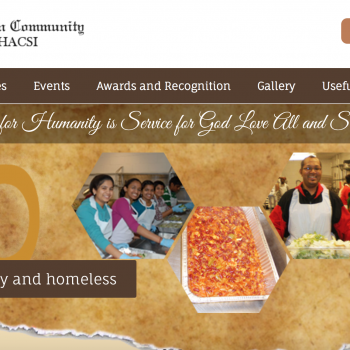
Hindus in America: Acting on Our Values, Alleviating...
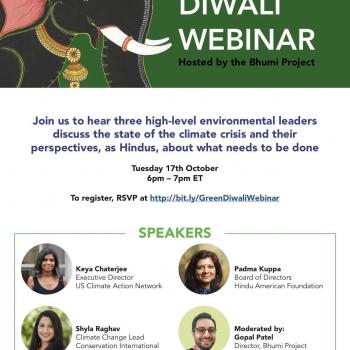
Green Diwali Webinar: Lighting the Way to Protect...

Watching Marshall, Lighting the Diwali Lamp for Dharma
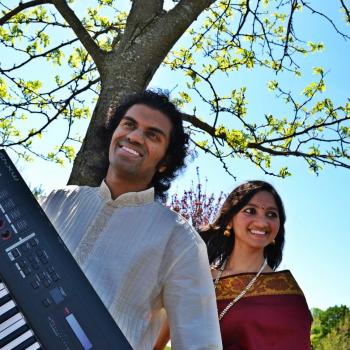
Eclipse-Nirvana: Contemporary Devotional Music by Aks & Lakshmi
TRENDING AT PATHEOS Hindu

‘Ramayana’ Gives India’s Epic a Hollywood-Scale Makeover
For centuries, the Ramayana has been far more than an ancient...

Does One of Us Have to Change Religions...
Twenty Years of Listening to Interfaith Couples A couple can spend years...

10% or 38%? Counting Hindu - American Interfaith...
Are 10% or 38% of American Hindus Marrying Outside Faith? What two...

Indian Hindu pilot’s valor in line of duty...
There is a hoary maritime tradition that the captain of the...

Movie on Neem Karoli Baba’s life is a...
Neem Karoli Baba’s life (1900-1973) is associated with miracles he made in...

20 Questions to Ask Before an Interfaith Marriage,...
Four questions every interfaith couple should discuss before marriage: Conversion. Will either...
view all Hindu blogs
Ad-Free & Subscriber Log-In Subscription Support
- About Us
- 2026 Calendar
- Videos
- Podcasts
- Library of World Religions
- Faith In Media Tracker
- Advertise With Us
- Write for Us
- Privacy Policy
- Terms of Service
- Do Not Sell My Data
- Contact Us
- Radiant Digital
- Manage Newsletter Subscriptions
- Unsubscribe From Notifications
- Sitemap
Copyright 2008-2026, Patheos, part of the Radiant Digital network of media brands. All rights reserved.
Subscription Support Ad-Free & Subscriber Log-In
Follow Patheos