
BuddhistCatholicContemplativeEvangelicalGeneral ChristianHinduJewishLatter-day SaintMuslimNew VisionsProgressive Christian
Beliefs
- Buddhist
- Catholic
- Contemplative
- Evangelical
- General Christian
- Hindu
- Jewish
- Latter-day Saint
- More Voices
- Muslim
- New Visions
- Pagan
- Progressive Christian
Topics
- Religion News
- Food and Religion
- Sports and Religion
- Religious Art
- Religious Music and Entertainment
- Religious Events
- History and Religion
- Style and Religion
- Politics and Religion
- Women in Religion
- Recreation Outdoors and Religion
- Business Finance and Religion
- Careers Workplace and Religion
- Education and Religion
- Family Parenting and Religion
- Health Fitness and Religion
- Home and Religion
- Relationships and Religion
- Technology and Religion
- Travel and Religion
Columnists
- Buddhist Columnists
- Business Finance and Religion Columnists
- Careers Workplace and Religion Columnists
- Catholic Columnists
- Contemplative Columnists
- Education and Religion Columnists
- Evangelists Columnists
- Family Parenting and Religion Columnists
- General Christian Columnists
- Health Fitness and Religion Columnists
- Hindu Columnists
- History and Religion Columnists
- Home and Religion Columnists
- Jewish Columnists
- More Voices Columnists
- Latter Day Columnists
- Muslim Columnists
- New Visions Columnists
- Nonreligious Columnists
- Pagan Columnists
- Politics and Religion Columnists
- Progressive Columnists
- Recreation Outdoors and Religion Columnists
- Relationships and Religion Columnists
- Religion News Columnists
- Religious Art Columnists
- Religious Events Columnists
- Religious Music and Entertainment Columnists
- Sports and Religion Columnists
- Style and Religion Columnists
- Technology and Religion Columnists
- Travel and Religion Columnists
- Women in Religion Columnists
Resource Library
- 2026 Calendar
- Library of World Religions
- The 100 Most Holy Places on Earth
- Patheos Answers
- Podcasts
- Videos
- Faith Leaders Database
- Anglican Episcopalian
- Bahai
- Baptist
- Buddhism
- Christianity
- Confucianism
- Eastern Orthodoxy
- Hinduism
- Holiness and Pentecostal
- ISKCON
- Islam
- Judaism
- Lutheran
- Methodist
- The Church of Jesus Christ of Latter-day Saints
- New Age
- Paganism
- Presbytarian and Reformed
- Protestantism
- Religion Behind the Scenes
- Roman Catholic
- Scientology
- Shia Islam
- Sikhism
- Sufism
- Sunni Islam
- Taoism
- Zen
- See all religions
Research Tools
 Ad-Free & Subscriber Log-In Subscription Support
Ad-Free & Subscriber Log-In Subscription Support
Follow Patheos 

- Trending:
- Forgiveness
- |
- Marriage
- |
- Consciousness
- |
- Death Penalty
- |
- Election
- |
- Halloween
 Seeking Shanti
- Home
- Hindu
- Gadadhara Pandit Dasa Shares His Journey in Urban Monk
Gadadhara Pandit Dasa Shares His Journey in Urban Monk
Last updated on: October 7, 2013 at 12:41 pm by Padma Kuppa
Gadadhara Pandit Dasa Shares His Journey in Urban Monk 2013-10-07T12:41:18-04:00 Padma Kuppa
Patheos Explore the world's faith through different perspectives on religion and spirituality! Patheos has the views of the prevalent religions and spiritualities of the world.
Gadadhara Pandit Dasa shares his story in Urban Monk: Exploring Karma, Consciousness, and the Divine as he chronicles his experiences from young Hindu, Indian-immigrant child struggling to fit in to America, to a simple Hindu monk working to help people find spiritual meaning in life. At the suggestion of a friend, reluctant to write as he had never kept a regular diary, he realized the value of meditating on his life’s journey and the challenges that brought him to embrace the life of a monastic in the heart of New York City. Readers will find gems of wisdom, pearls of Truth and challenges that one can easily identify with – all told in a simple and sincere way.
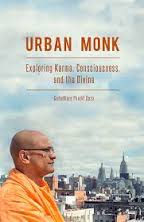
Gagadhara Pandit Dasa’s Journey to Monkhood
Pankaj Srivastava came to the United States as a seven year old with his immigrant parents, from northern India. His love and respect for them are apparent from the dedication – to his “parents, who exemplify loyalty, dedication, and sacrifice.” Their story is one typical of Indian immigrants – struggling to achieve the financial stability that is known as the American Dream. Over seven years, as Pankaj became a teenager, they acquired a grand house, nice cars and comforts, and provided their only child a good education at a private school. A child of Indian immigrant parents myself, I found parallels in anecdotes from these years – the heartfelt connection to warm and welcoming extended family on a short visit to India, on a being called “Hey Gandhi!” instead of “dothead,” or the explanation of the gap between “Indians that immigrate to America and their American kids,” trying to “enforce their Indian culture upon their children” and the ensuing clashes.
But in the early 90s, his father’s factory burnt down and their family fortunes hit rock bottom. The soon-to-be enlightened young man dropped out of college to help his parents. Another major upheaval followed – to Bulgaria: a new language, a new culture and once again, uprooted from his home and starting all over. Constantly asking himself “Why is this happening to me?”, the 21-year old comes across a Bulgarian woman seeking spiritual guidance from the Bhagavad Gita, and after acquiring a copy himself, begins a what will become a life-changing study of this essential Hindu scripture. Much of the remainder of the book narrates his travel to India, seeking of gurus and spiritual guidance from masters, and what the focus of his life has become, as he lives on the Lower East side and provides spiritual counseling to Columbia students, young professionals and many others.
While his journey itself is fascinating, what a reader will find captivating throughout the book is the way the author discovers the various facets of Hinduism and explains it in a way that is relevant to anyone’s daily life – not just for a monk. Take for example this verse quoted from the Gita’s second chapter:
O Son of Kunti, the nonpermanent appearance of happiness and distress, and their disappearance in due course, are like the appearance and disappearance of winter and summer seasons. They arise from sense perception, O scion of Bharata, and one must learn to tolerate them without being disturbed.
Pandit Dasa explains that the “theme of this verse is tolerance and acceptance. We know the seasons are changing… even if we are not fond of winter, we have to prepare for it and tolerate it – we have no choice.“ My favorite passage is the one where he explains the yoga of cooking. I was with my mother and daughter when I was reading the book, and felt compelled to read them the passage. Part of it I share here: “Knowing that we are cooking for someone else can help remove some of the selfishness we harbor in our hearts. Like yoga, cooking with the right consciousness can purify the heart and mind of negative tendencies. This entails that the cook isn’t allowed to taste the food while the cooking is taking place…In the Bhagavad Gita, Krishna offers a very salient point: ‘If one offers Me with love and devotion, a leaf, a flower, fruit or water, I will accept it.’ God isn’t looking for elaborate offerings from the devotees.” The ideas in the Bhakti tradition are made accessible through a down-to-earth explanation: a mother’s love impacts the consciousness with which she cooks for her child, and the importance of how simple endeavors, such as preparing and providing a meal, can move one closer to God.
Therapeutic it might have been for the writer – in fact, in the beginning, he acknowledges that “Writing it out might sort out my thoughts…” – it is the reader who will be transformed, by traveling through several decades of a young man’s turbulent journey which brought him to delve deeply into the faith of his roots, by his clear explanations of Bhagavad Gita verses as applied to every day life, and by an understanding of Hinduism as it is lived by an urban monk.
Previous Post

September 8, 2013
Avoiding Rock Bottom by Advocating for Peace
Next Post
November 26, 2013 Faith in the Public Square: Inclusive or Exclusive?
Browse Our Archives
Select a Category acttochange Advocacy african american American Apocalyspse Autism Belief bhagavad gita Bhumi Project Bullying caste caste report Catholic Climate Change conversion Creation Story development dfn Dharma Diversity and Inclusion Divine Feminine Draupadi Education Environment EquityInEducation ethics evangelism Evil faith in the public square genocide God Goddess guru Hijab Hindu Hindu American Hindu American Foundation Hindu practices Holidays Holocaust human rights human trafficking identity India Indian American interfaith Internship Jewish Justice Kashmiri Hindus LGBT LGBT Rights Mahabharata Martin Luther King Jr Celebration meditation MLK Muslim National Day of Prayer NoDAPL Pakistani Hindu Peace Advocacy pluralism Prayer predatory proselytization Religious Freedom SacredSites Sari science self-realization Social Action spock Telugu Truth TSOG Uncategorized Urban monk Vegetarian Vote
Select a Month November 2017 October 2017 September 2017 April 2017 March 2017 February 2017 January 2017 December 2016 November 2016 October 2016 September 2016 August 2016 July 2016 June 2016 May 2016 April 2016 February 2016 January 2016 December 2015 November 2015 October 2015 September 2015 July 2015 June 2015 May 2015 April 2015 March 2015 February 2015 August 2014 July 2014 June 2014 May 2014 April 2014 March 2014 February 2014 January 2014 November 2013 October 2013 September 2013 February 2013 January 2013 December 2012 November 2012 October 2012 September 2012 August 2012 July 2012 June 2012 May 2012 April 2012
Follow Us!
TAKE THE
Religious Wisdom Quiz
What did God use to lead the Israelites by day?
Select your answer to see how you score.
A pillar of fire An angel A pillar of cloud A trumpet
Related posts from Seeking Shanti
Embracing a Hindu Life: One Journey to Becoming...

Apocalypse, Rebirth or Self Realization: What is the...

Hindus in America: Acting on Our Values, Alleviating...

Green Diwali Webinar: Lighting the Way to Protect...
TRENDING AT PATHEOS Hindu

Indian Hindu pilot’s valor in line of duty...
There is a hoary maritime tradition that the captain of the...

Movie on Neem Karoli Baba’s life is a...
Neem Karoli Baba’s life (1900-1973) is associated with miracles he made in...

20 Questions to Ask Before an Interfaith Marriage,...
Four questions every interfaith couple should discuss before marriage: Conversion. Will either...

Avadhānam: The Art of Concentration and Intellectual Mastery
What is Avadhānam? In the summer of 2015, during a three-day Sanskrit...

Jesus in the Dharma: Where Christ Fits in...
Where Does Jesus Fit in Hinduism? That’s a question I get often...

Hormuz: A Shared Hindu and Zoroastrian Heritage
Every evening, somewhere in the world, a newsreader utters the words: "The...
view all Hindu blogs
Ad-Free & Subscriber Log-In Subscription Support
- About Us
- 2026 Calendar
- Videos
- Podcasts
- Library of World Religions
- Faith In Media Tracker
- Advertise With Us
- Write for Us
- Privacy Policy
- Terms of Service
- Do Not Sell My Data
- Contact Us
- Radiant Digital
- Manage Newsletter Subscriptions
- Unsubscribe From Notifications
- Sitemap
Copyright 2008-2026, Patheos. All rights reserved.
Subscription Support Ad-Free & Subscriber Log-In
Follow Patheos