
BuddhistCatholicContemplativeEvangelicalGeneral ChristianHinduJewishLatter-day SaintMuslimNew VisionsProgressive Christian
Beliefs
- Buddhist
- Catholic
- Contemplative
- Evangelical
- General Christian
- Hindu
- Jewish
- Latter-day Saint
- More Voices
- Muslim
- New Visions
- Pagan
- Progressive Christian
Topics
- Religion News
- Food and Religion
- Sports and Religion
- Religious Art
- Religious Music and Entertainment
- Religious Events
- History and Religion
- Style and Religion
- Politics and Religion
- Women in Religion
- Recreation Outdoors and Religion
- Business Finance and Religion
- Careers Workplace and Religion
- Education and Religion
- Family Parenting and Religion
- Health Fitness and Religion
- Home and Religion
- Relationships and Religion
- Technology and Religion
- Travel and Religion
Columnists
- Buddhist Columnists
- Business Finance and Religion Columnists
- Careers Workplace and Religion Columnists
- Catholic Columnists
- Contemplative Columnists
- Education and Religion Columnists
- Evangelists Columnists
- Family Parenting and Religion Columnists
- General Christian Columnists
- Health Fitness and Religion Columnists
- Hindu Columnists
- History and Religion Columnists
- Home and Religion Columnists
- Jewish Columnists
- More Voices Columnists
- Latter Day Columnists
- Muslim Columnists
- New Visions Columnists
- Nonreligious Columnists
- Pagan Columnists
- Politics and Religion Columnists
- Progressive Columnists
- Recreation Outdoors and Religion Columnists
- Relationships and Religion Columnists
- Religion News Columnists
- Religious Art Columnists
- Religious Events Columnists
- Religious Music and Entertainment Columnists
- Sports and Religion Columnists
- Style and Religion Columnists
- Technology and Religion Columnists
- Travel and Religion Columnists
- Women in Religion Columnists
Resource Library
- 2026 Calendar
- Library of World Religions
- The 100 Most Holy Places on Earth
- Patheos Answers
- Podcasts
- Videos
- Faith Leaders Database
- Anglican Episcopalian
- Bahai
- Baptist
- Buddhism
- Christianity
- Confucianism
- Eastern Orthodoxy
- Hinduism
- Holiness and Pentecostal
- ISKCON
- Islam
- Judaism
- Lutheran
- Methodist
- The Church of Jesus Christ of Latter-day Saints
- New Age
- Paganism
- Presbytarian and Reformed
- Protestantism
- Religion Behind the Scenes
- Roman Catholic
- Scientology
- Shia Islam
- Sikhism
- Sufism
- Sunni Islam
- Taoism
- Zen
- See all religions
Research Tools
 Ad-Free & Subscriber Log-In Subscription Support
Ad-Free & Subscriber Log-In Subscription Support
Follow Patheos 

- Trending:
- Forgiveness
- |
- Marriage
- |
- Consciousness
- |
- Death Penalty
- |
- Election
- |
- Halloween
 The Secular Spectrum
- Home
- Nonreligious
- How Religion Can Impact Mental Health in Good and Bad Ways
How Religion Can Impact Mental Health in Good and Bad Ways
Last updated on: January 30, 2020 at 11:29 am by Kate Harveston
How Religion Can Impact Mental Health in Good and Bad Ways 2020-01-30T11:29:58-05:00 Kate Harveston
Patheos Explore the world's faith through different perspectives on religion and spirituality! Patheos has the views of the prevalent religions and spiritualities of the world.
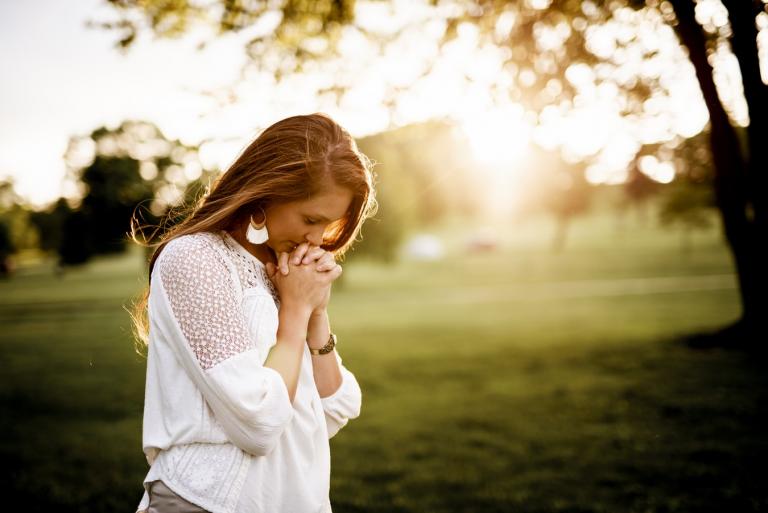
Many people on Earth think a belief in a higher power is essential if we’re to become moral people. This position is held by decisive majorities in dozens of countries. It’s a vital example of how religion can cause us to offload our sense of morality and self.
When it comes to mental health, there are signs religion can do some good, under the right circumstances. Yet, religion can also have unintended consequences for mental and emotional development. Let us look at the ways religion affects our emotions and psyche.
Religion’s Positive Effects on Mental Health
For most practitioners, the stated purpose of most world religions usually goes something like this:
- To understand and improve the world
- To uncover their god’s plan for their lives
- To improve themselves and pursue inner serenity
Whether world peace can materialize beneath the banners of several rival gods is debatable. Nevertheless, there is some evidence that religion may benefit its practitioners at a personal level.
In one study of older individuals suffering from ill health, religion proved effective at staving off depression. Spirituality, which adheres to noninstitutionalized beliefs and practices, and non-religiousness did not have the same result.
Another study claims those who believe in God may experience better short-term outcomes for psychiatric illness, including depression and anxiety. At the beginning of the program, participants rated their belief in God. Over two weeks, researchers evaluated the patients’ well-being.
Those who held more than a slight belief in a higher power were twice as likely to respond to treatment. According to experts, this higher power can be through religious beliefs, nature and connections with friends and family.
Religions that encourage meditation-like prayer intervals might activate portions of the brain, such as the frontal lobes, associated with emotional regulation. Buddhists are especially likely to demonstrate higher frontal lobe activity, indicating a lower likelihood to engage in reactionary behavior and an improved capacity to take stressors and negative feelings in stride.
The Possible Negative Effects of Religion
Some of the collected research indicates practicing religion might heighten the likelihood of developing anxiety or exacerbate its symptoms. Other studies say the opposite.
One claim supported by a now-retracted paper is that religious upbringings result in children — and eventually adults — who:
- Are more likely to engage in judgments of others
- Are more punitive-minded than those raised in secular environments
- Are less likely to empathize with and practice altruism toward others
More research is required before we make broad judgments about what kind of adults “most” religiously-raised children grow up to be. However, there is an emerging avenue of scientific inquiry into what’s now known as religious trauma syndrome. While this term doesn’t appear in the DSM yet, psychotherapists, clinicians and counselors use it to describe people who find themselves recovering from involvement in a poisonous religion.
According to Harlem’s Michael “Pastor Mike” Walrond Jr., religion for many adherents “has been more bruising and damaging than healing and constructive.” Many churches, he says, have “weaponize[d] scripture” in a way that can “do very deep damage on the psyche.”
Pastor Walrond is referencing scientific research demonstrating the potential for long-term psychological harm after spending decades in some religions. This harm includes:
- Symptoms resembling those of PTSD
- Heightened levels of anxiety
- Self-doubt and poor self-image
- A lingering sense of social inadequacy
When it comes to personal development and personal peace, it turns out religion may be equally likely to have a corrosive effect as a positive one. Believing that humans are unworthy, fallen and sinful can make those with poor mental health less likely to seek assistance from professionals.
Extremist groups can exacerbate these feelings, guiding members to develop cult-like and harmful behaviors. Ex-Scientologists, for example, claim they must become servants to the religion and its leaders, signing billion-year contracts. The organization has been known to force members into labor and make them privy to illegal schemes, including child abuse and human trafficking.
This group, much like other extremist religions, convinces members that these harmful activities are necessary for the greater good — that it’s God’s will. When members escape, they often deal with symptoms resembling PTSD but feel too guilty to reach out. Believing one has diminished value in the eyes of God and society isn’t a new problem.
Authoritarianism persists across the world today. It’s fair to say that religion can and does prime the human spirit and mind for oppression. More than one dictator across history has managed to dovetail their own cruel, totalitarian vision convincingly enough with the popular scriptures of the day, and often to the point where it’s hard to tell where one ends, and the other begins.
On Religion and Mental Health
Religion can be freeing and deliver a sense of peace — but it can also feel like wearing a set of emotional, psychological and social blinders. The research overwhelmingly shows that involvement with religion will almost certainly have some sort of an effect on one’s mental health.
Previous Post

January 15, 2020
Re-imagining our Common Bond with the Cosmos

Browse Our Archives
Select a Category Ableism Activism Addiction and Recovery Agnosticism Anti-intellectualism Arts Atheism Beauty Catholicism Charles Darwin Children China Christianity Church/State separation churchgoing communication compassionate humanism Creationism critical thinking Culture death disaster response doubt education Egypt Entertainment Environment ethics evolution Existence of God Exploration fear Foundation Beyond Belief Free speech God Health History Human rights humanism identity India Interfaith Islam labels Language LGBT Love Meaning Media Medicine Middle East misconceptions mixed belief marriage Moral argument Morality Myths Near-Death Experience Nonreligious parenting Parody Persecution complex Philosophy Poetry Politics prayer Psychology Rationality Religion religious atheists Religious privilege Republican Party Satire Schools science secular parenting Spirituality The Unpigeonholeables Uncategorized United Kingdom Wonder
Select a Month March 2021 August 2020 March 2020 January 2020 September 2019 July 2019 June 2019 April 2019 February 2019 January 2019 December 2018 November 2018 October 2018 September 2018 August 2018 July 2018 June 2018 May 2018 April 2018 March 2018 February 2018 January 2018 December 2017 November 2017 October 2017 September 2017 August 2017 July 2017 March 2017 February 2017 January 2017 December 2016 November 2016 October 2016 September 2016 August 2016 July 2016 June 2016 May 2016 April 2016 March 2016 February 2016 January 2016 December 2015 November 2015 October 2015 September 2015 June 2015 March 2015 February 2015 January 2015 December 2014 November 2014 October 2014 September 2014
Follow Us!
TAKE THE
Religious Wisdom Quiz
Where did Elijah confront the prophets of Baal?
Select your answer to see how you score.
Mount Sinai Mount Zion Mount Horeb Mount Carmel
Related posts from The Secular Spectrum

Yasir Qadhi's Elitist Ruse to Conceal the Obscure...

Despite "Pro-Life" Claims, Stem Cell Therapy Has Very...

On Cognitive Dissonance and the Thought Patterns Behind...
Understanding Cultures of Unbelief for Religious
TRENDING AT PATHEOS Nonreligious

Dethroning Jesus and Enthroning Yourself
Jesus Never Asked to Be Worshipped. He Asked to Be Understood. Christianity...

Why Most Christians are Really Paulians and Jobians
I Don't Care, But It Matters Let's get this out of the...

Essential Tips to Successfully Navigate the Selling Process
Selling a house can feel overwhelming, but it doesn’t have to be....

To Make Remote Work Effective, Think About Others
The COVID-19 pandemic forced many companies to rapidly transition to remote work....

Flexibility Is Key to Solving Problems of Tomorrow
The world of work is undergoing a dramatic transformation. The COVID-19 pandemic...
view all Nonreligious blogs
Ad-Free & Subscriber Log-In Subscription Support
- About Us
- 2026 Calendar
- Videos
- Podcasts
- Library of World Religions
- Faith In Media Tracker
- Advertise With Us
- Write for Us
- Privacy Policy
- Terms of Service
- Do Not Sell My Data
- Contact Us
- Radiant Digital
- Manage Newsletter Subscriptions
- Unsubscribe From Notifications
- Sitemap
Copyright 2008-2026, Patheos. All rights reserved.
Subscription Support Ad-Free & Subscriber Log-In
Follow Patheos